
Mastering Septic System Care in Texas Clay Soil: A Homeowner’s Guide
Imagine it’s been raining for three days in Cleveland, and suddenly your sinks won’t drain. You look out at your yard and see a swamp forming over your drain field. That sinking feeling in your stomach isn’t just the mud. It’s the fear of a massive replacement bill. Most Texas homeowners know that our heavy “gumbo” clay doesn’t play nice with traditional plumbing. It’s frustrating to feel like you’re at the mercy of the soil every time a storm rolls through.
Mastering septic system care in Texas clay soil is about more than just regular pumping; it’s about understanding how this dense earth behaves when it’s saturated. We’re here to help you protect your investment and keep your system running smoothly, even during the heaviest Houston downpours. In this guide, you’ll learn the specific maintenance steps that prevent drain field failure and why “soil rest” is your best defense against a total system collapse. By understanding the unique needs of your property, you can ensure your home stays functional for years to come.
Key Takeaways
- Understand why “gumbo” clay in regions like Houston and Cypress prevents proper drainage and how to adapt your system’s operation to match these conditions.
- Learn how to manage your daily water volume to prevent hydraulic overload, ensuring your septic system care in Texas clay soil includes spacing out heavy usage like laundry days.
- Discover simple landscaping and drainage adjustments, such as diverting gutter runoff, to keep your drain field from becoming a swamp during wet seasons.
- Identify why clay-heavy properties in Cleveland and Shepherd require more frequent professional pumping and inspections to prevent costly system failures.
- Explore modern solutions like Aerobic Treatment Units (ATUs) and drip dispersal systems that are specifically engineered to handle the poor drainage of East Texas soil.
Why Texas Clay Soil is a Unique Challenge for Your Septic System
In the Houston and Cypress regions, we deal with what locals call “gumbo.” This isn’t your average garden soil. It’s expansive clay that acts like a sponge, but with a catch. It holds onto water with incredible grip. This makes septic system care in Texas clay soil a unique challenge because the earth literally fights against the dispersal of wastewater. While sandy soils allow water to pass through freely, clay particles are tiny, flat, and stack together tightly. This leaves almost no room for oxygen or liquid movement.
The physical nature of this soil causes significant mechanical stress. Texas clay goes through a violent shrink-swell cycle. During a hot summer, the ground dries out and cracks. When the rain returns, it swells rapidly. This constant movement can actually shift your pipes, loosen connections, or even cause concrete tanks to develop hairline fractures over time. It is a level of physical strain that homeowners in other parts of the country simply don’t have to worry about. This is why many traditional “perc tests” fail in our area, making alternative designs like aerobic units a necessity rather than an option.
The Science of Soil Saturation
Clay-heavy soils have very low permeability. Because water sits still for so long, a “biomat” of bacteria and organic solids can build up much faster than it would in better-draining soil. This layer eventually acts like a waterproof seal, completely blocking any further absorption. When a standard septic drain field is placed in this environment, the lack of airflow slows down the natural breakdown of waste. The Texas heat also plays a role. Intense summer sun bakes the surface, creating a hard crust that increases compaction when lawnmowers or vehicles pass over the area.
Signs Your Clay Soil is Rejecting Wastewater
You need to know what to look for before a backup happens. One common sign is finding “spongy” or unusually green spots in your yard, even when we haven’t had rain for weeks. This usually means the effluent is rising to the surface rather than soaking in. It’s important to distinguish between a tank that simply needs pumping and a saturated drain field that can no longer process liquid. If you notice slow drains or odors, it might be time for a professional septic system repair to prevent a total failure. Catching these signs early is the key to effective septic system care in Texas clay soil and avoiding a massive bill later.
Managing Your Household’s Hydraulic Load to Prevent Soil Saturation
In Huffman and Shepherd, volume management is your most powerful tool for maintaining a healthy yard. Because our local soil acts like a slow-moving drain, you can’t treat your septic system like a city sewer line. Hydraulic load is the total volume of water entering the system per 24 hours. When this volume exceeds what the clay can absorb, the system backs up. Proper septic system care in Texas clay soil starts with understanding that your drain field has a “daily budget” for water. If you overspend that budget, you risk pushing solids into the soil and causing permanent damage.
The biggest threat to this budget is the dreaded “laundry day” surge. Washing five loads of clothes in one afternoon sends hundreds of gallons of water into a tank that is already struggling to drain into dense clay. This sudden rush of water creates turbulence, which stirs up settled solids and carries them out to your drain field. To keep your system stable, you must stagger your water usage. Spread laundry throughout the week rather than doing it all at once. This gives the soil time to process the liquid and “breathe” between doses.
Water Conservation Tactics for Clay Soil
Small leaks can lead to big failures in clay-heavy areas. A single running toilet can dump 200 gallons of extra water into your system every day, which is enough to saturate a drain field in a matter of hours. Fix leaky faucets and running toilets immediately to preserve your system’s capacity. Installing high-efficiency fixtures, such as low-flow showerheads and dual-flush toilets, also makes a significant difference. While this EPA overview of septic system types explains how different designs handle waste, no system is immune to the physics of water-logged clay. If you suspect your system is already struggling with current loads, scheduling professional septic system repair can help identify hidden leaks before they destroy your yard.
Monitoring Your Usage
Smart water meters or simple flow monitors are excellent investments for rural Texas homes. These devices track your daily flow and can alert you if you’re nearing your soil’s limit. During the Texas rainy season, you should be even more cautious. When the ground is already soaked from a thunderstorm, your septic system’s ability to disperse water drops significantly. Educate your guests on these limits too. If you’re hosting a large family gathering, remind everyone to keep showers short and avoid running the dishwasher until after the guests have left. Managing these small habits is the secret to successful septic system care in Texas clay soil.
Protecting the Drain Field: Landscaping and Surface Water Management
Protecting your drain field is just as vital as managing what goes down your drains. In our region, the weight of the soil itself is already heavy; adding extra pressure is a recipe for disaster. Never drive vehicles, park trailers, or operate heavy riding lawnmowers over your absorption area. Compacted clay loses its ability to “breathe,” which stops the natural treatment process. Effective septic system care in Texas clay soil requires keeping the ground above your lines as porous as possible to allow for oxygen exchange.
Surface water management is your next priority. If your roof gutters empty directly onto your drain field, you are essentially drowning your system every time a Gulf Coast storm hits. Divert all downspouts at least 10 feet away from the septic area. You want your drain field to handle wastewater from the house, not rainwater from the sky. When the clay is already saturated from a downpour, it cannot accept any more liquid from your tank, leading to immediate backups.
Rainwater Diversion Strategies
Managing the sudden influx of water during heavy rains requires proactive grading. Ensure your yard slopes away from the tank and field to prevent pooling. If your property has a natural dip where the septic is located, consider installing swales or shallow berms to catch and reroute surface runoff. These simple landscape features act as a shield, ensuring your system doesn’t become overwhelmed by external water sources during the wet season. Proper grading is a one-time fix that provides years of protection for your drain field.
Safe Landscaping for Texas Septics
The right vegetation can actually help your system function better. Choose “thirsty” but non-invasive grasses like Bermuda or Zoysia, which thrive in our heat and help pull moisture from the soil through evapotranspiration. However, be careful with trees. In Cleveland, TX, species like Willows, Elms, and certain Maples have aggressive roots that seek out the moisture in your septic lines. Always maintain a minimum 10-foot buffer zone between any tree and your septic components. This prevents root intrusion that can clog pipes and crack tanks.
Avoid the temptation to add topsoil or “fill” over a soggy drain field. While it might look better temporarily, adding soil over clay acts like a lid on a jar. It traps moisture and prevents evaporation, which is a critical part of how systems in heavy clay function. If your yard is consistently wet, it’s a sign of a deeper issue. Professional septic system maintenance can help determine if your system needs a specific repair or if the soil has reached its limit.
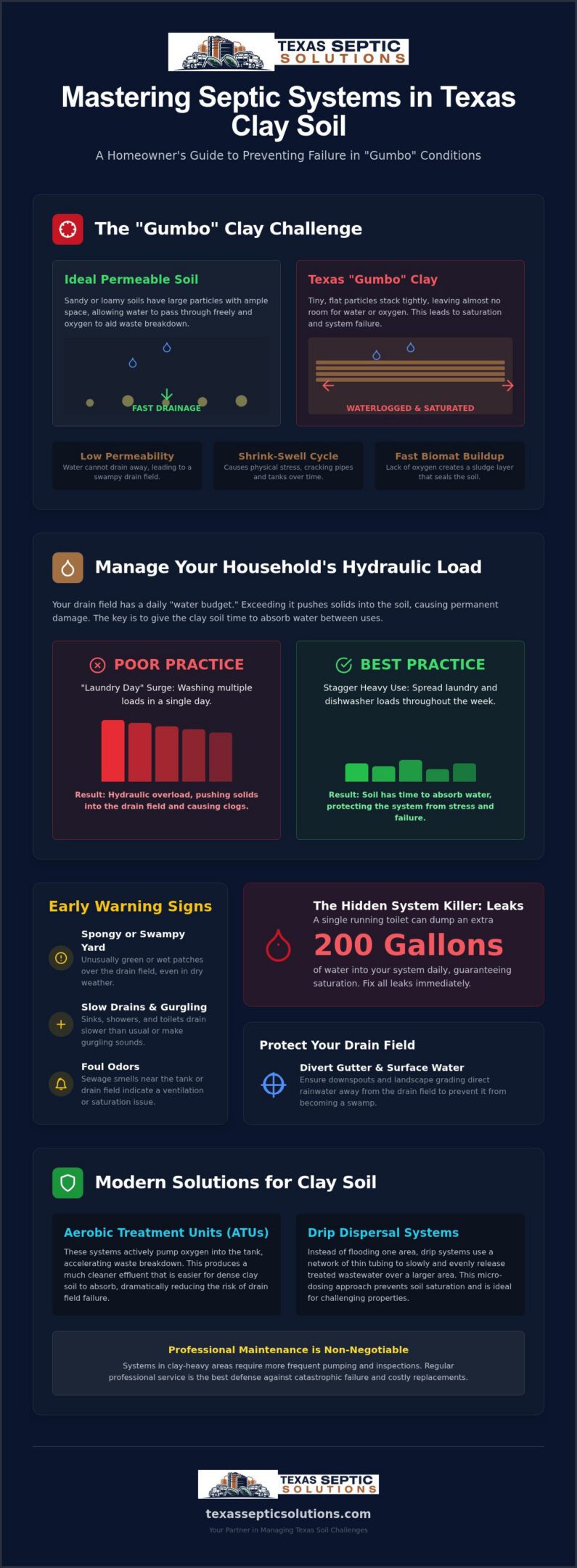
Troubleshooting and Upgrading Systems for Poorly Draining Soils
Living on heavy clay doesn’t mean your system is doomed to fail. If your conventional drain field is consistently soggy, it might be time to look at an Aerobic Treatment Unit (ATU). These systems are game-changers for septic system care in Texas clay soil. Unlike standard tanks, an ATU uses oxygen to break down waste more thoroughly. This means the water leaving the tank is much cleaner, which helps prevent the clay from becoming clogged with organic solids. In Cypress and surrounding areas, drip dispersal systems are often the best answer for heavy clay. These systems use a network of small tubes to deliver tiny amounts of water directly to the root zone of your grass. Because the water is applied slowly and evenly, it doesn’t overwhelm the soil’s limited absorption capacity.
Evaluating Alternative Systems
If you’re dealing with a flat property where water tends to pool, a mound system might be an alternative, though they require more space and specific engineering to work correctly in our terrain. These systems create a raised area of sandy soil to treat effluent before it ever touches the native clay. Consulting with a professional for septic system maintenance plans can help you decide if an upgrade is necessary before you face a total failure. A proactive plan ensures you aren’t surprised by a system that can no longer keep up with your household needs.
Retrofitting for Resilience
You don’t always need a full replacement to improve your system’s performance. Effluent filters can prevent up to 50% of premature drain field failures. These simple devices catch small particles before they ever reach your clay soil. Upgrading to pressure-dosed distribution is another smart move. This ensures that every part of your drain field gets an equal amount of water, rather than just the first few feet of pipe. Proper septic system care in Texas clay soil often involves these proactive mechanical upgrades. You should also consider adding a septic tank riser. Since Texas clay shifts and settles, having a riser at the surface makes inspections and pumping much easier without having to dig up your yard every few years.
If your septic tank alarm goes off during one of our frequent floods, don’t panic. It usually means the high water table has triggered the sensor. Turn off your water usage immediately and wait for the ground to dry out. If the alarm persists once the yard is dry, it’s time for a professional look. For expert help with upgrades or emergency repairs, reach out to Texas Septic Solutions today.
Professional Maintenance and Pumping Strategies for Clay-Heavy Properties
Standard advice often suggests pumping your tank every three to five years, but that timeline can be a gamble when you’re dealing with “gumbo” clay. In areas like Houston and Cypress, the soil’s inability to process water quickly means your tank stays fuller, longer. Effective septic system care in Texas clay soil requires a more aggressive maintenance schedule. If solids are allowed to build up and migrate into a clay drain field, they can create a waterproof seal that is nearly impossible to break. One of the most reliable ways to check your system’s health is a “sludge judge” test. This involves using a clear tube to measure the specific layers of scum and sludge in your tank, giving us a precise look at when you actually need a pump-out rather than just guessing based on the calendar.
A proactive approach also helps you plan for the future. By keeping detailed records of your system’s performance, you can better estimate a realistic septic system replacement cost down the road. Most systems in clay don’t fail overnight; they fail slowly over years of neglected maintenance. Regular professional inspections every one to two years allow us to catch small issues like shifting pipes or cracked baffles before they turn into a total system collapse.
The Pumping Schedule for Clay Soil
For most homes in our region, a two to three year pumping cycle is much safer than the national average. This frequency ensures that the effluent leaving your tank is as clear as possible. When the tank gets too full of solids, those particles are pushed out into the drain field lines. In sandy soil, some of those solids might eventually break down or wash away, but in clay, they get trapped and clog the tiny pores of the earth. Sticking to a tighter schedule is the best way to prevent the stress of emergency 24/7 septic service calls during a holiday weekend or a major storm.
Choosing a Local Maintenance Partner
You need a “neighborly expert” who understands the specific challenges of Cleveland and Huffman soil. A provider from outside the area might not realize how much the ground shifts here or how Gulf Coast humidity affects aerobic components. When choosing a partner, ensure they are doing more than just “pump and go.” A comprehensive provider will check the health of your drain field, inspect the tank’s structural integrity, and test any alarms or pumps. For a deeper look at protecting your investment, read our Septic System Maintenance Texas pillar guide. Working with someone who knows the local “gumbo” ensures your system gets the specialized care it needs to survive the Texas climate.
Secure Your Home’s Functionality in the Texas Gumbo
Managing your utility system in our local “gumbo” doesn’t have to be a source of constant stress. By controlling your household’s daily water volume and keeping surface runoff away from your drain field, you take the pressure off your property’s dense soil. Successful septic system care in Texas clay soil depends on being proactive rather than reactive. Removing solids through regular pumping before they can clog clay pores is the single best way to avoid a massive replacement bill. Your home is a major investment. Your septic system is the engine that keeps it running every day.
As a locally owned and operated business, we understand exactly how East Texas soil behaves after a week of heavy rain. We specialize in expert soil testing and system designs that are built to last in our unique environment. Whether you need a routine maintenance check or 24/7 emergency service in Cleveland or Houston, our team is ready to support you. Get a Professional Septic Inspection for Your Clay Soil Today and gain the peace of mind that comes with a healthy, reliable system. We are built for this. We’re proud to be your neighborly experts in keeping your home functional and safe.
Frequently Asked Questions
Can I use septic additives to help my system drain better in clay?
Septic additives are generally not recommended for improving drainage in clay soil. While some products claim to break down waste, they often agitate the settled solids in your tank. This allows fine particles to flow out into your drain field. In the dense clay found around Cypress and Huffman, these particles quickly clog the tiny soil pores, leading to permanent system failure. It’s better to focus on regular pumping and water conservation.
How much rain is too much for a septic system in Texas clay?
Any rain that leaves your yard “squishy” or creates standing water is too much for your system to handle effectively. When the clay soil in Houston is fully saturated, it can’t accept any more wastewater from your tank. During heavy storms, you should minimize water use inside the house. This prevents the system from backing up into your home while the ground is waterlogged and unable to drain into the earth.
Why is my drain field always wet even when it hasn’t rained?
A wet drain field during a dry spell is a clear warning sign of system failure. It usually indicates that the clay soil has become so compacted or clogged with a “biomat” layer that it can no longer absorb liquid. Instead of soaking into the ground, the wastewater is forced to the surface. This is a critical point for septic system care in Texas clay soil. You should call for a professional inspection immediately.
Is an aerobic system better than a conventional system for clay soil?
Aerobic systems are significantly better for clay soil than conventional gravity systems. Because aerobic units treat the wastewater to a much higher standard before dispersal, the liquid is cleaner and less likely to clog the soil. In areas like Cleveland and Shepherd, where “gumbo” clay is common, aerobic systems with spray or drip dispersal are often the only reliable long-term solution. They handle poor drainage much more effectively than gravity-fed lines.
How often should I pump my septic tank if I have heavy clay soil?
We recommend pumping your septic tank every two to three years if you live on heavy clay soil. While sandy soil might be more forgiving, clay requires you to be much more careful about solid buildup. Frequent pumping ensures that solids never have the chance to migrate into your drain field lines. This proactive approach is essential for septic system care in Texas clay soil and helps you avoid expensive emergency repairs during wet seasons.
What happens if I drive a vehicle over my drain field in clay?
Driving a vehicle over your drain field in clay soil is extremely damaging. The weight of a car or truck crushes the soil particles together, destroying the already limited air pockets needed for drainage. It can also shift or break the underground distribution pipes. In the expansive clay of East Texas, this compaction is often permanent and can lead to immediate backups. Always keep heavy equipment and vehicles well away from your septic area.
Can I install a pool near my septic system in clay soil?
You can install a pool, but you must maintain strict setbacks from your septic system components. In clay-heavy areas, the excavation for a pool can change how groundwater moves through your property. You don’t want the pool’s drainage to flow toward your septic field, as this will saturate the clay and cause the system to fail. Always consult with a licensed professional to ensure your pool placement meets local codes and doesn’t compromise your system.
What are the best trees to plant near a septic system in Texas?
The best trees for your septic area are actually none at all within a safe buffer zone. If you must plant near the perimeter, choose slow-growing species with non-aggressive root systems. Avoid Willows, Elms, and Maples, which are notorious for seeking out septic moisture. For the area directly over your drain field, stick to native grasses like Bermuda or Zoysia. These help pull moisture from the clay through evaporation without the risk of root intrusion.