
Managing Septic Systems in a Flood Zone: Huffman, TX Homeowner Guide
When the San Jacinto River begins to rise and the clouds over Huffman turn a heavy grey, the last thing you want to worry about is your septic tank floating out of the ground or raw sewage backing up into your home. Living in a flood-prone area means you’re always keeping one eye on the radar and the other on your property’s vulnerabilities. It’s natural to feel a sense of dread when the water starts to climb, especially when you’re unsure if your system can withstand the pressure. We understand that stress because we’re right here in the community with you, seeing the impact of these local storms firsthand.
This guide provides the clear, professional steps you need for managing septic systems in a flood zone Huffman homeowners deal with every season. You’ll learn how to safeguard your equipment before the rain starts and exactly what to do if your drain field becomes submerged. We’ll walk through a dependable emergency plan, explain the hidden dangers of pumping your tank before a storm, and show you how to verify your system’s safety once the water finally recedes. Our goal is to help you prevent long-term damage and ensure your home remains functional and safe, no matter what the Texas weather throws your way.
Key Takeaways
- Learn how to install backflow prevention valves and secure watertight risers to keep floodwaters from damaging your home and tank.
- Discover why managing septic systems in a flood zone Huffman homeowners navigate requires avoiding tank pumping until the ground is completely dry.
- Understand the importance of immediate water conservation during heavy rain to prevent your system from backing up when the drain field is submerged.
- Identify the critical signs of system damage to look for after floodwaters recede, such as soil settling or exposed pipes.
- Establish a long-term maintenance strategy designed for the unique environmental pressures found near the San Jacinto River.
Understanding Flood Risks for Septic Systems in Huffman
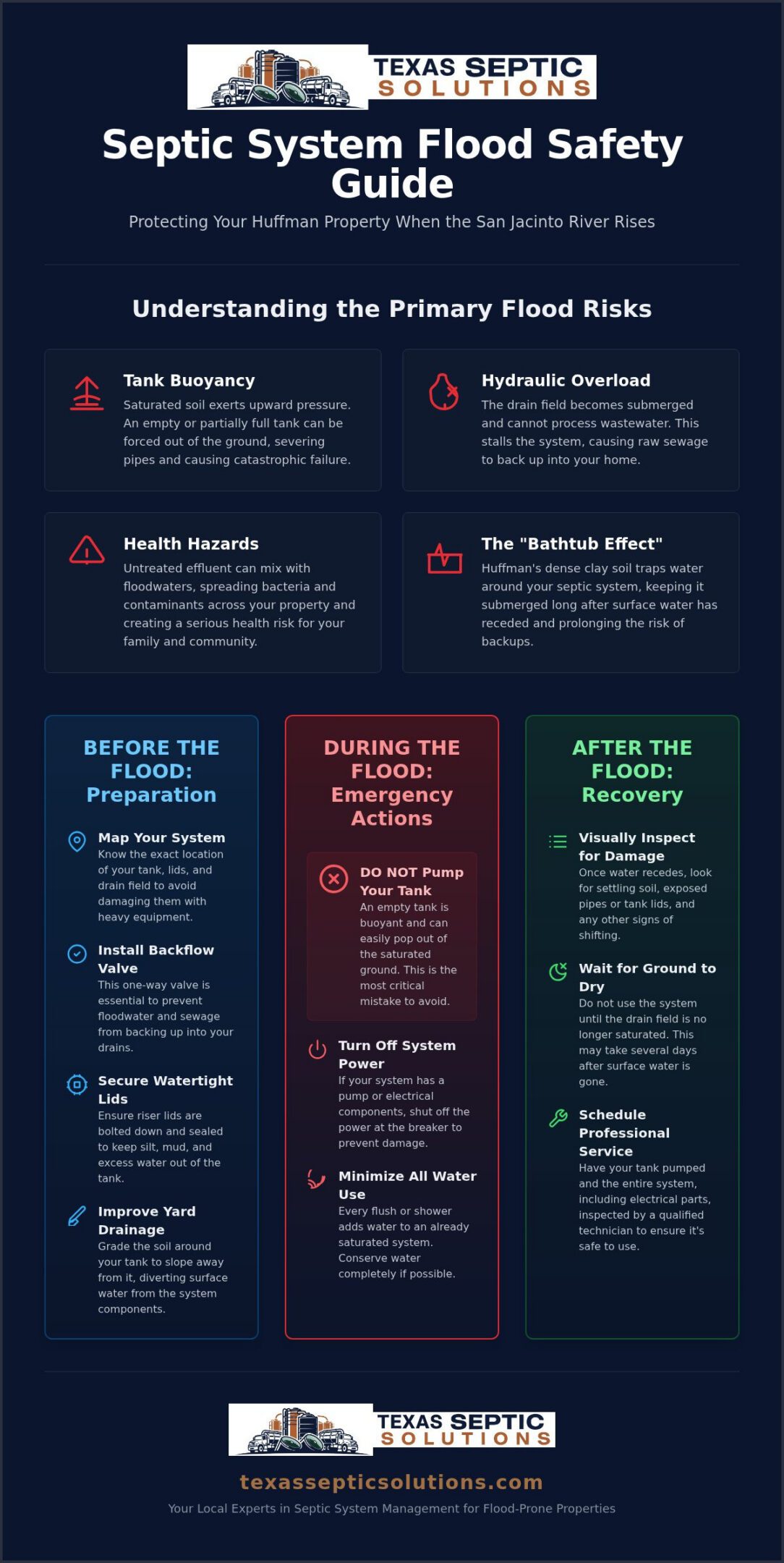
Huffman homeowners face a unique set of challenges when the San Jacinto River reaches its banks. Managing septic systems in a flood zone Huffman requires an understanding of how water moves through our local environment. When a flood occurs, the primary threat to your septic tank is buoyancy. As the soil becomes saturated, it acts like a liquid, exerting upward pressure on the tank. If the tank is empty or insufficiently anchored, it can literally pop out of the ground, severing pipes and causing thousands of dollars in damage.
Beyond physical displacement, flooding leads to hydraulic overloading. This happens when the volume of water entering the system exceeds its capacity to process it. In Huffman, the combination of river overflow and heavy rain creates a scenario where the drain field cannot breathe. Without oxygen, the beneficial bacteria that treat your waste cannot survive, and the entire system stalls. This creates a serious health hazard, as untreated effluent can mix with floodwaters and spread across your property. It’s not just a utility issue; it’s a safety concern for your family and neighbors.
Why Huffman’s Soil Makes Flooding More Dangerous
The dense East Texas clay found throughout Huffman complicates drainage. Unlike sandy soils that allow water to pass through, clay holds onto moisture with incredible tenacity. This leads to what we call the “bathtub effect.” When your septic system was installed, a large hole was excavated in the clay. During a storm, this hole fills with water that has nowhere to go. Because the clay walls are nearly impermeable, your system stays submerged long after the surface water has disappeared, prolonging the risk of a backup into your home.
Identifying if Your Property is in a High-Risk Zone
Knowing your risk level is the first step in preparation. Harris County flood maps provide a baseline, but they don’t always account for localized groundwater saturation. Properties near Lake Houston or the San Jacinto River are at a high risk for surface flooding. However, even inland properties can suffer if they rely on older, gravity-fed systems. These systems lack the mechanical components to handle high water tables. When managing septic systems in a flood zone Huffman residents should look for signs of poor drainage, such as standing water that lingers for more than 24 hours after a typical rain event.
Pre-Flood Preparation: How to Flood-Proof Your Septic System
Preparation is your best defense against the heavy rains that frequently hit Harris County. While you can’t control the San Jacinto River, you can control how your property handles the runoff. Managing septic systems in a flood zone Huffman requires a proactive approach before the ground even gets damp. Start by mapping out your entire system while the weather is clear. Locate the tank, the distribution box, and the exact boundaries of your drain field. Knowing these locations prevents you from accidentally driving heavy equipment over sensitive areas during storm prep, which could collapse pipes or compact the soil.
Essential Hardware Upgrades for Flood Zones
One of the most effective hardware additions is a backflow prevention valve. This simple device acts as a one-way gate, allowing waste to leave your home while preventing rising floodwaters from pushing sewage back up through your toilets and drains. If your system has older components, you might need a professional septic system repair to ensure all seals and joints are airtight. Bolted down, watertight riser lids are another critical investment. These lids prevent silt, mud, and excessive water from entering the tank, which would otherwise lead to a premature backup or system failure.
The EPA suggests reviewing their guidelines on What to Do after the Flood to understand how these preparations pay off during the recovery phase. Keeping your system sealed is often the difference between a minor inconvenience and an expensive total system failure.
Landscaping for Better Drainage
How you manage the surface of your yard affects what happens underground. Ensure the area around your tank is slightly mounded or graded. This encourages water to run off toward drainage ditches rather than soaking directly into the septic components. When managing septic systems in a flood zone Huffman residents should avoid planting trees or large shrubs near the drain field. Roots seek out the moisture in your pipes and can cause blockages that lead to failure during heavy rain. Instead, stick to native grasses that help with erosion control and absorb excess moisture.
Keep the area clear of debris like wood piles, fallen branches, or lawn furniture. Debris can block the natural flow of water and create localized flooding right over your pipes. Mapping your system is equally important; use a permanent marker or a digital map to note the location of all lids and cleanouts. This allows you to find and inspect them quickly if water starts to rise, without having to dig through mud.
If your system hasn’t been checked lately, a professional septic system maintenance visit can identify these vulnerabilities before the clouds gather.
During the Flood: Critical Do’s and Don’ts for Huffman Residents
When the water levels begin to peak, your priority shifts from preparation to active damage control. Managing septic systems in a flood zone Huffman residents often find themselves in requires discipline and a calm head. The most important rule during an active flood is to treat your system like it’s already at maximum capacity. Even if you don’t see water backing up inside the house yet, the soil outside is struggling to keep up. Your goal now is to minimize the stress on your tank and drain field until the environment can naturally process the excess moisture again.
The Danger of the ‘Floating Tank’
It might seem logical to pump your tank out when you suspect it’s full of floodwater, but this is the most dangerous mistake you can make. When the soil around the tank is saturated, it exerts immense upward pressure. A full tank is heavy. It stays put. An empty tank, however, becomes buoyant. An empty tank acts like a boat in wet soil. If the tank shifts or “floats,” it will snap your inlet and outlet pipes. This leads to a catastrophic failure that usually requires a total system replacement. You must wait until the groundwater has fully receded before calling for a pump truck.
Drastic Water Reduction Strategies
Every gallon of water you send down the drain during a flood adds to the pressure on your submerged drain field. You need to implement an immediate “emergency use only” policy for your plumbing. Stop all laundry and dishwashing until the floodwaters recede. Limit showers to the absolute minimum and only flush the toilet when strictly necessary. If you have gutter downspouts that discharge near your tank or drain field, try to temporarily redirect that flow further away to prevent additional saturation in that specific area.
For those with aerobic systems, electrical safety is paramount. If you see your septic tank alarm going off, stay calm. This often indicates the high-water float has been triggered by groundwater or heavy inflow. If floodwater is deep enough to reach electrical components like the air compressor or control panel, turn off the dedicated breaker to the system immediately to prevent a short circuit. Professional resources like this guide on Protecting Your Septic System can provide more context on managing these high-stress moments safely. By reducing your water footprint, you give your system the best chance of survival.
Post-Flood Recovery: Inspecting and Restoring Your System Safely
Recovery starts with patience. Even after the surface water vanishes from your yard, the ground remains a heavy, waterlogged sponge. Managing septic systems in a flood zone Huffman requires a cautious transition back to normal use. You must wait for the water table to drop below the level of the tank before you resume regular household activities. If you start sending water down the drain while the soil is still saturated, you risk a backup that could have been avoided with just a few more days of caution. Check your yard for standing water; if it’s still there, your septic system isn’t ready to work yet.
Once the surface is dry enough to walk on, conduct a thorough visual inspection. Look for signs of soil settling, new sinkholes, or pipes that have become exposed due to erosion. For those with aerobic systems, don’t flip the electrical breaker back on until you’ve checked the air compressor and control panel. If these components were submerged, they need to be cleaned and dried by a professional to prevent a short circuit or permanent motor failure. Silt and mud are the primary enemies here; they can clog filters and baffles, leading to long-term drainage issues.
A Homeowner’s Safety Checklist for After the Storm
Walk your drain field carefully and look for “effluent breakout,” which appears as muddy, foul-smelling puddles on the surface. This is a clear sign that the soil is too saturated to treat waste. It’s vital that you avoid driving any vehicles or heavy equipment over the drain field for at least a week after the water recedes. The weight of a truck on wet clay will compact the soil and crush your lateral lines. If you notice large cracks in the tank or pipes that have shifted, you likely need a professional septic system repair to restore structural integrity.
Professional Inspection vs. DIY Assessment
While a visual check is a great first step, never attempt to open the septic tank lids yourself. Flooded tanks can trap toxic gases like hydrogen sulfide and methane, which are deadly if inhaled. A professional inspector has the equipment to safely check for silt accumulation in the tank and verify that the internal baffles are still intact. Silt is a silent killer for drain fields; if it’s allowed to flow out of the tank, it will plug your soil’s pores permanently. Schedule a professional pumping service only after the soil has dried completely to ensure the tank doesn’t float during the process. If you suspect your system shifted during the surge, reach out to Texas Septic Solutions for an emergency septic inspection to ensure your home stays safe and functional.
Long-Term Maintenance Strategies for Flood-Prone Properties
Moving from emergency response to long-term resilience is the best way to protect your property value and peace of mind. Managing septic systems in a flood zone Huffman residents call home requires a more rigorous schedule than properties on high, dry ground. While a standard system might only need attention every few years, your system faces constant pressure from high water tables and silt-heavy runoff. Implementing a specialized septic system maintenance plan ensures that your components are always ready for the next San Jacinto surge.
One of the most critical habits to form is regular filter cleaning. After heavy rain events, silt and fine debris can migrate into your tank and clog the effluent filter. If this filter remains dirty, it restricts flow and causes the system to back up even when the drain field is dry. Additionally, you should keep meticulous service records. Document every inspection, pump-out, and repair. In the event of a catastrophic flood, these records are vital for insurance claims and FEMA assistance, proving that the system was well-maintained prior to the disaster.
Proactive Pumping and Inspection Schedules
In Huffman, the standard “pump every three to five years” advice often falls short. Because our clay soil retains moisture and flood events are frequent, your system works harder to process waste. We recommend a more proactive pumping schedule to keep solids at a minimum, which reduces the risk of a blowout during a flood. Annual inspections are equally important. A professional can catch minor storm damage, such as hairline cracks in a riser or a failing seal, before the next rainy season turns those small issues into a total system failure. A well-maintained system recovers significantly faster from saturation because the biological balance is stable and the hardware is intact.
Partnering with Local Huffman Experts
You don’t have to navigate these environmental challenges alone. Partnering with a team that understands the specific flooding patterns of East Texas makes a world of difference. At Texas Septic Solutions, we provide 24/7 emergency support because we know that septic failures don’t wait for business hours, especially during a storm. We can perform a “flood-readiness” audit of your system, checking for proper anchoring, watertight seals, and functional backflow valves. This professional care extends the life of your drain field and ensures your home remains a safe haven. Contact Texas Septic Solutions for a Huffman system evaluation to build a custom strategy that keeps your utilities running through any weather.
Secure Your Peace of Mind Against Huffman Floods
Success in managing septic systems in a flood zone Huffman residents navigate depends on shifting from a reactive mindset to a proactive one. By securing watertight riser lids, installing backflow preventers, and adhering to a professional inspection schedule, you can protect your property from the unique pressures of the San Jacinto River basin. These steps ensure that when the waters rise, your home remains a safe and functional sanctuary. Taking care of your system now prevents the stress and high costs of emergency repairs later.
Texas Septic Solutions stands ready to be your long-term partner in home functionality. We provide 24/7 emergency response for Huffman residents and possess deep expertise in East Texas clay soil management. Our licensed and insured local professionals understand the high stakes of flood-zone living and are committed to keeping your utilities reliable. Don’t wait for the clouds to gather before checking your system’s integrity. Schedule a Huffman Flood-Readiness Inspection Today to verify your safety. We’re proud to serve this community and help you stay prepared for whatever the weather brings.
Frequently Asked Questions
Can I use my toilet during a flood if I have a septic system?
You should stop using your toilet immediately if floodwaters cover your drain field or tank area. When the ground is saturated, the soil cannot absorb any more liquid, meaning every flush risks a backup into your home. If you have a backflow prevention valve, you might be protected from sewage entering the house, but the system still won’t function. It’s best to use portable toilets or alternative facilities until the water recedes completely.
Why is it dangerous to pump my septic tank during a flood?
Pumping a tank while the surrounding soil is waterlogged creates a buoyancy problem that can cause the tank to “float” or pop out of the ground. The weight of the waste inside actually keeps the tank anchored against the upward pressure of the saturated soil. If you empty it, the tank becomes like a boat. This shifting can snap inlet and outlet pipes, leading to expensive structural repairs or a full system replacement for your property.
How do I know if my drain field is too saturated to use?
Look for standing water or soggy patches over the drain field area that persist long after the rain stops. Other signs include gurgling sounds in your pipes, slow-draining sinks, or toilets that won’t flush properly. If you notice a foul, sulfur-like odor or see dark, muddy water “breaking out” on the surface of your yard, your soil is too saturated to treat effluent. Managing septic systems in a flood zone Huffman homeowners often requires checking these soil conditions daily.
What should I do if my septic alarm goes off during a heavy Huffman rainstorm?
First, silence the alarm and immediately stop all non-essential water use in the house. During heavy Huffman rainstorms, the high-water alarm often triggers because groundwater is entering the tank faster than it can drain. If the water is deep enough to reach your aerobic system’s electrical components, turn off the breaker to prevent damage. You should call for a professional inspection once the water recedes to ensure the pump and floats are still calibrated correctly.
Does floodwater damage the bacteria in my septic tank?
Floodwater doesn’t usually kill all the bacteria, but it severely disrupts the biological balance by diluting the “good” microbes and introducing silt or chemicals. Saturated conditions also turn the tank anaerobic, which is less efficient for some modern aerobic systems. After a major flood event, you might need to have a professional evaluate the tank. In some cases, adding a bacterial treatment after the system has dried out can help jumpstart the natural breakdown process again.
Will FEMA or insurance cover septic system repairs after a flood?
FEMA may provide assistance for septic repairs if your home is a primary residence in a federally declared disaster area and the damage makes the home uninhabitable. Standard homeowners insurance typically excludes flood damage, so you would need a specific flood insurance policy through the NFIP or a private provider. Always keep detailed maintenance records and take photos of the damage immediately to support your claim. Professional inspections are often required to document the extent of the failure.
How long should I wait to pump my tank after floodwaters recede?
You should wait until the standing water has disappeared and the soil is no longer soggy to the touch. This usually takes at least a week of dry weather in our local clay soil. Pumping too early while the water table is still high carries the same risks as pumping during the flood itself. A professional can use a soil probe to verify the water table height before beginning any pumping services to ensure your tank remains safely anchored.
Can I install a flood wall around my septic system?
Installing a physical flood wall is usually not recommended and may violate local Harris County drainage regulations. A wall can trap water inside the septic area, creating a “pond” that saturates the drain field even faster. Instead of a wall, focus on hardware-level protection like watertight riser lids and backflow valves. Managing septic systems in a flood zone Huffman properties benefit more from proper grading that directs surface runoff away from the tank and components.