
Long-Term Septic System Care in Houston: Service Timing
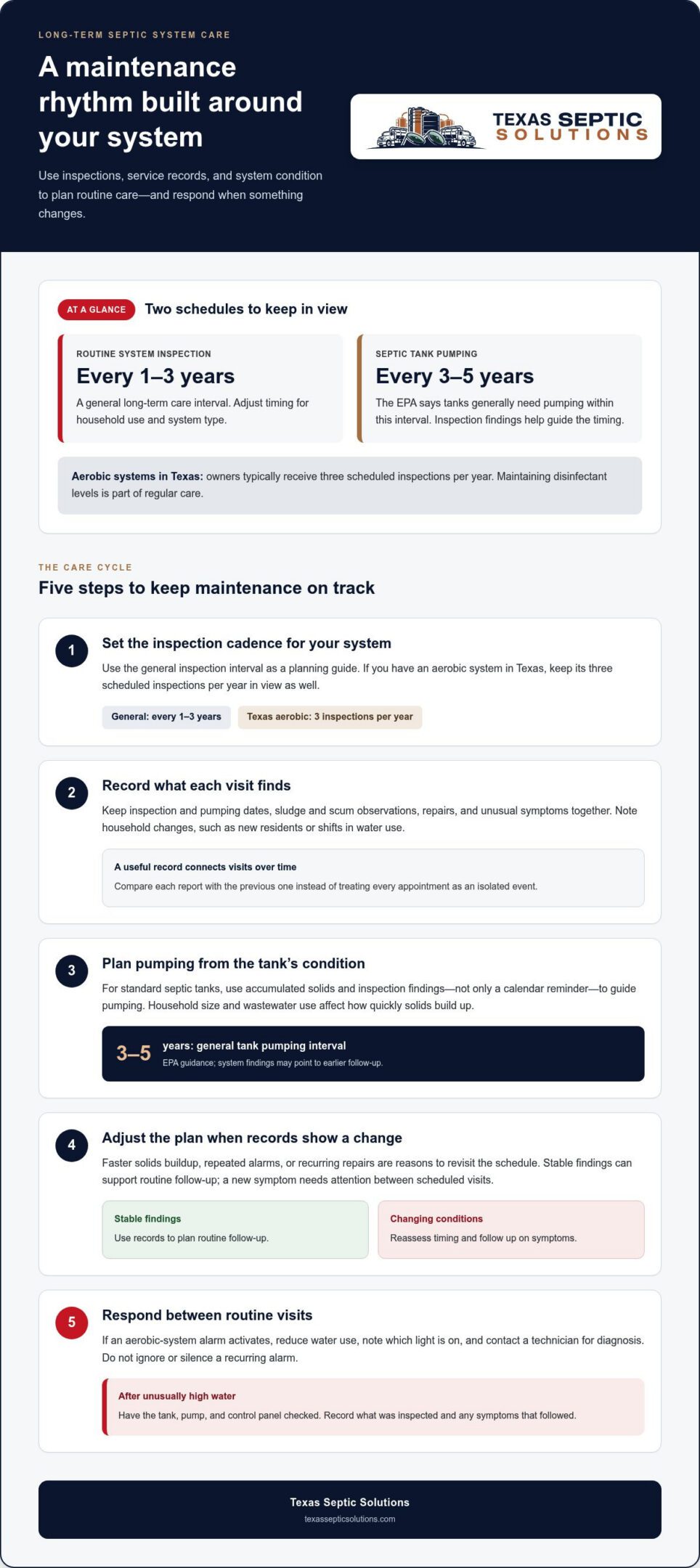
For a long-term septic system care plan in Houston, schedule a system inspection every 1 to 3 years and plan to pump the tank every 3 to 5 years; according to the U.S. Environmental Protection Agency, septic tanks generally need pumping within that interval. The right timing can shift with household use and system type, so keep maintenance records to guide future visits.
It’s easy to focus on pumping and overlook checks that can catch problems earlier. A consistent maintenance schedule helps you understand how your system is working and address warning signs before they lead to a bigger disruption.
This guide explains what routine inspections cover, how maintenance contracts and service visits are organized, and which symptoms need prompt attention. You’ll also find practical ways to protect your system between appointments, from managing water use to keeping vehicles and heavy equipment off the drain field.
Key Takeaways
- According to the U.S. Environmental Protection Agency, septic tanks generally need pumping every 3 to 5 years; household use and system condition help shape a maintenance schedule.
- Protect the drain field by keeping vehicles and heavy equipment off it, and directing roof and yard water away from the system.
- Keep service records together, including inspection and pumping dates, repairs, symptoms, and changes in household use.
- Learn which warning signs, such as sewage odors, gurgling drains, or wet areas near the drain field, call for prompt attention.
- Understand what a system evaluation and component checks can reveal, especially after high water or when an aerobic system alarm sounds.
Protecting drain fields from vehicles and construction
Keep cars, trucks, trailers, and heavy equipment off the drain field. Their weight can compact the soil and interfere with wastewater absorption. Don’t use the area for parking, storage, or construction access. A loaded work truck can damage the soil even if it leaves no visible ruts. Keep heavy objects, including lumber stacks and equipment pallets, away as well. Protecting the field helps preserve its structure and function.
After heavy rain or flooding around Houston, keep vehicles and machinery off saturated drain-field soil. Once the water recedes, have the tank, pump, and control panel checked. If you notice an alarm, wastewater backup, or unusually wet ground, contact a septic specialist for an assessment.
Plan construction before work begins. Locate the tank and drain field using property records, visible access lids, or existing site information. Clearly mark the protected area for crews operating excavators, delivery trucks, or other machinery. Keep temporary roads, soil piles, and building materials outside it. If the work could change grading, drainage, or access around the septic system, account for those effects in the project plan.
In Houston, direct roof runoff and yard drainage away from the tank and drain field. Downspouts should not discharge onto the field, and landscaping should not channel runoff toward it. When the soil is saturated, additional water can reduce its capacity to absorb wastewater. Avoid irrigating soggy areas until they drain.
- Keep vehicles and heavy equipment off the drain field.
- Direct roof and yard water away from septic components.
- Keep construction traffic, stored materials, and excavated soil clear of the field.
Everyday household habits also affect the system’s workload. Don’t flush wipes or hygiene products, even if the packaging describes them as flushable. Keep cooking grease out of drains, where it adds material for the system to handle. Spread laundry loads across several days instead of sending large volumes of wastewater through the system at once. Fix plumbing leaks promptly, because a constantly running fixture adds water continuously.
Bacteria in the tank help break down some waste, so don’t use drains to dispose of grease or household rubbish. Routine pumping removes accumulated solids, while steady water use helps avoid sudden surges. Keep maintenance records with pumping and inspection dates, along with notes about flooding, repairs, or changes in household use. That history helps a specialist assess the system’s needs and spot changes after severe weather.
For work crews, mark a clear no-drive zone and preserve routes that direct roof and yard runoff away from septic components.
How Often Should Septic System Maintenance Be Scheduled for Long-Term Care?
Build a schedule around inspections, pumping, system type, and household use. The U.S. Environmental Protection Agency recommends that septic tanks generally be pumped every 3 to 5 years.
Routine Maintenance Scheduling
Routine maintenance helps you track system performance before symptoms appear. Schedule inspections regularly, then use the findings about the tank and components to plan follow-up work. Household size, water use, and changes in daily routines affect how quickly solids accumulate. A larger household or an increase in wastewater use can change the system’s needs.
For aerobic systems in Texas, owners typically receive three scheduled inspections per year. Maintaining disinfectant levels is part of regular care. Standard septic tanks still need pumping based on accumulated solids, not just a calendar reminder. Inspection findings can show whether pumping or repairs should happen sooner than planned.
Maintenance Records and Schedule Adjustments
Keep a single record of inspection and pumping dates, sludge and scum observations, repairs, and unusual symptoms. Note household changes, such as new residents or shifts in water use. These details reveal patterns across visits instead of treating each appointment as an isolated event.
Compare each inspection report with the previous one. If the records show faster solids buildup, repeated alarms, or recurring repairs, adjust the maintenance schedule accordingly. Stable findings can help you plan routine follow-up, while a new symptom calls for attention between scheduled visits.
Aerobic systems need attention to both mechanical operation and disinfection. If an alarm activates, reduce water use, note which light is on, and contact a technician for diagnosis. The illuminated indicator can help identify which system condition needs assessment. Don’t silence or ignore a recurring alarm as part of routine operation.
After unusually high water, include the tank, pump, and panel in a system check. Record what was inspected and any symptoms that followed. This creates a useful reference for the next visit, especially if household use or system performance changes afterward.
Make the schedule easy to follow: keep inspection reports together, enter the next service date, and record changes promptly. If the number of people using the system changes, note it for the next inspection. Consistent records help relate pumping intervals to actual system conditions, rather than relying on memory alone.
Don’t wait for the next routine appointment if an alarm or unusual symptom appears. Prompt diagnosis can distinguish a temporary issue from a developing problem and keep maintenance decisions grounded in how the system is actually operating.
Septic system maintenance and service contracts
A maintenance contract can organize inspections, testing, pumping, and repairs around your system’s needs. Review the scope, record-keeping, and follow-up process before setting a recurring schedule.
Service Contract Considerations
Check what each scheduled visit covers, including system assessment, testing, written findings, and recommendations for pumping or repairs. A contract should explain how routine visits are arranged and how additional work is handled. Residential and commercial systems differ in wastewater demand and operating patterns, so the service plan should reflect actual use and treatment needs.
For a standard residence, professional septic system assessments are advised every three years. Houston-area owners commonly use maintenance contracts for regular testing, followed by pumping and repairs when needed. Use inspection findings to plan follow-up work instead of assuming every visit includes every repair or service.
Factors Affecting Service Costs
Service costs depend on system type and condition, site access, and the work required. A routine assessment differs from a visit that also involves pumping, parts, or repairs. Difficult access to a tank or its components can affect the work involved. The price depends on the case and is provided after a quote request, based on the scope, condition, access, and work needed.
Commercial properties can have different wastewater flows and operating demands from a household. Those factors affect the testing and treatment needs considered during service. Keep the system’s service history available so the assessment can account for previous repairs and observed changes, rather than treating the visit as an isolated task.
Local Expertise and Service Evaluation
Aerobic septic systems in Texas are regulated by the Texas Commission on Environmental Quality and local authorized agents. For an aerobic system, include its maintenance requirements and testing in the service plan. Before septic service in Harris County, provide the crew with available system records. Inspection dates, previous repairs, and reported symptoms give useful context.
After a visit, review the findings, recommended next steps, and any completed repairs. A clear service record should identify observed conditions and distinguish routine maintenance from additional work. If testing points to a problem, use the findings to prioritize repairs and update the schedule. This reduces guesswork and ties future service decisions to the system’s condition.
Before committing to a contract, compare its visit schedule and included tasks with your property’s needs. Confirm how inspection results, pumping recommendations, and repair findings will be recorded. At a commercial site, include changes in occupancy or wastewater use in the service history. For a residence, record household changes that could affect system demand.
Warning signs that require a septic specialist
Slow drains throughout the house, gurgling plumbing, sewage odors, backups, or wastewater surfacing near the tank or drain field can signal a problem. If symptoms appear, reduce water use, note where they occur, and contact a septic specialist for diagnosis.
Early Warning Signs
Pay attention to changes affecting multiple fixtures, not just one slow sink. For example, a toilet that gurgles when a nearby shower drains may point to a system-wide issue. Persistent sewage smells indoors or outdoors also need attention. Note when symptoms began and which fixtures are affected. Those details help a technician assess the problem.
Check the yard for new wet patches or unusually lush grass above the drain field. A damp spot after rain may have another cause, but recurring soggy ground or a wet area during dry weather can indicate wastewater surfacing. Keep people and pets away from the affected area, and don’t drive over it. Record the location and any nearby odors.
Signs of Failure and Next Steps
Backups, wastewater surfacing, strong sewage odors, and slow drains throughout the home need prompt professional attention. If an aerobic system alarm sounds, reduce water use, note which light is on, and contact a technician for diagnosis. Don’t open electrical panels or attempt component repairs yourself. A specialist can inspect the system and identify the source.
While waiting for service, limit activities that send extra wastewater into the system. Pause laundry, avoid long showers, and use plumbing only as needed. If a toilet or drain backs up, stop using that fixture. These steps reduce additional demand while the cause is assessed. Keep children and pets away from surfaced wastewater.
- Write down each symptom, its location, and when it started.
- Note whether several drains are slow or only one fixture.
- Record any aerobic alarm light and changes in yard conditions.
- Share previous inspection, pumping, and repair records with the technician.
Treat recurring symptoms as a change in system performance, not just a plumbing nuisance. One slow drain differs from slow drains throughout the house; repeated gurgling, odors, or wet ground provide useful context. Share those details clearly so the specialist can assess the system with a fuller picture of household demand.
Don’t wait for a scheduled maintenance visit if sewage backs up or wastewater reaches the yard. These conditions need prompt assessment. A record of symptoms, alarm indicators, and affected areas helps the technician focus the visit and document what needs attention.
Basic plan inspections and component testing
A septic inspection starts with an evaluation of the full system. The specialist reviews how the components work together, rather than considering one symptom or part in isolation. For homeowners, that means checking the tank, pump, panel, and visible signs around the drain field. The findings can identify needed maintenance, pumping, or repairs.
Tank checks help assess its condition and the amount of accumulated solids. The tank separates wastewater into settled solids, liquid effluent, and floating material before the effluent moves toward the drain field. Observations of sludge and scum levels can guide pumping decisions. The specialist can also note visible damage or other changes that affect system operation.
Component testing depends on the system type. For a system with a pump, the inspection should include the pump’s operation and the related control panel. An aerobic system may also have an alarm panel near the house. If an alarm is active, note which light is on and share that detail during diagnosis. Don’t open electrical equipment or attempt repairs yourself.
After high water in Houston, have the tank, pump, and panel checked. Flooding can affect components and disrupt normal operation. Include the drain field in the overall evaluation, especially if standing water or unusual wetness remains nearby. Keep vehicles and equipment off saturated ground while it recovers.
A useful inspection record makes the findings easy to follow. Ask for written notes on the work completed, observations, and recommended next steps. Keep the report with earlier service records. Comparing reports can help homeowners spot changes in tank levels, recurring concerns, or repeated component problems between visits.
- Tank: Record observed sludge and scum levels and any visible changes.
- Pump: Note whether it operates during the evaluation and any reported concerns.
- Panel: Record alarm status and the indicator light shown.
- Drain field: Document visible wet areas or other changes around the field.
Filtration and treatment needs vary with system design. An inspection can identify which parts need attention and whether maintenance or repair is recommended. For aerobic systems, maintaining disinfectant levels is also part of routine care. Keep those findings with pumping and inspection dates so future service can account for the system’s history.
Use the report to set practical follow-up steps. If it identifies a problem, address it rather than waiting for the next routine visit. If the evaluation finds no concerns, keep the record and refer to it at the next maintenance appointment. Clear notes connect component checks with the system’s ongoing performance.
Texas Septic Solutions: New Septic System Installation
Texas Septic Solutions provides septic system maintenance, pumping, and repairs when inspection findings or warning signs call for professional attention. If the system needs replacement rather than another repair, New Septic System Installation may be the next step. Share your inspection notes, service history, and current symptoms so the work can address your system’s condition and your property’s needs.
For routine care, maintenance and pumping help you follow an informed service schedule. For recurring problems, repairs can address damaged or malfunctioning components. The right service depends on the inspection findings.
Contact Texas Septic Solutions to discuss your septic system’s maintenance, repair, pumping, or installation needs.
Keep Your Septic Plan Moving Forward
A long-term septic system care plan for Houston works best as a living record, not a calendar reminder you set and forget. Keep your system history accessible and update it when household use or property conditions change. This gives you a clearer starting point for future service decisions and connects current findings with your system’s longer-term needs.
When you need professional support, Texas Septic Solutions offers septic system maintenance, septic system repair, and new septic system installation. The right next step depends on whether your system needs ongoing care, a repair, or replacement. Sharing your service history and the issue you’re facing can help focus the conversation.
Contact Texas Septic Solutions to discuss your septic system’s needs and plan the next step with confidence.
Frequently Asked Questions
What is a long-term septic system maintenance schedule for Houston homeowners?
Plan inspections every 1 to 3 years, and pump the tank every 3 to 5 years, adjusting based on system type and household use. The U.S. Environmental Protection Agency recommends pumping septic tanks generally every 3 to 5 years. For aerobic systems, Texas owners typically receive three scheduled inspections per year. A long-term septic system care plan in Houston should also account for alarm alerts, household changes, and service records.
What are typical septic inspection, pumping, and maintenance costs in the Houston area?
Costs depend on the work needed, system condition, access, and whether a visit involves inspection, pumping, or repairs. The price depends on the case and is provided after a quote request. For example, a routine evaluation differs from work involving a malfunctioning pump or system repair. Keep past service records available so the scope can account for known issues, system type, and access to the tank.
How do Houston soil, rainfall, flooding, and high water tables affect septic system care?
Heavy rain and flooding can saturate the drain field and affect system components. After high water, have the tank, pump, and panel checked, and keep vehicles off wet ground. Direct roof runoff and yard drainage away from septic components. In Houston, Cleveland, Cypress, Huffman, and Shepherd, watch for persistent soggy areas or wastewater surfacing, and note whether symptoms began after substantial rain.
What should homeowners do to protect a septic drain field and prevent clogs or damage?
Keep vehicles, construction equipment, and stored materials off the drain field, and prevent roof or yard runoff from flowing toward it. During landscaping work, mark the tank and field before crews begin excavation. Inside, spread laundry across the week, repair plumbing leaks, and keep wipes, hygiene products, and cooking grease out of drains. These steps limit excess water and materials that can disrupt system operation.
Which household products and practices are safe for a septic system?
Use household drains for wastewater, not solid products or cooking grease. Don’t flush wipes or hygiene products, including items labeled flushable, because they can add material the system cannot readily handle. Use water consistently instead of sending large laundry loads through at once, and fix running fixtures promptly. Tank bacteria break down some waste, so avoid unnecessary drain treatments or relying on additives as a substitute for maintenance.