
Hydrojetting Septic Field Lines: A Homeowner’s Guide to Drain Field Repair in Houston
What if the solution to your failing septic system isn’t a massive excavator, but a high-pressure stream of water? It’s a common fear for homeowners in the Bayou City: you see a wet spot in the grass, smell that unmistakable odor, and immediately start worrying about the massive cost of a septic drain field repair Houston project. You’ve likely heard different stories from every contractor you call, leaving you more confused than when you started. We understand how overwhelming it feels when your home’s most essential utility is on the fritz.
The good news is that a full replacement isn’t your only option. Hydrojetting offers a way to restore functionality without digging up your entire yard. In this guide, we’ll show you how this technology can scrub away years of biomat buildup and stubborn clogs, effectively resetting your lines. You’ll learn why Houston’s heavy clay soil makes this surgical approach so effective and how to determine if your system is a candidate for restoration instead of a total teardown.
Key Takeaways
- Understand how Houston’s heavy clay soils contribute to biomat buildup and why a soggy yard doesn’t always require a total system replacement.
- Learn how hydrojetting uses high-pressure water to scrub lateral lines clean, offering a non-invasive way to restore your system’s drainage.
- Compare the significant financial savings of a professional septic drain field repair Houston project versus the high cost of a full excavation.
- Get a clear look at the restoration process, including the importance of camera inspections and locating distribution boxes before work begins.
- Discover why specialized local expertise is vital for accurately diagnosing field failure and avoiding the mistakes of general plumbers.
Understanding Septic Drain Field Failure in Houston Soils
Living in areas like Cypress or Huffman, you’ve likely seen what we call the “Houston Swamp.” It’s that patch of yard that stays wet even when we haven’t had a rainstorm in a week. While it’s easy to blame the humidity, this is often the first sign you need a professional septic drain field repair Houston assessment. Our local geology plays a massive role in why these systems fail earlier than expected. Unlike the sandy soils found in other parts of the country, our region is dominated by Blackland Prairie clay.
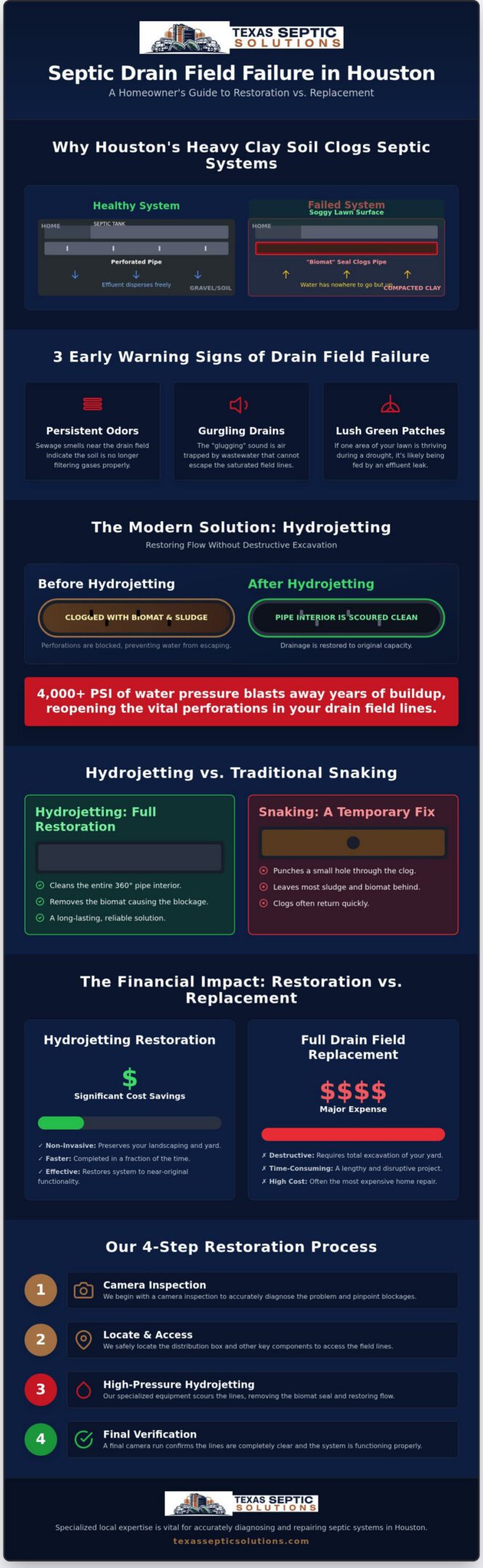
This dense, heavy clay is notorious for its poor absorption rates. When wastewater leaves your tank, it enters septic drain fields where it should naturally filter into the ground. Over time, a biological layer called a “biomat” forms along the trench walls. While some biomat is necessary for treatment, Houston’s clay traps effluent against this layer, causing it to thicken into an impermeable seal. Once this happens, the water has nowhere to go but up to the surface of your lawn.
Many homeowners mistakenly believe a “full” tank is the cause of their slow drains. It’s a common misconception. Your septic tank is designed to stay full to its operating level at all times. If your drains are backing up or gurgling, pumping the tank is usually just a temporary band-aid. The real bottleneck is almost always the field lines’ inability to push water into the surrounding compacted soil.
Signs Your Houston Drain Field is Struggling
Recognizing the early warning signs can save you from a total system collapse. Look for these specific indicators in your yard:
- Lush green patches: If one area of your lawn looks like a golf course during a Texas summer drought while the rest is brown, you likely have an effluent leak.
- The gurgling sound: Listen to your pipes. If they “glug” after you flush or run the laundry, it’s air trapped by water that can’t escape the saturated field lines.
- Persistent odors: Sewage smells near the drain field area mean the soil is no longer filtering gases properly.
The Impact of Local Weather on Septic Health
Houston’s intense rainfall events put immense stress on already struggling systems. When the ground is already saturated by a thunderstorm, there’s no “room” for your septic effluent to go. Soil compaction also plays a major role; heavy lawnmowers or foot traffic in suburban yards squeeze out the tiny air pockets in the clay that are vital for drainage. As of 2026, climate trends show rising local groundwater levels in Southeast Texas, which further reduces the vertical separation required for traditional systems to function effectively.
What is Hydrojetting and How Does It Restore Field Lines?
Hydrojetting is essentially a surgical cleaning for your septic system. Instead of using mechanical blades, we use specialized nozzles to blast high-pressure water streams into your lateral lines. This process scours the entire interior surface of the pipe. For a successful septic drain field repair Houston homeowners can rely on, this method is far superior to standard cleaning because it addresses the root cause of the blockage: the biological seal.
The science behind it is simple but powerful. By pushing water at 4,000+ PSI, we can break down years of accumulated sludge and mineral scale. This isn’t just about clearing a single clog. It’s about restoring the 360-degree functionality of the perforated pipes. These perforations are the small holes that allow treated effluent to seep into the soil. When they’re blocked, the system fails. Hydrojetting reopens every single one of those holes without the need for destructive digging.
Hydrojetting vs. Traditional Snaking
Mechanical snaking is a great tool for a kitchen sink, but it’s often insufficient for field lines. A metal snake follows the path of least resistance. It might punch a small hole through a thick clog, but it won’t clear the sludge stuck in the lateral line’s perforations. It’s like poking a straw through a sponge; the rest of the sponge remains clogged and unable to drain wastewater effectively.
Additionally, snaking carries a risk of cracking older, brittle pipes. Professional hydrojetting uses precise pressure regulation to ensure the water is strong enough to clean but gentle enough to protect the pipe’s integrity. This thorough cleaning means the results last much longer than simple rooting, providing a more permanent solution for your septic drain field repair Houston needs. If you’re unsure which method fits your situation, a quick consultation with a local expert can clarify your options.
Removing the Biomat Obstruction
The primary culprit in field failure is the biomat. This is a slimy, black layer of anaerobic bacteria and organic solids that grows where the pipe meets the soil. In Houston’s low-oxygen clay, this layer thrives and eventually turns into a waterproof barrier. Hydrojetting “shocks” this environment by introducing high-velocity water and oxygen, physically stripping the biomat from the pipe walls and the soil interface.
Proper septic system maintenance usually prevents this buildup, but once it’s established, jetting is the best way to flush loosened solids back toward the septic tank for removal. This process resets your field’s ability to “breathe” and drain, extending the life of your system by years without the need for a full yard excavation.
Hydrojetting vs. Full Drain Field Replacement: A Cost-Benefit Analysis
When you’re facing a failing system, the choice often feels like a gamble between a quick fix and a massive construction project. In the Houston area, a full drain field replacement can easily reach $15,000 when you factor in excavation, materials, and the necessary county permits. By contrast, a professional septic drain field repair Houston using hydrojetting is a fraction of that cost. It’s the difference between a few hours of targeted service and days of heavy machinery tearing up your yard.
Preserving your landscape is another major factor. Houston properties often feature mature oak trees or established gardens that would be destroyed by the excavators needed for a full replacement. Hydrojetting is non-invasive. We access the lines through existing distribution boxes or small access points, leaving your trees and lawn intact. You might see “miracle” chemical restorers at big-box stores claiming to dissolve clogs, but these liquids can’t provide the mechanical scouring force of Hydrojetting or power-rodding. Chemicals often just drain away without breaking through the thick biomat unique to our clay-heavy environment.
When Hydrojetting is the Ideal Choice
Restoration is most effective for systems that are structurally sound but have been neglected. If you’ve missed a few pumping cycles, “sludge push” can send solids into your lateral lines, creating immediate blockages. Hydrojetting acts as a system reset for these scenarios. It’s also perfect for older fields that have slowly lost their drainage capacity over time due to biomat growth. For a deeper look at fixing specific system parts, our guide on septic system repair provides more detail on component-level fixes.
The Limits of Restoration: When Replacement is Unavoidable
We believe in being honest with our neighbors: hydrojetting isn’t a magic wand for every situation. If your lateral lines have been crushed by heavy vehicle traffic or have collapsed due to extreme age, water pressure won’t fix the physical damage. Another deal-breaker is “saturated soil” syndrome. This happens when the ground surrounding the trenches becomes so compacted and chemically altered that it can no longer absorb any liquid, regardless of how clean the pipes are. In these worst-case scenarios, we’ll help you understand the septic system replacement cost and plan for a new installation that meets current Texas standards.
The Restoration Process: What to Expect During Field Line Cleaning
Understanding the logistics of a septic drain field repair Houston service day helps remove the mystery from the process. It isn’t a “set it and forget it” job. Instead, it’s a methodical restoration that requires specific equipment and local expertise. Our team follows a proven four-step protocol to ensure your field lines are actually restored, not just temporarily rinsed.
- Step 1: Locating the Access Points: We start by finding your distribution box (D-box). This is the hub where the tank effluent splits into various lateral lines.
- Step 2: Pre-service Camera Inspection: Before we introduce high pressure, we run a specialized waterproof camera through the lines to check for root intrusions or physical collapses.
- Step 3: The Jetting Process: Our technicians work from the distal end of the line back toward the D-box. This “back-flushing” action pulls clogs and biomat out of the pipe rather than packing them deeper into the soil.
- Step 4: Flow Testing: Once cleaned, we perform a saturation test to verify the field is “drinking” water at an acceptable rate.
Pre-Jetting Inspection and Pumping
A successful cleaning starts with a clean slate. You must pump your septic tank before we attempt to jet the lines. If the tank is full of solids, the jetting process could accidentally pull more sludge into the lateral lines, defeating the purpose of the repair. During this phase, we use cameras to identify any pipe offsets that might hinder the jetter. To find buried lines in suburban Houston yards without excessive digging, TSS technicians use electronic transmitters that send a signal from the camera head to a receiver on the surface.
Post-Service Care and Maintenance
Once we finish the septic drain field repair Houston homeowners often ask what happens next. Your system needs a 48-hour “rest period” where you minimize water usage. This allows the soil around the trenches to settle and drain the excess water used during the jetting process. We often recommend introducing high-quality bacteria additives at this stage. While they won’t clear a clog on their own, they help re-establish the healthy microbial colony needed for wastewater treatment. To ensure you never face another backup, consider setting up a septic system maintenance plan to keep your pipes clear year-round. If you’re ready to restore your system’s health, schedule your field line inspection with Texas Septic Solutions today.
Professional Septic Drain Field Repair in Houston with Texas Septic Solutions
We’ve seen it many times: a homeowner calls a general plumber for a sewage backup, only to be told their entire system needs to be ripped out and replaced. While general plumbers are experts at indoor fixtures and main sewer lines, they often misdiagnose the complex biological and geological factors involved in a septic drain field repair Houston. At Texas Septic Solutions, we focus exclusively on the health of your septic system. We’re committed to the families in Houston, Cleveland, and Shepherd, offering a “neighborly expert” approach that prioritizes restoring your current system over selling you a new one. We stand by our work with reliable diagnostics and transparent pricing, so you never have to guess about the final bill.
Our team is built for both routine upkeep and high-pressure failures. When your field lines stop draining, it doesn’t take long for the issue to become a household emergency. That’s why we offer 24/7 emergency support to handle critical backups before they cause major property damage. We don’t just clear a clog; we investigate the “why” behind the failure to ensure our solution lasts for years, not just days.
Why Local Expertise Matters in East Texas
Texas law is strict about on-site sewage facilities. The Texas Commission on Environmental Quality (TCEQ) regulates these systems under 30 Texas Administrative Code Chapter 285. Since Harris County acts as a TCEQ Authorized Agent, any repair or modification requires specific local knowledge to stay compliant. Our team understands these regulations inside and out, ensuring your repair meets all state and local standards. We also have extensive experience with both aerobic and anaerobic systems. In Houston’s dense clay, aerobic systems are increasingly common because they treat wastewater to a higher quality before dispersal. Whether your system uses traditional lateral lines or spray heads, we bring the specialized tools needed for restoration. You can learn more about protecting your investment in our pillar article on septic system maintenance Texas.
Ready to Save Your Drain Field?
Taking proactive steps is the best way to avoid a massive replacement bill. If you notice slow drains, gurgling pipes, or odors in the yard, contact us to schedule a professional flow test and camera inspection. This allows us to see exactly what’s happening inside your pipes without digging up your flower beds. If your septic tank alarm is going off right now, it’s a sign of a high-water emergency. Stop all water usage immediately to prevent a backup into your home and call our emergency line. We’re ready to provide a free repair estimate and help you find the most cost-effective path to a functional septic system.
Take the Next Step Toward a Worry-Free Yard
Don’t let a soggy lawn or slow drains convince you that a full system replacement is the only path forward. Hydrojetting offers a powerful, non-invasive way to clear biological buildup and restore your lateral lines without the need for heavy machinery. By choosing a targeted septic drain field repair Houston service, you can potentially save thousands of dollars while preserving your trees and landscaping. It’s about working smarter with the system you already have.
As a family owned and locally operated business, we take pride in our specialized Houston clay soil expertise. We know exactly how our local geology impacts your drainage and how to fix it effectively. Whether you’re planning ahead or need our 24/7 emergency response for a sudden backup, we’re here to help. You don’t have to navigate confusing contractor advice alone when you have a neighborly expert in your corner.
Save your drain field today—Contact Texas Septic Solutions for a Houston repair estimate. We look forward to helping you get your septic system back to peak performance and giving you the peace of mind you deserve.
Frequently Asked Questions
Is hydrojetting safe for old septic pipes?
Hydrojetting is safe for older systems when performed by a professional who can regulate the water pressure. Before we start, we use a camera inspection to check the structural integrity of your pipes. If the lines are brittle or cracked, we adjust the PSI settings to ensure we scour away the biomat without causing any physical damage to the infrastructure.
How much does septic field line hydrojetting cost in Houston?
The cost depends on the total length of your lateral lines and the severity of the biological buildup. While we don’t provide flat rates without an inspection, this service is a fraction of the cost of a full replacement. Factors like the accessibility of your distribution box and the current sludge levels will influence the final estimate for your septic drain field repair Houston project.
How long does a hydrojetted drain field last?
A successful restoration can extend your system’s life by several years if you follow a proper maintenance schedule. By stripping away the impermeable biomat and reopening the soil interface, we effectively reset the biological clock of your field. Its ultimate longevity depends on your household water usage and how well you protect the area from soil compaction and heavy traffic.
Can hydrojetting remove tree roots from my septic lines?
Hydrojetting is excellent for clearing out the fine, hair-like roots that often clog perforated septic pipes. However, large and woody roots that have physically broken through the pipe walls may require mechanical cutting or section replacement. We use our camera footage to determine if the root intrusion has caused structural damage that high-pressure water alone cannot resolve.
What happens to the sludge that is jetted out of the lines?
We work from the far end of the lateral lines back toward the distribution box. This “back-flushing” technique pulls the loosened sludge, grease, and biomat out of the perforated pipes instead of pushing it deeper into the soil. Once the debris reaches the distribution box or the tank, it’s vacuumed out during the pumping process to ensure it’s permanently removed from the system.
Do I need a permit for septic field line cleaning in Texas?
You generally don’t need a permit for routine maintenance or cleaning services like hydrojetting in Harris County. Permits are typically required for new installations, major modifications, or structural repairs to the tank itself. Since we aren’t changing the footprint of your system, this restoration is considered a maintenance task under most local TCEQ guidelines, making the process much faster.
Can I rent a hydrojetter and do it myself?
We strongly advise against DIY hydrojetting for septic systems. Rental units often lack the precision pressure gauges and specialized nozzles needed for delicate, perforated lateral lines. Without a professional camera to guide you, it’s easy to accidentally blow out a pipe or force sludge into the surrounding soil. This mistake can turn a simple cleaning into a total system failure.
How often should septic field lines be jetted?
Most systems don’t require jetting on a fixed annual schedule if the tank is pumped every three to five years. However, if you live in an area with heavy clay, a preventative cleaning every five years can be beneficial. It’s a proactive way to manage a septic drain field repair Houston homeowners use to prevent the biomat from becoming an impenetrable seal.