
How to Protect Your Septic System During a Power Outage in Houston
What if the biggest risk to your septic system during a Houston power outage isn’t the loss of electricity itself, but how much water your household keeps sending down the drain? Some systems rely on electric pumps or treatment components, so what happens during an outage depends on your system’s design. If you’re wondering how to protect your septic system during a power outage Houston residents may face, start by identifying which parts of your system need power.
It’s understandable to worry about backups, warning alarms, and whether a generator is safe to use. You can reduce stress on the system by adjusting water use and following system-specific guidance while still meeting essential household needs.
This guide explains what to do before, during, and after an outage: how to identify components that may need backup power, what to expect when electricity returns, and when an alarm or backup calls for professional help. A few practical steps can help protect your system and guide your response if a problem persists.
Key Takeaways
- Understand how to protect your septic system during a power outage Houston homeowners may face by identifying which system components depend on electricity.
- Prepare by locating your control panel, alarm, equipment manual, shutoffs, and service records before an outage.
- Reduce water use while power-dependent equipment is unavailable, and avoid handling components that may be unsafe.
- Compare conserving water, planned backup power, and waiting for utility restoration, with key safety considerations for each approach.
- Recognize when a persistent alarm, sewage backup, or suspected equipment problem needs professional attention.
What a Houston Power Outage Can, and Cannot, Stop in Your Septic System
Storms, extreme heat, and utility interruptions can leave Houston-area homeowners wondering whether a dark control panel means the whole septic system has stopped working. The answer depends on the system’s design and installed equipment. Some systems rely mainly on gravity to move wastewater, while others use electrical components to pump or treat it. A brief outage doesn’t automatically mean the system has failed, but it can interrupt a component your system needs.
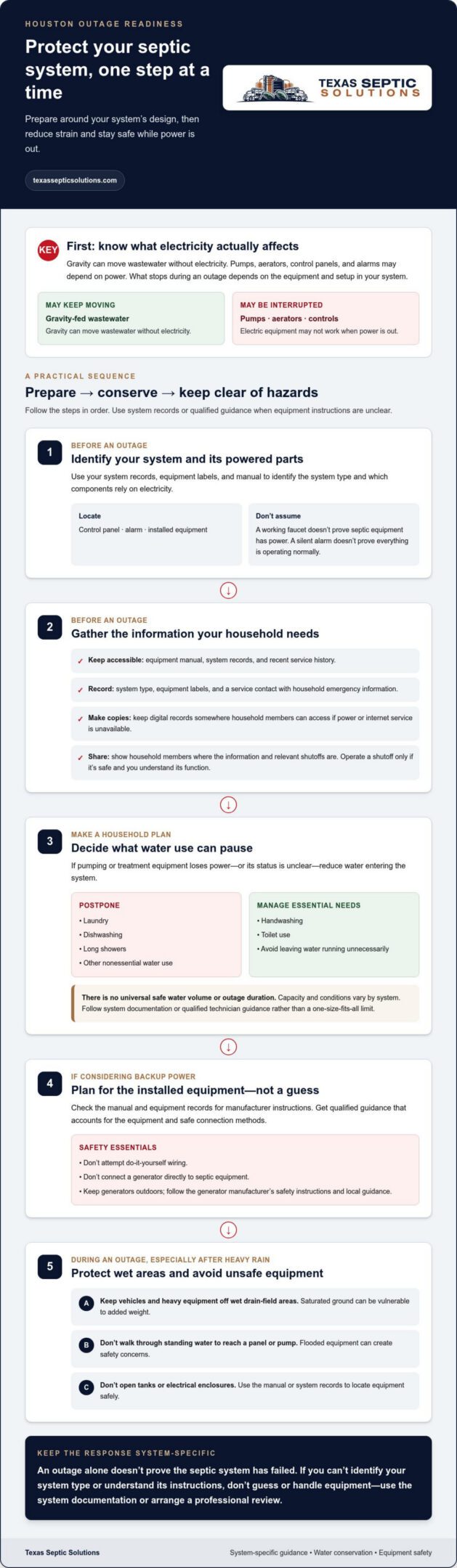
Gravity can move wastewater without electricity, but electric pumps, treatment equipment, and controls may not work when the power is out. That distinction is a useful starting point for how to protect your septic system during a power outage Houston residents may experience. It helps you focus on the equipment installed at your home instead of assuming every system behaves the same way.
Which septic system components may need electricity?
Depending on the system, a pump may move wastewater between tanks or toward the drain field, while an aerator may supply air for treatment. Control panels manage equipment, and alarms can warn of a high water level or another issue. An outage may affect these components, but their exact operation depends on the system and its setup.
Your household water supply is a separate consideration. A private well may rely on its own electric pump, while a septic pump or aerator is part of the wastewater system. One or both could be affected. Don’t assume that a working faucet means septic equipment has power, or that a silent alarm means everything is operating normally. Use system records, equipment labels, and the manual to identify components and find any backup-power instructions.
Why Houston-area conditions can add pressure
Heavy rain or flooding can make it harder for wastewater to drain and may complicate access to equipment. These conditions don’t accompany every outage, and an outage alone doesn’t prove the system has been damaged. Still, wet ground calls for care. Saturated areas can be vulnerable to added weight, and flooded equipment can create safety concerns.
- Keep vehicles and heavy equipment off wet drain-field areas.
- Don’t walk through standing water to reach a panel or pump.
- Use the manual or system records to locate equipment safely rather than opening tanks or electrical enclosures.
Knowing which parts depend on electricity gives you a clearer picture of what an outage may interrupt. If the system’s design is unclear, don’t guess or handle equipment. Prepare for an outage by locating the right information and reducing strain while power-dependent components are unavailable.
How to Prepare Your Septic System for a Houston Power Outage
Preparation before a forecast storm or utility interruption can help your household respond calmly instead of searching for information in the dark. Start with details specific to your system: its type, the equipment installed, and the instructions for operating it. This makes it easier to decide what to do if power-dependent components stop working.
Use this short sequence to get ready:
- Locate the septic control panel and alarm, and note where the equipment is installed. Don’t open electrical enclosures or tanks.
- Find the equipment manual, system records, and recent service history. Keep digital copies somewhere household members can access if power or internet service is unavailable.
- Identify relevant household shutoffs, such as the water shutoff, and make sure everyone knows where they are. Only operate them if it’s safe and you understand their function.
- Write down the system type and a service contact, then keep the information with your household emergency records.
Before an outage, locate and record your system type, equipment labels, control panel, alarm, shutoffs, manual, and service history. Share this checklist with other household members so they can find the information if you’re away. The National Environmental Health Association’s Protecting Your Septic System During Outages also offers guidance for preparing for and managing outages across different system types.
Make a household water-use plan
Decide in advance which water uses your household can pause if pumping or treatment equipment loses power or its status is unclear. Postpone laundry, dishwashing, long showers, and other nonessential uses. Agree on how to manage essential needs, such as handwashing and toilet use, without leaving water running unnecessarily. There’s no universal safe water volume or outage duration. Capacity and conditions vary by system, so use its documentation or qualified technician guidance rather than relying on a one-size-fits-all limit.
Plan for powered septic equipment safely
Use your records and equipment manual to identify which installed components depend on electricity and what the manufacturer recommends during an outage. If you’re considering backup power, plan ahead with qualified guidance that accounts for the equipment and safe connection methods. Don’t attempt do-it-yourself wiring or connect a generator directly to septic equipment. Keep generators outdoors and follow the generator manufacturer’s safety instructions and local guidance.
Preparation can also reveal gaps before bad weather arrives. If you can’t identify your system type or understand its operating instructions, arrange a professional review instead of guessing. Septic system maintenance can help clarify equipment and service history, giving your household a more reliable plan for the next outage.
Power Outage: Protect Septic Systems & Limit Water Use
If the power goes out and you’re unsure whether septic equipment is operating, use less water until you can check your system’s instructions. Reducing wastewater flow can limit strain on a system that relies on pumps or treatment equipment. This is a key part of how to protect your septic system during a power outage Houston homeowners may face, particularly when the outage lasts long enough to disrupt normal household routines.
Focus on safe, practical steps. Don’t open a septic tank, enter a confined space, or handle wiring, pumps, or other electrical components. Even familiar equipment can be hazardous, particularly if the area is wet or flooded.
Use water conservatively without creating avoidable risks
Pause nonessential water use and space out necessary household uses instead of running several appliances close together. For example, postpone laundry and dishwashing, and keep showers brief. Lower water flow can reduce the load on equipment that can’t pump or treat wastewater normally. If sewage backs up into the home, stop using plumbing fixtures and appliances that send water to the septic system. Don’t try to clear or inspect the system yourself.
- Use only the water your household needs for essential tasks.
- Wait to run washing machines and dishwashers until the system’s status is clear.
- Don’t flush items that add unnecessary material to the system.
Respond calmly to alarms, odors, or wet areas
An alarm is a signal to consult your equipment manual and reduce water use, not a reason to open a panel or tank. Note when it started and whether power has returned. Keep children and pets away from sewage, unusually wet ground, and exposed or potentially flooded electrical equipment. Avoid walking through wastewater or touching wet electrical components. Move to a safe place if you suspect an electrical hazard.
A brief odor or alarm may need monitoring according to the manual, but sewage inside the home, a persistent alarm, or a new wet area near system components can indicate a problem that needs assessment. Follow the septic tank alarm guide for alarm-specific next steps. If signs persist or you suspect equipment damage, a septic system repair assessment can help identify what needs attention.
Separate routine precautions from urgent warning signs. Conserve water and monitor the system when equipment status is uncertain, but treat a sewage backup or electrical hazard as an immediate safety concern. Don’t attempt repairs yourself. Once power returns, follow system-specific instructions and watch for alarms or symptoms that don’t resolve.
Compare Backup Power Options and Restore Septic Operation Carefully
There isn’t one backup-power plan that suits every septic system. A gravity-based setup may need a different outage response than a system with a pump, aerator, or other powered treatment equipment. The safest choice depends on the installed components, their electrical requirements, and the manufacturer’s instructions. For many households, conserving water while waiting for utility power to return is a sensible first step. Backup power may be worth planning when the system’s design and household needs call for it.
Use this comparison to think through how to protect your septic system during a power outage Houston households may experience. It’s a planning guide, not a substitute for equipment-specific instructions.
| Option | When it may fit | Limitations and safety considerations |
|---|---|---|
| Conserve water | Useful while powered equipment is unavailable or its status is uncertain. | Doesn’t restore an electric pump or treatment component. Reduce nonessential use and follow system guidance. |
| Professionally planned backup power | May suit a system that depends on electricity and needs a planned power source. | Requirements depend on equipment and electrical load. Have the setup planned safely; don’t improvise wiring or connections. |
| Wait for utility restoration | May be reasonable when the outage is brief and the system can be managed with reduced water use. | Keep monitoring the system and conserve water. Don’t assume power restoration means every component has resumed normal operation. |
Choose an outage response that fits your system
Water conservation is often the simplest immediate response when you don’t know whether a pump or treatment component is operating. A generator isn’t a universal requirement, and choosing backup power takes more than identifying that equipment uses electricity. The electrical load, installed components, and manufacturer instructions all matter. Have a qualified professional plan generator support rather than attempting electrical installation yourself.
Check the system after utility power returns
Once power is back, consult the manual for alarm meanings, control-panel indicators, and any restart steps. Watch for an alarm that continues, unusual odors, slow drains, or sewage backup. Don’t repeatedly reset equipment if you can’t identify why an alarm is active. Continue limiting water use while you assess the situation, and get professional help for persistent warning signs.
If an alarm remains active after power returns, follow the equipment instructions and keep monitoring it. The National Environmental Health Association recommends contacting a septic professional if an alarm does not turn off within 24 hours. Ongoing septic system maintenance can also help keep system records and operating guidance organized before the next interruption.
If an outage reveals an alarm, backup, or suspected equipment problem, request septic system service for professional assessment and repair.
When Houston Homeowners Should Call for Septic Help After an Outage
Power returning doesn’t always mean a septic system is back to normal. A recurring alarm, sewage backup, or sign of equipment failure deserves professional assessment, especially if the problem continues after you’ve followed the equipment manual. Knowing how to protect your septic system during a power outage Houston homeowners face also means knowing when to stop troubleshooting and get help.
Warning signs that need prompt attention
Treat sewage inside the home or a suspected electrical hazard as an immediate safety concern. Keep people and pets away from sewage, standing wastewater, and wet areas near electrical equipment. Don’t touch exposed wiring, open tanks, or attempt repairs on powered equipment. If sewage is backing up indoors, stop using plumbing and keep others clear of the affected area.
Arrange a professional assessment for warning signs such as:
- An alarm that keeps sounding or returns after you follow the manual’s instructions.
- Sewage backup indoors, or wastewater standing near the septic system.
- Unusual or persistent odors around the system or drain field.
- Equipment that appears damaged or doesn’t operate as expected after power returns.
A brief outage or a single alert may not mean the system has failed, but don’t ignore symptoms that persist, recur, or worsen. Avoid repeatedly resetting an alarm when its cause is unclear. Make a note of what you see and leave inspection or repairs to a qualified septic professional.
What to share when requesting local service
A few details can make the service conversation more useful. Have your system type, alarm status, and any equipment labels or service records available if you can access them safely. Note when the outage began, when power returned, and when symptoms appeared. Describe what you observed, such as an indoor backup, unusual odor, or standing wastewater, rather than trying to diagnose the cause yourself.
Also share the property location. Texas Septic Solutions serves Houston and nearby communities including Cypress, Huffman, Cleveland, and Shepherd, with septic repair and 24/7 emergency septic service. If you’re seeing an active backup, persistent alarm, or suspected component damage, get 24/7 septic help for a professional assessment.
Until help is arranged, keep people and pets away from affected areas and don’t handle electrical components or open the tank. Clear observations and a safe distance help protect your household while the problem is assessed.
Make Outage Readiness Part of Your Home Routine
An outage can be a useful prompt to make septic readiness an ongoing household habit, not a last-minute scramble. After an interruption, note what questions came up, which system information was hard to find, and what your household would do differently next time. Keep those notes with your system records so everyone can act with more confidence during the next outage.
If you’re planning how to protect your septic system during a power outage Houston households may encounter, build your plan around your system’s instructions and get professional guidance when an alarm, backup, or equipment concern doesn’t clear. Texas Septic Solutions supports local homeowners with septic pumping, repair, maintenance, and emergency service.
Get 24/7 septic help from Texas Septic Solutions if an outage leaves you concerned about your system. With a clear plan and local support, you can face the next interruption with greater peace of mind.
Frequently Asked Questions
Does every septic system stop working when the power goes out?
No. A system that relies on gravity may continue moving wastewater, while a pump, aerator, or electronic control may stop without electricity. Check your system records to see which components are installed before deciding what the outage means for your home. Knowing how to protect your septic system during a power outage Houston homeowners may face starts with understanding that systems can respond differently.
Can I flush the toilet during a power outage if my home has a septic system?
It depends on your septic setup and whether your water supply is available. A gravity-fed system may still accept wastewater, but a system that depends on a pump could have limited capacity while that equipment is off. Use the toilet sparingly if you’re unsure, and don’t flush if wastewater is already backing up or the system manual advises against use. Consider whether a well pump also needs electricity.
Should I have my septic tank pumped after a power outage?
Not automatically. An outage by itself doesn’t show that the tank is full or needs pumping. Follow your regular maintenance schedule and watch for signs such as slow drains, sewage backup, or an alarm that continues after power returns. Pumping may be appropriate as part of addressing a specific issue, but a professional can assess whether the tank or another component needs attention rather than relying on the outage alone.
Can heavy Houston rain make septic problems during a power outage worse?
Yes. Heavy rain can saturate the soil and make it harder for wastewater to disperse through the drain field, especially if the area is already wet. That doesn’t mean every rainstorm or outage will damage a septic system. In Houston, Cleveland, Cypress, Huffman, and Shepherd, keep vehicles and heavy equipment off soft drain-field ground, and avoid approaching equipment through standing water.
Is it safe to use a portable generator for septic equipment?
A generator can be part of a backup plan, but only if it’s compatible with the septic equipment and the setup follows the manufacturer’s instructions. Don’t connect a generator directly to septic equipment or attempt electrical work yourself. Operate generators outdoors and follow their safety instructions and local guidance. If you aren’t sure what the system requires, keep water use low while you get qualified guidance.
What should I do if my septic alarm stays on after power returns?
Check the system manual, limit water use, and note whether the alarm changes as the system resumes operation. Don’t repeatedly reset the alarm if you don’t know what triggered it. If it remains on for 24 hours after power returns, contact a septic service professional. Call sooner for sewage backing up into the home, suspected electrical damage, or wastewater that creates an immediate safety concern.
Can I run laundry and a dishwasher as soon as the power comes back?
It’s better to wait until you’ve checked the system’s instructions and confirmed there are no active alarms or signs of trouble. Restarting both appliances at once can send a large amount of water into the system in a short period. Resume household water use gradually, and postpone these loads if drains are slow or an alarm remains active. If symptoms appear, stop adding wastewater and seek professional advice.