
How to Prevent Septic System Freezing in Houston: The 2026 Homeowner Guide
Imagine waking up to a record-breaking freeze in East Texas, only to find your toilets won’t flush because a shallow line is blocked by ice. For many homeowners across the region, the fear of raw sewage backing up into the home is a legitimate winter nightmare. While our subtropical climate is usually mild, knowing how to prevent septic system freezing Houston is critical because our pipes aren’t buried deep enough to naturally escape a hard freeze. One bad cold snap can turn a functional system into a costly emergency if you aren’t prepared.
We know the stress of hearing conflicting advice about whether to leave your water running or shut it off entirely. You need to protect your system without accidentally causing a tank overflow or damaging your pump. This guide offers a dependable plan to ensure your septic setup survives a 48-hour freeze with zero drama. We’ll walk through thermal mass management, surface insulation, and the specific signs that tell you it’s time to call a local expert for emergency support. You’ll gain the confidence to handle the winter weather like a pro.
Key Takeaways
- Understand why local soil conditions make learning how to prevent septic system freezing Houston different than in northern states.
- Learn how to use natural materials like hay or mulch to create a protective thermal barrier over your tank and lateral lines.
- Discover the “steady heat” principle and why dripping your faucets can actually cause more harm than good for your septic tank during a freeze.
- Follow a specific winterization checklist to secure lids, ports, and drain fields before the temperature drops.
- Identify the clear warning signs of a frozen pipe versus a mechanical failure so you know exactly when to call for professional support.
Why Houston Septic Systems are Vulnerable to Freezing
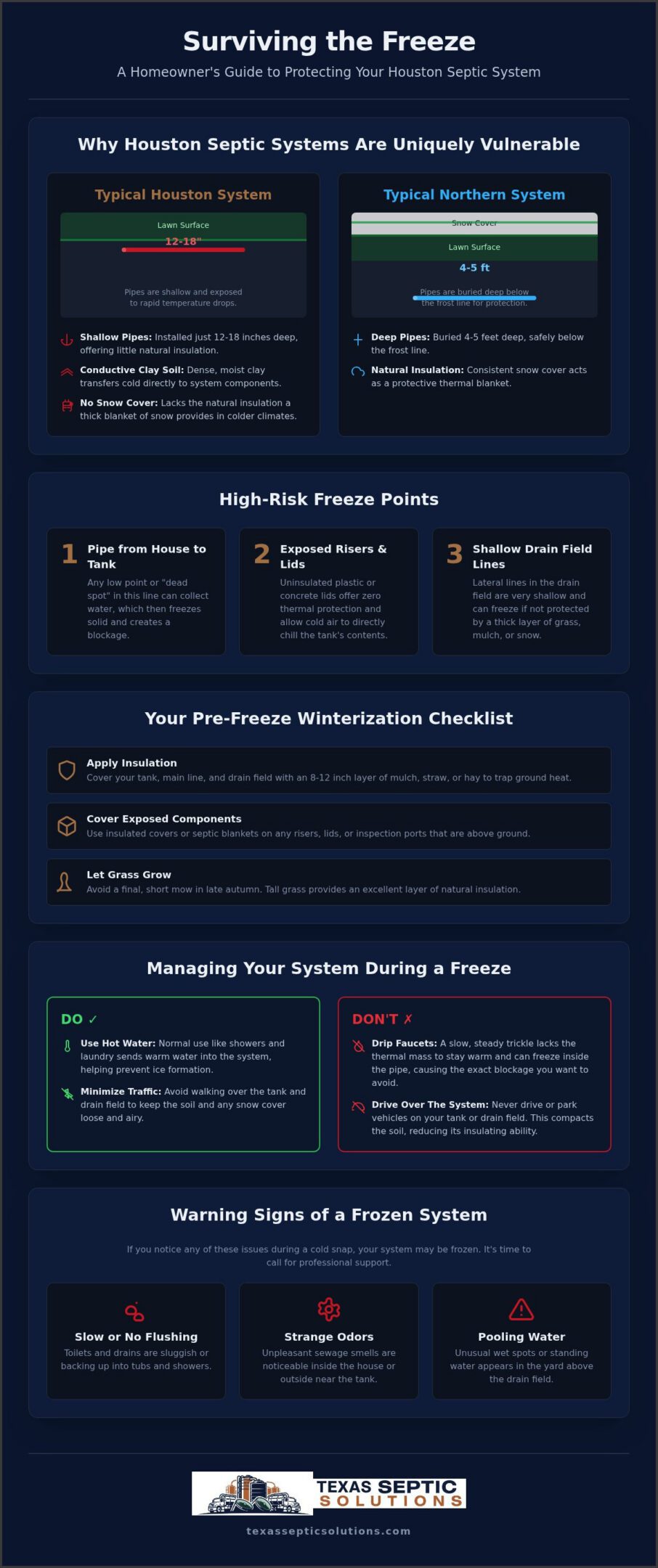
When we discuss how to prevent septic system freezing Houston residents often assume our winters aren’t harsh enough to cause real damage. However, our local infrastructure is actually more at risk during a cold snap than systems in the North. Unlike the Midwest, where a septic system might be buried four or five feet underground to stay below the frost line, Houston systems are built for a subtropical climate. This means our pipes are closer to the surface and more exposed to the elements.
The lack of consistent snow cover is another major factor that increases our risk. In colder states, a thick layer of fluffy snow acts as a natural insulator, trapping ground heat like a blanket. In East Texas, we usually get freezing rain or “dry” cold. These conditions pull heat out of the ground much faster than a snow-covered field would. Additionally, our clay-heavy soil is a highly efficient conductor of cold. Clay is dense and holds moisture; when that moisture chills, it transfers those freezing temperatures directly to your components. A 2026 “Flash Freeze” is particularly dangerous because the temperature drops too quickly for the ground to buffer the change, sending a thermal shock to your system.
The Vulnerability of Shallow Septic Lines
Standard installation in the Houston area typically places pipes just 12 to 18 inches below the surface. This depth is perfect for aerobic spray systems and standard drainage, but it offers almost no protection against a hard freeze. Cold air penetrates this shallow soil layer in a matter of hours, especially when the ground is already saturated from winter rains. Houston septic systems freeze faster than northern ones because our pipes lack the deep “earth blanket” protection found in colder climates. Without that soil mass, your lines rely entirely on the heat of the wastewater to stay clear.
Common Freeze Points in a Texas System
There are three main areas where ice typically forms first in a local system. The most common is the “dead spot,” which is the pipe running from your house to the tank. If this line has a slight sag or isn’t sloped perfectly, small amounts of water sit and turn to ice. Exposed risers and inspection ports are also high-risk zones. These plastic or concrete lids have zero insulation value and act like a direct straw for cold air to reach the liquid in the tank. Finally, look at your distribution box and shallow drain field laterals. If these aren’t protected by thick vegetation or mulch, they can lock up and cause a system-wide backup into your home.
Insulating Your Septic System: The First Line of Defense
Since Houston doesn’t benefit from the natural insulation of consistent snow cover, homeowners must create their own thermal barriers. Learning how to prevent septic system freezing Houston starts with effective surface insulation. You can use affordable, natural materials like hay, straw, or even raked leaves to protect your system. These materials trap air pockets, which act as a buffer between the freezing ambient air and the shallow pipes buried just beneath your lawn. If you prefer a more permanent solution, commercial septic blankets made of high-density polyethylene are available, though a thick layer of organic material is often just as effective for our short-lived Texas freezes.
One critical rule for winter septic care is to avoid compacting the soil. You should never drive a vehicle or heavy equipment over your tank or drain field, especially when a freeze is forecasted. Compacted soil loses its ability to hold air, which means it conducts cold much deeper and faster. If you are unsure where your lateral lines are located, scheduling a routine septic system maintenance visit can help identify high-risk areas before the temperature drops. Following a professional winterization checklist will help you stay ahead of the weather.
Mulching for Thermal Protection
Apply a layer of loose mulch or straw between 8 and 12 inches deep over your entire system. You should pay special attention to the area where the main sewer line exits your home; this is a frequent point of failure. Don’t be too quick to mow your grass short in late autumn. Tall, “green” vegetation and thick grass provide an extra layer of natural insulation that helps keep the ground temperature stable. This organic cover is your best defense against the rapid temperature swings typical of East Texas winters.
Covering Exposed Components
Any part of your system that sits above the ground is a potential entry point for frost. You must insulate septic risers and lids, as these plastic or concrete surfaces offer very little thermal resistance. Many homeowners use insulated “fake rocks” or decorative utility covers to provide protection while maintaining curb appeal. If your system relies on an aerobic pump or has external electrical components, ensure they are shielded from the wind. A simple insulated box or a wrap of weather-resistant material can prevent these mechanical parts from seizing up during a 48-hour freeze.
Operational Changes: Managing Water Use During a Freeze
Adjusting your daily habits is just as important as physical insulation when considering how to prevent septic system freezing Houston. We rely on the “Steady Heat” principle to keep the system functional. This means using enough warm water to keep the internal temperature of the pipes and tank above the freezing point. However, there is a delicate balance between keeping things warm and overwhelming your system’s capacity during a cold snap. If the ground is frozen, it cannot absorb water as quickly as usual, so you must be mindful of your total output.
Managing your high-volume appliances is a key part of this strategy. While hot water from a dishwasher or washing machine adds significant thermal mass to your tank, you should avoid running multiple loads back-to-back. Spacing out your laundry ensures the drain field isn’t flooded. An overloaded drain field during a freeze is a recipe for disaster, as the excess water can’t drain away and may freeze on the surface of your lawn or back up into your home. Aim for one load of laundry per day rather than a “marathon” cleaning session.
The Faucet Dripping Dilemma
Many Houstonians are taught to drip their faucets to protect indoor plumbing, but this can be disastrous for a septic system. A slow, cold trickle of water doesn’t have enough velocity or heat to make it through your shallow, 12-inch deep exterior lines. Instead, that tiny stream can freeze layer by layer, eventually creating a solid “ice dam” that blocks the pipe entirely. For those with aerobic systems, a constant drip can also lead to hydraulic overload, filling the tank faster than the pump can clear it. It’s much safer to run a full basin of warm water every few hours and then shut it off completely. This sends a surge of heat through the lines, clearing out any slush before it can harden.
Maintaining Biological Heat
Your septic tank is more than just a container; it’s a living ecosystem. The active bacteria inside the tank generate natural heat as they break down organic matter. This biological warmth is a primary defense against the cold. To keep this process running, you must avoid using harsh chemical cleaners or large amounts of bleach during a freeze. These substances kill the beneficial bacteria, causing the tank temperature to drop and increasing the risk of a freeze-up. Ensuring your system is healthy before winter begins through professional septic system maintenance is the best way to guarantee your “biological heater” is ready for a 48-hour freeze.
Your Step-by-Step Houston Winterization Checklist
Preparation is the difference between a cozy winter night and a plumbing disaster. When you’re looking for how to prevent septic system freezing Houston, you need a clear sequence of operations. It’s not enough to just throw a blanket over a pipe; you need to ensure the entire system is sealed and functional. Start by clearing any fallen leaves or debris from your drain field area. This allows the soil to breathe while preventing moisture from pooling and freezing on the surface. Next, inspect your thermostat settings. Keeping your home at a steady 68 degrees or higher ensures the exit pipe stays warm enough to prevent ice from forming at the very start of the drainage path.
48 Hours Before the Freeze
Timing is everything. Two days before the temperature drops, walk your yard and look for signs your septic tank is full, such as spongy soil or unusual odors. If the tank is already at capacity, a freeze will only accelerate a backup. You should also seal any visible gaps around your septic riser lids with weather-stripping or extra soil to prevent cold air from entering the tank. Finally, test your septic alarm. You don’t want to find out the battery is dead in the middle of a sleet storm. If you notice any mechanical issues during this walk-through, contact us for emergency septic service immediately.
During the Cold Snap
Once the freeze begins, your focus shifts to monitoring and conservation. Pay close attention to your drains. If you hear gurgling or notice slow flushes, these are early warning signs that ice might be forming in the main line. Limit your water usage to essential needs like flushing and quick showers to reduce the load on the system. If the septic tank alarm goes off, don’t panic, but act quickly. This usually indicates a high-water level or a pump failure. Switch to “emergency water conservation” mode and call for professional help to diagnose the issue before it leads to a home backup.
When Prevention Fails: Professional Septic Support
Even when you follow every step on how to prevent septic system freezing Houston, nature can be unpredictable. Record-breaking 2026 cold snaps can occasionally overwhelm even the best insulation and water management strategies. If your system locks up, the most important rule is to remain calm and avoid dangerous DIY “fixes.” Many homeowners accidentally cause thousands of dollars in damage by trying to thaw their own lines using methods that aren’t suited for our specific Texas infrastructure. Turning a frozen pipe into a burst pipe is a mistake that’s easily avoided with the right professional approach.
One of the biggest dangers during a freeze is the temptation to use open flames or high-heat torches. You must never use a blowtorch or any open flame to thaw a septic pipe. Septic tanks naturally produce methane gas, which is highly flammable and potentially explosive. Additionally, the PVC piping used in most Houston installations can easily melt or warp under direct heat, leading to a total collapse of the line. Professionals use specialized steam thawing equipment that safely melts ice blockages from the inside out without risking a fire or damaging the structural integrity of your plumbing.
Recognizing a Frozen System
It is vital to distinguish between a simple frozen faucet and a full septic failure. If your indoor sinks are flowing but your toilets won’t flush, the blockage is likely in the main line leading to the tank. You should look for these specific warning signs:
- Toilets that won’t flush even after your indoor house pipes have thawed.
- Wastewater backing up into the lowest drains in the home, such as walk-in showers or bathtubs.
- Strange gurgling or knocking noises coming from the main septic line when water is used elsewhere.
If you notice these symptoms, stop using water immediately. Continuing to flush will only force sewage back into your home, as the frozen blockage has nowhere else to go.
Professional Recovery and Repair
Once the weather breaks, the work isn’t quite over. Expanding ice can cause hairline fractures in shallow pipes that only become visible once the ground fully thaws. You might need a post-freeze septic system repair to address these cracks before they lead to soil contamination or system-wide pressure loss. Our team conducts thorough inspections to ensure your lateral lines and tank baffles survived the thermal stress without shifting or breaking.
Transitioning from an emergency to a long-term plan is the best way to ensure you aren’t caught off guard again next year. We can help you identify the specific weak points in your layout and reinforce them with permanent insulation or better grading. If you are currently facing a backup or a frozen line, contact Texas Septic Solutions for 24/7 emergency service. We have the local expertise to get your system back online quickly and safely, no matter how hard the freeze hits.
Secure Your Home Against the Next Texas Freeze
Managing a septic system in East Texas requires a specific approach because our shallow-bury lines lack the deep earth protection found in the North. By focusing on heavy mulching for thermal protection and avoiding hydraulic overload from dripping faucets, you can significantly reduce your risk of a winter backup. Understanding how to prevent septic system freezing Houston is about proactive maintenance and knowing exactly when to stop using water if a blockage occurs. These simple steps protect your investment and your peace of mind throughout the winter season.
We are your local experts in shallow-bury system protection, serving Houston, Cleveland, and Cypress with the neighborly service you can trust. Our team is built for both routine care and the high-pressure demands of unexpected failures. If prevention fails or your septic alarm sounds during a record-breaking cold snap, don’t risk a DIY repair that could permanently damage your PVC pipes. Get 24/7 Emergency Septic Help in Houston to keep your home functional through any weather. Stay warm, stay prepared, and know that professional help is always available when you need it most.
Frequently Asked Questions
Can I use antifreeze in my septic tank to prevent freezing?
No, you should never use automotive antifreeze in your septic system. These chemicals are toxic and will kill the beneficial bacteria that generate necessary biological heat inside your tank. This can lead to system failure and potential groundwater contamination. If you are concerned about your system, focus on adding surface insulation like mulch or hay rather than introducing harmful substances that can lead to expensive repairs later.
Should I leave my faucets dripping if I have a septic system?
You should avoid dripping your faucets during a freeze if you use a septic system. A slow, cold trickle doesn’t have enough heat to stay liquid in shallow pipes and often creates ice dams that block the line entirely. For homeowners learning how to prevent septic system freezing Houston, it’s much safer to run a full basin of warm water every few hours to flush the lines with a surge of heat.
Will a frozen septic system fix itself when it thaws?
A frozen system won’t necessarily fix itself, even after the ice melts. While the blockage will disappear, the expansion of ice often causes PVC pipes to crack or joints to separate. These structural issues can lead to soil contamination or slow drainage weeks after the weather warms up. You should always schedule a professional inspection after a hard freeze to ensure the integrity of your system’s components remains intact.
How deep are septic lines usually buried in Houston?
Septic lines in Houston and surrounding areas like Cleveland and Cypress are typically buried only 12 to 18 inches deep. This shallow depth is common for our subtropical climate but makes the system highly vulnerable during rare cold snaps. Because our soil doesn’t provide much natural protection, knowing how to prevent septic system freezing Houston requires active steps like applying supplemental insulation over the tank and lateral lines before the temperature drops.
What is the best material for insulating a septic tank lid?
The best materials for insulating a septic tank lid are natural, loose covers like hay, straw, or a 12-inch layer of mulch. These materials trap air and create an effective thermal barrier against the cold. You can also use high-density polyethylene septic blankets for a more permanent solution. Ensure your chosen material is breathable and doesn’t trap excessive moisture against electrical components, which could cause corrosion or short circuits over time.
Does a full septic tank freeze faster than an empty one?
An empty or low-volume tank actually freezes much faster than a full one. A full tank contains a large volume of wastewater that acts as a thermal mass, holding onto heat for a longer period. Additionally, the active bacteria in a healthy, full tank produce consistent biological warmth as they break down organic matter. If your tank was recently pumped in Huffman or Shepherd, it’s even more important to apply heavy surface insulation.
Is it safe to use a space heater near my septic pipes?
It is never safe to use a space heater near your septic pipes or components. Septic systems produce methane gas, which is highly flammable and poses a significant risk of fire or explosion if exposed to a heating element. Furthermore, intense heat can melt PVC piping or damage the electrical wiring of your pump. If your lines are already frozen, professional steam thawing is the only safe way to restore flow without risking your property.
What happens if my aerobic septic system air pump freezes?
If your aerobic air pump freezes or the intake becomes blocked by ice, the system will stop treating wastewater correctly. This usually triggers your septic alarm because the pump cannot move liquid through the spray heads, leading to high water levels in the tank. You should immediately switch to emergency water conservation mode and contact a professional. Don’t attempt to force the pump to run, as this can damage the internal diaphragm or motor.