
How to Prevent Drain Field Compaction in Houston: A Homeowner’s Guide
A drain field can be stressed by more than a vehicle driving across it. Repeated foot traffic, heavy yard equipment, and rainwater pooling over the area can also put pressure on the soil. If you’re wondering how to prevent drain field compaction Houston homeowners can start by locating the field and keeping damaging loads and excess water away.
It’s understandable to feel unsure about what’s safe, especially when the drain field isn’t clearly marked or Houston rain leaves the yard soggy. Some Houston-area properties have clay-rich soil that drains slowly, so saturated ground deserves extra care. That doesn’t mean you need to give up routine yard maintenance. The key is knowing which activities are lower-risk and which could compact the soil or interfere with wastewater dispersal.
This guide explains how to identify your drain field, protect it from vehicles and heavy loads, and manage rainwater and landscaping without adding stress to the system. You’ll also learn what changes to watch for, such as persistently wet areas or wastewater odors, and when to arrange a professional assessment. Routine observation and professional maintenance work together to help protect your system.
Key Takeaways
- Understand how pressure can reduce soil pore space and interfere with the drain field’s ability to receive and treat wastewater.
- Learn how to prevent drain field compaction Houston homeowners can use by choosing safer paths, parking areas, and equipment access.
- Adjust lawn-care timing to avoid adding pressure when the ground is saturated, and manage water so it doesn’t collect over the field.
- Use a simple routine to locate and protect the field, then record changes in wet spots or drainage without disturbing the soil.
- Know why soggy ground, odors, slow drains, or pooling need attention, and which DIY fixes to avoid before a professional assessment.
How Drain Field Compaction Develops on Houston Properties
A drain field relies on the soil around its dispersal area to accept wastewater and help treat it as it moves through the ground. The exact layout varies by system, but understanding what a septic drain field is helps explain why protecting the soil matters. Compaction can interfere with that job, particularly when pressure is repeated over the same area.
What soil compaction means for a septic drain field
Soil contains small spaces, or pores, that allow air and water to move through it. Repeated pressure from vehicles, equipment, or concentrated foot traffic can press soil particles closer together above or around drain field components. With less pore space, water infiltration and air movement may be limited, putting added stress on the field’s ability to disperse and treat wastewater.
“A drain field needs open soil pores for water to move through the ground and for the soil to support wastewater treatment.”
Compaction is a possible contributing factor, not a diagnosis. Slow drainage or wet ground can have other causes, so don’t assume the field has failed based on one symptom. The practical takeaway for how to prevent drain field compaction Houston homeowners can use is straightforward: reduce repeated pressure over the field and keep loads off it when the soil is soft.
Why Houston weather and soil conditions deserve attention
Some Houston-area properties have clay-rich soil that drains slowly, while soil and drainage conditions can differ from one property to another. Rain can leave ground saturated, and wet soil may be more vulnerable to traffic than firm, dry ground. The effect depends on the site, the soil, and the amount of pressure applied.
That makes timing part of protecting the field. A mower or service vehicle that leaves no obvious mark on firm ground may rut or press down wet soil after heavy rain. Repeatedly crossing the same route can also concentrate pressure instead of spreading activity across the yard. Keep vehicles and heavy equipment away from the drain field, and avoid unnecessary traffic over it when the ground is saturated.
Use local conditions as a reason to observe your own yard, not as proof that every Houston property has the same soil or rainfall impacts. If an area stays wet or drainage changes, note where and when you see it. Don’t dig into the field to investigate. A septic professional can assess persistent concerns and help distinguish compaction from other system or site issues.
The Main Causes of Drain Field Compaction in Houston
Pressure and excess water are the main preventable stresses to watch for. Repeated heavy loads can compress soil, while saturation can make it more vulnerable to traffic. Risks depend on the field’s location, soil, and current ground conditions, so consider how your household and yard use the space.
Traffic, parking, and outdoor projects over the field
Cars, delivery vehicles, trailers, construction equipment, and repeated parking can concentrate substantial weight over a small area. Even if a single pass leaves no visible rut, repeated trips along the same route can press down soil above or around drain field components. Frequent foot traffic is generally a lighter load, but a well-worn shortcut can still concentrate activity.
Before a landscaping project, delivery, or other property work, locate the drain field and show its boundaries to everyone working on the property. Keep vehicles and equipment off the field rather than using it as a temporary access route or parking area. This simple planning step supports how to prevent drain field compaction Houston homeowners may otherwise overlook during routine projects.
Standing water, runoff, and repeated saturation
Water can add stress even without a vehicle crossing the field. Roof downspouts that discharge nearby, yard grading that channels runoff toward the dispersal area, or irrigation that repeatedly wets the same patch can leave soil saturated longer. Avoid directing water onto the field, and pay attention to persistent pooling or ground that stays soft after surrounding areas have dried.
Rain doesn’t automatically damage a drain field. The concern is repeated or prolonged saturation, especially when it coincides with foot traffic, mowing, or equipment use. If the ground is soft, postpone nonessential work over the area. For broader guidance on keeping a system in working order, see this Texas septic maintenance guide. The EPA also outlines essential maintenance practices, including conserving water to help avoid overloading a septic system.
Not every drain field concern is compaction. Tree or shrub roots can create a separate issue by growing into system components, while plumbing problems or other system conditions can also affect drainage. Avoid planting deep-rooted vegetation over the field, and don’t treat wet spots as proof of a specific cause. If drainage changes persist, professional septic maintenance or repair can help assess the concern. Texas Septic Solutions provides Houston septic maintenance and repair to support system health.
How to Prevent Drain Field Compaction: Compare Practical Yard Choices
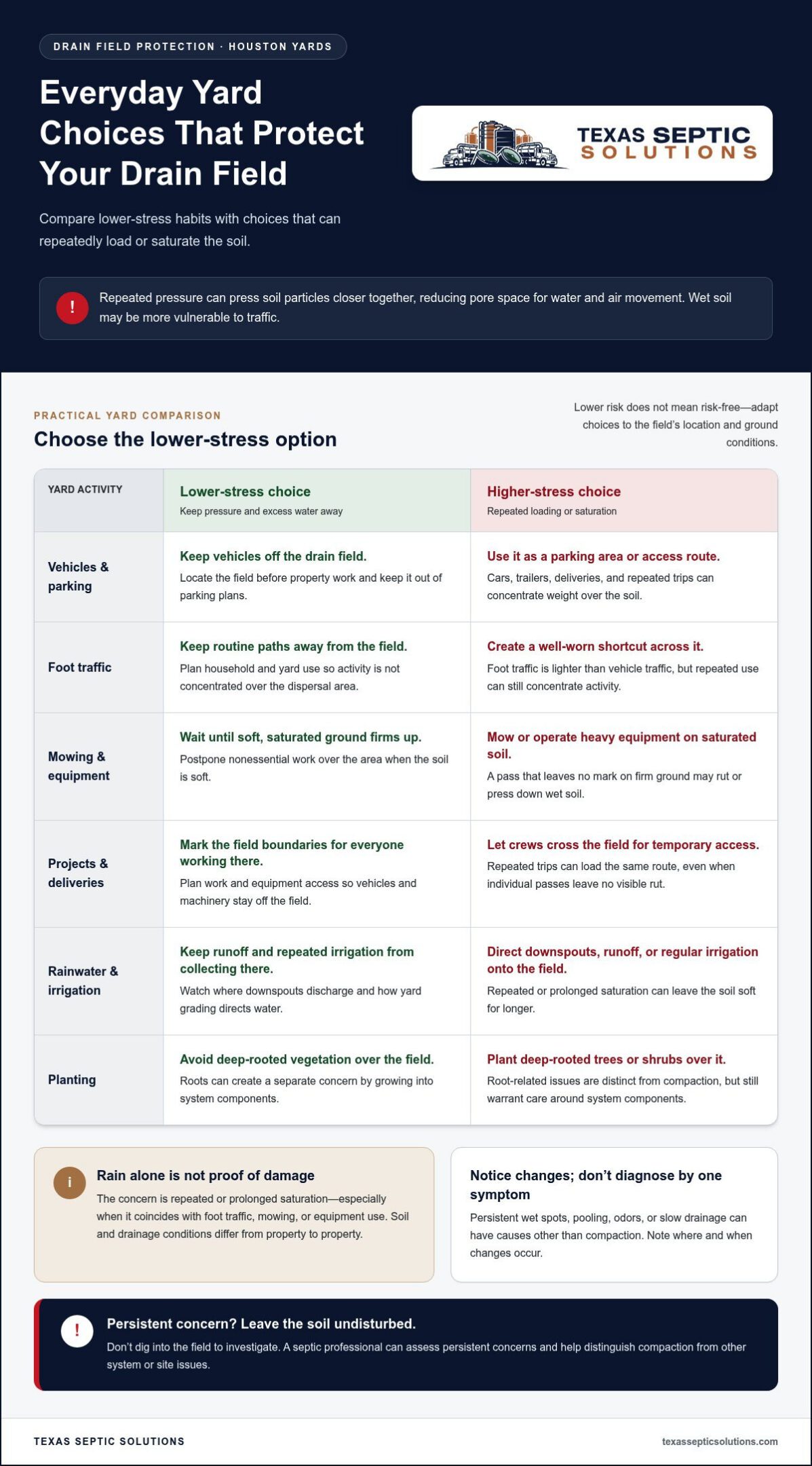
Small yard decisions can either keep routine activity away from the drain field or repeatedly load and soak the same ground. Use this comparison as a starting point, then adapt it to the field’s location and the condition of your yard. Lower risk doesn’t mean risk-free, especially when the soil is soft.
| Yard choice | Lower-risk approach | Higher-impact choice to avoid |
|---|---|---|
| Walking paths | Route regular foot traffic around the field. | Making a frequently used shortcut across it. |
| Parking | Keep cars, trailers, and delivery vehicles in designated areas away from the field. | Parking or turning vehicles over the dispersal area. |
| Equipment access | Plan mower and project access routes outside the field. | Driving construction or heavy yard equipment across it. |
| Lawn care | Mow when the ground is firm enough to support the equipment. | Working over unusually soft or saturated soil. |
| Water and planting | Choose suitable shallow-rooted cover and direct roof runoff away from the field. | Concentrating irrigation or runoff over it, or digging deeply to change the surface. |
Choose low-impact access and yard-care routines
Start by confirming the field boundaries before planning patios, sheds, parking areas, or landscaping. Check available septic or property records, and avoid estimating the field’s location based only on surface appearance. Once you know the protected area, keep regular routes outside it. Occasional light walking is different from repeated traffic, but a defined path around the field helps prevent people and equipment from crossing it by habit. If the ground feels unusually soft, postpone heavy mowing and outdoor projects rather than risking ruts or pressure from machinery.
Manage planting and surface water without disturbing the field
Grass or other appropriate shallow-rooted ground cover may suit the site, but no surface treatment can guarantee protection from compaction. Keep downspouts and irrigation from directing extra water onto the dispersal area. Avoid deep digging, aggressive aeration, or adding soil amendments over the field unless a septic professional advises it. These actions can disturb system components or change drainage. NC State Extension offers additional guidance to protect and maintain the site.
These practical choices are a useful foundation for how to prevent drain field compaction Houston homeowners may face through everyday yard use. If you can’t identify the field’s boundaries or aren’t sure whether a planned change could affect it, professional septic maintenance can help you make an informed plan. Texas Septic Solutions provides Houston septic maintenance to support ongoing system care.
A Houston Homeowner’s Step-by-Step Drain Field Protection Plan
A simple routine can make drain field care easier to manage. After major yard changes, heavy rain, or signs that drainage has changed, follow the same sequence: locate the system, protect its footprint, manage water, observe the ground, and document what you notice.
Locate the field, keep loads off it, manage runoff, watch for changes, and record what you see.
Map the drain field and set household ground rules
Start with available septic or property records to understand where the tank and drain field sit. If the boundaries are unclear, don’t guess before planning construction or landscaping. Once you know the protected area, share that information with household members and workers on the property. Set clear rules: no parking, material storage, vehicle access, or equipment operation over the field.
Adjust the plan for Houston-area wet weather
After substantial rainfall, check whether the yard feels unusually soft before allowing mowing, deliveries, or other work nearby. Conditions vary across Houston properties, so judge the actual ground rather than assuming every storm affects every field in the same way. Keep roof runoff and other drainage changes from directing water toward the field or system components.
Before changing grading or drainage, consider where the water will go. A fix that moves water away from one spot shouldn’t create a new problem elsewhere. For broader upkeep guidance, read this septic system maintenance plan guide.
Make observation part of the routine, not a reason to disturb the soil. From a safe distance, note wet areas, pooling, odors, or changes in how quickly the yard dries. Record the date, recent rainfall, nearby yard work, and whether the same area becomes wet again. These details can help show whether a concern follows storms, irrigation, or a particular activity. Don’t dig, aerate, or run machinery over the field to investigate.
This repeatable plan turns how to prevent drain field compaction Houston homeowners may be concerned about into practical habits: protect the area, keep water from collecting there, and track changes over time. If you’re unsure where the field is or notice persistent drainage changes, arrange professional septic maintenance to assess system health. Schedule septic maintenance with Texas Septic Solutions.
When Suspected Compaction Needs a Professional Drain Field Assessment
Persistent wet ground, pooling, wastewater odors, or slow drains deserve attention, but none of these signs proves soil compaction. Rainfall, drainage patterns, or other septic system issues may also be involved. A professional assessment can help evaluate the soil, water movement, and system condition instead of relying on guesswork.
Warning signs that call for closer attention
Look for changes that persist or return: a spongy patch over or near the field, standing water, wastewater odors, or drains that are slower than usual. Note where you see each sign and when it occurs. Record whether symptoms appear after rain as well. These details help describe the pattern, but they don’t identify the cause on their own.
What to do next if symptoms persist
Keep people and vehicles away from wet or affected areas, and avoid contact with standing water that may contain wastewater. Don’t dig, aerate, add chemicals, or use machinery to try to loosen or dry the soil. Those steps may disturb system components or complicate an assessment. Instead, document what you’ve observed and arrange professional help if signs continue or worsen.
A septic professional can assess the field and surrounding drainage alongside the broader system, then explain whether maintenance or repair is appropriate. This is a practical next step in how to prevent drain field compaction Houston homeowners are concerned about: address warning signs carefully without assuming compaction or attempting a risky DIY fix.
For more on common system issues and repair considerations, read the Texas septic repair guide. If wet areas, odors, pooling, or slow drains persist, contact Texas Septic Solutions for a professional septic assessment. A clear review of the conditions can help you choose a sensible next step and protect your system.
Protect Your Drain Field With Consistent, Simple Care
Protecting your drain field starts with knowing where it is and keeping vehicles, heavy equipment, and repeated traffic off the area. Manage runoff so water doesn’t collect over the field, and adjust yard work when the ground is soft. Regular observation matters too: note recurring wet spots, pooling, odors, or drainage changes, but don’t assume they prove compaction or try to fix the soil yourself.
These habits are the foundation of how to prevent drain field compaction Houston homeowners can put into practice. If warning signs persist or you’re unsure about your system’s condition, a professional assessment can help identify a sensible next step. Texas Septic Solutions provides septic maintenance, pumping, and repair in Houston, Cleveland, Cypress, Huffman, and Shepherd, along with 24/7 emergency septic service.
Get septic maintenance, pumping, or repair from Texas Septic Solutions to keep your system’s care on track. A little attention now can help you protect your property and feel more confident about your septic system.
Frequently Asked Questions
Can I drive over my septic drain field?
Avoid routine driving, parking, and heavy equipment over your drain field because repeated or concentrated loads can compact soil or damage system components. Keep access routes elsewhere, and identify the field before property work or deliveries. If a vehicle has already crossed it, watch for persistent ruts, wet spots, or other changes. These signs are worth noting, but they don’t confirm damage on their own.
Does Houston rain cause drain field compaction?
Rain alone doesn’t prove that compaction has occurred. Saturated or unusually soft soil may be more vulnerable to pressure from vehicles, equipment, or repeated foot traffic, so keep heavy loads off the field until the ground firms up after substantial rain. Conditions vary by property across Houston and nearby communities. If pooling continues after the weather clears, note the location and arrange a professional assessment.
How can I tell if my drain field soil is compacted?
No single surface sign confirms compaction. Persistent soggy ground, pooling, odors, or changes in drainage may point to a drain field concern, but other site or system conditions can cause similar symptoms. Note where and when changes occur, especially after rain or yard work. Don’t dig or aerate to investigate. A professional assessment can help identify the cause and guide the next step.
Can I aerate or till the soil over my drain field?
No. Don’t till, deeply aerate, or excavate over the drain field as a DIY fix. Septic components may be below the surface, and digging or using equipment could damage them or make the problem worse. First identify the system area and keep heavy machinery away. If the soil stays wet or you suspect compaction, record what you observe and have a septic professional assess the field.
What should I plant over a septic drain field?
Grass or other suitable shallow-rooted ground cover may work, but the right choice depends on your property and system. Avoid planting trees or shrubs where roots could interfere with components, and don’t dig deeply while planting. Keep the area accessible for observation and professional care. If you’re unsure about a plant’s roots or placement, get site-specific guidance before changing the landscaping.
What should I do if there is standing water over my drain field?
Keep people and vehicles away from standing water, and avoid contact with water that could contain wastewater. Note whether rain, irrigation, or roof runoff may be contributing, but don’t dig or redirect water in a way that affects the system or neighboring property. If pooling persists, odors appear, or drains slow, document when and where it happens and arrange a professional assessment.
Can pumping a septic tank fix drain field compaction?
No. Pumping removes accumulated solids from the septic tank; it doesn’t directly loosen compacted drain field soil. Pumping may be part of appropriate system maintenance, but wet ground or poor drainage needs assessment to determine its cause. Keep loads off the field if symptoms persist. Texas Septic Solutions provides septic pumping, maintenance, and repair in Houston, Cleveland, Cypress, Huffman, and Shepherd.