
How to Pass a Septic Inspection in Texas: The 2026 Homeowner’s Checklist
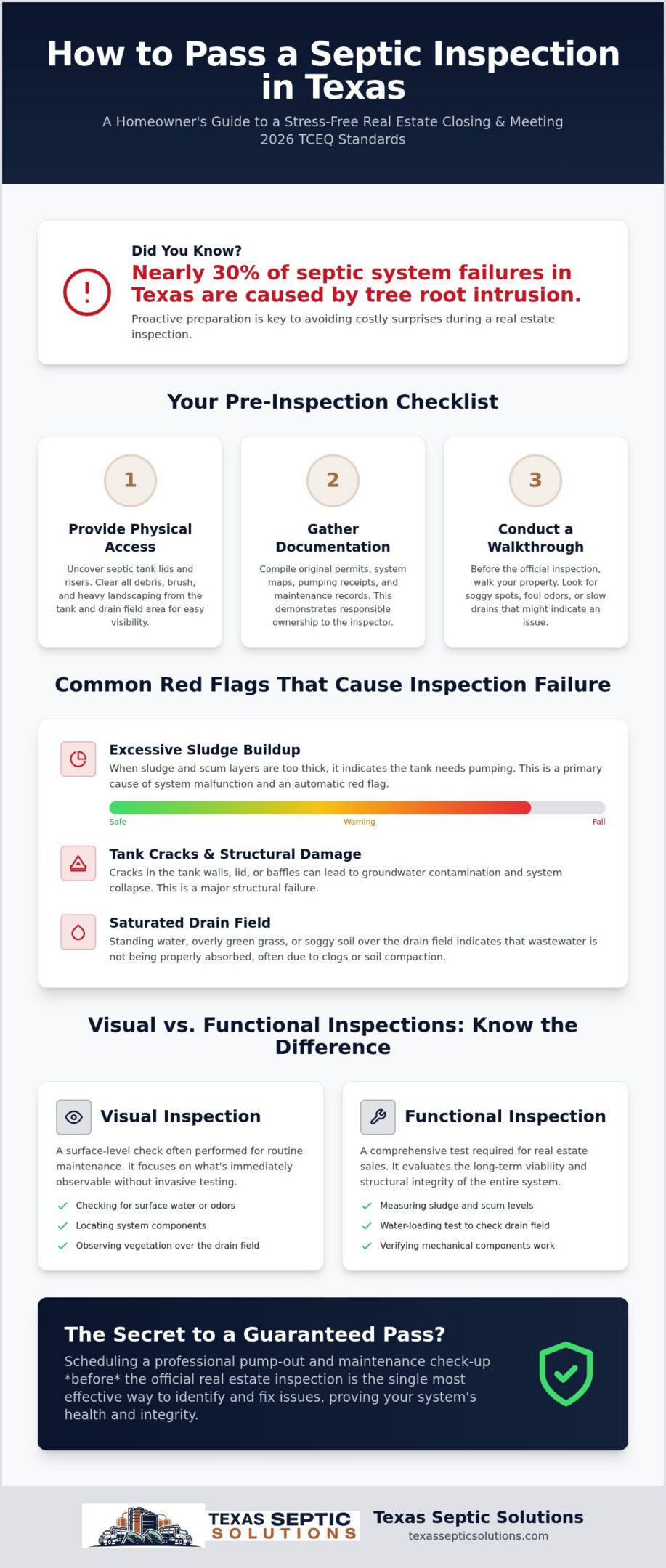
Did you know that tree roots account for nearly 30% of septic system failures across Texas? It’s a frustrating reality for many homeowners who only realize there’s a serious issue when a real estate inspector is standing in their yard with a clipboard. We know the stress that comes with a looming deadline. If you’re wondering how to pass a septic inspection in Texas without facing unexpected repair bills, you aren’t alone. The fear of an expensive “Fail” grade is common, especially when you aren’t even sure where your tank lids are buried or what the latest 2026 TCEQ regulations require for your specific property.
The good news is that most failures are preventable with the right proactive preparation. This guide will show you exactly what to do by breaking down the specific mechanical and structural red flags that inspectors look for during their visit. We’ll provide a clear checklist of prep work, explain the critical differences between visual and functional inspections, and give you the confidence you need during real estate negotiations. By the end of this article, you’ll have a solid plan to ensure your system is ready for a passing grade and your property remains in peak condition.
Key Takeaways
- Understand the latest 2026 TCEQ standards to ensure your property meets state requirements before the inspector arrives.
- Learn exactly how to pass a septic inspection in Texas by uncovering tank lids and clearing debris from your drain field to facilitate a smooth review.
- Identify common red flags, such as excessive sludge buildup or tank cracks, that can lead to a failed result during real estate negotiations.
- Discover why scheduling a professional pump-out and maintenance check-up is the most effective way to prove your system’s structural integrity.
- Distinguish between surface-level visual checks and comprehensive functional inspections so you know exactly what to expect on inspection day.
Septic Inspections in Texas: Why They Matter in 2026
The Texas Commission on Environmental Quality (TCEQ) oversees every on-site sewage facility in the state. They enforce Title 30 of the Texas Administrative Code, Chapter 285. These regulations ensure that waste doesn’t contaminate our local groundwater or create a public nuisance. In 2026, we are seeing even tighter standards as the state modernizes rules under House Bill 4087. If you’re a homeowner in Cleveland or Cypress, understanding what a septic system is and how it interacts with our heavy East Texas clay is vital. Clay soil doesn’t absorb liquid as quickly as sand; this puts extra pressure on your drain field and makes regular checks essential.
Learning how to pass a septic inspection in Texas starts with knowing the difference between a routine maintenance visit and a formal real estate inspection. A maintenance provider looks for immediate mechanical issues to keep things running. A real estate inspector, however, looks at the long-term viability and structural integrity of the entire system. They want to ensure the next owner won’t inherit a failing utility. This distinction is why a system that “seems fine” can still fail a rigorous sale inspection.
When is a Septic Inspection Required in Texas?
Most property owners encounter formal inspections during a real estate closing. Lenders for FHA and VA loans almost always require a passing report before they’ll fund a mortgage. If you are navigating the complexities of home financing and want to find out more about how these requirements affect your loan, consulting with a mortgage professional is a smart step. Beyond sales, many counties around Houston mandate specific maintenance contracts for aerobic systems. These require inspections three times a year to stay in compliance with state law. You might also need a professional assessment after extreme weather events or heavy flooding. These events can shift soil and damage underground components in our region, leading to hidden failures that only a pro can spot.
A failed inspection report can stop a home sale in its tracks. In cities like Huffman or Shepherd, a “Fail” often leads to stressful renegotiations or a complete collapse of the deal. The financial impact is significant. Repairing a major component can be quite expensive, whereas proactive maintenance and a pre-inspection pump-out are much more manageable. Under Texas property law, failing to disclose known septic issues can also lead to legal liability after the sale. Proper preparation is the best way to ensure you know how to pass a septic inspection in Texas while keeping your closing date on schedule.
The Texas Septic Inspection Checklist: How to Prepare Your Property
Preparation is the key to a stress-free closing day. Many homeowners assume the inspector will handle everything, but a little legwork on your part can be the difference between a “Pass” and a costly delay. Taking these steps is the most reliable way to learn how to pass a septic inspection in Texas without the headache of last-minute repairs or rescheduled appointments. When you’re ready, follow this checklist to ensure your system is accessible and your records are in order.
Step 1: Physical Access and Visibility
Uncovering your septic tank lids and risers is the first and most important step. If an inspector has to spend an hour digging through dirt or clearing thick brush just to find the system, you’re already off to a bad start. Clear all debris, overgrowth, and heavy landscaping from the drain field area. If you know where the distribution box is located, mark it with a small flag or stake. Inspectors appreciate a clean site where they can see the ground clearly; this helps them spot potential issues like soil subsidence or surface dampness quickly. Don’t let a buried lid stall your home sale.
Step 2: Documentation and History
Paperwork tells a story of care. Inspectors want to see a clear history of maintaining your septic system properly over the years. Gather your original permits, system maps, and pumping receipts into one folder. Having a formal septic system maintenance plan ready to show demonstrates that you’ve been a responsible steward of the property. This documentation is especially critical for aerobic systems, where the state requires specific maintenance contracts. If you’ve had recent repairs or upgrades, keep those invoices handy to prove the work was done by a licensed professional.
Step 3: Pre-Inspection System Check
Do a quick walkthrough before the professional arrives. Make sure the electrical power to the aerator and pump is turned on and the circuit breakers are set. If you notice a septic tank alarm going off, address it immediately rather than waiting for the inspector to find it. Walk the drain field and look for unusually lush green patches or standing water, as these can indicate a subsurface leak. Check that your toilets flush quickly and drains aren’t sluggish. These simple checks can save you from a “fail” on a report for something as simple as a tripped breaker.
If you haven’t had a pump-out in the last few years, scheduling septic system pumping before the inspector arrives is a smart move. It ensures the tank is clean and allows the inspector to perform a much more thorough review of the system’s structural integrity.
Common Red Flags That Cause an Inspection Failure
Understanding the specific pitfalls that lead to a failed report is the best way to prepare. Inspectors aren’t just looking for a tank that’s currently working; they’re looking for evidence of long-term reliability and safety. If you want to know how to pass a septic inspection in Texas, you must look at your system through their eyes. Most failures fall into four main categories: excessive solids, structural decay, hydraulic overloading, or mechanical breakdown in aerobic units. These issues are often invisible until a professional opens the lids.
- Excessive Sludge and Scum: This is the most frequent cause of failure. When solids build up beyond one-third of the tank’s liquid capacity, they risk entering the drain field. This causes permanent damage that can’t always be reversed.
- Mechanical Failure: In aerobic systems, the aerator is the heart of the treatment process. If it isn’t humming, the treatment stops. Similarly, a failed pump means effluent cannot move to the dispersal area, leading to a system backup.
- Hydraulic Overloading: This occurs when the system is pushed beyond its design capacity. Inspectors look for high water marks in the tank or sluggish dispersal as evidence of this struggle.
Tank and Baffle Integrity Issues
The inlet and outlet tees are the most scrutinized components inside the tank. These baffles serve a critical role by preventing solids from exiting the tank and clogging your drain field. In older concrete tanks across East Texas, these baffles often corrode or break off over time. Inspectors also look for infiltration, which happens when groundwater leaks into the tank through cracks or poorly sealed risers. This extra water volume can swamp the system, especially during our heavy rain seasons. Staying compliant with TCEQ maintenance requirements for septic systems ensures that these structural issues are caught during routine service rather than during a high-stakes real estate inspection.
Drain Field and Soil Absorption Failures
A “stress test” is a standard part of a comprehensive functional inspection. The inspector will run a significant volume of water through the house to see how the drain field responds. If the water backs up or the ground becomes saturated quickly, the field has failed. This is often caused by “biomat” buildup, which is a thick layer of bacteria that prevents soil absorption. Physical damage is another major red flag. We often see failed fields caused by heavy machinery or vehicles driving over the absorption area. This compacts the soil and crushes the lateral lines. Knowing how to pass a septic inspection in Texas means protecting this area from any heavy weight or traffic long before the inspector arrives.
Visual vs. Functional Inspections: What to Expect
If you’re wondering how to pass a septic inspection in Texas, you’ve got to understand that not all “passes” are equal. Some inspections are surface-level visual checks, while others are deep-dive functional assessments. A visual inspection is a basic walk-through where the pro looks for surface-level red flags like ponding water, odors, or unusually green grass. While this is a good starting point, it doesn’t give a clear view of what’s happening inside the tank. It’s often included in a standard home inspection but rarely provides the peace of mind required for a high-stakes real estate deal.
Functional or comprehensive inspections are much more thorough and provide a complete picture of the system’s health. These usually involve a “stress test” where the inspector runs a high volume of water to see how the system handles the load. They might also use a dye test, where fluorescent tablets are flushed down the toilet to see if effluent is surfacing somewhere it shouldn’t. For the most detailed view, camera inspections use fiber-optic technology to find hidden clogs or root intrusions deep inside the lines before they cause a total backup.
The Functional Inspection Process
During a functional visit, the inspector will measure the “sludge judge” levels in each chamber to see how much solid waste has accumulated. They’ll also test the high-water alarm and float switches to ensure your pump and aerator are communicating properly. In many cases, the inspector will require a professional septic tank pumping during the visit. This is the only way to see the bottom and walls of the tank to check for cracks or structural decay. It’s a critical step for anyone learning how to pass a septic inspection in Texas with 100% certainty.
Which Inspection Type Do You Need?
For Houston-area homes, the type of inspection usually depends on the buyer’s lender. FHA and VA loans almost always mandate a full functional inspection to protect their investment. If the inspector finds a minor issue, they might issue a “Conditional Pass.” This means the system is working but needs a specific repair, like a new aerator or a baffle replacement, before the final closing. If you suspect your system has older lines or has been neglected, opting for a camera inspection can save you from a major surprise after the sale is finalized.
Don’t wait for the inspector to find a problem. Schedule a professional septic system maintenance check-up now to ensure your system is ready for any test.
The Secret to a Guaranteed Pass: Professional Maintenance
The most reliable strategy for how to pass a septic inspection in Texas isn’t found in a last-minute scramble; it’s found in a consistent maintenance log. Routine pumping is your best insurance policy against a failed report. When an inspector sees a clean tank and a functional aerator, they immediately gain confidence in the rest of the property’s utility infrastructure. Proactive care prevents the accumulation of sludge that leads to drain field failure, which we’ve already identified as the most expensive issue a homeowner can face.
Small issues often snowball into deal-breakers when they’re discovered by a buyer’s inspector. Addressing minor septic system repairs before you list your home keeps you in control of the timeline and the budget. If you’re worried about how to pass a septic inspection in Texas, a professional pre-listing check-up is the ultimate stress-reliever. It allows you to present a system that is not only functional but also clearly well-cared for by a local authority.
Pre-Listing Pumping and Inspection Prep
There’s a significant psychological benefit to handing a fresh pumping receipt to a potential buyer. It signals that you’re a responsible homeowner who hasn’t cut corners on essential maintenance. During a pre-listing tune-up, a technician will clean your filters, check the aerator’s performance, and test the high-water alarms. These small components are frequent points of “minor” failure on official reports. A simple $500 maintenance visit can often save you from a $5,000 repair negotiation during the closing process. By confirming your system’s health early, you eliminate the risk of a “Conditional Pass” that could delay your funding.
Partnering with Texas Septic Solutions
We’ve spent years helping homeowners in Cleveland, Houston, and Cypress navigate the complexities of TCEQ regulations. Our team is built for both the mundane tasks of upkeep and the high-pressure demands of unexpected failures. If an inspector finds a surprise issue, our 24/7 availability ensures that last-minute repairs won’t stall your sale. We have deep expertise in both aerobic and conventional systems, allowing us to provide the straightforward, neighborly advice you need to get to the closing table with confidence. We’re not just a service provider; we’re your partner in protecting your home’s value and functionality.
Ready to sell? Schedule your pre-inspection pumping and system check today!
Secure Your Sale with a Proactive Septic Strategy
Passing a property inspection isn’t a matter of luck. It’s the result of clear preparation and a commitment to maintenance. We’ve explored the necessity of uncovering your tank lids, organizing your TCEQ compliance records, and distinguishing between surface-level visual checks and deep-dive functional tests. By identifying red flags like excessive sludge or structural cracks before the official inspector arrives, you protect your home’s value and your closing timeline.
Understanding exactly how to pass a septic inspection in Texas is your best defense against stressful price negotiations. Texas Septic Solutions provides the local expertise you need to ensure your system is in peak condition. Our licensed TCEQ technicians serve Cleveland, Houston, and the surrounding counties. We offer everything from routine pumping to 24/7 emergency repairs for those unexpected last-minute failures. Get a professional pre-inspection assessment from Texas Septic Solutions today and move toward your closing date with total peace of mind. Your system is the heart of your home’s utility; treat it with the care it deserves and it won’t let you down.
Frequently Asked Questions
Do I have to pump my septic tank before an inspection in Texas?
While state law doesn’t always mandate it, many local ordinances in counties around Houston require a pump-out during a functional inspection. Pumping allows the technician to see the tank’s floor and walls, which is essential for verifying structural integrity. Without emptying the tank, a comprehensive review of the baffles and internal components is impossible. It’s the most effective way to ensure you know how to pass a septic inspection in Texas without hidden sludge issues.
How long does a typical septic inspection take?
A standard real estate septic inspection usually takes between one and three hours. The duration depends on the system type and how easily components like lids and distribution boxes are accessed. If you’ve already uncovered your lids and cleared the area, the process moves much faster. More complex tests, such as hydraulic stress tests or camera line inspections, can extend the time needed to ensure every part of the system is functioning correctly.
What happens if my septic system fails the inspection during a home sale?
A failed report typically triggers a negotiation phase between the buyer and seller. The buyer may request repairs, a price reduction, or an escrow holdback to cover the costs of a new system. In some cases, lenders for FHA or VA loans will refuse to fund the mortgage until the system receives a passing grade. Addressing small repairs quickly with a licensed technician can often get the sale back on track before the scheduled closing date.
How much does a septic inspection cost in the Houston area in 2026?
The cost for a professional review depends on the system’s complexity and the specific requirements of your lender. A standard functional inspection involves a technician’s labor, stress testing, and the detailed reporting required for property transfers. Specialized tools like fiber-optic cameras or fluorescent dye tests will increase the total investment. Getting a professional quote is the best way to understand the budget needed for how to pass a septic inspection in Texas with a certified report.
Can I perform my own septic inspection for a real estate transaction?
No, Texas law requires that a licensed professional perform inspections for real estate transactions and permitting. Lenders and title companies will only accept reports from certified inspectors or licensed maintenance providers. While you can perform basic checks like looking for surface leaks, an official report must verify the system meets TCEQ Chapter 285 standards. Professional oversight ensures the safety of the local groundwater and protects all parties involved in the property transaction.
Is an aerobic system inspection different from a conventional one?
Aerobic inspections are significantly more complex because they involve mechanical components like aerators, pumps, and spray heads. These systems require a valid maintenance contract and inspections three times per year under Texas law. During a real estate inspection, the technician will check the disinfectant levels, the high-water alarm, and the electrical control panel. Conventional systems are simpler, focusing primarily on the tank’s structural integrity and the soil’s ability to absorb effluent through the drain field.
What are the most common reasons for septic failure in East Texas?
Tree root intrusion is a major culprit, accounting for approximately 30% of septic issues in our region. Our heavy clay soils also contribute to failures, as they don’t absorb water as efficiently as sandy soil. Other common red flags include excessive sludge buildup from garbage disposal use and mechanical failures in aerobic units. Regular maintenance is vital in East Texas to combat these environmental challenges and ensure the longevity of your underground system components.
How often should I have my septic system inspected if I am not selling?
If you have a conventional system, you should have it professionally inspected and pumped every three to five years. For aerobic systems, Texas law mandates inspections every four months as part of a service contract. Even if you aren’t planning to sell, regular checks prevent small leaks from turning into total system failures. Staying proactive is the only way to avoid the stress of emergency repairs and protect your property’s long-term utility functionality and value.