
How to Manage Septic Tank Pumping for Event Venues in Cleveland, TX: A 2026 Guide
Imagine it’s a Saturday night at your venue in Liberty County, and you’re hosting a sold-out wedding reception. The music is great, the food is served, and suddenly, a frantic staff member tells you the restrooms are overflowing. For many local business owners, this is a high-stakes reality when they haven’t scheduled professional septic tank pumping for event venues Cleveland TX before a major seasonal surge.
You already know that your reputation depends on a flawless guest experience, and nothing ruins a party faster than foul odors or a closed bathroom. It’s the silent anxiety that keeps many managers up at night during the busy season, but a backup doesn’t have to be part of your story. We understand the pressure of managing high-capacity crowds and the need for a system that works as hard as your staff does.
In this guide, we’ll walk you through the exact steps to prepare your system for the 2026 event season and avoid the high costs of emergency weekend repairs. You’ll learn how to assess your system’s true capacity, follow local health regulations in Cleveland, and build a maintenance schedule that guarantees zero downtime during your busiest months.
Key Takeaways
- Understand the critical difference between residential flow and commercial hydraulic surges to protect your system from sudden volume spikes.
- Learn why scheduling septic tank pumping for event venues Cleveland TX exactly 48 to 72 hours before a major booking is the ideal window for maximum safety.
- Discover how to align your maintenance schedule with your event calendar while accounting for local factors like East Texas rainfall and soil saturation.
- Identify the specific equipment and 24/7 response guarantees required to maintain a reliable safety net during your venue’s busiest seasons.
Identifying the Risks of High-Capacity Septic Use in Cleveland Venues
Cleveland event venues face a set of plumbing challenges that the average homeowner never encounters. While a residential system manages a steady, predictable flow from a few people, a venue system must handle hundreds of guests in a single afternoon. To protect your property, it’s helpful to understand what a septic system is and how it functions as a living biological filter. When you push that filter beyond its design limits, the results are often messy and expensive.
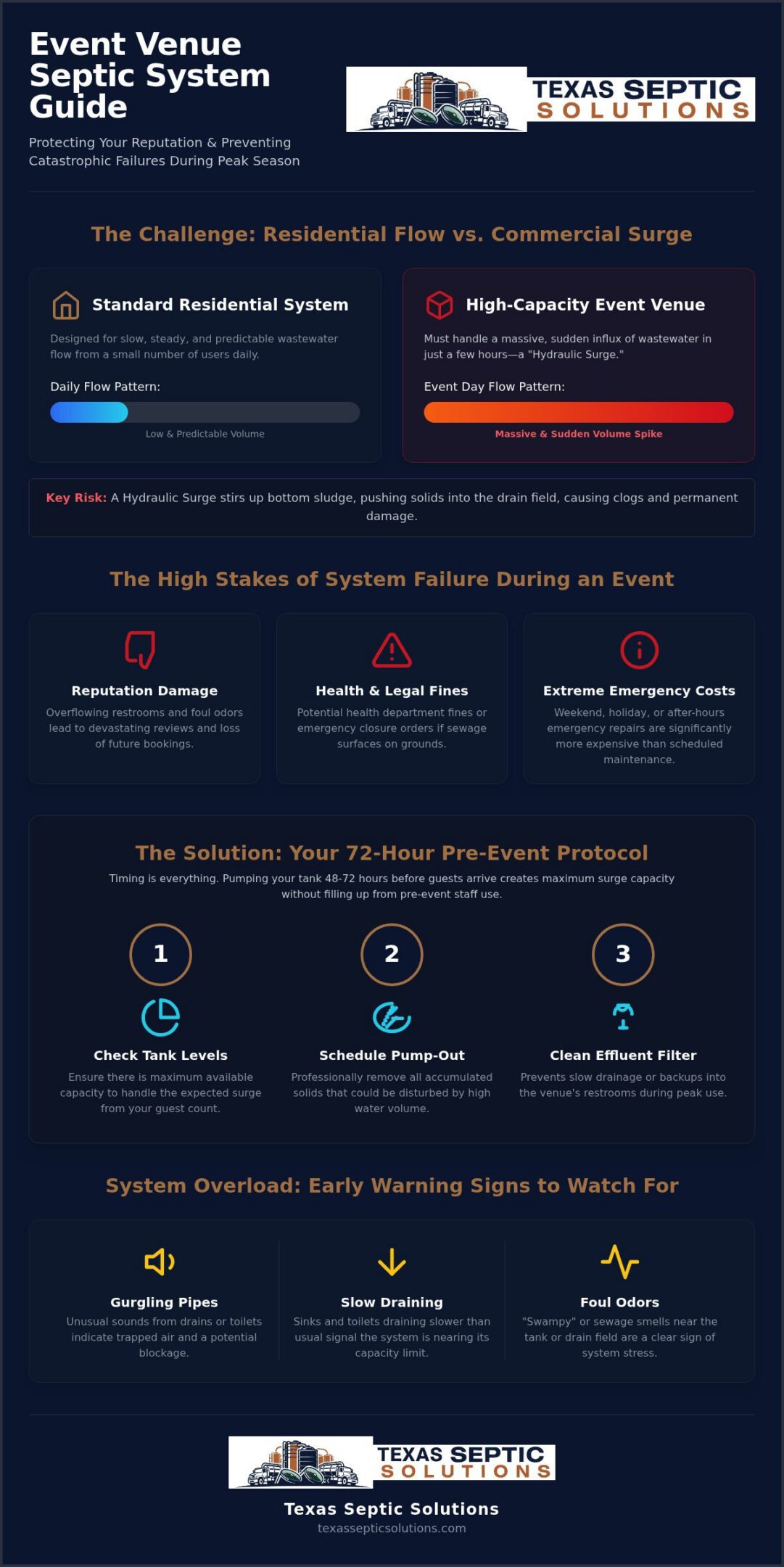
Managing septic tank pumping for event venues Cleveland TX requires a shift in mindset. You aren’t just maintaining a tank; you’re managing a surge. In a typical home, wastewater enters the tank slowly, giving solids time to settle and bacteria time to break down organic matter. At a wedding or corporate retreat, that same volume enters the system in a matter of hours. This sudden influx doesn’t just fill the tank; it creates turbulence that stops the settling process entirely.
Standard maintenance intervals of three to five years simply don’t apply to the event industry. If your venue is entering a busy season, waiting for a scheduled date could lead to disaster. You should watch for early warning signs like gurgling pipes, slow-draining sinks, or faint “swampy” odors near the drain field. These are clear signals that your system is struggling under the current load.
Understanding Hydraulic Surging
Hydraulic surging is the rapid influx of wastewater into your system over a short period, typically four to eight hours. This massive wave of water stirs up the sludge layer at the bottom of the tank. Instead of staying put, these solids are pushed out into the drain field. This process causes immediate and often permanent damage to the soil’s ability to absorb water. High-capacity use accelerates sludge accumulation far faster than normal daily use. When the tank stays turbulent, the anaerobic bacteria that treat waste are often washed away or overwhelmed, leaving the system “dead” and unable to process effluent effectively.
The Cost of System Failure During an Event
The true cost of a backup isn’t just the repair bill. For a Cleveland venue, a single failure during a high-profile event can lead to devastating reviews and a loss of future bookings. Beyond reputation, you face potential health department fines or even emergency closure orders if sewage surfaces on the grounds. Proactive pumping is a strategic investment. There is a massive price difference between a scheduled pump-out and a frantic call for emergency septic repair on a Saturday night. By planning ahead, you ensure your venue remains a safe, clean, and professional space for every guest.
How to Prepare Your Septic System for a Major Event
Preparing for a high-stakes event in Cleveland requires more than just a quick glance at your tank. Timing is everything. Scheduling your septic tank pumping for event venues Cleveland TX approximately 48 to 72 hours before guests arrive is the sweet spot. This window ensures the tank is empty enough to handle the massive surge capacity of a 200-person wedding, while giving the system a few days to settle before the first flush. If you pump too far in advance, normal daily use from staff might fill the buffer you need for the big day.
Walk your drain field before the event starts. In East Texas, heavy rains can saturate the soil, making it harder for your system to process wastewater. If you see standing water or unusually lush, soggy grass, your system is already at its limit. A professional inspection of the baffles and effluent filters is a critical step in overall septic system maintenance. If these components are clogged, you risk a backup into the venue’s main hall just as the party starts. If you’re unsure about your current capacity, our team at Texas Septic Solutions can perform a quick pre-event assessment.
The 72-Hour Pre-Event Checklist
A clear plan prevents chaos. Follow these three steps to ensure your system is ready for the crowd:
- Step 1: Check tank levels to ensure there is maximum surge capacity available for the expected guest count.
- Step 2: Schedule a professional pump-out to clear accumulated solids that might be stirred up by high water volume.
- Step 3: Clean the effluent filter to prevent slow drainage or backups into the venue’s restrooms.
Managing Guest Behavior and Signage
Your guests aren’t thinking about your plumbing, so you have to do it for them. Place clear, polite “Septic Safe” signage in every restroom. Paper towels and feminine products are the primary causes of pump failure and clogs during events. You should also coordinate with your catering team. Ensure they understand that grease and food scraps must never go down the venue drains, as these can solidify and cause immediate blockages. Providing dedicated bins for grease and food waste in the kitchen area is a simple way to protect your long-term system health.
Evaluating Commercial Pumping Services for High-Capacity Systems
Choosing a partner for septic tank pumping for event venues Cleveland TX requires more than just finding the lowest bid. Venues often operate what the EPA classifies as Large-Capacity Septic Systems, which face significantly higher stress than a standard home setup. You need a provider with the right equipment; specifically, trucks with the tank capacity to handle commercial volumes in a single visit. If a service provider has to leave your property mid-job to empty their truck, it extends the time heavy machinery is on your grounds and leaves your system in a state of flux.
Local experience in Cleveland is your best defense against system failure. Our East Texas soil can be tricky, especially when heavy rains saturate drain fields. A technician who understands local drainage patterns can provide a comprehensive inspection that goes beyond just pumping the tank. They should check your pumps, floats, and alarms to ensure every component is ready for a 200-guest surge. Pumping is only half the battle; a professional eye on the entire infrastructure is what prevents a mid-party disaster.
Key Criteria for Venue Septic Partners
When interviewing potential service providers, look for those who offer specialized septic system maintenance plans tailored for commercial use. Your partner should be able to demonstrate experience with both aerobic and anaerobic systems. Ask specifically about their weekend emergency response protocols. Since most venue crises happen on a Friday or Saturday night, a partner who only works “banker’s hours” isn’t a viable option for your business. We pride ourselves on being a 24/7 service provider because we know your reputation is on the line every weekend.
Comparing Proactive vs. Reactive Service
The difference between a scheduled maintenance visit and an emergency call is often the difference between a successful event and a total shutdown. A dedicated technician who knows your venue’s specific layout can spot trouble spots, like a struggling lift pump, before it stops working. This relationship creates a level of reliability that “on-call” services simply cannot match.
| Feature | Proactive (Scheduled) | Reactive (Emergency) |
|---|---|---|
| System Readiness | Guaranteed for high volume | Uncertain until arrival |
| Guest Experience | Zero impact; work is hidden | High impact; visible repairs |
| System Knowledge | Technician knows your layout | First-time visit learning curve |
While price matching is common in many industries, it shouldn’t be your primary factor here. A lower price often means the provider lacks the specialized equipment or the 24/7 staffing required to protect a high-capacity venue. Investing in a reliable local authority ensures your plumbing stays off your guests’ minds.
Implementing a Venue-Specific Maintenance Strategy
A generic maintenance schedule doesn’t work for a business that sees 500 guests one weekend and zero the next. To keep your facility running smoothly, you must map your event calendar directly to your pumping schedule. Instead of counting months, count your bookings. For most local venues, scheduling septic tank pumping for event venues Cleveland TX should happen based on projected guest volume rather than the passage of time. This proactive approach ensures you never start a busy wedding season with a tank that is already half-full from the previous year’s holiday parties.
Record-keeping is another vital part of your strategy. Maintaining a detailed log of every pump-out, inspection, and minor repair isn’t just about local compliance; it helps you predict the eventual septic system replacement date. By tracking how your system handles peak loads over several years, you can budget for upgrades before a total failure forces your hand. When it comes to additives, be cautious. While some products claim to “boost” bacteria, high-use systems often do better with natural biological balance and regular pumping rather than chemical interventions that can stir up settled solids.
Peak Season vs. Off-Season Protocols
Cleveland venues often experience heavy surges during the spring and fall wedding peaks. During these months, you should increase your inspection frequency to catch small issues like sticking floats or clogged filters before they become disasters. Conversely, use your off-season as a “rest” period for the drain field. Reducing water usage during dormant weeks allows the soil to dry out and the natural bacteria to catch up on breaking down organic matter. It is especially vital to stay on top of septic system maintenance in Texas during our notoriously heavy rain months when the ground is already stressed. If you need help building a custom schedule for your property, contact Texas Septic Solutions to set up a professional maintenance plan.
Protecting the Drain Field from Compaction
In the Cleveland and Houston area, our clay-heavy soil is prone to compaction and saturation. One of the biggest threats to your venue’s septic health is guest parking. Never allow cars, catering trucks, or heavy event equipment to drive over or park on your drain field. This pressure crushes the underground pipes and compacts the soil, effectively “killing” the area’s ability to absorb water. You can improve drainage by using specific landscaping techniques, such as planting water-loving, shallow-rooted grasses that encourage evaporation. Watch for signs of soil saturation, such as unusually bright green patches of grass or a lingering “sour” smell after a storm, which indicate that the drain field is no longer keeping up with the load.
Securing 24/7 Support with Texas Septic Solutions
Choosing a partner for septic tank pumping for event venues Cleveland TX is about more than just clearing a tank; it’s about protecting your livelihood. At Texas Septic Solutions, we understand that when a hundred guests are on-site, there’s no room for error. We’ve built our reputation on being the reliable local authority that venue managers can call at any hour. Our team doesn’t just show up to pump; we arrive with the specialized knowledge required to keep high-capacity commercial systems running under intense pressure.
Our 24/7 emergency response serves as the ultimate safety net for your business. If a lift pump fails or an alarm sounds during a wedding reception, you don’t have to wait until Monday morning for a solution. We’re ready to move immediately, ensuring that your guests never even realize there was a potential issue. This level of responsiveness is why venues across East Texas trust us to handle their most critical utility needs. We provide the stability you need to focus on hosting, while we handle the infrastructure in the background.
The Texas Septic Solutions Advantage
We take immense pride in our commitment to local businesses in Cleveland, Huffman, and Shepherd. Our professional technicians are specifically equipped to handle the unique demands of high-capacity commercial systems. We don’t use a one-size-fits-all approach. Instead, we offer transparent communication and a neighborly expert service style that puts your mind at ease. You’ll always know exactly what we’re doing and why it matters for your system’s longevity. We aren’t just a service provider; we’re a partner in your venue’s long-term success.
- Commercial Grade Equipment: Trucks and tools designed for large-scale waste management.
- Expert Inspections: Identifying mechanical wear and tear before it leads to a total system shutdown.
- Customized Scheduling: Pumping plans that adjust based on your actual booking volume and guest counts.
Booking Your Pre-Event Inspection
The best time to handle a plumbing crisis is before it starts. Getting started with a comprehensive system audit before your next busy season allows us to identify potential failures in your baffles, pumps, or filters. This proactive care provides the peace of mind you need to focus on your guests rather than your pipes. We’ll help you design a customized pumping schedule that aligns with your booking volume, ensuring you’re always prepared for the next big crowd. Professionally maintained systems last longer and perform better, saving you from the stress of unexpected failures.
If you’re ready to secure your venue’s future, contact us today for a reliable venue pumping plan. Let’s work together to keep your operations smooth and your guests happy.
Protecting Your Venue’s Reputation for the 2026 Season
Running a successful event space means managing every detail, including the ones your guests never see. By timing your maintenance to your booking calendar and protecting your drain field from heavy equipment, you ensure your system stays ahead of the crowd. Scheduling professional septic tank pumping for event venues Cleveland TX doesn’t just prevent odors; it safeguards your reputation and prevents costly emergency shutdowns during your busiest weekends.
Don’t leave your next high-capacity event to chance. As commercial system specialists with deep local Cleveland, TX expertise, we’re built to handle the unique demands of the venue industry. We provide the 24/7 emergency service and proactive care you need to keep your focus on the party, not the plumbing. Our team understands the high stakes of wedding season and the importance of a system that works as hard as you do.
Ready to secure your facility? Schedule your pre-event septic pumping with Texas Septic Solutions today. Your venue is a place for celebration, and we’re here to keep it that way.
Frequently Asked Questions
How often should an event venue pump its septic tank?
You should base your pumping frequency on your booking volume rather than a set number of months. Most venues find that scheduling septic tank pumping for event venues Cleveland TX right before their busiest season prevents mid-event disasters. If you host multiple high-capacity weddings each month, you might need a pump-out every few months. A professional audit can help you determine the exact guest count threshold that triggers a necessary service call.
Can I pump my septic tank the morning of an event?
We don’t recommend pumping the morning of a major event. It’s best to schedule your service 48 to 72 hours in advance. This buffer allows the tank’s biological layers to stabilize and ensures that any lingering odors from the pumping process dissipate before guests arrive. Plus, if a technician identifies a mechanical issue during the pump-out, you’ll have a few days to perform repairs before the party starts.
What are the signs that my venue’s septic system is about to fail?
Watch for slow-draining sinks or toilets that gurgle when flushed. These are often the first signs of a system struggling under pressure. You might also notice standing water or unusually lush grass over the drain field area. If a “swampy” smell begins to drift toward your outdoor ceremony sites, your system is likely near capacity. Catching these signs early allows you to schedule a proactive pump-out instead of an emergency repair.
Is it safe to use septic additives to handle high guest volume?
Most additives are unnecessary and can actually harm high-use systems. These products often stir up settled solids, allowing them to escape the tank and clog your drain field. This leads to permanent soil damage and expensive repairs. Instead of relying on chemicals, stick to a disciplined pumping schedule. Maintaining the natural balance of bacteria is the best way to ensure your system handles the sudden surges of a busy weekend.
What should I do if the septic alarm goes off during an event?
Call for professional help immediately if your septic alarm sounds. This alert usually means the water level in the tank is too high or a pump has failed. Stop all non-essential water use in the venue to prevent an immediate backup into your restrooms. Since we offer 24/7 emergency septic service in Cleveland, we can often arrive and resolve the issue before your guests even realize there’s a problem with the plumbing.
How does East Texas rain affect my venue’s septic drainage?
Heavy East Texas rain saturates the soil, which prevents your drain field from absorbing wastewater effectively. When the ground is already soaked, your effluent has nowhere to go, which can cause the system to back up into the venue. During rainy seasons, it’s even more critical to have a clear tank. A well-maintained system with a clean effluent filter is your best defense against the drainage challenges posed by Cleveland’s local weather patterns.
Does my catering staff need to use a separate grease trap?
Yes, catering staff should always use a dedicated grease trap. Grease, oils, and fats are incredibly destructive to septic systems because they solidify in the pipes and the drain field. This creates blockages that are difficult and expensive to clear. Ensure your catering partners understand that your venue relies on a septic system. They must dispose of all food scraps and cooking oils in separate containers rather than using the kitchen sinks.
What is the best way to prevent guests from flushing non-flushables?
Clear signage is your most effective tool for guest education. Place polite “Septic Safe” reminders in every restroom stall to explain that only toilet paper should be flushed. You should also provide large, visible trash bins near the toilets for paper towels and feminine products. These items don’t break down and are the leading cause of clogs during high-capacity events. A little bit of prevention goes a long way in protecting your system’s health.