
How to Fix Septic Odors in Your Texas Home
You have neighbors coming over for a weekend BBQ, but as soon as they step through the front door, a foul, sulfurous scent hits them before the smell of smoked brisket ever does. It is an incredibly embarrassing moment that leaves you wondering if your entire system is about to fail. When that rotten egg smell starts drifting through your hallways, it’s natural to fear a massive sewage backup or a costly replacement. Understanding how to fix septic odor in house usually starts with identifying simple plumbing issues rather than assuming the worst about your tank.
We know how stressful it feels to balance the urgency of a utility issue with the need for a reliable solution. Most indoor odors actually stem from minor mechanical failures that you can address quickly. In this guide, we’ll walk you through the most common causes of indoor smells and provide a step-by-step plan to neutralize them before they turn into a true emergency. You’ll learn how to troubleshoot your drains, check your vent pipes, and determine if your system needs a professional inspection to keep your Texas home fresh and functional.
Key Takeaways
- Identify whether that smell is a minor plumbing issue or a major system failure by understanding how gases move through your home.
- Discover how to fix septic odor in house by checking for dry P-traps in unused guest bathrooms or clearing debris from roof vents.
- Inspect your toilet for a loose base or a failed wax ring, which are common culprits for letting sewer gas bypass your plumbing seals.
- Learn how high Texas temperatures impact aerobic septic systems and how to maintain the proper bacterial balance to prevent odors.
- Recognize critical red flags like surfacing sewage or slow drains that indicate you need to call a professional for immediate septic repair.
Identifying the Source of Septic Odors Inside Your Home
When you first notice that unmistakable scent, your mind probably jumps to a failing tank or a massive repair bill. Don’t panic just yet. Learning how to fix septic odor in house often starts with simple detection. Most indoor smells aren’t caused by the septic tank itself failing. Instead, they usually signal a breach in your home’s plumbing seals. These seals are designed to keep gases where they belong: in the pipes and out of your living room.
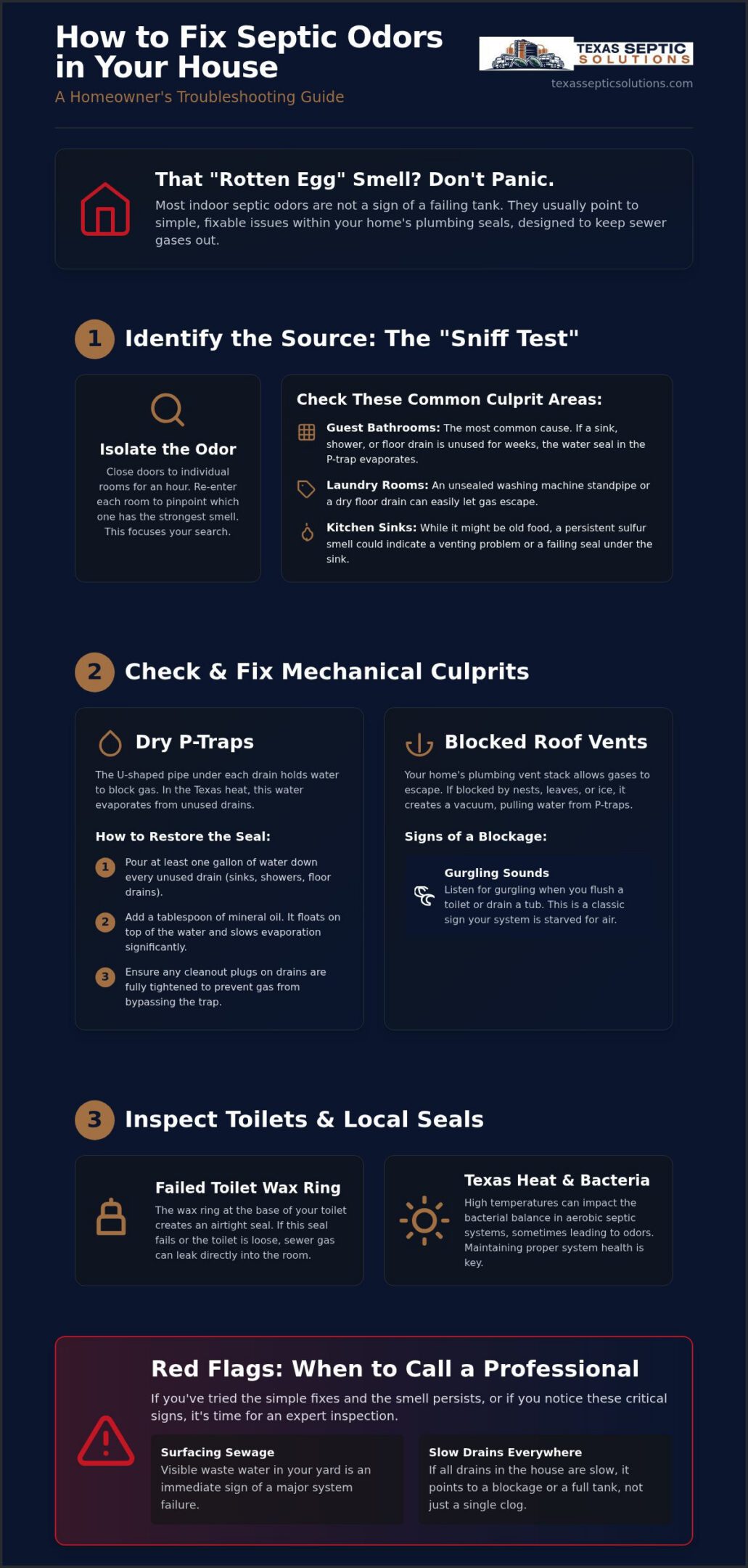
You need to distinguish between a faint whiff and a constant stench. A faint, occasional smell might just be a dry drain. A constant, heavy odor usually indicates a broken seal or a venting problem. Start your investigation by performing a “Sniff Test.” Close the doors to individual rooms for about an hour. When you re-enter, you’ll quickly identify which room is the primary source. This simple step saves you from chasing ghosts across the entire floor plan.
The Science of Sewer Gases
The “rotten egg” smell is primarily Hydrogen Sulfide. This gas is a natural byproduct of the organic breakdown happening inside your septic system. While Methane is also present, it’s actually odorless. The Hydrogen Sulfide acts as a built-in warning system for homeowners. Atmospheric pressure changes, like a sudden Texas storm or high winds, can push these gases back through your pipes. While a faint whiff is mostly a nuisance, constant exposure isn’t healthy. High concentrations can cause headaches or dizziness. It’s best to address the issue as soon as you notice a persistent scent.
Isolating the Odor: Room by Room
Once you’ve narrowed the smell down to a specific area, look for these common culprits:
- Laundry Rooms: Check the washing machine drain. If the standpipe isn’t sealed or the P-trap has dried out, gas escapes here easily.
- Guest Bathrooms: If a shower or sink hasn’t been used in weeks, the water seal in the pipe evaporates. This is perhaps the most common cause of indoor odors we see in Texas homes.
- Kitchen Sinks: A smell here might just be food trapped in a disposal. However, if the scent is metallic or sulfurous, it’s likely a venting issue or a failing seal under the sink.
Identifying the location is half the battle. Once you know which fixture is the source, you can move on to the specific mechanical fix required to restore your home’s air quality. Most of the time, the solution is much simpler than you expect.
Checking and Fixing Dry P-Traps and Blocked Vents
Once you have pinpointed the room where the smell is strongest, you can focus on the two most likely mechanical culprits: a dry P-trap or a blocked vent stack. These components are your home’s primary defenses against sewer gas. When they fail, the barrier between your living space and the septic tank disappears. Learning how to fix septic odor in house often comes down to restoring these simple physical barriers.
The P-trap is that U-shaped pipe located under every sink, tub, and floor drain. Its job is to hold a small amount of water at all times. This water acts as a liquid seal that prevents gases from drifting up through the drain. In our hot Texas climate, water in unused drains evaporates quickly. If you have a guest bathroom or a laundry room floor drain that hasn’t seen water in a few weeks, that seal is likely gone.
How to Restore a Dry P-Trap
Fixing a dry trap is a straightforward process that any homeowner can handle. Follow these steps to reset your plumbing seals:
- Step 1: Pour at least one gallon of water down every floor drain and unused sink. You should hear the water fill the trap, immediately cutting off the gas flow.
- Step 2: Add a tablespoon of mineral oil to the drain. The oil floats on top of the water, creating a barrier that significantly slows down evaporation. This is a great trick for seasonal homes or guest suites.
- Step 3: Check the cleanout plug. If your drain has a removable plug for snaking, ensure it’s tightened fully. A loose plug allows gas to bypass the water trap entirely.
If you’re still searching for how to fix septic odor in house after checking the traps, the roof is your next stop.
Clearing Blocked Roof Vents
Every home has a plumbing vent stack that allows air to enter the system and sewer gases to escape. In Texas, these vents are prime real estate for bird nests, wasps, or accumulated leaf debris. During rare winter freezes, even a small amount of ice can seal the vent shut. When the vent is blocked, your system creates a vacuum that sucks water out of your P-traps or forces gas through the seals.
Listen for a gurgling sound when you flush the toilet or drain the tub. This is a classic sign of a vent blockage. You can often clear a minor obstruction using the “Garden Hose” trick. From a safe height or using a ladder, spray a firm stream of water down the vent stack. This often flushes out nests or debris without requiring you to climb onto the roof. Never ignore a gurgling toilet. It is the system’s way of telling you the pressure is unbalanced. If the gurgling persists after you’ve tried these steps, it may be time to schedule professional septic system maintenance to ensure your venting is functioning correctly.
Inspecting Toilets and Wax Rings for Gas Leaks
If you have filled your P-traps and cleared your roof vents but the scent persists, it is time to look at the base of your toilet. This is where the most critical, yet often overlooked, seal in your home resides. When people research how to fix septic odor in house, they often focus on the tank or the drains, but the wax ring is frequently the real culprit. This ring of wax serves as the final airtight barrier between your bathroom and the septic line. If it fails, sewer gas flows freely into your home every time the air pressure shifts.
Many homeowners assume a failed wax ring will always cause a visible water leak on the bathroom floor. This is a common misconception. It is entirely possible for the seal to be broken enough to let gas escape without allowing water to seep out. You might notice a sharp increase in odor on windy days or when the septic system is under heavy use. If your toilet base is fully caulked, the caulk might even be masking a small water leak while the gas finds a way out through the subfloor or wall cavities.
The ‘Wobble’ Test for Your Toilet
The easiest way to diagnose a failed seal is to check for movement. Gently place your hands on the sides of the toilet bowl and try to rock it from side to side. A properly installed toilet should be rock solid. If there is even a tiny amount of “give” or a noticeable wobble, the wax ring has likely been compressed or shifted. Once that wax seal is broken, it cannot reset itself. Tightening the floor bolts might stop the wobbling, but it won’t fix the gas leak. If the floor underneath is soft or damaged from previous moisture, you may need to address the subfloor before a new ring will hold.
Step-by-Step Wax Ring Replacement
Replacing a wax ring is a manageable DIY task that can solve a persistent odor problem in an afternoon. First, turn off the water supply and flush the toilet until the tank and bowl are empty. After disconnecting the supply line and removing the floor bolts, lift the toilet and set it aside on an old towel. You must scrape away every bit of the old, sticky wax from both the floor flange and the bottom of the toilet to ensure the new seal bonds correctly.
When choosing a replacement, you can opt for a traditional wax ring or a modern reinforced rubber gasket. Rubber gaskets are often easier for beginners because they allow for multiple attempts at seating the toilet without ruining the seal. Once the new ring is in place, lower the toilet straight down. Use your body weight to press the toilet into the ring, then tighten the bolts snugly. Do not over-tighten, as you could crack the porcelain. Restoring this seal is a vital step in learning how to fix septic odor in house and reclaiming a fresh-smelling bathroom.
Managing Aerobic Systems and Bacterial Health in the Texas Heat
In regions like Houston, Cleveland, and Cypress, aerobic septic systems are incredibly common. These systems rely on oxygen-hungry bacteria to break down waste much faster than traditional gravity systems. However, this high-speed process makes them more sensitive to environmental changes. If you are struggling with how to fix septic odor in house, the problem might actually be originating from the biological health of your aerobic unit. When the bacterial colony inside your tank dies, the resulting gases can easily back up into your home through the plumbing vents or failed seals discussed earlier.
The intense Texas heat plays a major role here. High temperatures can cause bacterial activity to spike and then crash if the system isn’t properly balanced. When these colonies die off, they produce a thick, swampy stench instead of the relatively odorless effluent a healthy system should produce. This “dead” effluent is often what causes that sudden, overwhelming smell during the peak of summer.
The Aerobic System Odor Difference
Oxygen is the lifeblood of an aerobic system. Your air compressor must run constantly to keep the bacteria alive. If you notice a foul smell, check your compressor first. If it’s silent or vibrating excessively, your tank is likely going anaerobic. This means the oxygen-loving bacteria are dying, and smellier, less efficient bacteria are taking over. Additionally, check your chlorine tablet stack. In Texas, aerobic systems often spray treated water onto the lawn. If that spray smells like sewage rather than a faint hint of chlorine, your disinfection process has failed. A properly functioning aerobic system should never produce a noticeable odor during its spray cycle.
Maintaining Healthy Bacteria Levels
Keeping your system’s microbiome healthy is the best way to prevent odors before they start. Many common household products act as “septic killers.” Avoid pouring these down your drains:
- Bleach and Ammonia: These are highly effective at killing the very bacteria your system needs to function.
- Antibacterial Soaps: While good for your hands, they can disrupt the tank’s balance when used in high volumes.
- Chemical Drain Cleaners: Products like Drano are incredibly harsh and can cause a total system wipeout.
Instead of relying on harsh chemicals, focus on natural ways to support your system. Routine septic system maintenance is significantly cheaper than trying to reboot a dead tank. If your system has already reached a point where the smell is constant, you may need a professional to pump the tank and jumpstart the bacterial colony. If you suspect your system is failing, contact us for an emergency septic service inspection to get your home smelling fresh again.
Knowing When to Call a Professional for Septic Repair
If you have followed the steps to restore your P-traps and replaced your wax rings but still find yourself searching for how to fix septic odor in house, you are likely dealing with a deeper mechanical issue. While many smells are simple plumbing nuisances, others are early warning signs of a total system failure. Distinguishing between a minor leak and a major emergency is the best way to protect your property and your wallet. If the odor is accompanied by gurgling sounds in your pipes or slow drainage across multiple fixtures, the problem has moved beyond a DIY fix.
A common misconception is that a foul smell always means your tank is full and needs a pump-out. While pumping is a vital part of maintenance, odors often stem from broken baffles, cracked inlet pipes, or structural issues within the tank itself. In these cases, a professional camera inspection is invaluable. Technicians use specialized waterproof cameras to travel through your lines, identifying hidden cracks in vent pipes or main lines that allow sewer gas to seep into your walls and living spaces. Finding these “invisible” leaks early prevents long term structural damage and persistent health concerns.
Emergency vs. Routine Service
Recognizing a “Tier 1” emergency can save you from a catastrophic sewage backup. You should seek 24/7 emergency septic service if you notice raw sewage surfacing in your yard, water backing up into your bathtubs, or an odor that is coupled with an alarm on your aerobic control provider. These symptoms indicate that your system is no longer processing waste, creating an immediate health hazard. For less urgent issues, such as a faint but persistent scent, a proactive septic system maintenance plan ensures that small leaks are caught during routine inspections before they become a middle of the night crisis.
What to Expect During a Service Visit
When a professional arrives to diagnose a persistent odor, they don’t just look at the tank. A thorough inspection includes checking the integrity of the tank’s baffles, which prevent solids from entering the drain field, and verifying that the tank lids are airtight. Technicians will also inspect the air compressor and spray heads on aerobic systems to ensure the biological breakdown is happening correctly. Don’t live with the embarrassment of a foul-smelling home. Contact Texas Septic Solutions today for a professional inspection in Houston, Cleveland, or the surrounding areas to restore your home’s air quality and peace of mind.
Restore Fresh Air and System Health to Your Home
Dealing with foul smells doesn’t have to be a source of constant stress or embarrassment. By troubleshooting dry P-traps, inspecting your toilet’s wax ring, and supporting the bacterial health of your aerobic system, you can often resolve the issue without a major overhaul. Understanding how to fix septic odor in house is about maintaining those critical seals that keep sewer gases where they belong. However, when DIY efforts don’t clear the air, or if you notice red flags like slow drains and surfacing sewage, it’s time for expert intervention.
As local Texas septic experts, we are here to help you navigate everything from routine upkeep to high-pressure failures. Whether you need a comprehensive maintenance plan to prevent future issues or immediate 24/7 emergency service, our team has the tools and experience to protect your property. Don’t let a nuisance odor turn into a costly emergency. Schedule a Professional Septic Inspection in Cleveland or Houston today and ensure your home stays fresh and functional all year long.
Frequently Asked Questions
Is septic odor in the house dangerous to breathe?
Septic gases can be dangerous if they reach high concentrations in your home. Hydrogen sulfide, which causes that unmistakable rotten egg smell, is toxic and can cause headaches or nausea even at lower levels. Methane is also present and acts as an asphyxiant while being highly flammable. If the smell is overwhelming or causing physical symptoms, you should ventilate the area immediately and call for a professional inspection.
Can a full septic tank cause a smell inside the house?
A full septic tank can cause odors inside the house, but it usually happens because the system is backed up or under high pressure. When the tank is overfilled, gases are pushed back toward the house instead of venting properly through the yard. This pressure can force gas through your P-traps or around failing toilet seals. While pumping the tank often helps, you should also check for structural issues.
How do I clear a blocked septic vent without going on the roof?
You can often clear a blocked vent stack by using a garden hose from the ground or a steady ladder. Aim a firm stream of water directly into the vent opening to flush out bird nests, leaves, or debris. If you hear a glug sound followed by water flowing freely, you’ve likely cleared the obstruction. This is a safer way to troubleshoot how to fix septic odor in house without climbing onto high peaks.
Why does my house smell like sewage only when I run the washing machine?
Running a washing machine discharges a large volume of water quickly, which can create a vacuum in your plumbing if the vent is partially blocked. This vacuum sucks the water out of nearby P-traps, like those in a floor drain or laundry sink. Without that water seal, sewer gases enter the room immediately. You should check the laundry standpipe and ensure your roof vents are clear to maintain proper air pressure.
Will pouring bleach down the drain stop septic odors?
Pouring bleach down the drain won’t stop septic odors and will actually damage your system. Bleach kills the beneficial bacteria that break down waste in your tank. When these colonies die, the waste doesn’t decompose properly, leading to even stronger smells and potential system failure. If you need to neutralize odors, focus on fixing dry traps or mechanical seals rather than using harsh chemicals that disrupt the tank’s biology.
How often should I pump my septic tank to avoid smells?
Most Texas homeowners should have their septic tank pumped every three to five years to prevent solids from building up and causing odors. The exact frequency depends on your household size and water usage. Regular pumping ensures that gases don’t build up excessive pressure and that your drain field stays healthy. If you have an aerobic system, you might need more frequent inspections to check the mechanical components and chlorine levels.
What happens if my aerobic system alarm is going off and it smells?
An aerobic system alarm combined with a foul smell usually indicates a mechanical failure, such as a broken aerator or a failed pump. This is a Tier 1 emergency because the bacteria are no longer receiving oxygen and will die off quickly. When this happens, the waste becomes anaerobic and produces much stronger gases. You should contact a professional for emergency repair immediately to prevent a total system reboot and costly bacterial replacement.
Can heavy rain cause septic odors to enter the house?
Heavy rain can cause septic odors to enter the house by saturating the soil around your drain field or tank. When the ground is soaked, gases cannot escape through the soil as they normally would. This increases the pressure inside the system, forcing sewer gases back through your home’s plumbing. Learning how to fix septic odor in house during wet weather often involves ensuring your roof vents are completely clear to handle the extra pressure.