
How to Find the Source of Septic Odors Inside Your Huffman Home
A septic smell inside your Huffman home often starts with a plumbing issue, not a tank that needs pumping. For troubleshooting septic odors inside the house in Huffman, first note which drains or rooms smell, then run water down an affected drain for 30 seconds to refill a dry trap. If odors reach several rooms or return, a blocked vent, overloaded tank, or struggling drain field may be involved.
That smell can be unsettling, especially when you can’t tell whether it’s a minor drain issue or a sign of a larger system problem. A few careful checks can help narrow down the source without opening the septic tank or taking risks on the roof.
This guide explains how to check traps, drains, plumbing vents, and visible access points, reduce water use while you wait, and recognize when a professional inspection is the right next step. You’ll also learn which warning signs need prompt attention so you can respond calmly and protect your home.
Key Takeaways
- Track which rooms and drains smell to help narrow down whether the cause is local plumbing or a broader septic-system issue.
- Refill dry drain traps by running water in unused fixtures, and look for signs of a damaged plumbing vent without climbing onto the roof.
- Check visible plumbing and access points for loose fittings or damage, but don’t open septic tank lids yourself.
- Reduce water use while waiting for help, and note when and where the odor is strongest.
- Arrange a professional inspection if the odor persists, affects several areas, or comes with slow drains, gurgling, or wet ground.
Blocked or damaged plumbing vent pipes
A blocked plumbing vent can cause septic odors at several drains or in multiple rooms. The vent equalizes pressure in drainpipes as wastewater flows, helping drains work without pulling water from their traps. Indoor sewer gas can contain methane and hydrogen sulfide; high concentrations in enclosed spaces can be hazardous. If a strong odor persists, ventilate the house and leave the affected area while arranging a prompt inspection.
- Track where and when the smell appears. Note whether it affects one bathroom, several rooms, or multiple drains. Record whether the odor follows flushing, draining a sink, or windy weather. Several affected fixtures can point toward a shared vent problem rather than one isolated drain. These observations help narrow down the source before anyone inspects the plumbing.
- Check visible plumbing for signs of vent damage. Look at accessible pipes and joints for cracks, loose connections, or openings. A damaged section can let sewer gas escape before it reaches the roof vent. Don’t dismantle pipes or reach into openings. If the smell is strongest near a particular pipe or fitting, note its location for the inspection.
- Consider debris or freezing as possible blockages. Leaves and other debris can clog a roof plumbing vent. During a prolonged cold period, moisture inside the pipe can freeze and seal it shut. A frozen blockage may thaw after a warm day or two. If odors change with weather, keep a note of those changes rather than assuming the septic tank needs pumping.
- Keep roof checks safe. From the ground, look for obvious debris or damage around the vent outlet. Don’t climb onto the roof if you’re uncomfortable working at heights. A plumber can clear a suspected blockage with a plumber’s snake; if the smell continues after clearing, further plumbing checks may be needed. Avoid pushing tools into a vent yourself from an unsafe position.
- Notice wind-related odor patterns. Wind downdrafts can push vent odors back toward the home. If the smell appears during certain wind conditions, share that pattern during an inspection. Extending the existing vent pipe may help address downdrafts, but the vent’s position and the home’s plumbing layout matter. Don’t alter the vent without identifying the source of the odor first.
Repeated odors deserve attention, even if they fade temporarily. In Huffman, note which fixtures are affected, the weather, and any visible pipe damage. These details can help focus a vent inspection and distinguish a blockage from another plumbing or septic issue.
How do I find where the septic smell is coming from?
When troubleshooting septic odors inside the house in Huffman, note which rooms and fixtures smell first. Comparing locations with recent household activities can help narrow down the source.
Permitting requirements in Huffman or Harris County depend on the property and the planned septic work. An indoor odor alone doesn’t determine whether installation or repair work requires a permit.
Common causes include a dry P-trap, drain debris, a plumbing vent problem, or stress on the septic system. A P-trap holds water that blocks sewer gases. When its water seal dries out, odors can enter through the drain.
-
Identify possible septic odor causes
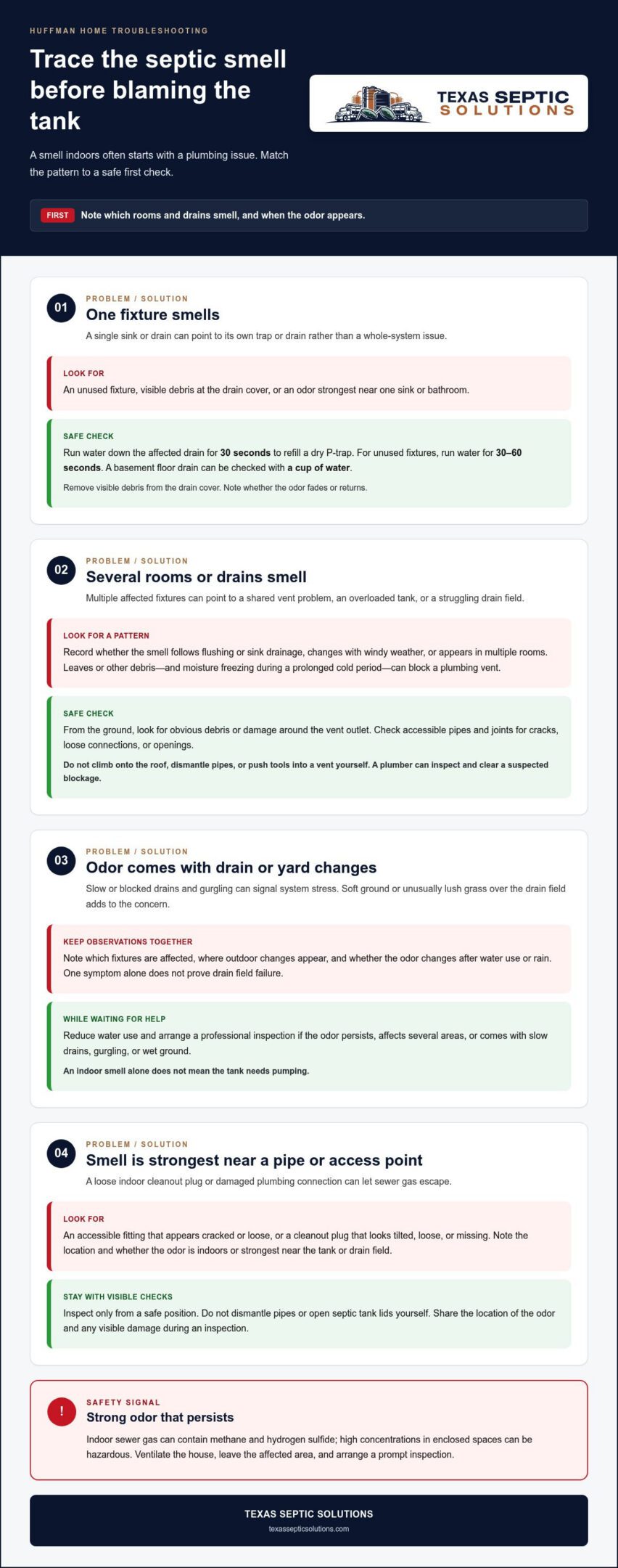
Record which rooms and fixtures are affected and what conditions coincide with the smell. An odor from one sink may point to its drain or trap, while odors in several rooms can suggest a blocked vent, an overloaded tank, or a struggling drain field. Don’t assume an indoor smell means the tank needs pumping. Note whether the odor changes after water use or rain.
-
Trace odors to a single drain
Check whether the odor is strongest at one fixture, such as a guest-bathroom sink. Run water down that drain for 30 seconds, then note whether the smell fades or returns. Clear visible debris from the drain cover and inspect accessible under-sink connections for gaps. If the odor is near a toilet, include the base and surrounding floor in your observations.
-
Refill dry traps and address drain debris
Run water in unused drains and fixtures for 30-60 seconds to refill their water seals. For a basement floor drain, pour in a cup of water and observe whether the smell changes. Remove visible debris from the drain cover before trying boiling water or a baking soda and vinegar mixture. Avoid repeated direct bleach use in the septic system.
-
Check for failing drain field warning signs
Look for indoor symptoms alongside outdoor changes. Slow or blocked drains and gurgling can signal system stress; soft ground or unusually lush grass over the drain field adds to the concern. Note where each sign appears and whether multiple fixtures are affected. One symptom alone doesn’t prove drain field failure.
If these checks don’t explain the smell, record where and when it occurs. When troubleshooting septic odors inside the house in Huffman, share your observations during an inspection to help focus on possible plumbing or septic-system causes.
Leaking tanks and loose access lids
- Locate where the odor is strongest. Compare indoor rooms with the yard near the septic tank and drain field. A smell near one bathroom drain points to a different location than an odor that’s strongest outdoors. Record the locations and any changes. An indoor smell doesn’t prove the tank is leaking; gases can enter through plumbing openings.
- Check indoor cleanout plugs from a safe position. A loose cleanout access plug in a drain can let sewer gas escape into the house. Look for a plug that appears tilted, loose, or missing, such as one near an exposed basement drain line. Don’t remove a plug or put your face near the opening. Note its location for a plumbing inspection.
- Inspect visible plumbing connections. Look around accessible pipes, cleanouts, and joints for gaps or signs of seepage. A loose connection beneath a sink, for example, may release odor near that fixture. Don’t dismantle pipes or try to seal a suspected septic-system leak with household materials. Record the affected area and whether the smell returns after ventilation.
- Observe exterior access lids without opening them. From a safe distance, look for a lid that appears displaced, cracked, or damaged. Note whether the odor is concentrated near that access point or spreads across the yard. Keep children and pets away from a damaged or displaced lid. Never lift a septic tank cover to investigate; the opening and gases can pose serious hazards.
- Look for changes in the ground around the system. Note soft, spongy soil, unusually lush grass, or wet areas near the tank or drain field. These signs can indicate septic-system stress, especially alongside slow drains or indoor gurgling. Don’t cross visibly wet or unstable ground to reach an access lid. Photograph the area from a safe spot to show its location.
- Reduce exposure if the indoor odor is strong. Open windows and doors if it’s safe, and leave rooms where the smell is concentrated. Septic gas can contain methane and hydrogen sulfide, which can be hazardous at high concentrations in enclosed spaces. Don’t use a flame near a suspected gas source. Arrange prompt help if the odor remains strong or returns.
- Share specific observations during the inspection. Explain whether the smell began near a cleanout, toilet, or exterior access lid. Mention visible damage, damp ground, slow drains, or changes after ventilation. These details can help distinguish a plumbing opening from a tank or drain-field concern. Leave the suspected area undisturbed until it can be assessed safely.
Reducing water use while awaiting help
Reduce household water use while you wait, and record when and where the odors appear.
- Pause water-heavy chores. Hold off on laundry, especially during rainstorms or wet weather. A washing machine sends a large volume of water into the septic system in a short period. If the ground is already wet, reducing that added flow can limit extra stress while the system is assessed.
- Spread necessary water use across the day. Avoid running the dishwasher, washing machine, and several showers close together. For example, wait to do laundry until other household water use has stopped. This isn’t a repair, but it can temporarily reduce incoming flow while you arrange help.
- Use sinks and showers thoughtfully. Turn off the faucet while brushing your teeth, and keep showers brief. Avoid filling a bathtub while odors or slow drains continue. These small changes reduce water entering the plumbing without stopping essential handwashing, cooking, or drinking-water use.
- Watch for signs that water use worsens the problem. Note whether gurgling, slow drains, or indoor odors worsen after laundry or when several fixtures run. Record the affected room and activity. A simple log can show whether symptoms follow household water use or remain steady.
- Track the odor in specific locations. Record whether the smell is strongest near a bathroom, basement drain, or another room. Note whether it appears after rain, a shower, or toilet use. Include any outdoor odor or soft ground near the drain field. These details give an inspector clearer context than a general report of “septic smell.”
- Keep children and pets away from affected outdoor areas. If a strong odor occurs near the tank or drain field, keep children and pets away while help is arranged. Don’t approach or open a tank access lid. If the odor is strong indoors, ventilate the home and leave the affected area.
- Keep essential use practical, not extreme. Reducing water use doesn’t mean neglecting sanitation or leaving fixtures unused indefinitely. Use water for necessary household needs, but avoid unnecessary loads and repeated flushing. Keep noting where and when the odor is strongest, then share those observations when arranging an inspection.
When to seek professional inspection
- Arrange prompt help for a strong, persistent odor. If it’s safe, ventilate the home by opening windows and doors. Septic gas can contain methane and hydrogen sulfide, which can be hazardous at high concentrations in enclosed spaces. Leave any area where the smell is strong, and don’t try to locate a gas leak with a flame.
- Call if basic checks don’t resolve the smell. If an odor remains after you refill a dry trap, clean visible drain debris, and check accessible plumbing, arrange professional help. Persistent odors after initial troubleshooting for 24-48 hours are a reason to call. Note which fixtures still smell and what steps you’ve already tried.
- Schedule an inspection for recurring odors. An odor that fades and returns still needs attention. Arrange an inspection within 1-2 weeks for septic odors, and sooner if the smell is strong or persistent. Recurrence can point to a plumbing or septic-system problem that a surface-level drain check won’t identify.
- Seek help when several fixtures show symptoms. Odors across multiple drains or rooms can signal a blocked vent, a full or overloaded tank, or a struggling drain field. Slow drains, gurgling, or wastewater backing up provide additional clues. Describe which fixtures are affected and whether symptoms appear after water use.
- Report outdoor warning signs alongside indoor odors. Tell the inspector about soft or spongy ground, unusually lush grass, or a strong smell near the tank or drain field. Keep children and pets away from affected areas. Don’t open a tank lid or cross unstable, wet ground to investigate.
- Prepare useful observations before the visit. Record when the odor began, where it’s strongest, and whether rain, laundry, or flushing changes it. Include any loose cleanout plug, visible plumbing damage, or vent concern you noticed. These details help focus the inspection without disturbing the tank or system components.
- Arrange an inspection when the odor persists. A professional can assess whether the source is plumbing, the tank, or the drain field, then identify the appropriate next step. For help with a continuing septic odor, arrange a septic inspection and share your notes about its location and timing.
Indoor sewer gas containing hydrogen sulfide can be hazardous at high concentrations in an enclosed space.
Texas Septic Solutions: New Septic System Installation
Texas Septic Solutions can help when inspection points to a septic-system problem rather than a dry trap or isolated drain issue. If damaged components or system performance are behind recurring odors, Septic System Repair or Septic System Maintenance may address the next step. Septic System Pumping is relevant when the tank needs pumping, while New Septic System Installation applies when a new system is needed. The right service depends on what the inspection finds, so share where the odor occurs and any changes in drains or yard conditions. Clear observations help focus the assessment and guide the work needed to restore reliable system function. For help with a septic concern, contact Texas Septic Solutions.
Take the Next Step Toward a Clear Answer
A careful approach to troubleshooting septic odors inside the house in Huffman can turn uncertainty into a useful next step. Track what you notice and share those observations during an inspection. A clear picture of the symptoms helps focus attention on the source, whether it involves plumbing or the septic system.
When system work is needed, Texas Septic Solutions provides septic repairs and maintenance. If the existing system needs replacement, the company also offers new septic system installation. The right solution depends on the system’s condition and what the inspection reveals, so start by having the cause assessed.
Recurring odors don’t have to remain a mystery. Contact Texas Septic Solutions to discuss your septic concern and take a practical next step toward restoring comfort at home.
Frequently Asked Questions
Quick Diagnosis: Is It Really Your Septic System?
Not always. An odor confined to one fixture may come from its drain, trap, or a nearby plumbing seal. A smell affecting several rooms, especially alongside gurgling or slow drains, raises greater concern about a shared vent or septic-system issue. Compare locations and symptoms before deciding. An indoor odor alone doesn’t show that the tank needs pumping, so identify the pattern first.
Why does my house smell like septic after it rains?
Wet weather can stress a septic system when water levels are high. If odors follow rain, note whether drains also slow or gurgle and whether the smell is stronger near the drain field. Reduce household water use during wet conditions, especially laundry during a rainstorm. A rain-related pattern is useful information for an inspection, but it doesn’t identify the odor’s source on its own.
How can you identify the source of a sewer or septic smell indoors?
Compare the odor’s strength near each fixture and room, then note what was used just before it appeared. A smell concentrated at a sink differs from one spreading across several rooms. Check accessible plumbing connections and cleanout plugs without dismantling them. If visible checks don’t explain a persistent odor, a professional can use smoke in drain lines to locate where gas escapes.
How do you troubleshoot dry P-traps, blocked vent pipes, and faulty plumbing seals?
For an unused fixture, run water to restore the trap’s water seal, then see whether the odor changes. Check visible toilet bases, under-sink joints, and cleanout plugs for gaps or looseness. A roof vent may be blocked by debris or ice, but don’t climb onto the roof if it feels unsafe. A plumber can investigate vent blockages and plumbing seals that aren’t safely accessible.
Can a septic tank or drain field problem cause indoor odors, and what are the warning signs?
Yes, septic-system trouble can contribute to indoor odors, but an odor alone doesn’t prove the tank needs pumping. Look for several signs together, such as slow drains in multiple rooms, indoor gurgling, unusually lush grass, or soft ground over the drain field. Record where each sign occurs. Indoor symptoms combined with outdoor changes give an inspector more useful context than smell alone.
What steps can homeowners take to safely reduce septic odors indoors?
Ventilate rooms with strong odors, and avoid lingering in an enclosed area where the smell is concentrated. Reduce unnecessary water use while arranging help, and keep a brief log of the odor’s location and timing. Don’t open a tank lid or repeatedly pour bleach into drains; repeated direct bleach use can affect the septic system. Keep children and pets away from affected outdoor areas.
When should you call a licensed septic professional or plumber for indoor septic odors?
Call a plumber when the evidence points to a fixture, cleanout, or plumbing vent; contact a septic professional for persistent odors with system warning signs. For Huffman homeowners, Texas Septic Solutions offers Septic System Repair and Septic System Maintenance. Its Installer II license is OS0029925, and its Maintenance provider license is MP000 1859. A strong, persistent odor warrants prompt attention and home ventilation.