
How to Choose Septic-Safe Cleaners for Your Houston Home
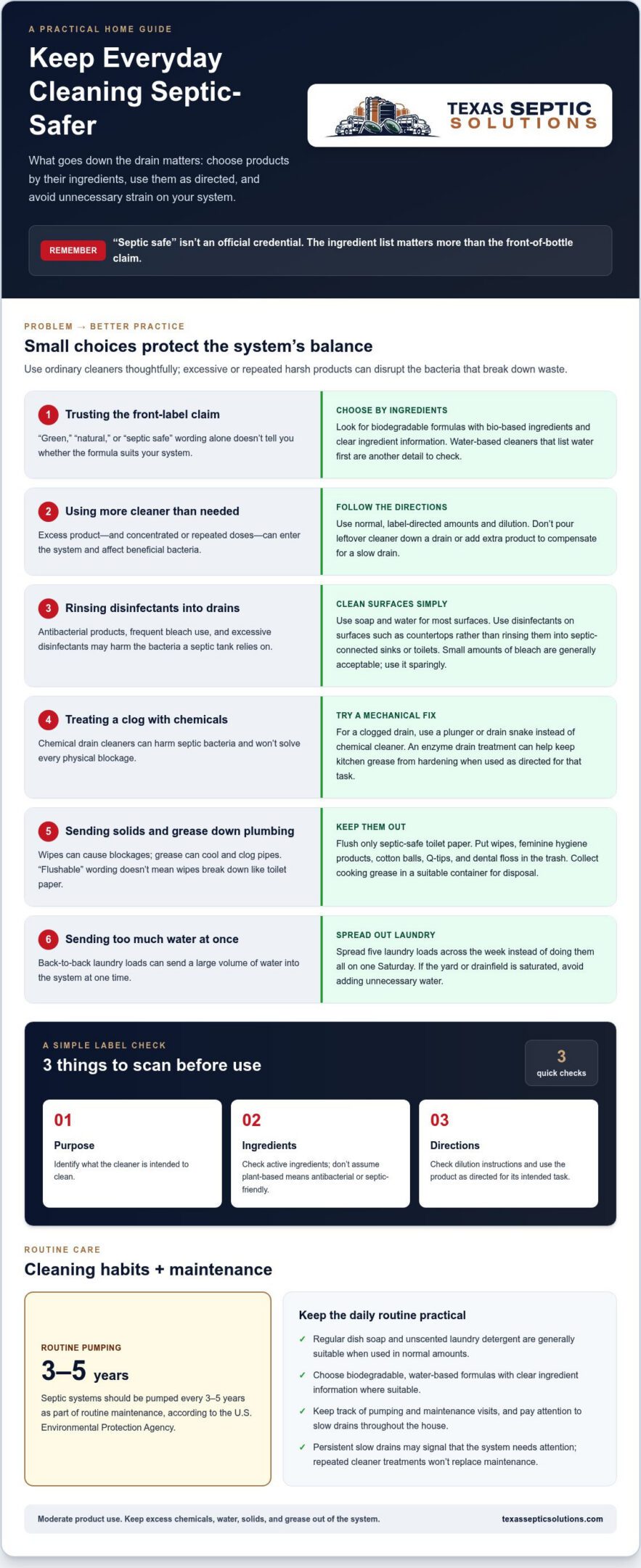
A “green” label alone doesn’t make a cleaner septic-safe. To understand how to choose septic-safe cleaning products in Houston, look for biodegradable, non-toxic formulas without antibacterial ingredients, and use them as directed rather than pouring excess cleaner down the drain. “Septic safe” isn’t an official credential, so the ingredient list matters more than the front-of-bottle claim.
It’s reasonable to want everyday products that clean well without disrupting the bacteria your septic system relies on. You don’t need to replace every cleaner or avoid routine cleaning. Choose products thoughtfully and use them in moderate amounts.
This guide explains what septic-safe means, which ingredients to look for or avoid, and how to choose laundry, dish, bathroom, and drain-cleaning products for a Houston home. You’ll also find practical cleaning habits that can help limit unnecessary strain on your system.
Key Takeaways
- Look beyond “septic safe” or “green” claims and use the ingredient list to judge whether a cleaner suits your system.
- Learn which plant-based and biodegradable ingredients can guide your everyday cleaner choices.
- Spot ingredients that may disrupt beneficial septic bacteria, and use strong disinfectants and bleach sparingly.
- Choose practical options for laundry, dishes, bathrooms, and drains while keeping excess water and cleaning products out of the system.
- Plan routine pumping every 3-5 years, according to the U.S. Environmental Protection Agency.
1. Can I use regular household cleaning products with a septic system?
Yes, many regular household products work with a septic system when used in normal amounts. Regular dish soap and unscented laundry detergent are generally suitable, while excessive cleaning chemicals can disrupt the bacteria that break down waste. Follow the product label, and don’t pour leftover cleaner down a drain. Both the ingredients and how often they enter the system matter.
Keep solid waste and grease out of connected plumbing. Don’t flush wipes, even those labeled “flushable,” because they can cause blockages rather than break down like toilet paper. Flush only septic-safe toilet paper. Put feminine hygiene products, cotton balls, Q-tips, and dental floss in the trash. Pour cooking grease into a suitable container for disposal, not the sink, where it can cool and clog pipes.
Bleach, disinfectants, drain cleaners, and antibacterial products aren’t equally safe. Small amounts of bleach are generally acceptable, but frequent or excessive use can harm beneficial bacteria. Avoid antibacterial cleaners and chemical drain cleaners. Use disinfectants on surfaces such as countertops rather than rinsing them into septic-connected sinks or toilets. For most surfaces, soap and water can replace quat-based disinfectant wipes.
There isn’t one safe amount for every cleaning product. Use normal, label-directed amounts and avoid repeated or concentrated doses entering the system. This is especially important with bleach and disinfectants, since excessive use can harm septic bacteria. For a clogged drain, try a plunger or drain snake instead of chemical cleaner. Don’t combine cleaners or use extra product to compensate for a slow drain.
Everyday water habits matter, too. Spread five laundry loads across the week instead of doing them all on one Saturday, so the system doesn’t receive a large volume of water at once. Use laundry detergent as directed, and choose septic-safe toilet paper rather than wipes or paper towels. Pouring vinegar into a connected drain won’t clear a blockage or replace system maintenance.
Houston soil, climate, and site conditions affect how wastewater moves through a property, but they don’t change which ingredients can harm tank bacteria. Favor moderate product use and fewer harsh chemicals. If the yard or drainfield is saturated, avoid adding unnecessary water through back-to-back laundry loads. The system’s design and condition also affect how it handles household wastewater.
Pair careful product use with proper maintenance. Septic systems should be pumped every 3-5 years as part of routine maintenance, according to the U.S. Environmental Protection Agency. Keep track of pumping and maintenance visits, and pay attention to slow drains throughout the house. A plunger can address a simple fixture clog, but persistent slow drains may signal that the system needs attention.
2. Biodegradable and plant-based cleaner ingredients
Start with the ingredient list, not a leaf graphic or a “natural” claim. Look for biodegradable formulas with bio-based active ingredients, and consider water-based cleaners that list water first. These details are more useful than broad marketing language. A label naming citrus, vegetable, pine-oil, or seed-based ingredients gives you specific ingredients to assess for household use.
Plant-based cleaners can handle everyday jobs such as wiping counters, cleaning bathroom surfaces, and washing floors. Match each cleaner to its intended surface, then follow the label’s dilution and use directions. More concentrate doesn’t mean better cleaning, and excess product can flow from a sink or floor drain into the septic system. Choosing septic-safe cleaning products in Houston starts with matching ingredients to the task.
For a simple bathroom option, sprinkle baking soda on a surface, scrub, then wipe or rinse it away with water. Distilled white vinegar, lemon juice, borax, and salt also appear in natural cleaner recipes. Use one formula at a time, and don’t mix household ingredients with commercial cleaners. A cleaner suitable for a counter isn’t automatically suitable for a toilet or another septic-connected fixture.
Enzyme-based cleaners have a more targeted role than all-purpose surface cleaners. An enzyme drain treatment can be used monthly to help keep kitchen grease from hardening into a blockage. Follow the product label and use it only for the drain task it names. It won’t fix a physical obstruction or replace a plunger or pipe snake when a drain is clogged.
Don’t assume “plant-based” means antibacterial or that antibacterial means septic-friendly. Antibacterial products can affect the beneficial bacteria that help a septic tank function. For routine surface cleaning, soap and water can avoid introducing an antibacterial disinfectant through a drain. Check active ingredients and intended use, especially on sprays or wipes used in bathrooms and kitchens.
Use a quick label-reading routine at the store: identify the cleaner’s purpose, scan its active ingredients, and check whether the directions require dilution. Prefer biodegradable, water-based formulas with clear ingredient information. A citrus-based cleaner may suit a greasy countertop, while simple non-antibacterial soap may work better for regular surface cleaning. This gives Houston homeowners a practical way to choose septic-safe cleaning products for daily use.
Natural formulas can reduce reliance on harsh cleaners, but they can’t resolve system problems. Persistent clogs or recurring drainage trouble need attention beyond another bottle of cleaner. For a system issue that needs professional work, septic system repair addresses the plumbing or system concern rather than masking it with repeated treatments.
3. Cleaning ingredients that can harm septic bacteria
Ingredients that may harm septic systems include antibacterial agents, quaternary ammonium compounds (quats), chlorine bleach in large quantities, and chemical drain cleaners. These substances can damage beneficial bacteria in the tank, which help break down waste. Check the active ingredients on cleaners, sprays, and wipes before using them around septic-connected drains.
Antibacterial cleaners and disinfectants deserve particular care. Quats appear in some disinfectant sprays and wipes, while methylisothiazolinone is found in many cleaners and can harm septic bacteria. Don’t assume a product is compatible simply because it cleans well or is marketed for frequent household use. Choose soap and water for routine surface cleaning when disinfection isn’t needed.
Chlorine bleach is a matter of amount and frequency. Small amounts are generally acceptable, but daily, constant use or large quantities can harm septic bacteria. Two gallons of chlorine bleach can kill functioning bacteria in a 1,000-gallon septic tank. Use the minimum amount needed for disinfection, and don’t pour concentrated bleach or leftover cleaning solution into a drain.
Drain cleaners can create a second problem: besides affecting bacteria, harsh formulas may damage plumbing or worsen a blockage. Avoid lye-based, foaming, solid, and crystal drain cleaners. A plunger or pipe snake can address many clogs without adding another chemical to the system. If a drain remains slow after mechanical clearing, repeated applications of cleaner won’t solve the underlying cause.
Look for biodegradable formulas with non-toxic, non-antibacterial, and non-chlorine ingredients. Water-based products listing water first, along with citrus-, vegetable-, pine-oil-, or seed-based cleaners, offer alternatives to harsher chemical formulas. Biodegradable ingredients break down more readily than persistent synthetic chemicals, reducing long-lasting residue entering household wastewater.
For simple cleaning tasks, distilled white vinegar, baking soda, borax, lemon juice, and salt are ingredients used in natural cleaners or household solutions. Use each for an appropriate surface and follow the product directions; natural ingredients still need careful handling. Don’t combine vinegar with chlorine bleach, and don’t pour excess homemade mixtures into septic-connected plumbing.
Water softener salt can also threaten bacteria essential to septic-system function. Check the ingredients in specialty household products, including drain treatments and disinfectants, rather than relying only on “green” wording. Scan for antibacterial claims, quats, chlorine, and harsh drain-cleaning chemicals, then choose a biodegradable alternative suited to the task.
4. Meaning and limits of “septic safe” product labels
“Septic safe” sounds official, but it isn’t a credential certified by a government or nonprofit agency. Treat it as a product claim, not proof that every ingredient is suitable for your septic tank. Check the ingredients and directions instead of relying on a green color, leaf symbol, or “environmentally friendly” wording on the front of the bottle.
Compare cleaners by the task, directions, and amount used per application. To assess price and effectiveness, compare the cost per intended use and whether a smaller directed amount handles the job. A concentrated cleaner isn’t automatically better value if you use too much or need another product to finish the task.
Look for biodegradable formulas and ingredients such as citrus, vegetable, pine-oil, or seed-based cleaners. Water-based products listing water first can also be a useful starting point. For example, baking soda can clean surfaces through scrubbing. Avoid antibacterial ingredients, quats, and large amounts of chlorine bleach, which can harm beneficial septic bacteria.
Third-party seals can offer information about a product, but they don’t establish septic compatibility by themselves. Environmental Working Group and Ecocert are examples of certifications to look for; an EPA Safer Choice label also shouldn’t replace checking ingredients and directions. Compare what each label evaluates with your specific concern: protecting the bacteria that help break down waste.
Read hazard wording as well as ingredient lists. A cleaning-product label using “warning” indicates a moderate level of hazard. That wording describes a hazard level, not whether the product is septic-safe. Follow the label’s precautions, and consider whether a routine job needs a disinfectant at all. Soap and water may be enough to wipe a kitchen counter.
Before buying, turn the bottle around and scan the full ingredient list, directions, and named certification. Look specifically for antibacterial claims, quats, and chlorine-based ingredients, then compare the stated use with your intended surface. “Green” or “environmentally certified” advertising alone doesn’t prove septic compatibility, even when the package displays an appealing seal.
Houston and Harris County homeowners can use the same ingredient-focused approach when comparing household cleaners. A septic-safe label isn’t local approval simply because a product is sold in the area. Use the product as directed, keep strong cleaners out of septic-connected drains, and choose a formula that suits the task without unnecessary chemical additives.
5. Everyday septic-safe cleaning products
Build a practical household cleaning kit around the task, not a single all-purpose chemical. For laundry, choose a low-suds liquid detergent and use the label’s recommended amount. Liquid formulas avoid the clumping powdered detergent can cause inside a septic tank. Unscented laundry detergent is generally suitable in normal amounts, and phosphate-free products are a sensible choice for septic homes.
Regular dish soap is generally suitable when used normally. Check the ingredients for phosphates, and don’t pour concentrated detergent or leftover wash solution directly into a drain. For dishwashers, use a phosphate-free, biodegradable formula. The goal is effective cleaning with measured use, not extra suds or excess product entering household wastewater.
For bathroom surfaces, baking soda offers a simple option: sprinkle it on, scrub, then wipe or rinse with water. White vinegar can help clean a toilet bowl and is safe for septic systems. For hard water stains, pour a cup of vinegar into the bowl, leave it overnight, then scrub and flush.
Choose a cleaner to match the surface. A bucket of hot water with two cups of lemon juice can serve as a natural cleaning mixture. For general bathroom and toilet cleaning, baking soda and white vinegar are familiar alternatives to antibacterial products. Don’t combine vinegar with bleach or mix household cleaners. Follow each product’s directions and use one formula at a time.
Bleach doesn’t need to be banned from laundry, but use it sparingly. Small amounts are generally acceptable, while excessive or constant use can harm beneficial septic bacteria. Oxygen bleach is an alternative for laundry. For routine cleaning, use the minimum amount needed and avoid directing bleach-heavy solutions into septic-connected drains.
Drain products need extra care. Use septic-safe liquid drain cleaner sparingly, and avoid foaming, solid, or crystal formulas. A plunger or drain snake is a useful first step for a clog. Chemical drain cleaners can harm tank bacteria and lead to costly repairs, so don’t keep pouring them into a slow drain. An enzyme drain treatment used monthly can help keep kitchen grease from hardening into a blockage.
Choose a small set of products you can use consistently: liquid laundry detergent, phosphate-free dishwashing formula, baking soda, vinegar, and a suitable surface cleaner. Read each label, measure carefully, and keep strong disinfectants for specific needs rather than routine rinsing down drains. For help keeping the system maintained alongside careful product use, schedule septic system maintenance.
Texas Septic Solutions: New Septic System Installation
Texas Septic Solutions provides New Septic System Installation for properties that need a new system, as well as repairs, maintenance, and pumping for existing systems. Careful product choices support everyday upkeep, but they can’t resolve persistent slow drains, recurring clogs, or system problems.
Turn to septic maintenance and pumping for routine system care, or repairs when a system issue needs attention. If a property needs a new septic system, installation is the relevant next step. Suitable household cleaners are one part of responsible care, alongside addressing plumbing and system concerns as they arise.
For help with your septic system, contact Texas Septic Solutions.
Make your next cleaning-product choice a confident one
Use your next shopping trip to put your decisions into practice. Keep a short note of ingredients you want to avoid, and compare it with the labels on products you already use. When a familiar cleaner changes its formula, check the label again instead of relying on its old claims. This simple habit makes choosing septic-safe cleaning products in Houston an ongoing part of household care, not a one-time research task.
Cleaning choices are one part of a healthy septic routine. If you’re also planning system work or need help with an existing concern, Texas Septic Solutions can help you consider an appropriate next step for your property.
Contact Texas Septic Solutions today to discuss your septic system. With informed product choices and attention to system needs, you can keep moving forward with confidence.
Frequently Asked Questions
WHAT DOES IT MEAN TO BE “SEPTIC SAFE”?
“Septic safe” generally describes a product intended for use in homes with septic systems, but the phrase isn’t an official certification. Treat it as a starting point, not a guarantee. Compare the ingredient list and directions on products before buying. Consider how the product will reach the tank: a cleaner wiped from a counter differs from one repeatedly rinsed into a connected drain.
Can I use bleach in my laundry with a septic system?
Yes, small amounts of bleach are generally acceptable for laundry with a septic system. Use only the amount needed for the load, and don’t make bleach a daily cleaning staple. Oxygen bleach is another laundry option. Choose a product suited to the task, follow its label, and don’t pour leftover concentrated bleach into a household drain.
Can I use regular household cleaning products with a septic system?
Yes, many regular household cleaners can be used if you choose them thoughtfully and follow their directions. A product used on a surface and wiped away may send less cleaner into plumbing than one poured into a sink. Check the label before switching products, and use a small, directed amount. If a cleaner isn’t needed for the task, plain water or soap may be enough.
What should you avoid using if you have a septic tank?
Keep items that don’t break down, such as wipes, dental floss, and cotton swabs, out of the toilet. Don’t send cooking grease, clay-based kitty litter, or feminine hygiene products down drains. These materials can contribute to clogs. For a blocked fixture, try a plunger or drain snake instead of chemical drain cleaner that may affect tank bacteria.
What makes a cleaning product septic-safe?
A suitable cleaner is biodegradable and avoids ingredients that can harm beneficial bacteria in a septic tank. Look for clear ingredient information and directions rather than relying on a “green” claim alone. For example, a water-based formula listing water first may be worth considering. Match the product to its purpose, and use it as directed instead of increasing the amount for a tougher job.
What septic-safe laundry detergents, dish soaps, and household cleaners are recommended?
Choose low-suds liquid laundry detergent, regular dish soap, and phosphate-free, biodegradable dishwashing formulas. Unscented laundry detergent is another practical option. For surface cleaning, baking soda or a simple soap-and-water solution can handle routine jobs. Don’t choose products by brand name alone: compare ingredients, intended use, and directions, then use only the amount needed for the load or task.
What cleaning products should Houston homeowners avoid if they use a septic system?
Houston homeowners should limit antibacterial cleaners, quat-based disinfectants, large quantities of chlorine bleach, and chemical drain cleaners. Avoid lye-based, foaming, solid, or crystal drain-clearing formulas. Check spray and wipe labels for antibacterial ingredients, too. A product marketed as environmentally friendly can still contain ingredients unsuitable for septic use, so review the label and choose a gentler option for routine household cleaning.