
How to Avoid Septic Emergencies During Holidays: A 2026 Homeowner Checklist
Imagine you’re halfway through a perfect holiday dinner when the guest bathroom begins to gurgle and a familiar, unpleasant scent drifts into the dining room. It’s the nightmare scenario every homeowner fears. A full-blown septic failure right when the house is packed with family isn’t just a mess; it’s an expensive disaster that can ruin your celebration. We believe the holidays should be about making memories, not managing a plumbing crisis or worrying about the steep surcharges of after-hours repairs.
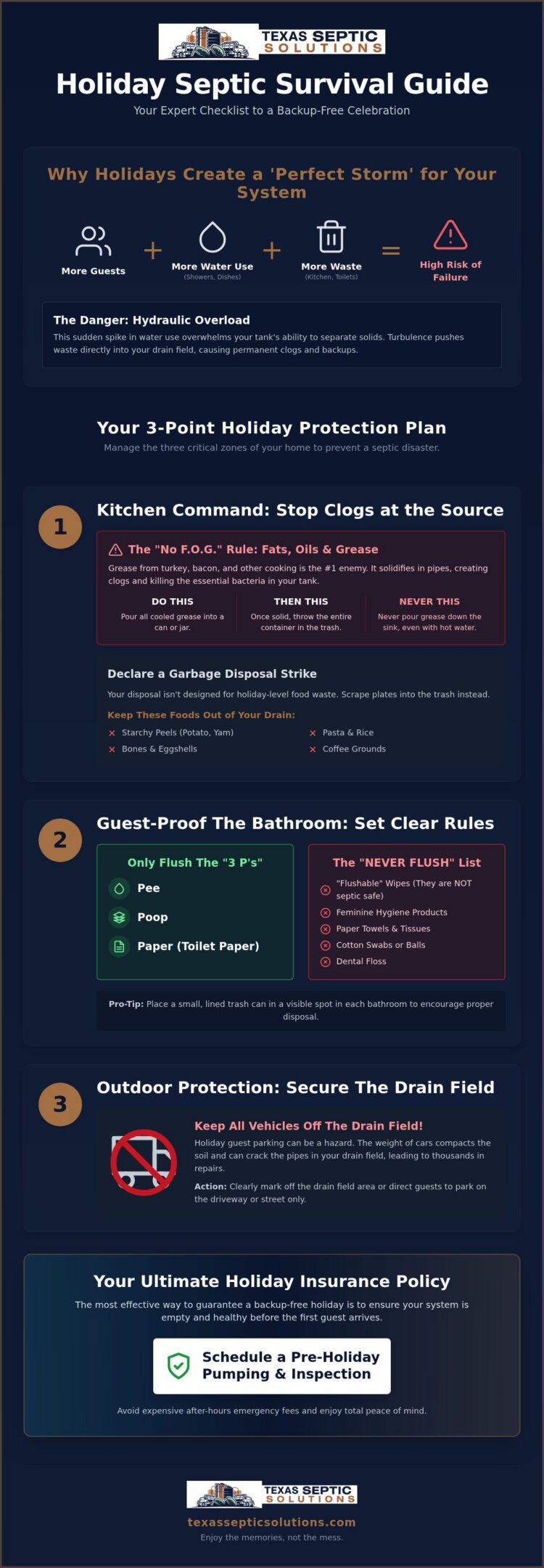
The good news is that most of these issues are entirely preventable with a little preparation. This guide shows you exactly how to avoid septic emergencies during holidays using our expert-backed 2026 homeowner checklist. At Texas Septic Solutions, we’ve seen every type of holiday backup, and we know that protection is a three-front battle involving the kitchen, the bathroom, and the backyard. You’ll learn how to set clear rules for guests, manage the extra load on your system, and why a proactive maintenance check is your best insurance policy. Let’s make sure your system is ready to handle the crowd so you can focus on the festivities with total confidence.
Key Takeaways
- Identify the “perfect storm” of high water usage and learn exactly how to avoid septic emergencies during holidays by pacing your household chores.
- Master the “No F.O.G.” rule to keep fats, oils, and turkey grease from clogging your pipes and killing essential tank bacteria.
- Establish clear guest rules for the bathroom to ensure only the “3 P’s” go down the drain, avoiding the common pitfalls of “flushable” wipes.
- Secure your drain field from heavy guest vehicles to prevent soil compaction and costly structural damage during wet Texas winters.
- Learn why scheduling a professional pumping and inspection before the first guest arrives is the most effective way to guarantee a backup-free holiday.
Why the Holidays Create a ‘Perfect Storm’ for Your Septic System
Holiday planning usually involves menus and guest lists, but the most critical guest is the one living under your lawn. Your septic system operates on a delicate balance of biology and timing. When you shift from a standard daily routine to 24/7 occupancy with a house full of relatives, that balance breaks. Instead of the usual few loads of laundry and quick morning showers, the system faces constant demand. This sudden spike in usage is exactly why homeowners need to know how to avoid septic emergencies during holidays.
It is easy to forget about your tank when you’re managing holiday stress. Most people don’t think about their plumbing until it stops working. This “out of sight, out of mind” mentality often leads to disaster. When you combine a neglected tank with a dozen extra guests, you’re essentially asking the system to do a month’s worth of work in a single weekend.
The Science of Hydraulic Overload
Hydraulic overload is the primary cause of holiday backups. This occurs when more water enters the tank than it can process in a given timeframe. To understand how septic systems work, you have to look at the settling period. In a healthy tank, gravity separates waste; solids sink to the bottom while grease floats to the top. Excessive water flow from back to back showers or heavy dishwashing creates turbulence. This turbulence pushes unsettled solids directly into your drain field, where they cause permanent clogs.
Local geography makes this even riskier for us. In East Texas, our heavy clay soils are already slow to drain. When winter rains saturate the ground in areas like Cleveland or Cypress, the drain field has nowhere to send that extra water. If your soil is already “full” from rain, even a small increase in indoor water use can trigger a total system failure.
Why Your System is More Vulnerable in 2026
As we move through 2026, many homes in growing communities like Huffman and Shepherd are relying on aging infrastructure. These older systems weren’t always designed for the high volume of modern life. Even high efficiency appliances can pose a challenge. While they use less water per cycle, the concentrated waste and frequent use of modern detergents can disrupt the natural bacterial breakdown in older tanks. Understanding these specific vulnerabilities is the first step in learning how to avoid septic emergencies during holidays. It’s about knowing the limits of your home and respecting the capacity of the soil around it.
The Holiday Kitchen Checklist: Preventing Clogs at the Source
The kitchen is the heart of the home, but it’s also the primary source of plumbing failures during the feast season. Large meals produce a massive volume of waste that your system isn’t used to handling. The most effective way to protect your home is to declare a “Garbage Disposal Strike.” Even if your disposal is marketed as septic-safe, it’s not designed to process the sheer volume of scraps generated during a holiday dinner. Shifting your habits in the kitchen is a fundamental step in learning how to avoid septic emergencies during holidays.
Managing Fats, Oils, and Grease (F.O.G.)
Grease is the silent killer of septic systems. When liquid fats like turkey drippings or bacon grease hit your cold pipes, they solidify almost instantly. This creates a waxy, impenetrable plug that stops water flow before it even reaches your tank. Beyond causing physical clogs, fats coat the beneficial bacteria in your tank, essentially suffocating the organisms responsible for breaking down waste. To follow official EPA guidance, you should never pour grease down any drain. Instead, use an old coffee can or glass jar to collect drippings. Once the grease cools and hardens, toss the container in the trash.
Don’t fall for the myth of “degreasing” dish soaps. These products are excellent at breaking up grease in your sink, but they often just transport that grease further down your plumbing. Eventually, the soap loses its effectiveness, and the grease separates and settles in your pipes or drain field. If you’re worried about existing buildup before the relatives arrive, scheduling septic system maintenance is a smart move to ensure your lines are clear and ready for the load.
Holiday Foods to Keep Out of the Drain
Certain festive foods are notorious for causing backups. Starchy items like potato peels, rice, and pasta are particularly dangerous. When these items are ground up, they transform into a thick, heavy paste that acts like glue inside your pipes. Fibrous vegetables like celery, pumpkin guts, and onion skins are equally hazardous. Their long, tough strings can wrap around disposal blades or snag other debris in the plumbing, leading to a massive obstruction.
Keep a close watch on “heavy hitters” that simply don’t break down. Coffee grounds and eggshells are common culprits that sink to the bottom of your tank and stay there. They take up valuable space that should be reserved for actual waste, which leads to more frequent pumping needs. By keeping these items in the compost pile or the trash can, you drastically reduce the risk of a messy, embarrassing backup in the middle of your celebration.
Guest Management: Educating Your Visitors Without the Awkwardness
Most holiday visitors arrive from cities where they never have to think about where their waste goes. They are used to municipal sewer systems that can handle almost anything. When these guests stay in a home with a septic tank, their city habits can lead to a disaster in your backyard. Managing your guests is a delicate but necessary part of learning how to avoid septic emergencies during holidays. The simplest way to start is by teaching the “3 P’s” rule: only pee, poop, and paper should ever go down the toilet.
Providing a subtle nudge is often better than a long lecture. Many homeowners find success by placing a small, framed sign in the guest bathroom. A simple message like, “Welcome! We’re on a septic system, so please only flush toilet paper. Everything else belongs in the bin. Thank you!” takes the pressure off you while protecting your pipes. This transparent approach ensures your system stays functional without making anyone feel uncomfortable.
The Flushable Wipes Myth
Despite what the packaging claims, there is no such thing as a “flushable” wipe in a septic environment. These products are currently the number one cause of emergency service calls in Cypress and the surrounding areas. Unlike standard toilet paper, which is designed to dissolve within seconds of hitting the water, wipes are made of synthetic fibers that stay intact for months. They don’t break down in the tank; instead, they float and snag on the inlet or outlet baffles. This creates an immediate blockage that can cause raw sewage to back up into your home during the busiest part of your celebration.
Scheduling Water Usage
When you have a full house, your septic system never gets a “rest” period to settle. This constant flow of water keeps the tank in a state of turbulence, which prevents solids from sinking. To manage this, implement a 10-minute rule between showers. This short gap allows the water level to stabilize and prevents the tank from becoming overwhelmed. Following university extension best practices for water conservation is especially critical during high occupancy periods.
You should also be strategic about your appliances. Try to finish all heavy laundry a few days before guests arrive. If you must wash clothes during the visit, spread the loads out over several days rather than doing them all at once. For the kitchen, only run the dishwasher when it is completely full. Setting it to run late at night when the rest of the house is asleep gives the system several hours to process the water without competing with showers or toilet flushes. These small adjustments in timing can be the difference between a stress-free weekend and a call for emergency service.
Outdoor Protection: Yard Rules for Holiday Visitors
When your driveway fills up with visiting relatives, the front lawn often becomes an overflow parking lot. This is one of the most dangerous scenarios for your property. Most guests don’t realize that under that patch of grass lies a network of pipes and carefully balanced soil. Learning how to avoid septic emergencies during holidays requires setting firm boundaries for where people can and cannot drive.
Why Parking on the Drain Field is Fatal
A modern SUV can weigh over 5,000 pounds. When you park multiple vehicles on top of your drain field, that weight is transferred directly into the ground. In East Texas, our winter soil is often saturated with rain, making it soft and easily compressed. This pressure can crush lateral lines and snap the PVC pipes connecting your tank to the field. Even if the pipes hold, the weight compacts the soil, destroying the tiny air pockets needed for the ground to absorb and treat water. If you suspect your system has already suffered structural damage from heavy traffic, consult our guide on Septic System Repair in Texas to understand your options before the next big event.
Marking Your System for Safety
You can’t expect guests to know your system’s layout by heart. Take a few minutes before the first car arrives to mark the “no go” zones. Use decorative flags, potted plants, or even a length of festive ribbon to create a temporary barrier around the drain field and tank area. This doesn’t have to look industrial; a few well placed garden gnomes or solar lights can serve as effective guides for arriving visitors.
Be careful with holiday decorations as well. Heavy lawn ornaments or large inflatable displays should never sit directly on top of the tank lid or risers. These components need to stay accessible in case of an emergency. Make sure your risers are visible so a guest doesn’t accidentally trip over them or clip them with a vehicle. Protecting these external components is a simple but vital part of how to avoid septic emergencies during holidays. If you’re unsure where your components are located, our team can help with professional septic system maintenance to map out your yard and ensure everything is protected.
Pre-Holiday Preparation: The Ultimate Insurance Policy
The best way to handle a crisis is to prevent it from ever starting. While managing your kitchen and yard is helpful, the most reliable way to ensure your system survives the season is through proactive preparation. If you’re wondering how to avoid septic emergencies during holidays, the answer usually starts with a clean tank and a functional pump. Taking these steps now means you won’t be searching for a technician while your guests are waiting for dinner.
Start by doing a quick walk-through of your system. Check the area around your tank for any soft spots or unusual odors that might indicate a slow leak. If you have an aerobic system, ensure your air compressor is humming and the spray heads are clear of debris. These small checks can reveal minor issues before the added stress of a full house turns them into major failures.
The Pre-Holiday Pump-Out
If it’s been more than three years since your last service, scheduling a pump-out is your best insurance policy. Starting the holiday season with an empty tank provides a massive “buffer” for the hydraulic overload caused by extra guests. It gives your system more time to process wastewater before the tank reaches capacity. When you search for Septic Tank Pumping near me, you aren’t just getting a cleaning; you’re getting a professional eyes-on inspection. Our technicians check for thinning baffles or cracks in the tank that could lead to a sudden failure when the system is under stress. Catching a worn-out baffle in November is much better than dealing with a collapsed one on Christmas Day.
Emergency Response: If the Alarm Sounds
Most modern aerobic systems include an alarm box with a red light and a buzzer. If this activates during your holiday party, don’t panic. First, check your breaker box to ensure a fuse hasn’t tripped. Most alarm boxes have a “silence” or “reset” switch on the bottom or side that will stop the noise while keeping the light on as a reminder. A holiday alarm usually indicates high water levels requiring immediate pumping.
Once you’ve silenced the buzzer, immediately reduce all water usage in the house. Stop the dishwasher, tell guests to hold off on showers, and call for professional help. Having the number for a 24/7 emergency septic service saved in your phone can turn a potential disaster into a minor scheduling hiccup. At Texas Septic Solutions, we prioritize these urgent holiday calls to get your home back to normal as quickly as possible.
Final Prep Steps
Before the first guest knocks, stock up on septic-safe supplies. Stick to high-quality, single-ply toilet paper that breaks down quickly. You might also consider a fresh dose of septic-safe enzymes to give your tank’s bacteria a boost before the heavy cooking begins. These small steps, combined with a professional check-up, are the final pieces of the puzzle for a worry-free holiday. Our team is always ready to provide the dependable, local expertise you need to keep your home functional through 2026 and beyond.
Secure Your Home for a Stress-Free Holiday Season
You’ve worked hard to make your home welcoming for the holidays. By following this 2026 checklist, you’ve taken the most important steps to protect your property and your wallet. Preventing hydraulic overload starts in the kitchen and ends with clear boundaries for your guests. Managing fats and oils, setting bathroom rules, and marking your drain field are simple tasks that pay off in total peace of mind. You shouldn’t have to spend your celebration worrying about what’s happening under your lawn.
Understanding how to avoid septic emergencies during holidays is about being proactive rather than reactive. As your reliable local authority, Texas Septic Solutions is here to ensure your system is ready for the extra load. We’re a locally owned and operated expert team providing 24/7 emergency service in Cleveland, Houston, and Cypress. If a critical failure happens, our rapid response times mean we’ll be there to fix it fast. Focus on your family and let us handle the technical details of your home’s functionality.
Frequently Asked Questions
Can I use septic additives to help my system handle holiday guests?
You shouldn’t rely on additives to compensate for a high guest count. While some products claim to boost bacteria, they can’t replace a professional pump-out or fix an overloaded tank. In some cases, these chemicals stir up settled solids, pushing them into your drain field and causing clogs. Focus on water conservation and proper waste disposal instead. If you’re worried about your system’s capacity, a pre-holiday inspection is a much safer investment than a box of chemicals.
Is it safe to use the garbage disposal at all during the holidays?
It’s best to keep your garbage disposal turned off when you have a house full of people. Even “septic-safe” disposals grind food into fine particles that settle slowly and fill your tank much faster than human waste. During the holidays, the sheer volume of scraps from large meals can easily overwhelm your system’s ability to process solids. Use a compost bin or the trash can for food waste to ensure your pipes stay clear and functional.
How many extra guests can my septic system realistically handle?
Most residential systems are designed based on the number of bedrooms in the home, typically allowing for two people per bedroom. If you have a three-bedroom house, your system is likely built for six full-time residents. Doubling that number for a weekend creates a massive spike in water usage. Learning how to avoid septic emergencies during holidays involves understanding these limits and spacing out activities like laundry and showers to give the system time to recover.
What should I do if my septic tank overflows during a holiday party?
If you notice an overflow or backup, you must stop all indoor water usage immediately. This includes flushes, showers, and running the dishwasher. Continued use will only make the mess worse and potentially damage your home’s interior. Once the water is off, call for our 24/7 emergency septic service. We provide rapid response times in Cleveland and Houston to handle these critical failures, ensuring your holiday gathering gets back on track as quickly as possible.
How far in advance should I schedule a pre-holiday septic pumping?
You should aim to schedule your pumping at least two to four weeks before your guests arrive. This timeframe ensures you get a preferred appointment slot before the holiday rush begins. It also gives you a small window to address any minor repairs or component replacements our team might discover during the inspection. Being proactive is the most effective strategy for those looking at how to avoid septic emergencies during holidays while maintaining a stress-free schedule.
Are there specific brands of toilet paper that are better for my septic system?
You don’t need a specific brand, but you should look for rolls labeled septic-safe or choose high-quality, single-ply options. These products are designed to dissolve rapidly when they hit the water in your tank. Avoid ultra-plush, multi-ply, or quilted varieties, as the thick fibers take much longer to break down. If the paper stays intact, it can snag on the tank’s baffles and lead to an immediate backup in your guest bathroom.
What are the early warning signs that my system is struggling with the holiday load?
Keep an eye out for slow-draining sinks or toilets that require multiple flushes. You might also hear gurgling sounds coming from the pipes or notice a faint sewage smell near the tank or drain field. These are clear indicators that your system is reaching its hydraulic limit. If you see water pooling in the yard or if your aerobic alarm activates, it’s time to call for professional help before a slow drain turns into a total backup.
Will my aerobic septic system handle guests differently than a conventional one?
Aerobic systems are generally more efficient at treating waste, but they’re also more sensitive to sudden surges in water volume. The mechanical components, like the air compressor and spray heads, must work harder to process the extra load. Conventional systems rely purely on gravity and soil, so they can become saturated more easily in wet Texas winters. Regardless of your system type, pacing out water usage is essential to prevent the tank from becoming overwhelmed by a large group.