
Houston Restaurant Septic Pumping: 2026 Commercial Guide
Imagine it’s a busy Friday night in the Heights, every table is full, and suddenly, a foul odor drifts from the floor drains. A sewage backup during peak hours doesn’t just ruin the atmosphere; it can shutter your doors for days and lead to staggering emergency repair bills. For owners managing septic pumping for restaurants Houston, staying ahead of these disasters is the difference between a profitable shift and a public health nightmare.
We know you’re juggling enough with staffing and rising food costs without having to worry about Harris County health inspectors or complex grease trap regulations. You need a system that works silently in the background so you can focus on your guests. This 2026 guide promises to simplify your commercial waste management, helping you achieve zero downtime and total compliance with local laws.
We’ll walk you through the latest discharge limits, the critical 25% rule for grease traps, and the documentation you must keep on hand to avoid fines reaching $2,000 per violation. By the end, you’ll have a clear roadmap to predictable maintenance and a sanitary kitchen that never misses a beat.
Key Takeaways
- Understand why a commercial kitchen’s high-volume water usage requires a different bacterial management strategy than a standard residential system.
- Learn how high kitchen temperatures can cause grease to bypass traps and solidify deep within your septic lines, leading to sudden blockages.
- Navigate the latest Harris County Health Department standards and learn which specific records you must keep for septic pumping for restaurants Houston.
- Discover how to calculate an optimal pumping schedule based on your seating capacity and specific menu type to avoid over-servicing or system failure.
- Establish a proactive maintenance plan to ensure your restaurant stays open and avoids the high costs of emergency plumbing failures during peak hours.
The Unique Demands of Restaurant Septic Systems in Houston
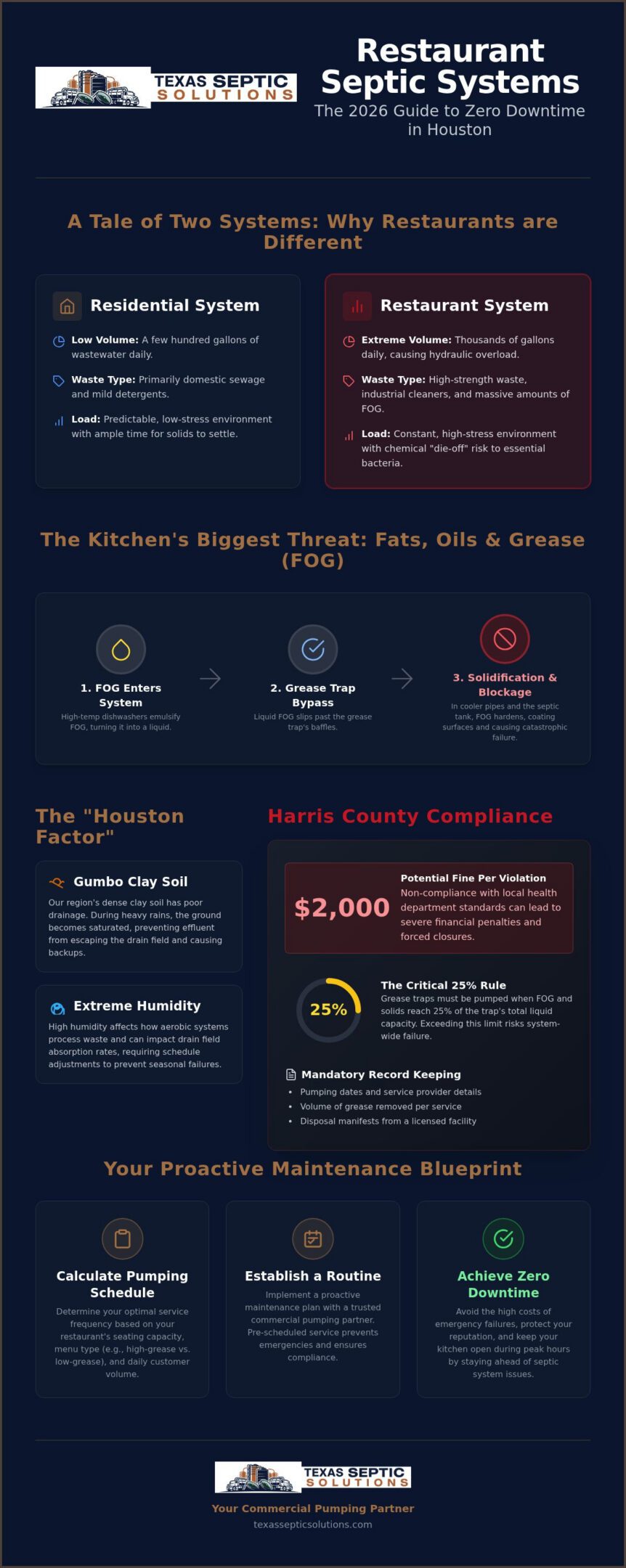
A restaurant septic system isn’t just a larger version of a home setup; it’s a high-performance engine running at redline every single day. While a typical family of four might generate a few hundred gallons of waste daily, a busy Houston diner can process thousands. This constant pressure creates a high-load environment where the margin for error is razor thin. For owners, consistent septic pumping for restaurants Houston is the only way to protect this infrastructure from the unique stresses of the food service industry.
The health of your septic tank is directly tied to your restaurant’s uptime. When the system fails, the kitchen stops. Without functional drainage, you can’t run dishwashers, prepare food, or provide restrooms for guests. In our experience across Harris County, the top three causes of restaurant septic failure are excessive grease bypass, chemical “die-off” from industrial cleaners, and hydraulic overloading during peak dining surges. Maintaining the delicate bacterial balance in your tank is essential to keep your doors open and your drains clear.
Residential vs. Commercial Septic Needs
The primary difference between home and commercial systems is the sheer volume and “strength” of the waste. Restaurants often process more effluent in twenty-four hours than a standard household does in an entire week. This massive daily flow doesn’t give solids much time to settle, increasing the risk of particles escaping into your drain field. To manage this, most establishments rely on understanding what a grease trap is and how it serves as the first line of defense for the septic tank.
Beyond volume, the chemical load in a restaurant is much harsher. Industrial dishwashers and high-strength sanitizers are designed to kill bacteria on plates, but they also kill the beneficial enzymes in your septic tank. Without these “good” bacteria, solids build up rapidly. High-protein waste and food particles further complicate the process, making routine septic pumping for restaurants Houston a functional necessity rather than a suggestion.
The “Houston Factor”: Climate and Soil Challenges
Operating a septic system in Houston and Cypress presents geographical hurdles you won’t find elsewhere. Our region is famous for its “gumbo” clay soil, which is notorious for poor drainage. When heavy East Texas rains hit, the ground saturates quickly, leaving nowhere for your effluent to go. This can cause backup issues even if your tank isn’t technically full.
The extreme humidity also affects how aerobic systems “breathe” and process waste. Local expertise is required to navigate these geological shifts and ensure your system is calibrated for the specific soil conditions on your property. We understand how the local climate impacts your drain field’s absorption rates and can help you adjust your maintenance schedule to prevent seasonal failures.
Fats, Oils, and Grease (FOG): Managing the Kitchen’s Biggest Threat
Fats, oils, and grease (FOG) serve as the primary disruptor of commercial effluent flow. While every restaurant uses grease traps, these devices aren’t foolproof. High-temperature commercial dishwashers often emulsify fats, turning them into a liquid state that slips right through the baffles of even a well-maintained trap. Once this hot, greasy water travels further down the line and hits the cooler environment of your septic tank, the grease begins the “solidification” process. It hardens against the walls of your pipes and forms a thick, buoyant layer in your tank that can eventually migrate into your drain field.
This buildup is more than just a nuisance; it’s a mechanical killer. Grease that bypasses the trap can coat aerobic system aerators and foul up expensive submersible pumps. When these components are covered in a layer of solidified fat, they can’t move water or oxygen, leading to total system stagnation. Consistent septic pumping for restaurants Houston is the only way to remove this accumulated FOG before it migrates into sensitive downstream components. If you’ve noticed slow drains or odors, it’s often a sign that FOG has already compromised your primary tank’s capacity.
Grease Trap Integration with Septic Tanks
Think of your grease trap and septic tank as a two-stage defense system. The trap catches the heavy hitters, while the septic tank manages the remaining organic waste. However, if the trap is neglected, the septic tank is forced to do a job it wasn’t designed for. Houston regulations are strict, requiring traps to be cleaned at least every 90 days or when they hit the “25% rule,” where a quarter of the trap’s depth is filled with solids and grease. Following these standards is vital to prevent the kitchen’s biggest threat from overflowing into your main septic lines.
Your kitchen staff plays a huge role in this ecosystem. Simple changes, like scraping plates into the trash instead of using the pre-rinse sink, can significantly reduce the FOG load. If you start seeing “grease caps” or floating mats in your septic tank during a routine inspection, it’s a clear signal that your kitchen practices or trap maintenance needs an immediate adjustment.
Aerobic System Vulnerabilities in Food Service
Aerobic systems are incredibly common in the Houston area because they handle our heavy clay soils better than traditional systems. However, they are also highly sensitive to grease. The aerator, which is the heart of the system, relies on small pores to distribute oxygen. Grease quickly clogs these pores, suffocating the beneficial bacteria and turning your clear effluent into a dark, odorous mess. The cost of replacing fouled aerators is significantly higher than the cost of regular septic pumping for restaurants Houston.
When grease causes a mechanical failure, you can’t afford to wait. We provide 24/7 emergency support for these exact scenarios. If your system has already suffered a component failure due to grease intake, you can learn more about the recovery process in our guide to Septic System Repair. Staying proactive with your pumping schedule ensures these sensitive parts stay clean and functional.
Houston Regulatory Compliance and Health Department Standards
Harris County Public Health doesn’t just look at your refrigerator temperatures; they’re deeply concerned with how your facility handles waste. In the Houston area, septic oversight is a collaborative effort between local health departments and the Texas Commission on Environmental Quality (TCEQ). For food service establishments, your Food Dealer Permit is directly tied to your ability to demonstrate sanitary waste disposal. Failing to prioritize septic pumping for restaurants Houston can lead to immediate permit suspension if an inspector determines your system poses a public health risk. Beyond local permits, environmental contamination carries heavy legal ramifications, including potential civil penalties and remediation costs that can cripple a small business.
Inspection-Ready Documentation
When an inspector arrives, they’ll ask for your paperwork before they even step outside to look at your tank. You must maintain a detailed pumping log that shows every service date and the name of the licensed professional who performed the work. Under Houston’s Special Waste Program, restaurants are required to keep waste manifests from grease trap and septic cleanings on-site for a period of 5 years. These manifests prove that your waste was transported and disposed of at a TCEQ-authorized facility, shielding you from liability for illegal dumping.
Organizing these records can be a headache for busy managers. A structured Septic System Maintenance Plan is the most effective way to ensure you’re always ready for a surprise visit. It moves your compliance from a reactive scramble to a predictable, documented routine that satisfies both county inspectors and state regulators.
Avoiding Fines and Closures
Violations of Houston’s Fats, Oils, and Grease (FOG) regulations are costly, with fines ranging from $250 to $2,000 per violation. Common red flags that trigger these penalties include exceeding the 200 mg/L grease discharge limit or allowing solids to accumulate beyond the 25% threshold. However, the most severe consequence is an immediate shutdown. If an inspector finds surfacing sewage in your parking lot or detects persistent odors in your dining area, they have the authority to close your doors until the issue is fully remediated by a licensed Texas septic professional.
We take a “Neighborly Expert” approach to these regulations. Instead of just showing up when there’s a disaster, we help you understand the specific requirements for your precinct. This proactive stance prevents regulatory headaches and keeps your restaurant in good standing with the community and the health department alike.
Determining Your Restaurant’s Pumping Frequency
Determining the right schedule for septic pumping for restaurants Houston is a calculation of volume, menu type, and local soil conditions. While a standard residential tank might go three to five years between services, a commercial kitchen operates on a completely different timeline. Waiting for a backup to occur is the most expensive strategy you can employ. Emergency calls often involve after-hours labor rates, potential health department fines, and lost revenue from an unscheduled closure. High-traffic kitchens generally require a pumping window of 30 to 90 days to maintain system equilibrium.
Your menu also dictates your frequency. A Texas BBQ joint processing heavy briskets and sides will accumulate solids and grease much faster than a small cafe serving sandwiches and salads. If your seating capacity has increased or you’ve expanded your kitchen hours, your previous maintenance schedule is likely outdated. Staying ahead of these issues with routine septic pumping for restaurants Houston is the most cost-effective way to manage your facility and protect your investment.
The Volume-Based Scheduling Model
We generally categorize pumping needs based on the “load” your system carries daily. Use these seating benchmarks as a starting point for your maintenance calendar:
- Small Cafes (1-50 seats): These establishments typically need pumping every 6 to 12 months, depending on dishwashing volume.
- Full-Service Restaurants (50-150 seats): Most mid-sized Houston eateries require quarterly pumping to prevent grease migration.
- High-Volume/24-Hour Diners: Facilities with constant flow often need monthly or bi-monthly inspections to ensure the system isn’t overwhelmed.
If you’re unsure where your establishment falls on this timeline, we can help you establish a Septic System Maintenance Plan tailored to your specific kitchen volume.
Warning Signs Your Tank is Reaching Capacity
Your plumbing will often try to tell you there’s a problem before a total failure occurs. Slow-draining commercial sinks or floor drains that “burp” when the dishwasher runs are early indicators that your tank’s capacity is maxed out. You might also notice gurgling sounds in the pipes during your peak lunch or dinner rush when water usage is at its highest.
Odors are another major red flag. If guests can smell sewage near your outdoor dining area or parking lot, your system is already in a state of distress. These smells indicate that gases are escaping because the tank is too full to process waste correctly. For a detailed breakdown of what to do if your system starts acting up, check our guide on Signs Septic Tank is Full to troubleshoot the issue before it becomes an emergency.
Texas Septic Solutions: Houston’s Commercial Pumping Partner
Texas Septic Solutions isn’t just another contractor; we’re a dedicated partner in your restaurant’s operational success. Our specialized commercial pumping fleet is built specifically for the high-volume demands of Houston’s food service industry. We understand that in the hospitality world, image is everything. That’s why our commitment to clean, professional, and discreet service is at the core of what we do. We aim to be the silent guardian of your facility, ensuring that septic pumping for restaurants Houston occurs without interfering with your guests or your kitchen’s rhythm.
Being a “one-stop” resource means we handle everything from routine maintenance to complex system repairs. We take the burden of waste management off your plate so you can focus on staffing and service. By choosing a local authority that is licensed, bonded, and insured, you gain the peace of mind that your facility is in the hands of seasoned experts who have seen every possible scenario in the Harris County area.
24/7 Emergency Support for Food Service
Plumbing disasters don’t follow a 9-to-5 schedule. A sewage backup on a busy Friday night can feel like a death sentence for your weekend revenue. We provide 24/7 emergency septic service to ensure your doors stay open even when the unexpected happens. Our rapid response teams are strategically positioned to reach locations in Houston, Cypress, and Cleveland quickly. We stand by our “Neighborly Expert” promise: when your system fails during a peak shift, we show up with the urgency and accountability you expect from a local partner.
Customized Maintenance for Multi-Location Groups
Managing the utilities for a single restaurant is a challenge, but overseeing a multi-location group requires a different level of coordination. We specialize in streamlining waste management for Houston restaurant owners who need consistency across several properties. Our customized plans offer predictable billing and scheduled service, which eliminates the stress of surprise repair costs. This proactive approach ensures every location in your group remains compliant with local health standards.
Don’t wait for a slow drain to become a health code violation. We invite you to contact us for a comprehensive commercial site evaluation. We’ll assess your current system’s health, analyze your kitchen’s load, and build a maintenance schedule that guarantees uptime and total regulatory compliance.
Protect Your Business with a Professional Maintenance Strategy
Running a successful kitchen in Houston requires more than just great food; it demands a functional and compliant infrastructure. By mastering Fats, Oils, and Grease (FOG) management and adhering to Harris County’s strict documentation standards, you protect your restaurant from sudden closures and costly fines. A customized schedule for septic pumping for restaurants Houston ensures that high-volume water usage and kitchen waste don’t turn into a Friday night disaster. You’ve worked hard to build your brand, and your septic system should support that growth, not hinder it.
As licensed and insured local experts, we are here to handle the heavy lifting. Whether you need a routine inspection or 24/7 emergency service, we proudly serve the Houston, Cypress, and Cleveland communities with discreet and dependable care. Don’t wait for a backup to disrupt your operations. Get a Commercial Pumping Quote for Your Houston Restaurant today and keep your focus where it belongs: on your guests. We’re ready to help you maintain a clean, sanitary, and thriving establishment for years to come.
Frequently Asked Questions
How much does septic pumping cost for a restaurant in Houston?
Pricing for septic pumping for restaurants Houston varies based on tank capacity and solid accumulation levels. Since commercial tanks are much larger than residential systems, the time and equipment required differ for every property. We provide customized quotes after assessing your specific setup to ensure you get a fair and accurate price without any hidden surprises or unexpected fees.
Can a restaurant stay open during a septic pumping service?
Most restaurants can remain open while we perform a routine pump-out. Our technicians are trained to be discreet and efficient, working around your busiest shifts to avoid disrupting your customers. We can often coordinate service during early morning or late afternoon hours so your kitchen stays productive and your guests never notice our fleet is even on-site.
Does a grease trap eliminate the need for regular septic pumping?
A grease trap is a vital component, but it doesn’t replace the need for septic tank maintenance. Traps are designed to catch heavy fats, yet smaller food particles and liquids still flow into the main septic tank. Without regular pumping, these solids will build up and eventually clog your system or ruin your drain field, regardless of how well your grease trap works.
What happens if my restaurant septic tank overflows during business hours?
If your tank overflows, you must immediately stop water usage and call for emergency septic service. An overflow is a serious sanitary hazard that can lead to an immediate closure by the health department. We offer 24/7 availability to handle these high-pressure situations, helping you resolve the backup and sanitize the area so you can reopen as quickly as possible.
Are there specific permits required for restaurant septic pumping in Harris County?
Harris County requires that all commercial waste be handled by a licensed transporter who follows strict disposal protocols. As a restaurant owner, your primary responsibility is maintaining the disposal manifests provided by your service technician. You must keep these records on-site for at least five years to demonstrate to health inspectors that your waste was disposed of at an authorized facility.
How do I know if my aerobic system needs repair or just pumping?
A full tank usually causes slow drains, while a mechanical failure often triggers a system alarm or persistent odors. If your tank was pumped recently but you’re still experiencing issues, the problem is likely a faulty pump or aerator. We perform a multi-point inspection during every service call to help you distinguish between routine maintenance needs and necessary mechanical repairs.
What is the most common cause of septic failure in Houston food service?
The most frequent culprit is grease bypass combined with hydraulic overloading. When a kitchen processes more water and fat than the system can handle, the beneficial bacteria are overwhelmed and the pipes become restricted. In Houston’s clay-heavy soil, this lack of processing leads to slow drainage and eventual backups that can only be resolved through professional intervention and a revised schedule.
Can I use septic additives to reduce the need for pumping in a commercial kitchen?
Commercial additives won’t eliminate the need for physical pumping. While some products claim to dissolve solids, they cannot keep pace with the thousands of gallons of waste a busy restaurant produces daily. Relying on additives often gives owners a false sense of security, leading to neglected maintenance and much more expensive repairs when the system inevitably reaches its physical capacity.