
Houston Community Center Septic Pumping: 2026 Guide
Imagine a packed Houston community center during a mid-summer wedding when the plumbing suddenly fails and a foul odor fills the reception hall. It’s a nightmare scenario that every local facility manager fears, especially when high-volume usage from summer camps or large public events puts maximum stress on your infrastructure. Managing a bustling public space is demanding enough without the added weight of potential sewage backups or regulatory fines. This is why mastering septic tank pumping for community centers Houston is essential for any facility aiming to provide a safe, reliable, and healthy environment for the neighborhood.
We understand that keeping your facility operational and welcoming is your top priority. This guide provides the tools you need to protect public health and keep your programming on track without unexpected interruptions. We’ll walk through the specific 2026 Houston Public Works requirements, including the mandatory 90-day evacuation rules for interceptors and the necessity of maintenance contracts in unincorporated Harris County. You’ll learn how to establish a reliable pumping schedule that prevents disruptions, stays ahead of strict environmental codes, and keeps your facility running like a well-oiled machine. From navigating TCEQ licensing to managing high-traffic demands, we provide the local expertise you need to stay compliant.
Key Takeaways
- Understand how Houston’s specific soil conditions and strict 2026 municipal codes require more rigorous maintenance than standard residential systems.
- Learn why the “1/3 rule” and seasonal usage patterns dictate the ideal frequency for septic tank pumping for community centers Houston to prevent overflows.
- Discover the technical differences in managing high-capacity commercial tanks, which often range from 1,500 to over 3,000 gallons.
- Master the logistics of scheduling service at least two weeks before major seasonal peaks to ensure zero disruption to weddings or summer camps.
- Identify how 24/7 emergency support serves as a vital safety net for your facility during high-pressure public events.
Understanding the High-Demand Septic Needs of Houston Community Centers
Managing a community center in Houston requires a different mindset than residential property management. While a home system serves a small family, these public facilities act like mini-utilities. They face extreme fluctuations in volume, ranging from quiet weekdays to weekend festivals that push the infrastructure to its limit. Houston’s humid climate and heavy clay soils, often called “black gumbo,” create a challenging environment for drain fields to breathe. Without proactive maintenance and regular septic tank pumping for community centers Houston, these high-traffic systems can quickly become a liability rather than an asset.
Understanding how septic systems work in a commercial context is the first step toward long-term stability. In a residential setup, the flow is steady. In a community center, you face “shock loading,” where hundreds of guests use the facilities simultaneously. This sudden surge can flush solids into the drain field before they’ve had time to settle, leading to permanent damage and expensive repairs. System failure in a public space isn’t just a mess; it’s a legal and health risk that can shut down your programming for weeks.
The Challenge of Surge Usage in Public Facilities
When 200 guests attend a Saturday wedding, the sheer volume of water can overwhelm the anaerobic bacteria that break down waste. This surge disrupts the delicate biological balance inside the tank. Many Houston centers use commercial-grade lift stations to pump effluent to higher elevations or distant drain fields. These mechanical components require precise care. You also have to consider the different waste streams your center produces. Kitchen grease from a large fundraiser is far more taxing on a system than standard restroom waste, requiring specialized attention to prevent clogs.
Local Environmental Standards for Houston Centers
Compliance isn’t just about avoiding a backup; it’s about following Harris County’s strict health codes. Large-capacity systems are subject to frequent inspections and require professional documentation to prove they’re operating safely. Keeping detailed maintenance records protects facility managers from liability if an environmental issue arises. Regular pumping prevents untreated wastewater from reaching East Texas groundwater, ensuring your center remains a safe, healthy hub for the families you serve. By staying ahead of these standards, you demonstrate a commitment to both public safety and environmental stewardship.
Determining the Ideal Pumping Frequency for High-Traffic Facilities
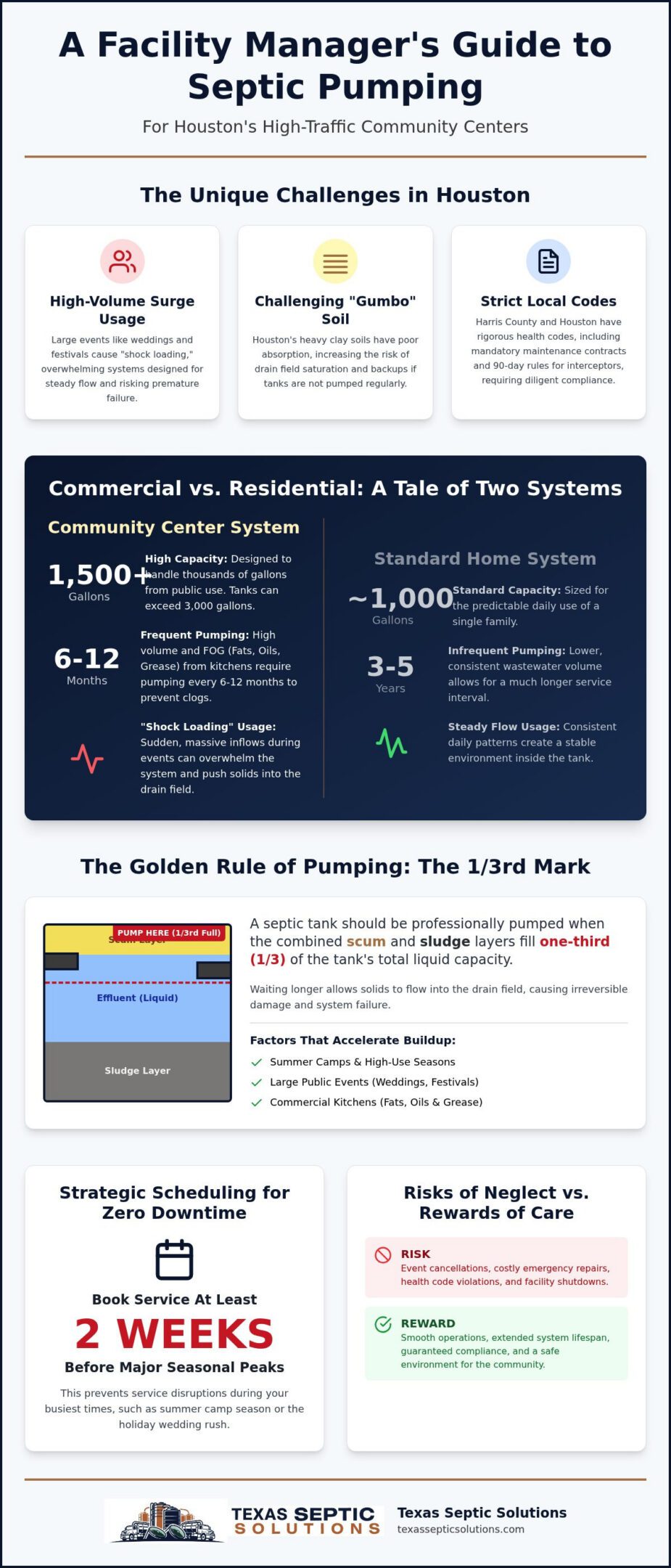
For a facility manager, the question isn’t just whether you need service, but exactly when to schedule it to avoid a public relations disaster. The industry standard for commercial systems is the 1/3 rule. This means the tank should be professionally serviced once the accumulation of sludge and scum reaches one-third of the total liquid capacity. For a community center serving between 50 and 500 people weekly, this often requires a pumping schedule every 6 to 12 months. Waiting longer invites solids to escape into the drain field, which leads to catastrophic failure.
Usage patterns in Houston are rarely consistent throughout the year. Summer camp seasons bring a constant, heavy load of wastewater from showers and restrooms, while winter holiday events often involve high-fat food preparation. Commercial kitchens accelerate sludge accumulation significantly because fats, oils, and grease (FOG) don’t break down as easily as standard waste. Large-capacity septic systems that process these varied waste streams need a tailored plan rather than a generic guess. If your facility sees heavy kitchen use, you might need to pump even more frequently to stay ahead of the buildup.
Usage-Based vs. Calendar-Based Scheduling
Relying on a standard three-year residential cycle is a dangerous gamble for public facilities. A better approach involves monitoring your water meter data; a consistent spike in water usage correlates directly with how fast your septic tank fills. Surge capacity in commercial septic design refers to the specific volume of space engineered into the tank to buffer massive, temporary inflows of wastewater during peak events. If you’re unsure about your current levels, our team at Texas Septic Solutions can help establish a baseline for your specific facility.
Warning Signs Your Center’s Tank is Reaching Critical Levels
Don’t wait for a total backup to take action. Slow-draining sinks in high-use restrooms or gurgling sounds in the pipes are early cries for help that you shouldn’t ignore. If you find your septic tank alarm going off, it signals a high-water event or a mechanical failure that requires immediate intervention. You should also perform a regular “sniff test” around the property. Detecting sewage odors near public playgrounds or parking lots indicates that the system is no longer venting or treating waste effectively. Prompt septic tank pumping for community centers Houston is the only reliable way to reset the system and protect your center’s reputation.
Commercial Pumping vs. Residential Standards: What Managers Must Know
Commercial systems are built to handle a much higher load than any single-family home. While a typical residential tank might hold 1,000 gallons, community center tanks frequently range from 1,500 to over 3,000 gallons to accommodate hundreds of daily visitors. This massive increase in scale requires specialized equipment. Standard trucks often struggle with the depth or distance of a large-scale Houston facility’s tank, making heavy-duty vacuum trucks and extended reach hoses a necessity for a thorough clean. If your center hosts catered events or has an on-site cafe, you must also account for grease trap maintenance. Fats and oils from a single large fundraiser can clog a system faster than months of standard restroom use, leading to costly disruptions.
Adhering to TCEQ septic system regulations ensures your facility stays on the right side of the law. Integrating a comprehensive septic system maintenance Texas plan into your annual budget is the smartest way to manage these costs. It transforms an unpredictable emergency into a manageable operating expense. This proactive approach allows you to plan for the unique needs of a public facility without sacrificing your programming budget.
The Role of Lift Stations and Aerobic Components
Public facilities often utilize Aerobic Treatment Units (ATUs) because they treat wastewater more aggressively than passive systems. These units rely on mechanical components like air compressors, pumps, and floats that require regular testing to function properly. If a pump fails or a float sticks, the entire system can stall, leading to immediate overflows in public restrooms. When you schedule septic tank pumping for community centers Houston, ensure your service provider also cleans the lift station. Removing the accumulated sludge from the bottom of the lift station prevents pump burnout and keeps the water moving as intended.
Total System Health: Beyond Just the Tank
A tank is only one part of the equation. During community festivals or outdoor markets, the drain field is at high risk. Heavy foot traffic or unauthorized parking over the lines causes soil compaction, which prevents the ground from absorbing effluent effectively. If components like baffles become cracked or dislodged due to age or stress, you’ll need professional septic system repair to prevent solids from ruining your entire field. Don’t be tempted by “miracle” additive chemicals sold in big-box stores. They’re rarely a substitute for professional pumping and can sometimes do more harm than good by disrupting the natural bacterial breakdown in large-scale systems.
Best Practices for Scheduling Maintenance Around Public Events
Timing is everything when you manage a public facility. You don’t want a vacuum truck blocking the entrance thirty minutes before a summer camp drop-off or a wedding processional. To avoid these logistical headaches, plan your septic tank pumping for community centers Houston at least two weeks before any major seasonal peak. This buffer allows you to identify and resolve any underlying mechanical issues that a routine pump might uncover, ensuring your system is in top shape before the crowds arrive. Whether you’re preparing for a Christmas gala or a mid-summer festival, proactive scheduling is your best defense against event disruptions.
Coordination with local service providers is essential for a smooth experience. We recommend scheduling pumping for early morning hours, often before 7:00 AM, to ensure the job is finished before your staff and visitors arrive. You should also verify that the access path from the parking lot to the tank lids is completely clear of public foot traffic, temporary stages, or vendor tents. Even with the best preparation, unexpected surges can happen. Establish a clear emergency protocol that includes 24/7 contact information for your septic partner so you can act fast if a high-water alarm triggers during a busy Saturday night.
Minimizing Disruption to Community Programs
The most effective way to handle maintenance is by targeting “dark days” when the center is closed for programming. This tactical timing eliminates the stress of managing guest expectations while heavy equipment is on-site. Communication is key; inform your staff and any recurring facility renters about the scheduled maintenance a few days in advance. While modern equipment is efficient, managing odor control is still a factor. We use specialized techniques to minimize venting during the process, but scheduling service during off-hours remains the most reliable way to ensure a fresh environment for your next scheduled activity.
Budgeting for Long-Term Facility Health
Smart facility management involves moving away from reactive “break-fix” spending and toward a predictable operating budget. Incorporating a septic system maintenance plan into your annual finances protects your center from the high costs of emergency repairs. When you consider the potentially massive septic system replacement cost for a commercial-grade unit, the price of regular pumping is a small, necessary investment. It’s much easier to justify a routine service fee to a board of directors than a five-figure emergency replacement. If you’re ready to secure your facility’s infrastructure, reach out to Texas Septic Solutions to coordinate your next service visit.
Expert Septic Pumping for Houston Community Centers: The TSS Advantage
Managing a public facility comes with a unique set of pressures that standard residential service providers often aren’t equipped to handle. Choosing a partner for septic tank pumping for community centers Houston requires more than just a truck and a hose; it demands a team that understands the logistical dance of public events and high-volume usage. Texas Septic Solutions has built a reputation as the “neighborly expert” for facilities across Houston, Cypress, and Huffman. We don’t just pump tanks; we act as guardians of your facility’s functionality, ensuring that your restrooms and kitchens remain operational even during your busiest seasons. Our team takes pride in being a sturdy, responsive partner that values the long-term health of our community’s shared spaces.
We recognize that an infrastructure failure in a public space is an immediate crisis. This is why we provide 24/7 emergency septic service specifically tailored for the high-pressure demands of community centers. Whether it’s a backup during a Saturday night gala or a lift station failure on a holiday weekend, our technicians are ready to respond with the urgency and professionalism your facility deserves. We approach every job with a “can-do” attitude, ensuring that our presence on your property is respectful of your visitors and staff. By combining industry-leading expertise with a commitment to local accountability, we provide the peace of mind facility managers need to focus on their programming rather than their plumbing.
Rapid Response for Houston’s Public Spaces
Our fleet is specifically equipped to handle the large-scale commercial pumping needs of expansive Houston facilities. We employ trained technicians who understand the complexities of multi-tank systems and commercial-grade components. Because we maintain a strong local presence in both Houston and Cleveland, we can offer faster service times than providers traveling from outside the metro area. This proximity allows us to be on-site quickly, minimizing the window of disruption for your guests and ensuring that your facility remains a safe, welcoming environment for the neighborhood.
Start Your Facility Maintenance Plan Today
The best time to manage a crisis is before it starts. By establishing a custom pumping schedule with Texas Septic Solutions, you move from reactive repairs to proactive care. We work with facility managers to evaluate their specific usage patterns and site logistics, creating a long-term partnership that stabilizes your maintenance budget. A reliable schedule ensures you never have to worry about the 1/3 rule or municipal compliance again. We’re here to provide the comprehensive care your infrastructure requires to last for decades. Schedule your community center septic pumping today and let our team provide the reliable local authority your facility needs to thrive.
Secure Your Community Center’s Infrastructure for the Future
Maintaining a public facility requires a proactive mindset that balances community programming with essential infrastructure care. You’ve learned how high-traffic usage and Houston’s unique soil conditions demand a more rigorous approach than standard residential systems. By following the 1/3 rule and scheduling service around your center’s busiest seasons, you protect public health and avoid the stress of unexpected event disruptions. Investing in a consistent schedule for septic tank pumping for community centers Houston is the most reliable way to stay compliant with TCEQ regulations while preserving your annual operating budget.
Texas Septic Solutions is ready to serve as your long-term maintenance partner. We bring specialized commercial pumping equipment and a “neighborly expert” approach to every site in Houston, Cleveland, Cypress, and Huffman. Whether you need a routine clean or 24/7 emergency service during a major festival, our team remains unfazed by the challenges of high-volume systems. Don’t wait for a backup to compromise your neighborhood’s favorite gathering spot. Get a Professional Septic Pumping Quote for Your Community Center today. We’re here to help your facility thrive for years to come.
Frequently Asked Questions
How often should a Houston community center pump its septic tank?
High-traffic facilities typically require septic tank pumping for community centers Houston every 6 to 12 months. This frequency ensures you stay ahead of the “1/3 rule,” where solids shouldn’t exceed one-third of the tank’s liquid capacity. While a home might wait years, your center’s usage from weddings or summer camps accelerates sludge buildup. We recommend a professional evaluation to set a baseline schedule that protects your drain field and prevents public health hazards.
What happens if our septic system fails during a public event?
A system failure during an event causes immediate plumbing backups and foul odors that can shut down your facility. This is a critical health risk that requires a rapid response to protect your guests and reputation. We provide specialized emergency septic service 24/7 to handle these high-pressure situations. Our technicians arrive with heavy-duty equipment to resolve the issue quickly, allowing you to return to your programming with minimal stress or long-term damage.
Are there specific Houston regulations for community center septic systems?
Yes, Houston facilities must comply with strict TCEQ and Harris County health codes. For example, the City of Houston requires interceptors and grease traps to be evacuated at least every 90 days. In unincorporated areas of Harris County, you’re required to maintain a continual maintenance contract for any commercial On-Site Sewage Facility. Keeping detailed professional records is vital for facility managers to prove compliance during inspections and protect the local East Texas groundwater.
Can a community center septic system handle commercial kitchen waste?
Most community centers handle kitchen waste if they use a properly sized grease trap. Commercial kitchens produce high levels of fats, oils, and grease that don’t break down like standard waste. Without regular pumping, these solids bypass the tank and clog your drain field. We coordinate grease trap cleaning with your standard pumping schedule to ensure total system health and prevent the costly repairs associated with kitchen-related clogs.
How long does it take to pump a large-capacity commercial septic tank?
Pumping a commercial-grade tank usually takes between one and three hours. This timeframe depends on the tank’s total capacity, which often ranges from 1,500 to over 3,000 gallons. Factors like the distance from our vacuum truck to the tank lids and the thickness of the accumulated sludge can also affect the duration. We use specialized commercial equipment to ensure the process is thorough and efficient, allowing your facility to get back to normal operations quickly.
Will septic pumping disrupt our scheduled community classes or programs?
Pumping doesn’t have to disrupt your programming if it’s scheduled during off-peak hours. We recommend booking service for early mornings or on “dark days” when no classes are in session. Our team works quickly to minimize noise and manage odor control during the process. By coordinating the logistics ahead of time, we ensure that the only thing your visitors notice is a facility that runs smoothly and stays clean for the neighborhood.
Do you offer 24/7 emergency pumping for facilities in Cypress or Huffman?
Yes, we provide 24/7 emergency service for facilities throughout Cypress, Huffman, Houston, and Cleveland. We understand that a septic failure in a public space is a time-sensitive crisis. Our local presence allows us to respond rapidly to urgent calls in these areas, ensuring that your community center has the support it needs at any hour. You can count on our “neighborly expert” team to handle high-pressure failures with professional care and accountability.
What is the difference between residential and commercial septic pumping?
Commercial pumping involves much larger tanks and stricter regulatory oversight than residential service. While a home system is relatively simple, commercial setups often include lift stations, grease traps, and aerobic components that require specialized expertise. The equipment needed is also more robust to handle volumes exceeding 3,000 gallons. Finally, commercial managers must maintain formal documentation and maintenance contracts to comply with state laws, which is rarely required for standard residential properties in Texas.