
Frozen Septic Line Repair in Houston: A 2026 Emergency & Prevention Guide
You didn’t move to Houston for the snow, but when a rare 2026 freeze hits, your home’s most essential system is often the first to fail. It’s a stressful realization when the toilet stops flushing and you suspect you need the kind of frozen septic line repair Houston homeowners simply weren’t prepared for. Because our local pipes are buried so shallow, they’re uniquely vulnerable to sudden temperature drops that wouldn’t bother a system up north. You’re likely worried about a pipe bursting or raw sewage backing up into your home while the ground is still frozen.
We understand that anxiety, and we’re here to help you get things moving again safely. This guide explains how to identify a freeze, the “low and slow” method for thawing lines, and how to prevent future backups. You’ll learn exactly how to restore your septic flow and when it’s time to call in a professional to avoid a permanent system failure. Let’s get your home back to normal and ensure your septic system stays protected through the rest of the winter.
Key Takeaways
- Identify early warning signs like gurgling drains and slow-flushing toilets to catch a freeze before it causes a major sewage backup.
- Adopt the “low and slow” thawing approach by using warm water and stopping all household water usage to prevent further pressure on your pipes.
- Avoid common mistakes that cause permanent damage, such as using open flames on PVC pipes or pouring harmful antifreeze into your system.
- Discover how professional frozen septic line repair Houston services use specialized steam equipment to restore flow without risking a pipe burst.
- Learn simple winterization techniques like using heavy mulch or septic blankets to protect Houston’s shallow lines from future temperature drops.
Identifying a Frozen Septic Line in the Houston Area
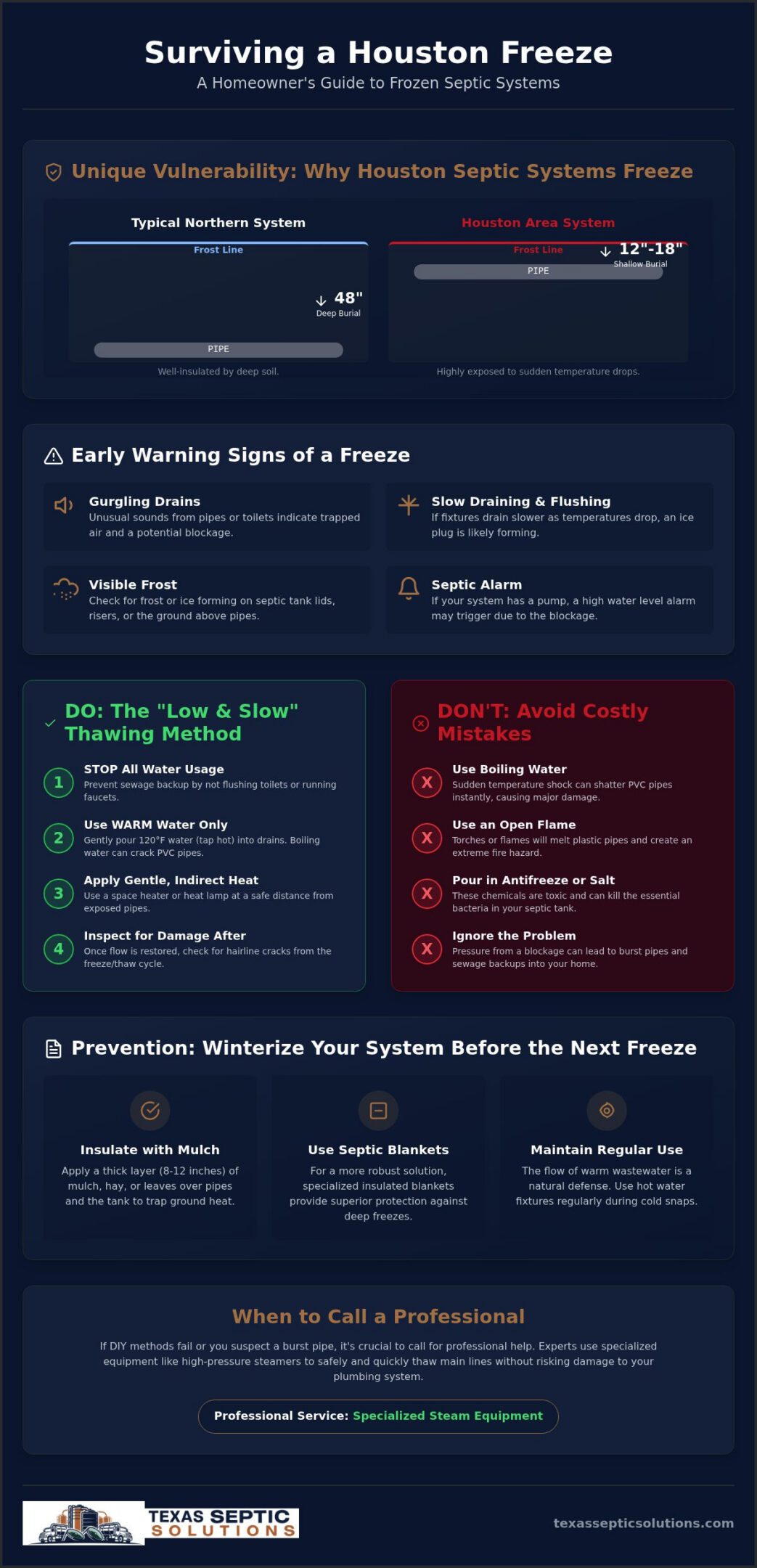
Houston weather is famously unpredictable. When a rare 2026 freeze settles over Southeast Texas, your septic system faces a threat it wasn’t necessarily designed to handle. Unlike systems in northern states that are buried four feet deep to stay below the frost line, Houston septic lines are often placed just 12 to 18 inches below the surface. This shallow placement means they lack the natural insulation of deep earth. When you experience a sudden backup during a cold snap, it’s a strong sign you might need frozen septic line repair Houston experts to evaluate the blockage.
Understanding How a Septic System Works helps you pinpoint exactly where the failure is happening. Waste moves from your home to the tank through a main sewer line. In a typical Texas winter, the ground doesn’t stay cold long enough to freeze these pipes. However, during an extended emergency freeze, the liquid inside those shallow pipes can turn to ice. This creates a solid plug that stops all flow. If your home’s drains were working fine yesterday but suddenly stopped as the temperature plummeted, you’re likely dealing with an ice blockage rather than a mechanical failure or a full tank.
Common Symptoms of Freeze-Related Failure
You’ll often notice specific patterns that point toward ice rather than a routine clog. Drains might work slowly in the afternoon when the sun warms the soil, only to stop completely at night. Listen for gurgling sounds coming from your pipes or toilets. You should also check for visible frost or ice around your septic tank risers or lids. If your system is equipped with a pump, a septic alarm might trigger. This happens because the ice blockage prevents water from moving through the system, causing the water level in the tank to rise and trip the sensor.
Why Texas Freezes Hit Septic Systems Hard
Northern climates benefit from “frost cover,” which is a consistent layer of snow that acts like a blanket for the ground. Houston doesn’t get that luxury. Our bare, damp soil transfers cold directly to the PVC pipes. Sudden temperature drops also cause pipes to contract slightly, which can stress joints and even lead to fractures if the ground shifts. Stagnant water is another major culprit. If you have a guest bathroom or a laundry line that isn’t used frequently, the water sitting in those pipes is the first to freeze. Regular usage keeps warmer water moving through the system, which is your best natural defense against a total freeze-up.
How to Safely Thaw and Repair Frozen Septic Pipes
If you suspect an ice blockage, the first thing you must do is stop all water usage inside the house. Every flush or shower adds volume to a system that can’t drain. This pressure can quickly force raw sewage back through your floor drains or tubs. Once the water is off, you can begin a cautious thawing process. For more detailed preparation steps, you can consult this Winter Weather Septic System Guide to ensure you’re following best practices for environmental health and safety.
Don’t reach for the tea kettle. Pouring boiling water into a frozen PVC pipe is a recipe for disaster. The extreme temperature difference can cause the plastic to shatter instantly. Instead, use warm water, roughly 120 degrees Fahrenheit. This is about the temperature of a standard home water heater. If you have exposed pipes in a crawlspace, set up a space heater or heat lamp. Keep a safe distance to prevent melting the pipe or creating a fire hazard. Once the line thaws, add a thick layer of mulch or insulation over the area to prevent a re-freeze.
The “Low and Slow” Thawing Method
This method is about patience and safety. If you can access your main cleanout, you can try to gently introduce heat there. Using a wet/dry vac to remove standing water from the pipe first makes the thawing process much faster. You aren’t trying to heat up a giant pool of cold liquid that way. Once the water is gone, aim a heat lamp at the cleanout or slowly trickle warm water down the line. Remember that PVC has a safe limit. Keeping water around 120 degrees ensures you don’t compromise the structural integrity of your plumbing.
Inspecting for Pipe Damage After the Thaw
Once the flow is restored, your job isn’t finished. You need to inspect every visible inch of the line for hairline cracks. Even a small leak can lead to soil erosion or system failure later in the year. Pipe fatigue is the structural weakening of the material caused by the rapid expansion and contraction during a freeze-thaw cycle. Check your drain field as well. If it looks unusually saturated or has a foul odor as the ground thaws, the ice may have caused a backup that damaged the soil’s ability to absorb liquid.
If you don’t see progress within a few hours, or if you notice water leaking from a joint, stop immediately. DIY efforts can only go so far before you risk a total pipe collapse. If you’re overwhelmed by a backup, our team provides emergency septic service to handle the heavy lifting and high-pressure steam thawing required for stubborn blockages. Professional frozen septic line repair Houston services can often save a pipe that would otherwise need a full replacement.
Common Mistakes to Avoid During a Texas Freeze
When your toilets stop flushing during a record chill, it’s natural to feel a sense of urgency. However, desperation often leads to mistakes that turn a simple ice blockage into a permanent system failure. Before you attempt a DIY fix or follow generic winter advice, you need to understand why Houston’s systems require a different approach. Many homeowners find themselves needing frozen septic line repair Houston services because they followed advice meant for city water lines or northern climates.
One of the most common errors is letting your faucets drip. While local officials have offered conflicting advice on this practice during recent freezes, for a septic system, a slow drip is dangerous. That tiny, constant stream of water doesn’t have enough thermal mass to stay liquid. Instead, it freezes in thin layers inside your shallow pipes, eventually building up into a solid ice dam. It’s much better to use your water in short, warm bursts, such as a quick load of laundry, to keep the lines clear. This movement of warm water is far more effective at preventing a total freeze-up.
You should also stay off your lawn. Driving a vehicle or heavy equipment over a frozen drain field is a recipe for a crushed pipe. Frozen soil is less flexible and doesn’t distribute weight as well as warm earth. The pressure can snap brittle PVC lines or compact the soil so tightly that it can no longer process effluent once the thaw arrives. Keep all traffic away from your septic tank and lines until the ground has completely softened.
The Danger of Open Flames and High Heat
Never use a blowtorch or any open flame to thaw your pipes. PVC has a relatively low melting point, and applying direct flame can cause it to warp, melt, or release toxic fumes. Even if the pipe doesn’t melt, localized high heat causes uneven expansion. This creates internal stress that often results in the pipe bursting. There is also a significant fire hazard when using torches in crawlspaces or near septic vents, where methane gas may be present. Stick to the “low and slow” heating methods mentioned earlier to protect your home and your health.
Chemical Pitfalls: Why Antifreeze Isn’t the Answer
It’s tempting to pour antifreeze down the drain, but this is a mistake. Fort Bend County officials and local experts advise against this because antifreeze can harm the beneficial bacteria that make your system work. A septic tank is a living biological environment. Killing those microbes means your waste won’t break down properly, leading to expensive pumping needs later. Furthermore, chemicals can leach into the groundwater, which is a major concern for the East Texas environment. If you’re struggling with a stubborn freeze, professional frozen septic line repair Houston specialists have safe, mechanical ways to clear the line without poisoning your system.
Winterizing Your Septic System: Prevention for Houston Homeowners
In Southeast Texas, we spend most of the year worrying about heat and humidity, but the 2026 winter season has shown that our septic systems aren’t invincible. Preventing the need for frozen septic line repair Houston starts long before the first frost hits the ground. National advice often suggests pumping your tank every winter, but for our shallow systems, that can actually be a mistake. A full tank of active waste generates its own biological heat, which helps prevent the core of your system from freezing. Instead of pumping right before a freeze, focus on insulating the path the waste takes to get there.
One of the simplest ways to protect your system is by applying a thick layer of “septic blankets” or heavy mulch over your lines. Because Houston pipes are so close to the surface, they need that extra 8 to 12 inches of cover to stay functional. You should also ensure all risers and lids are airtight. If cold air can whistle into your tank, it will drop the internal temperature rapidly. Scheduling a septic system maintenance plan is the best way to catch small issues like leaky faucets. A slow-leaking tap might seem minor, but that tiny stream of water creates “ice dams” in your pipes that eventually lead to a total blockage.
Insulation Techniques for Shallow Lines
Your “main run” is the pipe that travels from your house to the tank. This is the most vulnerable point for a freeze. You can use straw, hay, or even specialized foam board to create a temporary thermal barrier. If you have natural vegetation growing over your lines, don’t trim it back too much before winter. Long grass and shrubs trap air and provide a natural insulation layer that keeps the soil a few degrees warmer. If you’re unsure where your lines are buried, our team can help you map them out during a septic system maintenance visit.
Operational Adjustments During Freeze Warnings
When a freeze warning is issued for the Houston area, change how you use your water. Avoid “trickling” your faucets, as this slow movement allows water to freeze in thin layers inside the pipe. Instead, move warm water in larger volumes. Taking a hot bath or running a quick load of laundry in the evening can provide enough heat to keep the lines clear overnight. Finally, check your septic tank alarm battery backup. Power outages often accompany winter storms, and you need to know immediately if the water level starts rising due to an ice blockage.
Professional Frozen Septic Repair Services in Houston
When the temperature drops and your septic system fails, the situation changes from a minor inconvenience to a health emergency. While DIY methods can help with minor surface ice, deep-seated blockages in Houston’s shallow lines often require specialized equipment. Attempting to force a thaw without the right tools can lead to fractured PVC or collapsed baffles. If you’re facing a total backup, it’s time to seek frozen septic line repair Houston specialists who understand the unique soil and plumbing challenges of our region.
Professional steam thawing is the gold standard for restoring flow without damaging your property. Unlike home heaters or warm water tricks, industrial steam machines deliver consistent, controlled heat directly to the blockage. This method melts ice quickly while keeping the pipe material safe from thermal shock. Beyond just clearing the ice, a professional team can assess if the freeze caused structural damage, such as burst pipes or crushed baffles, which often go unnoticed until the ground thaws completely.
Our Emergency Response Process
We understand that a frozen septic line doesn’t wait for business hours. Our team provides 24/7 emergency septic service across Houston, Cleveland, Cypress, and Huffman. When we arrive, we don’t just start digging. We use diagnostic camera inspections to locate the exact position of the ice blockage or pipe failure. This precision allows us to apply industrial-grade thawing equipment exactly where it’s needed, minimizing disruption to your yard and getting your home’s functionality back to normal as quickly as possible. Our rapid dispatch ensures that you aren’t left waiting while sewage risks backing up into your living space.
Post-Freeze System Recovery
Once the ice is gone, the recovery process begins. A severe freeze can shock the biological environment of your tank, killing off the bacteria needed to process waste. We offer bacteria replenishment services to jumpstart your system’s health after a cold snap. Additionally, we perform a full inspection of your drain field. Ice backups can sometimes saturate the soil or damage the distribution lines, leading to long-term drainage issues if not addressed immediately.
To ensure you aren’t caught off guard by the next 2026 winter storm, we can develop a customized winterization plan for your specific property. This might include installing permanent insulation for shallow runs or upgrading your risers to be more weather-resistant. Don’t let a temporary freeze turn into a permanent headache. Contact Texas Septic Solutions today to restore your system and protect your home for the seasons to come.
Restore Your Septic Flow and Protect Your Home
A sudden Houston freeze doesn’t have to lead to a total system failure. By recognizing the early signs of a blockage and avoiding dangerous DIY mistakes like using open flames, you can protect your pipes from permanent fatigue. Remember that our shallow local lines require a specialized “low and slow” approach to thawing that prioritizes the structural integrity of your PVC. Whether you’re currently facing a backup or want to winterize your property before the next cold front, having a reliable local authority on your side makes all the difference.
If you need immediate help, our team is ready to assist. We provide 24/7 Emergency Frozen Septic Repair in Houston with a focus on rapid response. As local experts with licensed and insured technicians, we have the industrial steam equipment needed to clear ice blockages safely. Don’t let a winter storm disrupt your home functionality. We’re here to help you get through the freeze with confidence and a system that works exactly as it should. You can rest easy knowing your septic system is in professional hands.
Frequently Asked Questions
Can I pour boiling water down the drain to thaw a frozen septic line?
No, you should never pour boiling water down your drains to thaw a septic line. PVC pipes become brittle in freezing temperatures, and the extreme thermal shock from boiling water can cause the plastic to crack or shatter instantly. It’s much safer to use warm water, around 120 degrees Fahrenheit, which is the typical setting for a home water heater. This gentler heat allows for a “low and slow” thaw without risking a permanent pipe failure.
Will a frozen septic line fix itself when the weather warms up?
While the ice will eventually melt as temperatures rise, a frozen line rarely “fixes itself” without consequences. If you continue to use water while the line is blocked, you risk a sewage backup into your home. Additionally, the expansion of ice can cause hairline fractures or joint separations. It is best to have a professional inspection once the ground thaws to ensure no structural damage occurred during the freeze.
Should I pump my septic tank if I think the lines are frozen?
Pumping your tank is usually not recommended if the primary problem is a frozen line. A full septic tank actually generates biological heat through the breakdown of waste, which helps prevent the core of your system from freezing. Removing that liquid right before or during a freeze can make the system more vulnerable. You should only consider pumping if a professional determines the tank is at capacity and the blockage isn’t ice-related.
Does a frozen septic pipe always burst?
A frozen septic pipe doesn’t always burst, but the risk is high in the Houston area due to shallow burial depths. PVC has some flexibility, but ice expansion creates immense internal pressure that can snap pipes or push fittings apart. Even if a pipe doesn’t burst, it may suffer from “pipe fatigue,” which weakens the material and leads to leaks later in the year. Professional frozen septic line repair Houston services can help identify these hidden cracks.
Is it safe to use a space heater to thaw my septic pipes?
It is safe to use a space heater to thaw pipes in a crawlspace if you follow strict safety protocols. Never leave the heater unattended and keep it at least three feet away from flammable materials. You want to warm the air around the pipes rather than applying direct, high heat. Be mindful of methane gas vents near the septic system, as these can pose a fire hazard if a high-heat source is present.
How much mulch do I need to prevent my septic lines from freezing in Houston?
To effectively insulate Houston’s shallow septic lines, you should apply a layer of mulch or straw that is 8 to 12 inches deep. This extra cover acts as a thermal blanket, trapping the natural heat of the earth and the biological heat from the tank. Ensure you cover the entire run from the house to the tank, as well as the area around the tank lids and risers, to provide comprehensive protection during an extended freeze.
What should I do if my septic alarm goes off during a freeze?
If your septic alarm goes off during a freeze, you must stop all water usage immediately. This alarm usually indicates that the water level in your tank is too high, often because an ice blockage is preventing effluent from moving to the drain field. Continuing to use water will likely result in a backup into your home. Contact a specialist for frozen septic line repair Houston to diagnose the blockage and restore flow before the tank overflows.