
Fixing Slow Drains in One Area of Your Huffman, TX Home
Why is one part of your Huffman home draining slowly while the rest seems fine? A sluggish sink or shower can point to a clog near that fixture, not a septic tank backup. But if other drains start slowing, gurgling, or showing signs of sewage, take the pattern seriously. For septic tank backup troubleshooting Huffman homeowners can start by noting which fixtures are affected and whether there are warning signs outdoors.
It’s understandable to worry that flushing or running water could make a backup worse, especially when you don’t know whether the problem is local or system-wide. This guide explains how to make safe observations, distinguish a single slow drain from broader symptoms, and avoid DIY actions that could cause damage or expose you to sewage. If several fixtures are affected or an aerobic-system alarm sounds, limit water use and seek professional guidance.
Key Takeaways
- A slow drain in one area doesn’t automatically mean your septic system is failing. Note which fixtures are affected and whether they may share a plumbing route.
- Compare symptoms across fixtures and rooms to help distinguish a localized concern from signs that need broader assessment.
- For septic tank backup troubleshooting Huffman homeowners can begin by limiting unnecessary water use, observing what’s affected, and recording changes.
- If wastewater backs up or surfaces outdoors, stop using water and keep people away from the affected area.
- Recurring backups or symptoms across several fixtures may warrant professional help. Texas Septic Solutions handles septic repair, maintenance, pumping, and emergency septic service.
Slow drains in one part of a Huffman home: what the pattern can tell you
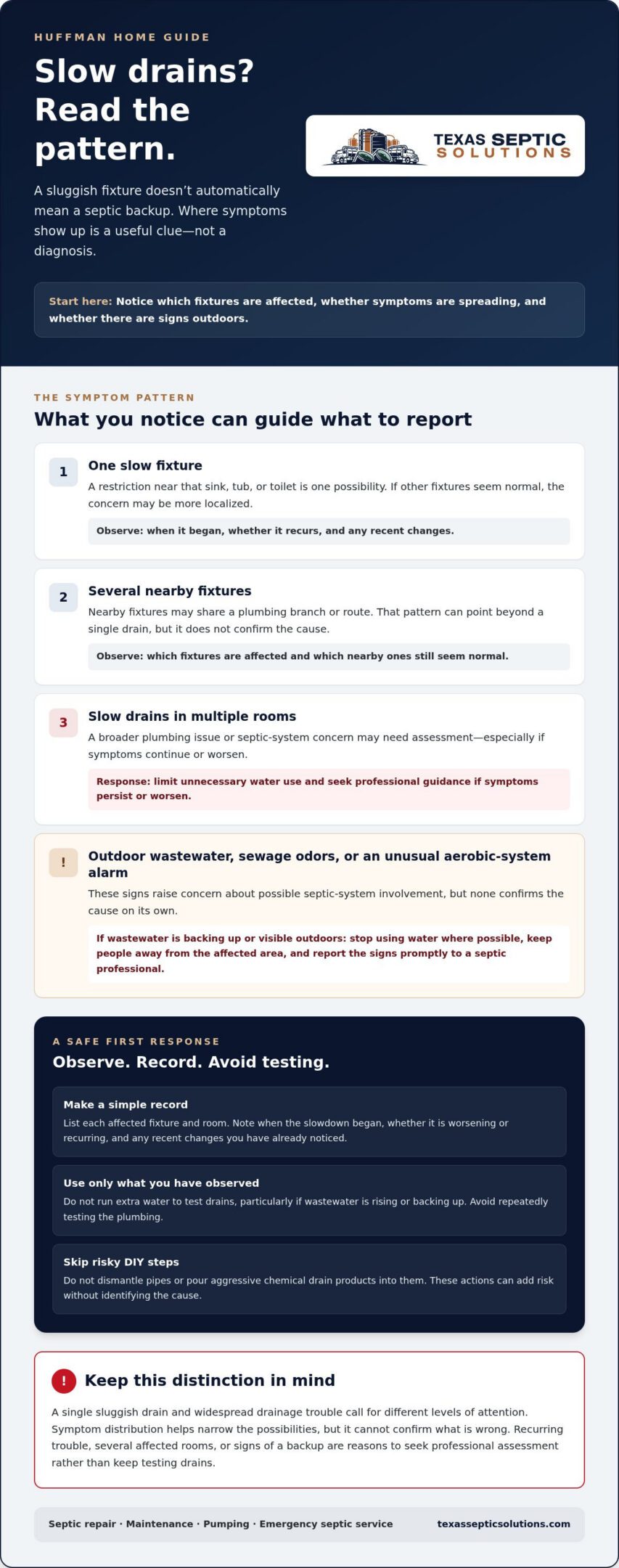
A slow drain in one area doesn’t automatically mean your septic tank is backing up. If the problem is limited to one fixture or a few nearby fixtures, it may involve a local drain or shared plumbing route. The pattern is a useful first clue, not a diagnosis.
Note which sinks, tubs, or toilets are affected, when you first noticed the slowdown, and whether it is getting worse or returning. Avoid running extra water to test the drains, particularly if wastewater is rising or backing up. These observations can help you explain the problem to a plumbing professional or, if symptoms suggest septic involvement, a septic professional.
Which fixtures are slow, and what do they share?
Consider where the affected fixtures are. Are they close together, such as a bathroom sink and tub, or in separate parts of the home? Nearby fixtures may share a plumbing route, while one slow fixture may indicate a more limited concern. Don’t use extra water to test this theory. Record only what you have already observed.
- List each affected fixture and its room.
- Note whether nearby fixtures seem normal or slow too.
- Record when symptoms began and whether they’re worsening or recurring.
This brief record gives a professional a clearer starting point without requiring you to open pipes or attempt a repair.
When can a localized symptom point beyond one drain?
If several nearby fixtures are slow, the issue may involve a shared plumbing route rather than one drain. If fixtures in multiple rooms are affected, the problem could extend farther through the home’s wastewater plumbing or involve the septic system. The drain-waste-vent system carries wastewater away from fixtures and supports proper drainage. A concern with a shared part of that system can affect more than one fixture.
Symptom distribution helps narrow the possibilities, but it can’t confirm the cause. A single sluggish sink and widespread drainage trouble call for different levels of attention, but neither pattern proves what’s wrong on its own. When starting septic tank backup troubleshooting Huffman, focus on where symptoms occur and whether they’re spreading. Recurring trouble, several affected rooms, or other signs of a backup are reasons to seek professional assessment rather than keep testing drains.
How to tell a local drain blockage from a septic tank backup
Look at how widely the symptoms are spread. One slow fixture may point to a local restriction. Trouble affecting several rooms or signs near the septic system calls for broader assessment. No single symptom confirms a septic tank failure, so use the pattern to decide what to report and how promptly to seek help.
| What you notice | What it may suggest | What to do |
|---|---|---|
| One slow sink, tub, or toilet | A restriction near that fixture is one possibility. | Note when it began and any recent changes, such as unusual use or a recurring slowdown. |
| Several nearby fixtures drain slowly | The fixtures may share a plumbing branch or route. | Record which fixtures are affected. Avoid repeatedly running water to test them. |
| Slow drains in multiple rooms | A more widely shared plumbing issue or septic-system concern may need assessment. | Limit unnecessary water use and contact an appropriate professional if symptoms continue or worsen. |
| Wastewater outdoors, sewage odors, or an unusual system alarm | These signs can raise concern about septic-system involvement, but none confirms the cause on its own. | Keep away from visible wastewater and report the signs promptly to a septic professional. |
Signs that may stay limited to a fixture or plumbing branch
If only one drain is slow and other fixtures seem normal, the issue may be confined to that fixture’s drain. If a nearby sink, tub, or toilet is also affected, those fixtures may share a plumbing route. Think about recent changes and note whether the symptoms are new, recurring, or getting worse. Don’t dismantle pipes or pour aggressive chemical drain products into them. Those steps can create added risk without identifying the cause.
Signs that make septic-system involvement more concerning
Several affected fixtures, wastewater surfacing outside, sewage odors, or an unusual alarm on an aerobic system call for prompt attention. An alarm is a warning to report, not a diagnosis. If wastewater is backing up or visible outdoors, stop using water where possible and keep people away from the affected area. For general guidance on caring for your septic system, the U.S. Environmental Protection Agency discusses habits that support system function.
Symptom patterns can help narrow down the possibilities, but only a professional assessment can establish the cause. For septic tank backup troubleshooting Huffman homeowners can share which fixtures are affected and report any outdoor signs or alarms. If those clues suggest septic involvement, review the septic system repair guide or contact Texas Septic Solutions for septic help. Confirm service availability for your address.
Why slow drains may happen in one area, and when the septic system matters
A slow drain can have several possible explanations, and the location of the symptoms can help guide what to check next. A restriction near one fixture may affect only that drain. A problem along a shared plumbing route may affect nearby fixtures. If several areas are affected or wastewater appears outside, the septic system may need professional assessment. These are possibilities, not a diagnosis based on symptoms alone.
Tank fullness, a problem with a system component, or a concern involving the drain field can’t be confirmed just because a drain is slow. Don’t assume pumping or repair is needed without an assessment. For septic tank backup troubleshooting Huffman homeowners can use the pattern of symptoms to explain what they’re seeing, then leave diagnosis and system work to a professional.
Local plumbing restrictions and shared drain lines
A restriction close to one sink, tub, or toilet may slow that fixture. If nearby fixtures also drain poorly, they may connect along a shared route where a localized issue could affect more than one drain. Note which fixtures are involved, whether anything changed before the slowdown began, and whether the problem has returned. If symptoms appear limited to household drain lines rather than the septic system, contact a plumber for assessment; homeowners facing drainline concerns in other regions can look to residential specialists such as a plumber Coeur d’Alene ID for expert pipe repair.
Septic tank and drain-field warning signs to report
Recurring backups, multiple affected areas, or wastewater surfacing outdoors warrant prompt attention. Sewage odors or an alarm on an aerobic system are also important details to report. These signs don’t prove that a particular component has failed, but they can help a professional decide what to investigate. NC State University Extension outlines signs of a failing septic system, including symptoms that can merit further evaluation.
Only an on-site professional can determine whether the tank, another system component, or the drain field is involved. If an alarm is sounding, follow the guidance in this septic tank alarm guide. For symptoms that point to septic involvement, Texas Septic Solutions provides septic repair, maintenance, and pumping. You can contact Texas Septic Solutions about septic service and confirm current availability for your Huffman address.
First Steps for Slow Drains in Your Huffman Home
A careful first response can help limit risk and make it easier to choose the right kind of help. If wastewater is backing up into the home or surfacing outside, stop using water and keep people and pets away from the affected area. Don’t touch wastewater, open a septic tank, or enter any part of the system.
Safe observations to make before calling
Use this sequence for septic tank backup troubleshooting Huffman homeowners can do safely without opening equipment or testing the system with extra water:
- Pause unnecessary water use. Avoid repeated flushing, showers, laundry, or running taps to see if a suspected backup clears. If wastewater is present, stop water use as much as possible.
- Observe from a safe distance. Note which fixtures are slow, whether they’re in one area or several rooms, and whether you can see wastewater near the septic system. Check only what’s normally visible and accessible. Don’t lift covers or enter equipment.
- Document what’s happening. Write down when symptoms began, whether they’re recurring or worsening, which fixtures are affected, and whether there’s an alarm or sewage odor. Share these observations when you call.
- Choose the appropriate professional. If symptoms seem limited to a household drain and there are no septic warning signs, contact a plumber. If several fixtures are affected or symptoms involve the septic system area, seek septic assessment.
You don’t need to diagnose the cause before calling. Describe what you’ve observed and ask which type of service may be appropriate instead of trying to investigate the system yourself.
Choosing between a plumber and septic service
A single slow fixture, with other drains working normally and no signs near the septic system, may be a reason to start with a plumber—for an example of professional fixture maintenance and emergency service, check out SOS Plombiers. Several affected fixtures, recurring backups, visible wastewater outdoors, or an aerobic-system alarm make septic involvement more concerning and warrant contacting a septic professional. These patterns guide the next step, but they don’t confirm the source.
Texas Septic Solutions provides septic repair, maintenance, pumping, and emergency septic service. If your observations suggest a septic issue, you can contact Texas Septic Solutions about septic service and confirm current availability for your address. For prevention and routine care context, see the Texas septic maintenance guide.
When to call for septic backup troubleshooting in Huffman
Several affected fixtures, recurring backups, or wastewater surfacing near the septic system are good reasons to seek professional help promptly. These signs don’t identify the cause, but they suggest the issue may go beyond one household drain. If wastewater is present, keep people and pets away and avoid using water.
For septic tank backup troubleshooting Huffman homeowners can make the call more useful by sharing clear observations instead of trying to diagnose the system themselves. Texas Septic Solutions offers septic system repair, maintenance, pumping, and emergency septic service. Confirm current service availability for your exact address when contacting a provider.
What to tell a septic professional serving Huffman
Have a few details ready. Share your property location, which fixtures are affected, when symptoms began, and whether the problem is worsening or has happened before. Mention visible wastewater, sewage odors, or any alarm from an aerobic system. If you know when the system was last pumped or maintained, include that information too.
These details help a provider understand the pattern and discuss an appropriate next step. If you’re unsure whether the signs point to septic service or a household plumbing problem, say so. Ask whether the symptoms fit the provider’s service scope or whether you should contact a plumber instead.
How professional assessment can guide the next step
A professional assessment helps determine whether the septic system is involved and what action, if any, is appropriate. Depending on the findings, the next step may involve repair, maintenance, or pumping. Pumping isn’t a universal fix for a slow drain, especially when symptoms are limited to one fixture or plumbing route, so don’t assume it’s needed before the cause is assessed.
If your observations suggest a septic issue, contact Texas Septic Solutions about septic service and share what you’ve noticed. The team provides septic services, including emergency septic service. Confirm availability for your Huffman address. A clear account of the symptoms can help start the conversation and point you toward the right kind of help.
Use the Drain Pattern to Choose Your Next Step
A slow drain in one area doesn’t automatically point to a septic backup. Note which fixtures are affected and whether symptoms recur or spread. Several affected areas, recurring backups, wastewater outside, or an aerobic-system alarm are stronger reasons to seek a septic professional’s assessment. These clues help guide the next step, but they can’t confirm the cause.
For septic tank backup troubleshooting Huffman homeowners should share what they’ve observed and avoid assuming that pumping or repair is the answer before an assessment. A localized household drain concern may call for a plumber. Signs involving the septic system may call for septic service.
Texas Septic Solutions lists Huffman among its service locations and provides septic repair, maintenance, pumping, and 24/7 emergency septic service. The company also serves Cleveland, Houston, Cypress, and Shepherd. Confirm current availability for your exact address. If your observations suggest a septic issue, contact Texas Septic Solutions about septic service in Huffman.
Frequently Asked Questions
Why are drains slow in only one part of my house?
Drains may be slow in one area because a single fixture or a shared plumbing route has a restriction. For example, a slow bathroom sink with normal drainage elsewhere may point to a local issue, while a slow sink and tub nearby could share a drain line. Note which fixtures are affected, when the problem began, and whether it’s recurring. That pattern can help a plumber assess the household plumbing.
Can a septic tank backup cause slow drains in just one room?
It’s possible, but slow drainage in one room alone doesn’t confirm a septic backup. The problem may be limited to a fixture or a shared plumbing route. Septic-system concerns become more likely if several fixtures are affected, backups recur, or wastewater appears outdoors. These clues help determine what professional to contact, but only an on-site assessment can identify the cause. Avoid repeatedly running water to test whether the drain clears.
What should I do first if my drains are slow and I have a septic system?
Pause unnecessary water use, then observe and write down what’s happening. Record which fixtures are slow, when symptoms started, whether they’re worsening, and whether you notice an alarm, sewage odor, or wastewater outside. Don’t repeatedly flush or run taps to test the drains, and don’t open or enter septic equipment. If wastewater is backing up or surfacing, stop using water and keep people and pets away from the affected area.
When should I call for septic backup troubleshooting in Huffman?
Contact a septic professional if several fixtures are affected, backups keep returning, wastewater surfaces outside, or an aerobic-system alarm sounds. For septic tank backup troubleshooting Huffman homeowners can describe the affected fixtures, symptom timeline, and any visible signs when asking about service. Texas Septic Solutions offers septic repair, maintenance, pumping, and emergency septic service. The company lists Huffman among its service locations, but confirm availability for your exact address.
Can I use chemical drain cleaner when my septic-system drains are slow?
It’s safer not to reach for an aggressive chemical drain cleaner as a first step. It may not address the cause, particularly if multiple fixtures are slow or the septic system may be involved. Avoid mixing products or using more than the label directs. Instead, note which drains are affected and contact a plumber for an isolated household drain concern, or a septic professional if broader warning signs appear.
Does one slow drain mean my septic tank needs pumping?
No. One slow drain doesn’t establish that the tank needs pumping. A localized fixture or plumbing-route issue is one possible explanation, and symptoms alone can’t confirm tank fullness or another septic problem. Don’t schedule pumping based only on a single slow fixture. Note whether other drains are affected and whether the issue recurs, then ask an appropriate professional to assess the situation before deciding what service may be needed.
What happens if I keep using water during a septic backup?
Continued water use sends more wastewater into the system and may worsen an active backup or contribute to more wastewater backing up or surfacing. If you see wastewater inside or outside, stop using water as much as possible and keep people and pets away from affected areas. Don’t open the tank or handle wastewater. Contact a septic professional promptly and explain what you’ve observed so they can advise on an appropriate next step.