
Fixing Septic Gurgling in Drains: A Texas Homeowner’s Troubleshooting Guide (2026)
You’re finishing the dinner dishes when a rhythmic, hollow “glug-glug” echoes from the sink. It’s a sound that immediately triggers a sinking feeling, usually followed by the unpleasant scent of sewer gas. That noise is actually a pressure warning from your plumbing. If you’re worried about fixing septic gurgling in drains before a full-blown backup ruins your weekend, you aren’t alone. Most Texas homeowners face this frustration at some point, fearing that a simple noise will lead to a massive repair bill or a messy yard.
We believe your home should be a place of comfort, not a source of utility stress. This guide will help you identify exactly why your drains are making noise and provide a step-by-step process to fix the issue. You’ll learn how to distinguish between a clogged vent and a full tank; this gives you a clear, cost-effective plan to restore your quiet plumbing. By the end of this article, you’ll have the expert knowledge needed to protect your system and keep your household running smoothly.
Key Takeaways
- Learn to tell the difference between a minor sink clog and a system-wide pressure issue that signals a serious septic problem.
- Use our 5-step diagnostic guide for fixing septic gurgling in drains to pinpoint exactly where the air is getting trapped.
- Discover why clearing your roof’s vent stack or cleaning an effluent filter can often stop the noise without a full system replacement.
- Identify the warning signs that mean your tank is full, including slow drains and toilets that bubble when you run the shower.
- Know exactly when to call for professional help to prevent a messy sewage backup if your septic alarm starts going off.
Why Are My Drains Gurgling? Identifying the Root Cause
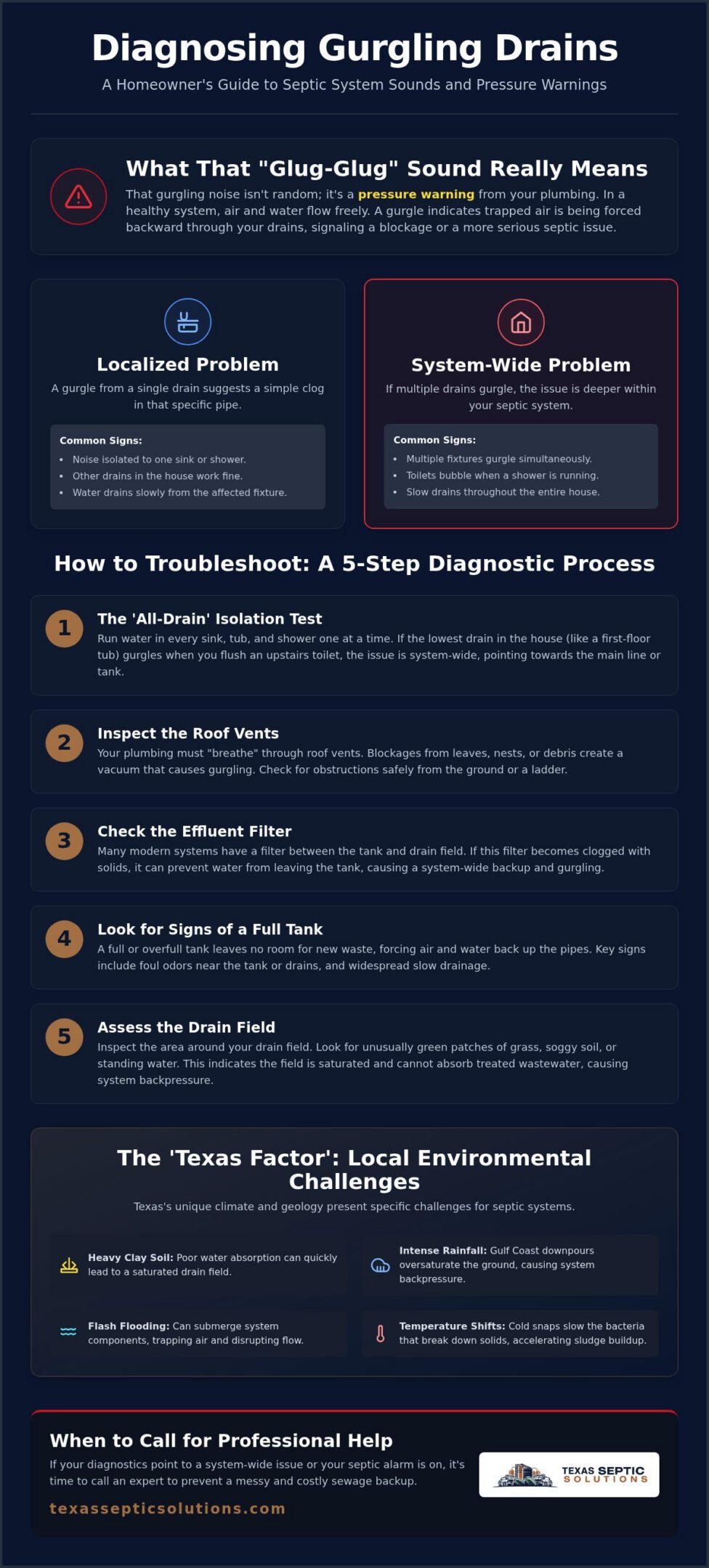
That strange, rhythmic glugging sound coming from your sink isn’t just an annoyance; it’s a physical reaction to trapped air. In a healthy plumbing setup, water flows down while air moves freely through vents to maintain equal pressure. When a blockage or a full tank disrupts this balance, air is forced to find the path of least resistance. Often, that path is back up through your P-traps, creating the bubbles and noise you hear. When you’re focused on fixing septic gurgling in drains, the first step is identifying if the noise is a localized hiccup or a system-wide emergency.
You can usually tell where the trouble lies by checking other fixtures. If only the kitchen sink gurgles, you likely have a local clog in that specific pipe. However, if multiple drains across the house make noise simultaneously, the issue is deeper in the system. Properly fixing septic gurgling in drains requires looking beyond the pipes inside your walls and checking the health of your external tank. The main line connecting your home to the septic tank acts as a primary highway for waste. If this line is partially blocked or the tank is overfilled, air cannot displace properly, leading to those frustrating “burps” in your plumbing.
Common Symptoms That Accompany Gurgling
Gurgling is rarely a solo act. To understand the root cause, you first need to understand how a septic system works and how it handles air displacement. If you notice a “sewage breath” odor near your drains, it means the water seal in your P-trap has been broken by pressure shifts, allowing sewer gases into your living space. Watch your toilets closely. A classic warning sign is the “toilet bubble,” where the water in the bowl ripples or bubbles when a nearby shower or washing machine drains. This indicates that the air trying to escape the system is being pushed back into the house because it has nowhere else to go.
The ‘Texas Factor’: How Soil and Weather Play a Role
Houston’s unique environment presents specific challenges for septic owners. Our region is famous for heavy clay soil, which doesn’t absorb water as quickly as sandy loam. During periods of intense Gulf Coast rain, the soil around your drain field can become completely saturated. When the ground is “full,” the effluent from your tank has nowhere to go. This creates backpressure throughout the entire system, leading to immediate gurgling.
Flash flooding can also throw off the air-to-liquid ratio inside your tank. If floodwaters enter the system, the sudden surge can submerge the inlet pipe, trapping air inside the house’s main line. Even seasonal temperature shifts in East Texas play a role; cold snaps can slow down the bacterial activity that breaks down solids, leading to faster sludge buildup and unexpected venting issues. Understanding these local factors helps you decide if you need a simple vent cleaning or an emergency pump-out.
How to Troubleshoot Septic Gurgling: A 5-Step Diagnostic Process
When your house starts making strange noises, it’s easy to jump to the worst-case scenario. However, fixing septic gurgling in drains often starts with a simple process of elimination. Before you assume the entire system has failed, follow this systematic diagnostic to see if the issue is a minor vent blockage or a sign that your tank needs immediate attention. Taking these steps now can prevent a small air pressure problem from turning into a messy, expensive cleanup later.
Step 1: The ‘All-Drain’ Isolation Test
Start by determining if the problem is localized or system-wide. Run water in every sink, tub, and shower one at a time. If only the kitchen sink glugs, you likely have a simple local clog in that specific pipe. However, if the lowest drain in the house, such as a first-floor bathtub, gurgles when you flush a toilet upstairs, the issue is deeper. This “global” gurgling suggests that air is trapped in the main line or the tank itself. Using this test helps you rule out simple P-trap issues before you start looking at the more complex components of your septic system.
Step 2: Inspecting the Roof Vents
Your plumbing system needs to “breathe” to work correctly. Every home has vent stacks that exit through the roof to allow air into the pipes. In Texas, these stacks are prime real estate for bird nests, leaves, or even wasps. If these vents are blocked, a vacuum forms every time water flows down a drain. This vacuum pulls air through your P-traps, creating that signature gurgling sound. You can often check for obstructions from the ground with binoculars. If you suspect a clog, the “garden hose trick” involves spraying a firm stream of water down the vent from the roof to clear out debris. If the water backs up out of the vent, you’ve found your culprit.
If your vents are clear, move your focus to the tank and drain field. For those with aerobic systems, a clogged effluent filter is a frequent cause of backpressure. This filter catches small solids before they reach the pump chamber; if it’s dirty, liquid can’t exit the tank fast enough. While you’re outside, observe the drain field for “ponding” or unusually lush, soft spots in the grass. These are common signs of a failing septic system that indicate the soil can no longer absorb liquid. Finally, check your maintenance records. If it’s been more than three to five years since your last professional pumping, the tank is likely reaching its capacity. If your troubleshooting points toward a full tank or a failing component, the team at Texas Septic Solutions is ready to provide a professional assessment to get your system back in balance.
Comparing the Culprits: Vent Clogs vs. Full Tanks vs. Field Failure
Deciphering the specific sounds and smells in your home is the fastest way to start fixing septic gurgling in drains. Not all gurgles are created equal. Some indicate a simple air pressure issue, while others warn of a system nearing capacity. By comparing these common culprits, you can determine if you need a ladder for your roof vents or a pumper truck for your backyard.
- Vent Clogs: These noises often occur even when the tank has plenty of room. Because the blockage is in the air stack on your roof, you’ll hear the gurgle without the accompanying sewer smell inside the house.
- Full Septic Tank: This is a “wet” problem. Gurgling is almost always paired with sluggish drains and toilets that hesitate to flush. You might also notice water rising in the shower when the dishwasher runs.
- Drain Field Failure: This is the most serious scenario. Along with the noise, you’ll find soggy patches in your yard and persistent odors that don’t go away even after a pump-out.
- Pipe Blockages: If the noise is limited to one room, it’s likely a local obstruction. Grease buildup or “flushable” wipes often snag in the pipes, creating small air pockets that bubble as water passes by.
Is Your Septic Tank Full? The 3-5 Year Rule
Over time, every system accumulates a layer of sludge at the bottom. As this layer grows, it reduces the available air space inside the tank. When there’s no room for air to displace as water enters, that air pushes back toward your house. This is why fixing septic gurgling in drains often requires a professional pump-out. Most Texas households should follow a Septic Tank Pumping Frequency Guide, which typically suggests service every three to five years. If you’ve reached that window and the “glug” has started, your tank is likely signaling that it’s full.
When the Drain Field is the Problem
In areas like Cleveland and Cypress, the soil can easily experience hydraulic overload. This happens when the ground becomes so saturated that it can’t accept more liquid from the tank. A common cause is the development of a “biomat,” a slimy layer of bacteria that eventually clogs the soil’s pores. When this happens, air can’t escape through the drain field, forcing it back up your plumbing lines. It’s vital to distinguish between temporary saturation from a heavy rainstorm and a total field failure. If the gurgling persists long after the Texas sun has dried the yard, your drain field may need professional attention to restore its absorption capacity.
Fixing and Preventing Septic Gurgling: Long-Term Solutions
Once you’ve diagnosed the cause of the noise, moving quickly to a resolution prevents a simple pressure issue from becoming a costly cleanup. fixing septic gurgling in drains requires a mix of basic maintenance and professional intervention to ensure your plumbing remains quiet. Start with the simplest fixes, like clearing your roof vents. Restoring proper atmospheric pressure allows water to flow freely without creating the vacuum that causes gurgling. If you have an aerobic system, cleaning the effluent filter is equally vital. A dirty filter acts like a dam, slowing down the liquid transition and forcing air back toward your home’s fixtures.
If these steps don’t quiet the system, you likely have a bottleneck in the main line caused by a full tank. Scheduling a professional pump-out is the only way to clear this obstruction and restore the necessary air gap. Beyond immediate repairs, the most effective way to protect your home is by implementing a septic system maintenance plan. This proactive approach ensures that filters are cleaned, levels are monitored, and small issues are caught before they trigger a household emergency.
Myth-Busting: Why Chemicals Won’t Fix the Gurgle
Many homeowners are tempted by “miracle” septic additives found at hardware stores, but these products often do more harm than good. These chemicals can break down solids into tiny particles that don’t settle, allowing them to flow into and clog your drain field pipes. Bleach and harsh cleaners are similarly destructive because they wipe out the microbial population your system needs. A septic system is a living biological reactor that relies on a delicate balance of healthy bacteria to break down organic waste. When you kill these bacteria with chemicals, the sludge layer builds up faster, leading to the very gurgling you’re trying to stop.
Proactive Maintenance for Texas Homeowners
For families in Huffman and Shepherd, regular inspections are a necessary safeguard against our local climate. Our heavy rainstorms put immense hydraulic stress on your system. During these wet periods, water conservation is your best tool to prevent gurgling. Avoid running multiple high-volume appliances, like the dishwasher and washing machine, at the same time. This prevents the system from becoming overwhelmed while the drain field is already struggling with saturated soil. Keeping a close watch for Signs Your Septic System Needs Immediate Repair can save you thousands in long-term damage. If your drains are still making noise after basic troubleshooting, it’s time for a professional assessment. Contact Texas Septic Solutions to schedule an inspection and ensure your system is ready for the next big Texas storm.
Professional Intervention: When to Call Texas Septic Solutions
While DIY troubleshooting can resolve minor air pressure issues, some symptoms indicate a deeper failure that requires a professional hand. fixing septic gurgling in drains becomes a race against time when the noise is followed by sewage backing up into your tubs or showers. If you see dark water or smell a sudden, sharp foul odor inside your home, the system is no longer just “gurgling”; it’s failing to move waste away from your living space. This is a health hazard that demands immediate attention before it causes significant property damage.
You should also take notice if your septic tank alarm is going off alongside those plumbing noises. An alarm typically signals that the water level in the tank has reached a critical high point, often due to a pump failure or a severe blockage in the effluent filter. If you’ve attempted to clear the roof vents or clean the filter yourself and the sound doesn’t resolve within 24 hours, don’t wait for a backup to happen. We provide 24/7 Emergency Septic Service throughout Houston, Cleveland, and Cypress, ensuring you have a dependable partner ready to respond when your utility systems let you down.
Our Emergency Septic Repair Process
We pride ourselves on rapid response times for Shepherd, Huffman, and our surrounding Texas communities. When our technicians arrive, we don’t start by tearing up your yard. We use professional diagnostic tools, such as high-resolution sewer cameras, to locate clogs and structural issues from within the pipes. This precision allows us to identify if the gurgle is caused by a collapsed line, a thick sludge layer, or an invasive root system. You’ll receive a transparent, straightforward report on the health of your tank and drain field so you can make an informed decision about the necessary repairs.
Restoring Peace and Quiet to Your Home
The goal of fixing septic gurgling in drains is to restore the silent, efficient drainage your household relies on every day. Often, a comprehensive Septic System Pumping is the most effective way to clear the bottleneck and reset the system’s air-to-liquid ratio. By choosing a “Reliable Local Authority,” you’re investing in the long-term health of your property. We don’t just pump the tank; we inspect the baffles and filters to ensure everything is in working order. Don’t ignore the warning signs your pipes are giving you. Contact Texas Septic Solutions for a professional inspection today and let us handle the stress of septic maintenance for you.
Restore Quiet and Reliability to Your Home
Gurgling drains are more than an annoyance; they’re a direct signal that your septic system’s pressure balance is off. Whether the culprit is a simple bird’s nest in your roof vent or a tank that has reached its sludge capacity, addressing the noise now saves you from the stress of a sudden sewage backup. Successfully fixing septic gurgling in drains starts with listening to your pipes and taking proactive steps to clear the way for proper airflow and liquid drainage.
If your troubleshooting hasn’t silenced the glug, or if you’re facing a high-water alarm, don’t wait for the situation to escalate. We offer expert troubleshooting for both aerobic and anaerobic systems with 24/7 Emergency Septic Service available when you need it most. We’re proud to serve our neighbors in Cleveland, Houston, Cypress, Huffman, and Shepherd with dependable, honest care. Schedule a Professional Septic Inspection and Pumping Service today to ensure your home stays comfortable and your plumbing remains silent. You’ve got this, and we’re here to help if you need a hand.
Frequently Asked Questions
Is a gurgling drain a septic emergency?
A gurgling drain isn’t always an immediate emergency, but it is a clear warning that your system is struggling with air pressure or capacity. If the noise is paired with slow drains or water backing up into your tubs, you should treat it as an urgent issue. Ignoring these signs can lead to a complete system failure. Our team provides 24/7 emergency service to handle these high-pressure situations before they cause property damage.
Can I use a plunger to fix a gurgling septic drain?
You can use a plunger for a simple local clog in a sink or toilet, but it won’t help with fixing septic gurgling in drains caused by system-wide pressure. Plungers only move blockages within the immediate pipe. If the gurgling is coming from multiple fixtures, the problem is likely in your main line, tank, or vent stack. Using a plunger in these cases won’t address the root cause of the trapped air.
Why does my toilet gurgle when the shower is running?
This happens because the air displaced by the shower water has nowhere to go but back through your toilet’s P-trap. It usually points to a blocked roof vent or a septic tank that is overfilled. When the air highway is blocked, the pressure forces air through the nearest available opening, which is often your toilet bowl. This specific symptom is a strong indicator that your system needs a professional inspection to restore proper venting.
Will pumping my septic tank stop the gurgling?
Pumping your septic tank will stop the gurgling if the noise is caused by a high sludge layer or a full tank reducing air space. Removing the waste restores the necessary air gap between the liquid level and the inlet pipe. This allows air to displace properly as water enters the tank. If the gurgling persists after pumping, the issue is likely a blocked plumbing vent or a failing drain field that requires further diagnostic testing.
How often should I clean my septic effluent filter?
You should clean your septic effluent filter at least every 6 to 12 months to prevent blockages that lead to gurgling. In aerobic systems, this filter is critical for protecting your pump and drain field from solids. A dirty filter restricts flow and creates backpressure in your home’s plumbing. Regular cleaning is a simple maintenance task that can prevent the need for emergency repairs and keep your drains quiet throughout the year.
Can heavy rain cause my septic system to gurgle?
Heavy Texas rain frequently causes septic gurgling because the saturated soil in your drain field can’t accept more liquid. When the field is flooded, the effluent stays in the tank, submerging the outlet and trapping air in the system. This backpressure manifests as gurgling in your indoor drains. It’s best to minimize water usage during storms to give your system time to recover as the ground dries out and regains its absorption capacity.
What does it mean if my septic tank gurgles after being pumped?
If your system still gurgles after a fresh pump-out, the problem is likely a blocked plumbing vent on your roof rather than a capacity issue. Because the tank is empty, the noise isn’t coming from a lack of space. Instead, a vacuum is forming in your pipes as water drains, pulling air through your traps. You should also check the main line for partial clogs that might be trapping air between the house and the tank.
Is it safe to ignore a gurgling drain if the water still flows?
It is not safe to ignore a gurgling drain because the noise is a precursor to a total sewage backup. While the water may still be flowing now, the gurgle indicates that your system’s air displacement is failing. Over time, the underlying cause will worsen, leading to slow drains, foul odors, and eventually waste backing up into your home. Fixing septic gurgling in drains early is much more cost-effective than dealing with a messy emergency cleanup.