
Emergency Septic Cleaning in Huffman, TX: 24/7 Rapid Response Guide
You’re finally settling in for the evening when you notice a foul odor drifting from the yard, or worse, you hear the persistent, high-pitched wail of a septic alarm. In Huffman, where heavy clay soil and high water tables are the norm, these warning signs can escalate into a full-scale household crisis in a matter of hours. If you’re currently staring at a sink that won’t drain or a yard that’s becoming a swamp, you need the kind of emergency septic cleaning Huffman experts provide to stop the damage before it spreads.
It’s incredibly stressful to face a sewage backup while worrying about potential repair costs and the health of your home. We understand that urgency, which is why we’ve designed this 24/7 rapid response guide to give you immediate solutions for septic failures, alarms, and overflows. We’ll walk you through the specific steps to take right now to stop a backup, how to get a clear diagnosis of the problem, and what’s required to get your household water usage back to normal as quickly as possible.
Key Takeaways
- Learn how to distinguish between routine maintenance and a true emergency where waste can no longer safely exit your home.
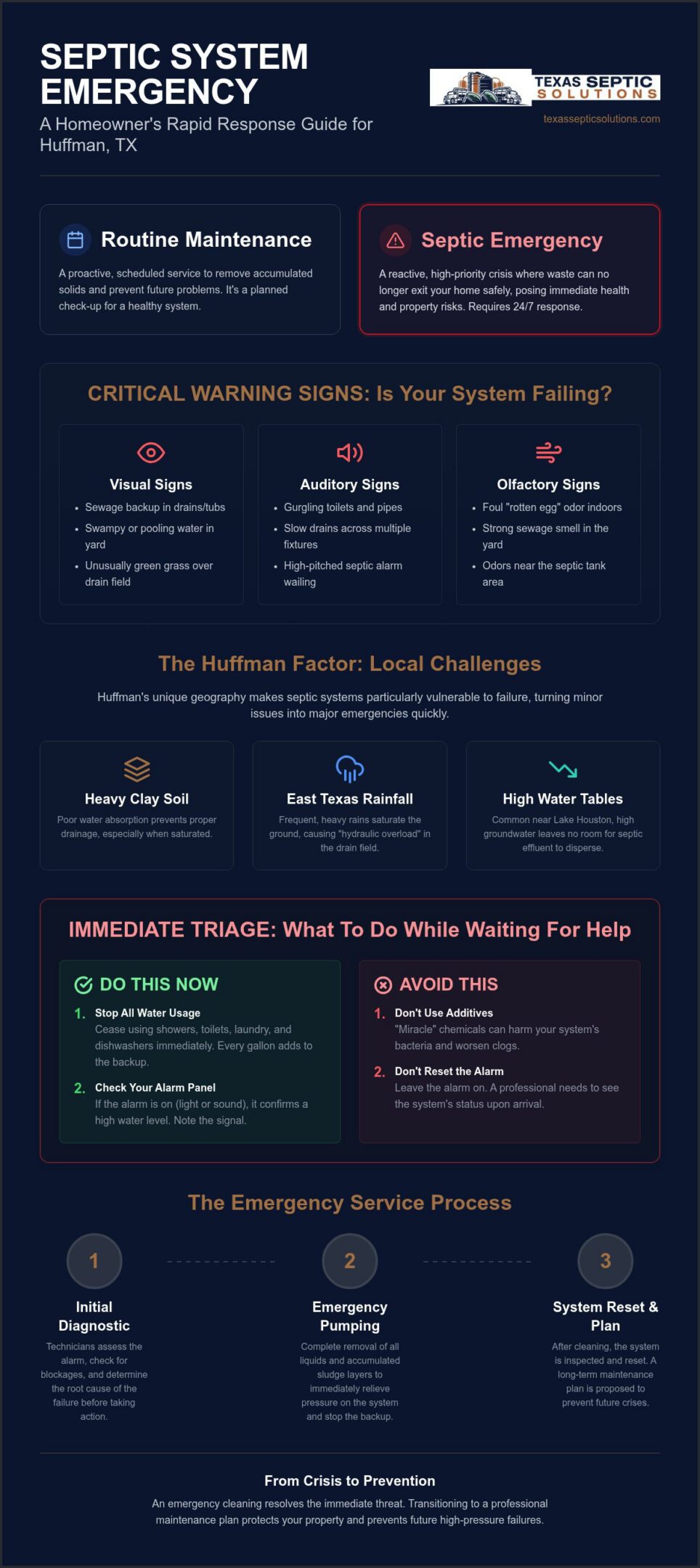
- Discover why Huffman’s heavy clay soil and frequent East Texas rainfall make your system particularly vulnerable to “hydraulic overload” and drain field failure.
- Get a clear breakdown of what happens during an emergency septic cleaning Huffman service, from the initial diagnostic to the complete removal of sludge layers.
- Identify the critical warning signs of a failing system, such as gurgling pipes and slow drains across multiple fixtures, before they lead to a total backup.
- Understand how transitioning to a professional maintenance plan after a crisis can protect your property and prevent future high-pressure failures.
What Qualifies as an Emergency Septic Cleaning in Huffman?
Most homeowners view septic maintenance as a box to check every few years. However, a true septic emergency is a different beast entirely. It occurs the moment waste can no longer exit your home safely or when the system begins discharging untreated effluent into your yard. While routine pumping is a proactive measure to remove accumulated solids, an emergency septic cleaning Huffman residents require is a reactive, high-priority intervention designed to prevent property damage and health risks. To understand the basic mechanics of these systems, it helps to know what a septic tank is and how it separates solids from liquids before they reach your drain field.
Huffman homeowners face unique environmental pressures that can turn a minor issue into a crisis overnight. Our local geography is defined by heavy clay soil and high water tables, particularly near Lake Houston. Clay soil doesn’t absorb water quickly. When we get the heavy East Texas rains we’re known for, the ground becomes saturated. This prevents your septic system from “breathing” or draining properly. If your tank is already near capacity, this external pressure can cause a total system backup. Delaying service under these conditions isn’t just an inconvenience; it’s a recipe for a collapsed drain field or a flooded home.
The hazards of waiting are significant. Raw sewage contains pathogens, bacteria, and parasites that pose immediate health risks to your family and pets. Beyond the biological dangers, the methane gas produced by decomposing waste can become trapped in your pipes, leading to foul odors and potential fire hazards. Taking action the moment you suspect a failure is the only way to protect your investment and your health.
Triage Steps: What to Do While Waiting for Help
If you suspect a backup, your first priority is to stop the flow. Immediately cease all water usage in the house. This includes showers, laundry, and running the dishwasher. Every gallon you send down the drain right now will likely end up on your bathroom floor or in your yard. Don’t be tempted to use “septic additives” or “miracle cleaners” to break up a suspected clog. These chemicals can disrupt the delicate bacterial balance of your system and may even worsen a blockage by dislodging solids that shouldn’t move. Finally, check your septic alarm panel. If it’s glowing red or beeping, it’s telling you the water level is too high. Note the light color but avoid resetting the system until a professional can inspect the pump and float switches.
When to Call for 24/7 Emergency Service
You should call for professional help immediately if you see “black water” backing up into your lowest-level drains, such as a basement shower or a floor drain. This is a clear sign that the system is completely blocked. Another red flag is a persistent “rotten egg” smell inside the house or near the tank area, which indicates that sewer gases are escaping. Perhaps the most common trigger for a late-night call is a septic tank alarm going off. This alarm is your system’s final warning that the tank is at a critical level and an overflow is imminent. Ignoring this signal for even a few hours can result in thousands of dollars in remediation costs.
Identifying a Septic Emergency: Signs You Need Immediate Help
If you’ve lived in Huffman for any length of time, you know the sound of a healthy plumbing system. When that rhythm changes, it is often a signal from deep underground that something is wrong. Common Signs of a failing septic system include slow drainage across multiple fixtures simultaneously. This isn’t just one stubborn kitchen sink; it’s the whole house struggling to “exhale.” When your toilets gurgle like a coffee percolator after every flush, your tank is likely struggling to process waste or is already over capacity.
The most undeniable sign of a crisis is a physical backup. Seeing dark water or raw sewage in your bathtub or lowest-level toilets is a clear indicator that the path to your tank is blocked or the tank itself is full. This is exactly when you need emergency septic cleaning Huffman experts to intervene. Waiting even a few hours can lead to permanent damage to your flooring, cabinetry, and drywall. If you notice these symptoms, it’s best to contact a local professional immediately to assess the situation before it gets worse.
Visual and Auditory Warning Signs
Take a walk through your yard and look for “pooling.” This is standing water that refuses to go away, even when the weather has been dry. “Ponding” is more severe, often appearing as a dark, swampy mess directly over your drain field or tank lids. You might also notice a patch of grass that looks suspiciously lush and vibrant compared to the rest of your lawn. This happens because the soil is being over-fertilized by untreated effluent leaking from the system. Don’t ignore a silent alarm, either. If you see a red light on your control panel but don’t hear a beep, the buzzer might be broken, leaving you blind to a rising crisis that could overflow at any moment.
The ‘Scent Test’ for System Failure
Your nose is often the most reliable diagnostic tool you have. While it’s easy to mistake “swamp gas” from the humid East Texas air for a septic issue, true system failure has a distinct, sharp odor of rotten eggs or sulfur. Check the area around your tank lids and the leach field specifically. If the smell is concentrated there, the system is venting improperly or overflowing. These odors often peak after heavy rainstorms because the saturated ground forces gases back up through the pipes and into your home. This is a sign that your system can no longer handle the hydraulic load and requires immediate attention to prevent a total failure.
The Huffman Factor: How Local Soil and Weather Impact Emergencies
Huffman sits in a unique spot in East Texas. The land here presents challenges that most urban plumbing systems never face. We deal with high water tables and strict Harris County environmental standards that dictate how we handle waste. If your system fails here, an emergency septic cleaning Huffman call is often a race against the elements. Because of our proximity to Lake Houston and the surrounding floodplains, the margin for error is slim. Understanding how our local geography interacts with your tank is the first step in preventing a total system collapse.
Clay Soil and the ‘Bathtub Effect’
The ground in Huffman is dominated by heavy, non-porous clay. Unlike sandy soils that allow water to percolate downward, clay acts like a sealant. When it rains, the water collects around your septic tank instead of soaking in, creating what we call the “bathtub effect.” This external pressure can be immense. In extreme cases, a tank that isn’t properly weighted or maintained can actually “float” or shift in the ground as the water table rises. Hydraulic overload in Huffman occurs when the surrounding soil becomes so saturated that it can no longer accept effluent from the drain field, forcing wastewater back into your pipes.
Weather Patterns and Septic Health
Our East Texas climate is famously humid and prone to sudden, intense downpours. Hurricane season is particularly brutal on local septic systems. During these months, the sheer volume of rain can overwhelm even the most robust systems. To stay ahead of these risks, many homeowners adopt a septic system maintenance plan to ensure their pumps and floats are ready for the surge. Protecting your drain field during the rainy season means diverting gutter runoff away from the area and avoiding any heavy traffic over the soil that could compact the clay further.
Many homes in Huffman utilize aerobic systems with surface discharge. These systems are complex and require specialized care because they must meet Harris County’s stringent disinfection standards. If your aerobic pump fails during a storm, you aren’t just dealing with a backup; you’re potentially discharging untreated waste onto the surface of your property. This requires immediate professional intervention to stay compliant with local health codes and protect your yard from contamination. We see these failures frequently when the humid climate wears down electrical components. Addressing these issues quickly with emergency septic cleaning Huffman services ensures your system remains a reliable part of your home’s infrastructure.
What to Expect During an Emergency Septic Pumping and Cleaning
When our response team arrives for an emergency septic cleaning Huffman call, the first priority is stabilization. We begin with a rapid diagnostic to locate your tank lids, which can sometimes be a challenge in the shifting Huffman clay. Once we have access, we check the liquid levels to determine if the issue is a simple overfill or a more complex component failure. This initial assessment allows us to stop the immediate threat of a backup before we begin the heavy lifting of waste removal.
The core of the emergency process involves removing the accumulated scum and sludge layers. The scum layer consists of fats and oils that float on top, while the sludge is the heavy solid waste that settles at the bottom. In an emergency, these layers have often reached a volume that blocks the natural flow of the system. We use high-capacity vacuum equipment to clear the tank completely, ensuring every inch of the interior is visible for a structural integrity check. This is when we look for cracks or groundwater intrusion that might be contributing to your system’s failure.
If we find that waste is standing in the pipes, we utilize high-pressure water jetting. This process clears stubborn clogs in the main lines and thoroughly cleans the tank’s baffles. These baffles are critical components that prevent solids from escaping into your drain field. If they’re clogged or damaged, the entire system is at risk. If you are facing a total system failure right now, you can request emergency septic service to get a technician on-site immediately.
Pumping vs. Cleaning: The Emergency Difference
There’s a significant difference between a routine pump-out and a comprehensive emergency cleaning. During a crisis, the waste in your tank has often become compacted or “caked” onto the walls. A simple pump-out might leave these solids behind, leading to another backup within weeks. We use agitators and “crust busters” to break up these solidified layers, ensuring a truly clean tank. This thorough approach also allows us to determine if you need a septic system repair, such as a baffle replacement or a new effluent filter, to prevent the problem from recurring.
Safety Protocols and Property Protection
We understand that your home is your biggest investment. Our technicians follow strict safety protocols to protect your property during the cleaning process. We use specialized hose placement and protective mats to prevent heavy equipment from damaging your lawn or compacting the sensitive Huffman soil. To manage odors, we utilize sealed vacuum systems that keep sewer gases contained. Before we leave, we always verify the “inlet” and “outlet” flow. This confirms that water is moving freely from your house to the tank and out to the drain field, giving you the peace of mind that your household water usage is fully restored.
Beyond the Crisis: Transitioning to a Septic Maintenance Plan
Once the immediate stress of an overflow is resolved, it’s time to ensure you never have to make that panicked midnight call again. An emergency septic cleaning Huffman residents experience is often a wake-up call for the system’s long-term health. It’s the perfect moment to shift from reactive repairs to a structured septic system maintenance plan. By taking control of your system’s functionality now, you can turn a one-time crisis into the last time you ever deal with a sewage backup in your home.
Regular inspections do more than just prevent odors. They allow a professional to identify small issues, like a failing float switch or a hairline crack in a baffle, before they escalate into a total system failure. In a community like Huffman, where the environmental conditions are already demanding, having a “set it and forget it” mentality toward your septic tank is a recipe for future trouble. Transitioning to a proactive schedule gives you the peace of mind that your home’s waste management is being handled by experts who know the local terrain.
The Cost of Proactive vs. Reactive Care
The math is simple. A midnight emergency call-out will always be more expensive than a scheduled daytime visit. Beyond the immediate service fees, regular maintenance significantly extends the life of your equipment. This delays the massive expense of a full septic system replacement, which can be one of the most significant financial burdens a homeowner faces. A key part of this care is routine filter cleaning. Small particles that bypass the tank can clog your drain field over time, leading to permanent soil damage. Keeping those filters clear is a simple, cost-effective insurance policy for your property.
Customizing Your Huffman Maintenance Schedule
Every home has different needs based on its specific plumbing load. A household of five using a 1,000-gallon tank will need more frequent pumping than a single resident in the same house. We help you factor in your resident count and water usage patterns to create a schedule that makes sense. As we discussed, aerobic systems are very common in Huffman due to our clay soil. These systems are more complex than traditional anaerobic ones and require more frequent check-ups to ensure the aerator and disinfection components are functioning properly. If you’ve just survived a system failure and want to avoid a repeat performance, you can Schedule your proactive septic inspection today to keep your home running smoothly.
Restore Your Peace of Mind and Protect Your Property
Dealing with a septic backup in Huffman is more than just a plumbing issue; it’s a race against local environmental conditions. We’ve explored how heavy clay and East Texas rainfall can quickly overwhelm your system, but you don’t have to face these challenges alone. By recognizing early warning signs and acting fast, you can prevent a messy situation from turning into a total system loss. Practical steps like stopping water usage and checking your alarm panel are the first lines of defense before a professional arrives to stabilize the situation.
Whether you’re currently facing a gurgling drain or a red alarm light, our team is ready to help. As a locally owned and operated business, we are experts in Harris County septic regulations and the specific needs of Huffman homeowners. Our 24/7 rapid response team is built to handle everything from emergency septic cleaning Huffman calls to long-term maintenance planning. Don’t let a temporary failure become a permanent headache. Call Texas Septic Solutions for 24/7 Emergency Service in Huffman and get your household back on track today. You’ve worked hard for your home, and we’re here to help you keep it functional and safe for years to come.
Frequently Asked Questions
How much does emergency septic cleaning in Huffman cost?
The cost for emergency service depends on the size of your tank, the complexity of the blockage, and whether the call occurs after-hours or on a weekend. Emergency response typically involves a premium over routine maintenance because of the immediate dispatch of equipment and personnel. We provide clear estimates once we assess the specific needs of your system on-site.
Can I use my toilets if my septic tank is backing up?
You must stop using all toilets and drains immediately if you suspect a backup. Every time you flush or run a faucet, you add more volume to a system that has nowhere to send it. This water will take the path of least resistance, which usually leads directly back into your home through your lowest bathtubs or floor drains.
How quickly can Texas Septic Solutions respond to an emergency in Huffman?
We provide 24/7 rapid response and prioritize Huffman calls to ensure a technician reaches your property as fast as possible. Being locally owned and operated allows us to move quickly within East Texas. Our goal is always to stabilize your system and stop any active backups before they cause extensive property damage or health hazards.
Is a septic backup covered by my homeowner’s insurance?
Coverage for septic failures depends on your specific policy and whether you’ve added a “sewer and drain backup” endorsement. Most standard policies don’t cover backups caused by lack of maintenance or wear and tear. It’s a good idea to check your policy details now so you aren’t surprised by the terms during a crisis.
What is the difference between septic pumping and septic cleaning?
Pumping simply removes the liquid and floating solids, while cleaning involves breaking up the heavy sludge at the bottom and scrubbing the tank walls. For an emergency septic cleaning Huffman residents often require this deeper level of service to ensure all compacted waste is gone. This thorough approach prevents the system from backing up again shortly after the technician leaves.
Why is my septic alarm going off after a heavy rain?
Heavy rain can saturate Huffman’s clay soil, which prevents effluent from leaving the tank and causes the internal water level to rise. When the water reaches a critical point, the alarm triggers to warn you of a potential overflow. This often indicates that your system is struggling with “hydraulic overload” and needs professional attention to prevent a backup.
Can a septic tank collapse if it isn’t pumped regularly?
Structural failure is rare but possible if a tank is neglected for many years and internal corrosion or external soil pressure takes a toll. Excessive sludge buildup puts unnecessary weight on the baffles and internal components. Regular pumping keeps the tank functioning within its design limits and allows technicians to spot cracks before they lead to a collapse.
How do I find my septic tank lids in an emergency?
You can locate buried lids by looking for slight depressions or mounds in the grass, or by using a thin metal probe to feel for the concrete or plastic covers. Most modern aerobic systems in Huffman have lids that are visible at the surface for easier access. If your lids are buried, our team can use specialized electronic locating tools to find them quickly without digging up your entire yard.