
Eco-Friendly Septic System Maintenance in Texas: The 2026 Homeowner’s Guide
With roughly 2.6 million septic systems operating across the Lone Star State, the way we manage our wastewater directly impacts the health of our local groundwater and soil. Mastering eco-friendly septic system maintenance Texas homeowners can trust is the best way to protect your property and the surrounding environment. You likely value the independence of living on your own land, but the worry of harsh chemicals leaching into your well water or your system failing in heavy East Texas clay is a constant weight. It’s easy to feel overwhelmed by “miracle” additives that often cause more harm than good, especially when you’re trying to navigate the updated 2026 TCEQ regulations.
We understand that you want a healthy, worry-free home that doesn’t compromise the Texas landscape. This guide provides a clear path toward sustainable care and total peace of mind. You will discover how to choose biological treatments over harsh chemicals, manage water usage to prevent soil saturation, and stay ahead of mandatory inspections. By focusing on these proven strategies, you can ensure your system remains clog-free and compliant for years to come. We’re here to help you move from confusion to complete confidence in your system’s performance.
Key Takeaways
- Learn how to implement eco-friendly septic system maintenance Texas homeowners can use to protect local groundwater and the Trinity River watershed.
- Understand the science behind biological additives and why chemical solvents are discouraged by state environmental experts.
- Identify the specific certifications and harmful ingredients to watch for when shopping for septic-safe household products.
- Discover how simple habits like water conservation and planting native Texas grasses can extend the life of your drain field.
- Recognize why professional pumping remains the most critical step in preventing soil contamination and system failure.
What is Eco-Friendly Septic System Maintenance in Texas?
Eco-friendly septic system maintenance is a proactive approach to OSSF health that prioritizes biological balance over chemical intervention. It involves using biological treatments and sustainable habits to manage household waste safely while protecting the surrounding ecosystem. Choosing eco-friendly septic system maintenance Texas residents can rely on means moving beyond simple repairs and focusing on the long-term health of the soil and water. It’s about working with nature rather than trying to overpower it with synthetic solutions.
In our state, this commitment to “green” care is particularly vital. Many homes sit near the Trinity River watershed or rely on local groundwater for their daily needs. What goes into your tank doesn’t stay there forever; it eventually filters back into the earth. True eco-friendly care avoids “greenwashed” products that use vague marketing terms and instead relies on scientifically backed methods that support the natural breakdown of solids.
The Environmental Impact of Traditional Septic Chemicals
To understand why this matters, you first need to know How Septic Systems Work. Your tank is a living ecosystem. When you pour harsh cleaners like bleach or caustic drain openers down the sink, you aren’t just cleaning a pipe; you’re effectively poisoning the colony of “good” bacteria that digests waste. Without these microbes, solids build up faster, leading to clogs and expensive repairs.
This risk is even higher in areas like Huffman and Shepherd, where high water tables mean that any chemical runoff can quickly reach the groundwater. Many homeowners are also tempted by chemical “starters” or “miracle” additives. In a healthy Texas septic system, these are usually unnecessary. A well-maintained tank naturally develops the bacteria it needs, provided you don’t kill them off with household toxins.
OSSF vs. Traditional Septic: A Texas Distinction
In Texas, the Texas Commission on Environmental Quality (TCEQ) uses the term On-Site Sewage Facility (OSSF) to describe what most people call a septic system. This distinction is important because it covers a variety of technologies, including both conventional gravity systems and modern aerobic units. Each requires a specific lens for eco-friendly septic system maintenance Texas homeowners must follow.
Aerobic systems, which are common in the tight clay soils of Houston and Cypress, use oxygen to speed up the treatment process. They often require a disinfection step before the water is sprayed onto the lawn. Traditional chlorine tablets are effective but can be harsh on the environment. Finding eco-friendly alternatives for disinfection, such as liquid bleach systems or specific non-toxic tablets, helps you stay compliant with local regulations while minimizing your footprint on the Texas landscape.
Biological vs. Chemical Septic Treatments: Which is Better?
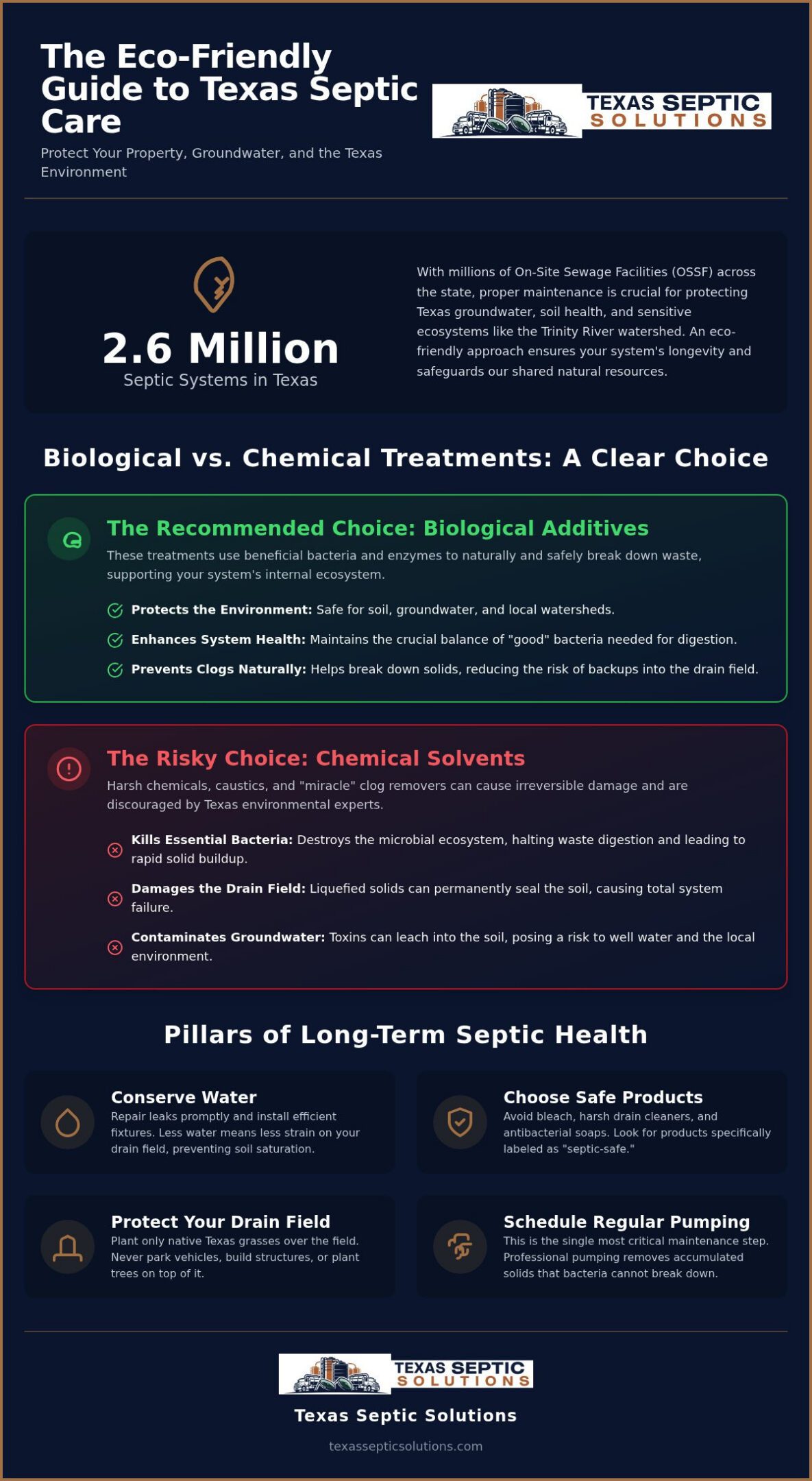
Choosing between biological and chemical treatments is more than a matter of price; it’s a choice about the future of your property. Biological additives work by introducing specific enzymes and bacteria that mimic the natural digestion process inside your tank. These microbes target organic matter, helping maintain a healthy scum-to-sludge ratio so that solids don’t overflow into your drain field. This is a foundational part of eco-friendly septic system maintenance Texas homeowners should prioritize to avoid system backups and environmental contamination.
Chemical solvents are largely discouraged by Texas environmental experts. While they might seem to clear a clog quickly, they often do so by liquefying grease and solids that should stay in the tank. These liquefied solids then travel to your drain field, where they can permanently seal the soil and cause total system failure. For a deeper look at sustainable practices, the EPA guide to septic system care highlights how proper waste disposal and biological balance are always better than chemical intervention.
Pros and Cons of Biological Additives
Biological boosters are environmentally safe and directly support the longevity of your drain field. They don’t introduce toxins into the Trinity River watershed or your local well water. However, they require consistency. You can’t just flush one packet a year and expect results. They also won’t “fix” a system that has already reached its breaking point. We often recommend using these boosters immediately after a septic system pumping to jumpstart a fresh, healthy colony of bacteria in a clean tank.
Why Chemical Treatments are a Risk for Texas Soils
East Texas is famous for its heavy clay soils, which are highly sensitive to the sodium and salts found in many commercial chemical treatments. When these chemicals enter the soil, they can cause soil compaction, essentially turning your drain field into a waterproof brick. This prevents effluent from filtering through the ground. Additionally, many harsh chemicals can corrode concrete tanks over time, weakening the structure of your OSSF. Chemicals provide a “quick fix” that often masks deeper issues.
When you compare costs over a 5-year lifespan, biological treatments are the clear winner. While a bottle of chemical cleaner might be cheap today, the resulting soil compaction or tank corrosion could lead to a replacement bill in the tens of thousands. Using monthly bacteria boosters ensures your system stays in balance without the risk of environmental fines or soil damage. If you’re unsure which product is right for your specific setup, a professional septic system maintenance plan can take the guesswork out of your routine.
Buying Guide: Choosing the Right Eco-Friendly Treatments
Buying the right products is a vital step in a solid plan for eco-friendly septic system maintenance Texas property owners can manage themselves. With hundreds of bottles on the shelf, you need a way to filter out the noise and find what actually works. Look for the EPA ‘Safer Choice’ or ‘Design for the Environment’ (DfE) labels. These certifications mean the product has been vetted for environmental safety and won’t disrupt the microbial balance of your tank. Selecting these products ensures you aren’t accidentally flushing toxins into the local water table.
Pay close attention to the ingredient list. You want to avoid these specific chemicals:
- Phosphates: These can lead to harmful algae blooms in local Texas waterways.
- Formaldehyde: Often found in RV treatments, this is a potent biocide that kills your tank’s beneficial bacteria.
- Quaternary ammonium compounds: These are harsh disinfectants that can stall the entire digestion process.
Form also matters for ease of use. Liquid treatments are easy to pour, while powder and flushable packets provide pre-measured doses. Regardless of the form, ensure the dosage matches your tank capacity. Most Texas residential tanks range from 500 to 1,500 gallons. Using a treatment designed for a small 500-gallon tank in a large 1,500-gallon aerobic system won’t provide enough bacteria to make a meaningful difference.
Evaluating ‘Miracle’ Septic Products
Be wary of any product claiming you “never have to pump again.” This is a dangerous myth. No amount of bacteria can digest inorganic solids or the thick sludge that accumulates over several years. Always cross-reference these claims with the official Texas septic system maintenance rules, which mandate regular oversight for a reason. Stick to products containing non-pathogenic bacterial strains, which are safe for your family and the local soil.
Eco-Friendly Cleaning Products for the Whole House
Maintenance doesn’t stop at the tank; it starts at the drain. Choose laundry detergents and dish soaps specifically labeled as septic-safe. Don’t assume “biodegradable” is enough. In a high-volume household, some biodegradable soaps don’t break down fast enough, leading to a “foamy” tank that interferes with solid separation. For a truly green approach, use natural alternatives like baking soda and vinegar for routine drain freshening. These are effective, cheap, and completely harmless to your OSSF’s delicate ecosystem.
Sustainable Habits for Long-Term Septic Health
Developing sustainable daily habits is just as critical as choosing the right products for eco-friendly septic system maintenance Texas properties require. Your system is designed to handle a specific volume of waste and water; exceeding those limits or flushing the wrong items can lead to environmental contamination. The “Golden Rule” of septic health is simple: only human waste and toilet paper should ever go down your drains. Even those labeled as “flushable” wipes don’t break down quickly enough for most OSSF setups, leading to mechanical clogs and expensive emergency service calls.
Regular inspections are another “green” practice that many homeowners overlook. Catching a small leak or a failing baffle early prevents untreated effluent from reaching the surface or contaminating the local groundwater. In a state where 2.6 million households rely on septic systems, these individual habits collectively protect our shared natural resources. Staying proactive ensures your system remains an asset to your property rather than a liability to the Texas environment.
Managing Your Hydraulic Load
Hydraulic load refers to the total volume of water entering your tank. When too much water enters at once, it can “flood” the system, pushing solids out into the drain field before they have time to settle. You can prevent this by spacing out laundry loads throughout the week instead of doing five loads on a Saturday. Installing low-flow fixtures in your Houston or Cypress home also significantly reduces the daily strain on your system. Watch out for “silent” toilet leaks; a single leaking flapper can send hundreds of gallons of clear water into your tank daily, effectively drowning the beneficial bacteria you’ve worked hard to cultivate.
Protecting the Drain Field (Leach Field)
Your drain field is the final stage of the treatment process, and it needs to “breathe” to function. You should never park or drive vehicles on this area. The weight of a truck can crush lateral lines and compact the soil, which is a major issue in East Texas clay. Compaction prevents the soil from absorbing and filtering effluent properly. Additionally, ensure your gutter downspouts and patio runoff are diverted away from the septic area to prevent soil saturation during heavy Texas rainstorms.
Landscaping also plays a role in moisture management. Planting Texas-native grasses like Buffalo grass or Sideoats Grama over the field helps stabilize the soil and absorb excess water without the deep, invasive roots that could damage your pipes. For a full seasonal checklist on how to manage these tasks, refer to our septic system maintenance plan. If you’re ready to ensure your system is operating at peak efficiency, contact us today for professional septic system maintenance.
Professional Oversight: The Ultimate Green Maintenance Step
While daily habits and smart product choices are essential, professional oversight is the backbone of eco-friendly septic system maintenance Texas homeowners need for long-term sustainability. Moving from reactive fixes to proactive care is the best way to protect your property investment and the local environment. A licensed expert brings the specialized tools and regulatory knowledge required to ensure your On-Site Sewage Facility (OSSF) operates at peak efficiency without risking the health of the surrounding soil.
The Role of Professional Pumping
Regular pumping is arguably the most eco-friendly action you can take for your land. By removing accumulated solids, you prevent sludge from escaping the tank and entering your drain field. If these solids reach the soil, they cause permanent compaction and lead to untreated waste surfacing on your lawn. Regular pumping prevents nitrogen and phosphorus from leaching into local waterways. We ensure that the waste removed is transported to a licensed treatment facility for responsible disposal. This process ensures the waste is neutralized according to TCEQ standards rather than becoming a local pollutant.
Catching a septic system repair need before it turns into a spill is essential for environmental health. A cracked tank or a failing aerator isn’t just a home maintenance nuisance; it’s a direct hazard to the Trinity River watershed. Enrolling in a professional septic system maintenance Texas plan provides the regular monitoring required to spot these mechanical issues early. These inspections are particularly vital for aerobic systems, which rely on moving parts that must function perfectly to treat waste to a safe, sprayable level.
Why Choose a Local Texas Expert?
Texas soil isn’t uniform, and a one-size-fits-all approach to maintenance doesn’t work here. The heavy, expanding clay in Cleveland requires different drainage strategies than the sandier pockets found in Shepherd or the urban-fringe lots in Cypress. A local expert understands these geological nuances and can provide personalized advice on eco-friendly treatments tailored to your specific system type. We also maintain 24/7 readiness for emergency septic service. This rapid response prevents spills from reaching neighboring properties or local storm drains. Texas Septic Solutions is committed to supporting sustainable property ownership across East Texas by keeping your system efficient, compliant, and environmentally sound.
Securing a Sustainable Future for Your Texas Property
Adopting a sustainable approach to your septic system isn’t just about following the law; it’s about ensuring your land remains healthy for generations. By prioritizing biological treatments over harsh chemicals and managing your daily water use, you’re taking active steps to prevent soil contamination. These simple choices today prevent expensive failures tomorrow. Remember that regular pumping is the most effective way to keep your system in balance and protect the local groundwater we all share.
Mastering eco-friendly septic system maintenance Texas homeowners can trust starts with professional oversight. Our team serves Cleveland, Houston, and Cypress with 24/7 emergency support to handle any unexpected issues promptly. As expert OSSF maintenance specialists, we’re ready to help you navigate the 2026 requirements while keeping your system running smoothly. We take pride in being your dependable local experts for every maintenance need.
Schedule your eco-friendly septic inspection with Texas Septic Solutions today! We look forward to being your partner in maintaining a healthy, worry-free home.
Frequently Asked Questions
Are septic tank additives really necessary for eco-friendly maintenance?
Septic tank additives aren’t strictly necessary for a healthy system because human waste naturally provides the bacteria needed for digestion. However, biological boosters are helpful for restoring balance if you’ve accidentally used harsh cleaners or recently moved into a new property. They act as a safety net to ensure your system continues to break down solids effectively. While they offer support, they don’t replace the need for professional pumping every few years to remove sludge.
Can I use bleach if I have a septic system in Texas?
You should avoid using large amounts of bleach because it’s a potent biocide that kills the “good” bacteria in your tank. While a small amount in a single laundry load won’t destroy your system, frequent use can lead to a “dead” tank where waste doesn’t break down. This increases the risk of solids reaching your drain field. Switching to oxygen-based bleaches or natural cleaners protects your system’s biological balance and the local environment in Shepherd.
What is the best eco-friendly toilet paper for Texas septic systems?
The best eco-friendly toilet paper is any brand labeled “septic-safe” that dissolves rapidly when wet. While recycled or bamboo papers are popular green choices, you should perform a simple “jar test” to see how quickly they break down. If the paper doesn’t disintegrate after a few minutes of shaking in water, it could lead to clogs in your pipes. Rapidly dissolving paper prevents the mechanical blockages that often trigger emergency repair calls in Cleveland.
How often should I use biological treatments in my septic tank?
Biological treatments are typically used once per month to keep microbial levels steady. This frequency helps support the natural digestion process and is a common part of eco-friendly septic system maintenance Texas residents use to prevent sludge buildup. If you have a high-occupancy home in Huffman or Cypress, staying on a strict schedule is even more important. This routine ensures your tank has the active enzymes needed to process household waste efficiently between professional pumpings.
Will an eco-friendly approach prevent my septic tank alarm from going off?
An eco-friendly approach reduces sludge buildup, which helps prevent float-related alarms, but it won’t stop alarms caused by mechanical or electrical failures. Your alarm often signals a high-water event or a pump malfunction that requires immediate professional attention. While biological health is vital, it can’t fix a broken aerator or a clogged spray head. Regular inspections are the only way to ensure your alarm system and mechanical components remain in good working order for years.
Is vinegar safe for septic systems?
Yes, vinegar is completely safe for your septic system and serves as an excellent alternative to harsh chemical cleaners. Its mild acidity is effective at cutting through grime without killing the beneficial bacteria in your tank. You can use it for cleaning toilets, sinks, and countertops without worrying about contaminating the soil in Cleveland or Shepherd. It’s one of the most cost-effective and environmentally friendly tools available for routine household maintenance today.
How do I know if a treatment is safe for Texas groundwater?
You can verify a treatment’s safety by checking for the EPA “Safer Choice” or “Design for the Environment” labels. These certifications indicate the product has been reviewed for its environmental impact on local soil and water. This is a critical part of eco-friendly septic system maintenance Texas homeowners should understand to protect our shared resources. Avoid any products containing formaldehyde or phosphates, as these substances can disrupt the natural filtration process in your drain field.
Does ‘all-natural’ always mean it is safe for my drain field?
“All-natural” is a marketing term that doesn’t always guarantee safety for your leach field. For example, some natural essential oils have antimicrobial properties that can harm your tank’s bacteria if used in high concentrations. Additionally, natural fats and greases can still clog soil pores just as easily as synthetic ones. Always ensure a product is specifically labeled as “septic-safe” to ensure it won’t cause soil compaction in the heavy clay found around Houston and Cypress.