
Cost to Replace Septic Drain Field in Cleveland, TX: 2026 Homeowner Price Guide
Most homeowners in Liberty County don’t realize their septic drain field is failing until the backyard becomes a swamp and the indoor drains stop moving. It’s a stressful, messy situation that usually happens at the worst possible time, leaving you worried about property damage and a massive repair bill. You’re likely wondering if you need a total system overhaul or just a targeted fix. We understand that facing the cost to replace septic drain field Cleveland TX is daunting, especially when you’re trying to protect your home’s value while following strict local regulations.
You deserve a straightforward answer about what to expect before the backhoe arrives. This 2026 guide provides a clear, localized breakdown of the expenses, factors, and processes involved in restoring your system. We’ll cover everything from Liberty County permit fees and mandatory soil evaluations to the specific challenges of East Texas clay. By the end of this article, you’ll have the transparency you need to work with a licensed local installer who knows exactly how to handle our unique local terrain and keep your home functional for years to come.
Key Takeaways
- Identify how Cleveland’s unique soil composition and heavy clay impact the design and total investment of your new drain field.
- Get a clear breakdown of the cost to replace septic drain field Cleveland TX, helping you budget for everything from permits to professional labor.
- Compare the benefits of conventional gravel systems versus high-performance aerobic spray or drip irrigation fields for your specific lot.
- Learn the essential steps of the Liberty County permitting process, including mandatory soil evaluations and engineering requirements for 2026.
- Understand the risks of DIY attempts and why hiring a licensed local installer is necessary to protect your property and ensure legal compliance.
Estimating the Cost to Replace a Septic Drain Field in Cleveland, TX
Your septic system works in distinct stages to keep your home functional. The What is a Septic Drain Field? acts as the final treatment area. It’s where liquid waste, or effluent, filters through layers of soil to be naturally purified. When this area stops working, you’ll notice soggy spots in the yard or slow drains in the house. Addressing the cost to replace septic drain field Cleveland TX early can prevent a total system collapse and protect your property from environmental contamination.
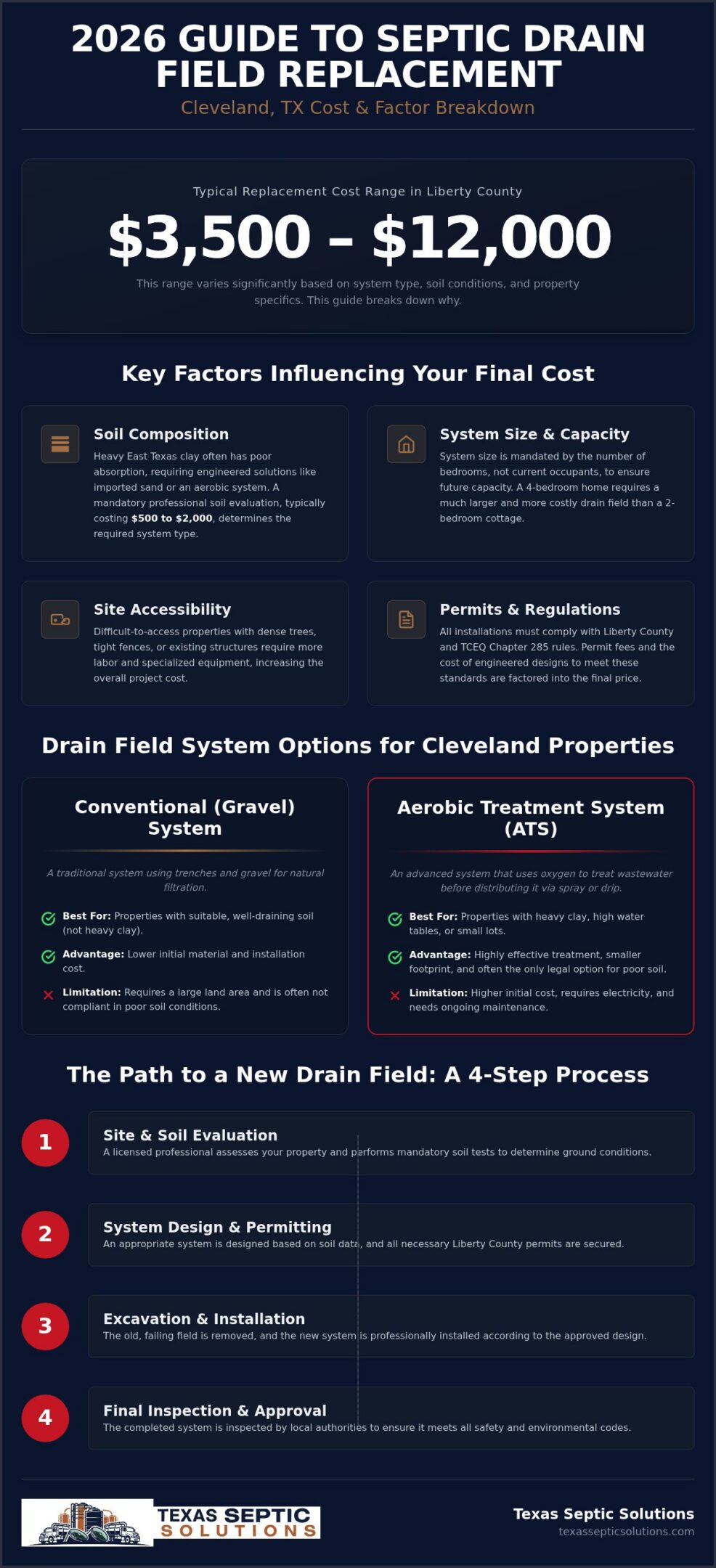
While every property is different, homeowners in the Cleveland area typically see industry averages between $3,500 and $12,000 for a drain field replacement. This price fluctuates based on whether you’re dealing with a conventional system or a more complex aerobic setup. Ignoring the signs of failure, like foul odors or surfacing water, only leads to higher emergency repair bills later on.
Drain Field Replacement vs. Full System Installation
You might not always need a brand new tank. If your existing septic tank is structurally sound and sized correctly for your home, we can often replace just the lateral lines or the treatment field. This saves significant money on excavation and materials. We look for signs of backflow or tank deterioration to determine if the entire infrastructure needs an upgrade. If the tank is cracked or the baffles have collapsed, replacing only the field is a temporary fix that will lead to another failure. Choosing a targeted replacement when possible keeps your project timeline short and your budget manageable.
Why Cleveland Homeowners Pay Different Rates
Local geography plays a huge role in your final quote. Cleveland sits in an area with varying soil types. Heavy East Texas clay doesn’t drain as easily as sandy loam. This often requires more gravel, longer lines, or specialized chambers to ensure proper filtration. Additionally, the number of bedrooms in your home dictates the required size of the field. A four-bedroom house requires a much larger footprint than a two-bedroom cottage. Accessibility also matters. If our crews have to work around tight fences or dense trees, the labor hours will naturally increase. Current 2026 material costs for PVC and aggregate also influence the bottom line as supply chains fluctuate.
Key Factors Influencing Drain Field Replacement Pricing
Calculating the cost to replace septic drain field Cleveland TX involves more than just picking a system from a catalog. Local variables like soil quality and site access play a massive role in the final invoice. Under current TCEQ Chapter 285 rules, every installation must meet strict environmental safety benchmarks. These 2026 standards ensure that wastewater doesn’t contaminate the local groundwater, which is particularly important in the low-lying areas of East Texas where the water table can be high.
Site accessibility is another major price driver. If your property has heavy tree cover, a narrow driveway, or existing structures like decks and sheds, expect labor costs to rise. Excavators need room to maneuver. Removing sections of a fence or working around established landscaping adds hours to the project timeline. Understanding the various Types of Septic Systems is the first step in seeing how these factors collide and influence your total investment.
The Cleveland Soil Factor: Clay vs. Sand
Liberty County requires a professional soil evaluation before any permit is issued. These tests, which determine how quickly water moves through your ground, usually range from $500 to $2,000. Because much of Cleveland sits on heavy clay, the soil often fails to absorb liquid at a standard rate. In these cases, we can’t simply put pipes in the ground. You might need to import high-quality fill sand to create a viable filtration bed or switch to an aerobic system that utilizes spray or drip irrigation. These engineered solutions are more expensive than traditional gravel fields but are often the only way to meet local codes in “tight” soil.
System Capacity and Daily Usage
Your home’s size determines the drain field’s footprint. A 2-bedroom home requires less linear footage than a 5-bedroom estate because the expected daily water volume is lower. Most regulations calculate capacity based on the number of bedrooms rather than the current number of occupants to ensure the system can handle future growth.
- Small Residential (2-3 Bedrooms): Typically requires shorter lateral lines and smaller overall footprints.
- Large Residential (4-5 Bedrooms): Needs extensive field area to prevent saturation and premature failure.
- Commercial Properties: Businesses in Cleveland must adhere to higher capacity standards, often requiring specialized engineering to meet Liberty County health codes.
If you’re unsure how your specific lot affects your budget, our local team can provide a detailed site assessment to clear up the confusion and help you plan your next steps.
Choosing Between Conventional and Aerobic Drain Field Solutions
Deciding which system to install is the most significant choice you’ll make during this process. The type of technology used in your backyard directly dictates the total cost to replace septic drain field Cleveland TX. While older homes in East Texas often relied on simple gravity-fed designs, modern environmental standards have shifted the landscape. Every new or replacement project must now align with the Texas Commission on Environmental Quality guidelines to ensure your property remains safe and compliant with 2026 health codes.
The right choice depends on your soil’s ability to absorb water and the size of your lot. Conventional systems are passive and rely on the earth to do the heavy lifting, while aerobic systems use mechanical assistance to treat wastewater to a much higher level before it ever touches the ground. Both have distinct advantages regarding upfront investment and long-term maintenance needs.
Conventional Systems: Pros, Cons, and Costs
Conventional systems remain the most affordable option for properties with the right soil profile. These setups use a network of perforated pipes buried in gravel-filled trenches. They are highly durable and can last 20 to 30 years if you’re diligent about regular pumping. However, they are becoming less common for new Cleveland permits because they require a large footprint and perfectly draining soil. If your land has a high water table or dense clay, a conventional field might not be an option under current regulations. While they have a lower initial septic system replacement cost, their reliance on natural filtration makes them vulnerable in the heavy rains we often see in Liberty County.
Aerobic and Engineered Systems
If your soil evaluation reveals heavy clay, an aerobic system is often the only viable path forward. These systems function like a miniature municipal treatment plant. They use an aerator to inject oxygen into the tank, which fuels bacteria that break down waste much faster than traditional methods. The treated water is then distributed through spray irrigation or subsurface drip lines.
- Spray Irrigation: These use specialized sprinkler heads to distribute treated effluent over a designated lawn area. It’s generally the most common aerobic solution in Cleveland.
- Subsurface Drip: This method uses a network of tubes buried just below the surface. It’s ideal for smaller lots or areas where you don’t want surface sprinklers.
In Texas, all new aerobic installations require a mandatory two-year initial maintenance contract with a licensed provider. This ensures the mechanical components, like the pump and aerator, stay in peak condition. While the ongoing costs are higher than a passive field, the ROI comes from having a reliable system that works in soil where conventional methods would fail.
The Replacement Process: From Site Evaluation to Final Inspection
Replacing a drain field is a structured construction project that requires precision and adherence to local health codes. It’s not as simple as digging a new trench; it involves a series of regulated steps designed to protect your property and the local environment. When you budget for the cost to replace septic drain field Cleveland TX, you’re paying for a specialized process that ensures your new system functions reliably for decades. This journey from the first shovel in the ground to the final sign-off typically follows a five-step path.
- Step 1: Professional Site Evaluation: A licensed professional performs a soil analysis to determine absorption rates.
- Step 2: Engineering and Design: A Registered Sanitarian or Professional Engineer creates a blueprint tailored to your lot’s topography.
- Step 3: Permitting: Your plans are submitted to the Liberty County or San Jacinto County Environmental Health Department for approval.
- Step 4: Installation: Our crews handle the excavation, laying the new lines or chambers, and backfilling the area.
- Step 5: Final Inspection: A county official visits the site to verify the installation meets all 2026 TCEQ standards before the system is commissioned.
Permitting and Engineering Fees in Cleveland
Local bureaucracy is a necessary part of the process. For 2026, Liberty County permit fees for repairing or replacing an existing system generally range from $100 to $300. If your property is within the City of Cleveland, you may face an additional $200 fee for activities requiring construction permits. It’s vital to have these permits in hand before work begins. As of June 9, 2026, Liberty County mandates a penalty of double the permit fee for any work started without prior authorization. The entire approval process, from soil testing to permit issuance, usually takes between 4 to 8 weeks.
Landscaping and Restoration Costs
The total investment often includes “hidden” costs related to your yard’s recovery. Excavation equipment is heavy and will inevitably disrupt your lawn. You should account for sod replacement, potential tree removal if roots interfere with the new lines, and even driveway repairs if heavy machinery must cross paved areas. While a basic septic system repair might only involve minor surface work, a full drain field replacement is a major undertaking. We work to minimize damage, but budgeting for post-installation landscaping ensures your home’s curb appeal is restored quickly.
If you’re ready to get started, contact our Cleveland team for a professional site evaluation and a clear path forward for your property.
Professional Drain Field Services for Cleveland Property Owners
Attempting a DIY drain field replacement is more than just a difficult weekend project; it’s a significant legal and environmental risk. Texas law, specifically under TCEQ Chapter 285, requires that on-site sewage facilities be handled by licensed professionals to prevent groundwater contamination. If a system is installed incorrectly, you face the prospect of heavy fines and a failed inspection that will force you to start over from scratch. When evaluating the cost to replace septic drain field Cleveland TX, remember that the value of a professional installation lies in the long term stability of your home’s infrastructure.
Texas Septic Solutions provides a complete turnkey process. We manage every detail from the initial soil evaluation and engineering design to the final county inspection. We’re built to handle both the routine maintenance that extends the life of your system and the high pressure demands of unexpected failures. Our team offers 24/7 emergency septic service because we know that a failing drain field doesn’t wait for business hours to cause a backup. We treat every property with the care of a neighborly expert, ensuring your utility issues are resolved with minimal stress.
Why Local Expertise Matters in East Texas
Cleveland presents unique challenges that out of town contractors often overlook. Our proximity to the Trinity River means certain areas face higher water tables and specific flooding risks that can saturate a poorly designed drain field. We understand how the heavy clay in Liberty County behaves during a rainy season and how it impacts filtration. Our team remains current on all Cleveland municipal codes and Liberty County environmental health requirements, ensuring your system is fully compliant. Having a local partner means you have someone nearby who understands the specific terrain of your backyard and is available for years of reliable maintenance.
Next Steps: Getting an Accurate Quote
Before you sign a contract, it’s important to have a clear understanding of the scope of work. We recommend preparing for your initial consultation by locating your existing septic tank and having any past maintenance records ready. When speaking with a contractor, ask these critical questions:
- Are you licensed by the TCEQ for OSSF installation in Liberty County?
- Does your quote include the cost of the mandatory soil evaluation and engineering design?
- How will you handle the permitting process with the county health department?
- What is your plan for minimizing damage to my existing landscaping?
We’re here to provide the transparent pricing and dependable service you need to protect your property. If you’re ready to move forward with a functioning, worry free system, get a custom quote for your drain field replacement today and let our experts handle the rest.
Restore Your Home’s Functionality with Expert Drain Field Care
Replacing a septic drain field is a significant investment in your property’s future. By understanding how Liberty County soil and 2026 permitting requirements influence the cost to replace septic drain field Cleveland TX, you can make an informed decision that protects your home. Whether you’re dealing with a conventional system or need a high-performance aerobic solution, the right design ensures you won’t be facing the same soggy yard issues again in a few years. Professional installation is the only way to guarantee your system meets environmental standards and functions reliably.
Don’t let a failing system disrupt your life or damage your property. As Licensed OSSF Installers, we provide comprehensive support from the first soil test to the final inspection. We’re proud to serve Liberty and San Jacinto Counties with 24/7 emergency service available for those urgent repairs that can’t wait. Contact Texas Septic Solutions for a Professional Site Evaluation in Cleveland today. Our team is ready to help you get your system back in peak condition with the reliable, local expertise you deserve.
Frequently Asked Questions
How long does it take to replace a septic drain field in Cleveland?
The entire process typically takes four to eight weeks from start to finish. This timeline includes the mandatory soil evaluation, professional design phase, and the Liberty County permitting process. Once we have the approved permit in hand, the actual physical excavation and installation only take two to five days. Weather conditions in East Texas can occasionally cause delays, but we work quickly to restore your home’s waste management system.
Can a septic drain field be repaired without replacing it?
Minor repairs are possible if the issue is caught early, such as clearing a single clogged line or replacing a broken baffle. However, if the soil in the field has become clogged with solids or biomat, a full replacement is usually the only permanent solution. We assess every system to see if targeted septic system repair can save you money, but we always prioritize a long term fix that prevents future yard flooding.
Will my homeowners insurance cover the cost of drain field replacement?
Standard homeowners insurance policies generally don’t cover the cost to replace septic drain field Cleveland TX. Most providers view septic failure as a maintenance issue rather than a sudden, covered peril. You might find coverage if the damage was caused by a specific, sudden accident like a vehicle driving over the field or a falling tree. It’s best to review your specific policy or contact your local agent to verify your coverage limits.
What is the most common reason for drain field failure in Cleveland, TX?
Soil saturation and lack of maintenance are the leading causes of failure in this area. Cleveland’s heavy clay soil doesn’t drain as efficiently as other regions, making it easy for the field to become overwhelmed during heavy rains. Additionally, if the tank isn’t pumped regularly, solids escape into the drain field and plug the soil pores. This combination creates the swampy yard conditions that signal a system has reached the end of its life.
Do I need a soil test if I am just replacing the existing lines?
Yes, you must obtain a new soil evaluation under current 2026 Liberty County health department rules. Even if you’re using the same footprint, the soil’s absorption capacity must be verified before a repair permit is issued. This ensures that the new lines will actually function correctly in the existing ground. Skipping this step isn’t an option, as the county requires the results from a Registered Sanitarian to approve the project.
How can I extend the life of my new drain field?
Regular septic system pumping is the single most effective way to protect your new investment. We recommend pumping your tank every three to five years to keep solids from entering the lateral lines. You should also avoid planting trees near the field or driving heavy vehicles over the area to prevent pipe crushing. Diverting rainwater runoff away from the field also helps ensure the soil remains ready to absorb effluent.
What happens if I don’t replace a failing drain field?
Ignoring a failing system leads to sewage backups in your home and significant environmental contamination in your yard. Beyond the foul odors, a failed field can attract pests and create a health hazard for your family and pets. You also risk facing steep penalties from local health authorities. If the problem persists, the damage to your property’s value and the potential for structural issues make a timely replacement the more affordable choice.
Are there financing options for septic replacement in Texas?
While Texas Septic Solutions doesn’t directly provide in house financing, many Cleveland homeowners use home equity lines of credit or specialized home improvement loans. Some state programs occasionally offer assistance for low income households needing essential utility repairs. We recommend checking with local Liberty County credit unions or banks to explore your options. Our team provides the detailed quotes you’ll need to submit for any loan application or assistance program.