
Cost of New Septic System in Texas: 2026 Budgeting Guide
Is your backyard actually the one in charge of your home construction budget? When you’re planning a build in areas like Cleveland or Cypress, the cost of new septic system Texas homeowners encounter isn’t just about the size of the tank; it’s about the dirt beneath your feet. It’s natural to feel a bit of sticker shock when you first see the requirements for aerobic systems or the complexity of professional engineering fees. Most property owners expect a straightforward utility installation, but they often find themselves managing a maze of soil reports and local health department permits that can feel overwhelming.
We’re here to help you move past the confusion and build a plan with confidence. This guide provides a clear roadmap for your 2026 installation project, breaking down the primary cost drivers from recent TCEQ rule updates to specific site variables. You’ll learn how property size in Huffman or Shepherd affects your options and why your soil type is the ultimate factor in your total investment. We’ll explore the differences between conventional and aerobic designs, ensuring you have the knowledge to choose a reliable system that protects your property and your peace of mind for the long haul.
Key Takeaways
- Learn how soil composition, especially the clay-heavy ground common in East Texas, determines which system type is required for your property.
- Identify the primary variables that influence the cost of new septic system Texas homeowners face in 2026, from updated TCEQ permit fees to site preparation.
- Discover the long-term operational expenses of aerobic systems, including electricity usage and the necessity of mandatory maintenance contracts.
- Navigate the permitting landscape in the Greater Houston and Cleveland areas with a clear roadmap of the application and inspection process.
- Protect your investment by learning how to verify installer credentials and avoid the common pitfalls of low-quality, “budget” quotes.
Factors Defining the 2026 Cost Range for Texas Septic Systems
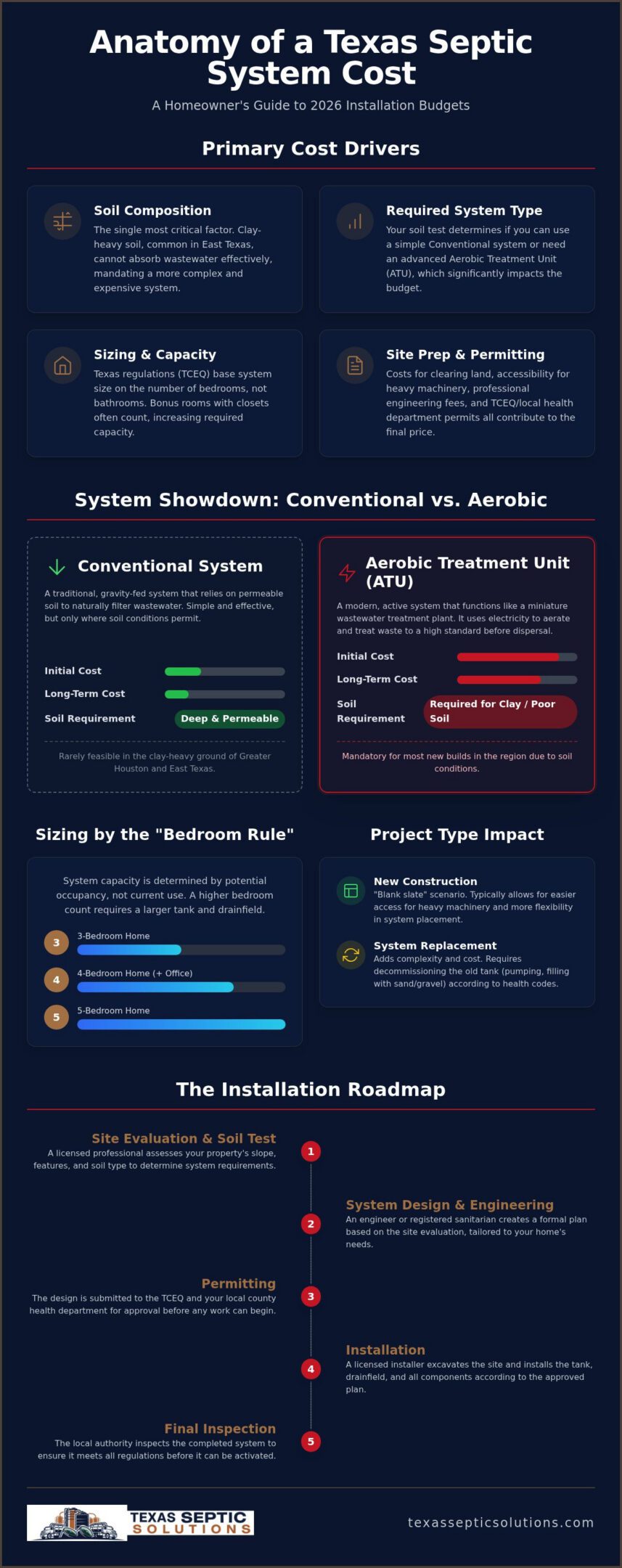
Determining the cost of new septic system Texas residents must plan for involves more than just purchasing a tank. In our state, these systems are officially classified as On-site sewage facilities (OSSF), and they are governed by strict environmental standards. The Texas Commission on Environmental Quality (TCEQ) sets a high bar for safety to protect local groundwater. Because of these rigorous standards, a project in Houston or Cypress often requires more detailed engineering and professional oversight than similar installations in neighboring states. Your total investment is a direct reflection of your property’s specific geology and your intended water usage.
While some regions allow for more relaxed approaches, Texas requires licensed professionals for almost every phase of the process. This oversight ensures that your system can handle heavy Gulf Coast rains without failing or contaminating the soil. Site-specific factors, such as the slope of your lot and its proximity to private or public water wells, also play a significant role in the final design and permitting requirements. We find that being proactive about these variables early on helps prevent expensive mid-project adjustments.
The Bedroom Count Rule: Sizing Your System
Texas regulators don’t look at your bathroom count when they decide how large your system needs to be. Instead, the sizing is based strictly on the number of bedrooms. The logic is straightforward: more bedrooms typically mean more residents, which creates a higher daily water load. A 3-bedroom home has a different baseline requirement for tank capacity and drainage area than a 5-bedroom estate. You should also be careful with “bonus rooms” or home offices that include a closet. If a room can legally be classified as a bedroom under local building codes, the TCEQ usually requires you to size your system to accommodate it, even if you only plan to use the space for a home gym or hobby room.
New Construction vs. System Replacement
Building on a fresh piece of acreage in Huffman or Shepherd is often a “blank slate” scenario. This allows for easier access for heavy machinery and more flexibility in where the system is placed. However, if you’re dealing with an existing property, it’s helpful to review the septic system replacement cost in Texas to understand the added labor involved. Replacing an old system in Cleveland or Houston often requires decommissioning the existing tank according to local health codes. This process might involve pumping out the old unit and filling it with sand or gravel. These demolition and site-clearing steps add layers of complexity that aren’t present when you’re starting from scratch on a new build.
Conventional vs. Aerobic: Why System Type Dictates Your Budget
Choosing between a conventional and an aerobic setup is the single most significant decision you’ll make regarding the cost of new septic system Texas projects. The mechanical differences between these two options are vast, and they directly influence your initial investment and long-term operating costs. An Aerobic Treatment Unit acts as a miniature wastewater plant for your backyard, cleaning effluent to a much higher standard before it ever touches the soil. While one relies on the simple laws of gravity, the other uses active technology to process waste in environments where the ground simply can’t do the job alone.
In many parts of East Texas, particularly around Cleveland and Houston, the high clay content in the soil forces your hand. This “Aerobic Requirement” isn’t a choice made by the installer; it’s a necessity determined by the land’s inability to absorb water. If your soil fails a percolation test, you’ll move into a higher investment tier by default. Understanding these mechanical differences helps you see why one quote might be significantly higher than another based on the specific technology required for your lot.
Conventional Systems: The Gravity-Fed Investment
Conventional systems represent the traditional approach to waste management. They rely on a simple two-chamber tank and a series of gravel-filled trenches known as a drainfield. Because they use gravity to move liquid through the system, they don’t require electricity or complex mechanical parts. However, these systems are only a viable option if your land has deep, permeable soil that can naturally filter waste. While they have lower maintenance expectations, they are rarely feasible in the clay-heavy regions of the Gulf Coast. If you’re lucky enough to have the right soil, you’ll enjoy a simpler setup that only requires routine pumping every few years.
Aerobic Systems: Advanced Treatment for Complex Soil
When soil quality is poor, aerobic systems become the mandatory standard. These units use an air pump to circulate oxygen, which encourages “good” bacteria to break down waste much faster than a standard tank. This process is so effective that the treated water is often dispersed through surface spray heads. While this technology is the gold standard for protecting Texas groundwater, the mechanical complexity increases your costs. You’re paying for pumps, aerators, control panels, and disinfection components like chlorine tubes or UV lights. Following TCEQ septic system regulations, these units also require mandatory maintenance contracts and regular professional inspections. If you aren’t sure which system your lot requires, our team can help you evaluate your property’s specific needs to ensure your budget is realistic from the start.
The Variables: Soil, Permits, and Site Preparation
Many homeowners assume the tank is the most expensive part of the project. In reality, the site’s unique characteristics determine the final cost of new septic system Texas installations. Before you break ground, it’s wise to consult a septic system repair expert. They can verify if your current system is truly beyond saving or if a few targeted repairs could extend its life, potentially saving you thousands. If a new build is necessary, your first step is always the soil. Your dirt dictates the design, and the design dictates the price.
The Site Evaluation: Testing the Ground
Your soil’s ability to process water is the financial foundation of the entire project. In East Texas, we see everything from the sandy loam of Shepherd to the heavy “black gumbo” clay in Cleveland and Houston. A licensed site evaluator must perform a professional soil profile to see how quickly water drains. Resources from the Texas A&M soil testing laboratory highlight how different minerals and textures impact drainage rates across our region. In areas like Cypress or Huffman, high water tables often complicate these designs. If the water table is too high, you can’t use a standard gravity drain field. Instead, you’ll need an engineered design that uses more linear footage or advanced treatment to meet safety standards.
Permitting and Engineering Fees
Navigating the red tape is often the most frustrating part of the process. You aren’t just paying for a piece of paper; you’re paying for the professional engineering required to ensure your system meets Title 30, TAC Chapter 285 standards. Most counties in the Greater Houston area, including Harris, Liberty, and San Jacinto, require custom engineered plans rather than “off-the-shelf” designs. These local authorities look at everything from property line setbacks to the distance from your neighbor’s well. While the TCEQ charges a small $10 fee for the OSSF permit application itself, the local county filing fees and professional design work are the real factors to watch.
The timeline for approval is another variable to budget for. It can take anywhere from 4 to 10 weeks to move from the initial application to the final inspection. Site preparation also adds to the bill. If your lot is heavily wooded or lacks clear access for a 20-ton excavator, you’ll need to budget for land clearing. Getting the rig into position is essential, and any delays caused by poor site accessibility can quickly increase labor costs. By handling these details upfront, you ensure a smoother installation that passes inspection the first time.
Beyond Installation: Total Cost of Ownership (TCO)
Many property owners focus solely on the initial cost of new septic system Texas installations, but the real financial story includes the years that follow. It’s helpful to think of your septic system as a private utility. While you won’t have a monthly city sewer bill, you’ll have small, predictable operational expenses that keep the system healthy. For aerobic systems, this includes the electricity to run the air compressor 24/7 and the cost of chlorine tablets or liquid bleach for disinfection. Even conventional systems require a budget for professional pumping every three to five years. This routine service removes accumulated solids that could otherwise clog your drain field and lead to a total system failure.
In areas like Cleveland and Houston, the high humidity and heavy rainfall can put extra stress on mechanical components. Being aware of these ongoing costs helps you avoid the “money pit” trap that many homeowners fear. When you view these expenses as part of your home’s standard upkeep, they become much easier to manage. Proactive care is the only way to ensure your system reaches its full 20 to 30 year lifespan without requiring a premature, and very expensive, overhaul.
Mandatory Maintenance Contracts
If your property in Cypress or Huffman requires an aerobic system, Texas law mandates a continuous maintenance contract. These regulations ensure your system stays in compliance with TCEQ standards through regular professional inspections. A standard contract typically includes three visits per year where a technician checks air pumps, diffusers, and sludge levels. Staying ahead of these checks is much better than dealing with a septic tank alarm going off in the middle of a holiday weekend. Enrolling in a comprehensive septic system maintenance plan turns unexpected repairs into predictable upkeep, protecting both your yard and your wallet.
The Cost of Neglect
Neglecting a small mechanical issue is the fastest way to turn a minor fix into a financial disaster. A minor pump repair might be a simple part replacement, but if that pump fails and floods your drain field with untreated waste, you could face a replacement bill that reaches five figures. Household habits also impact your long-term costs. Using harsh chemicals, pouring grease down the drain, or ignoring a leaky toilet can kill the beneficial bacteria your system needs to function. Over time, mechanical components like aerators and spray heads will naturally wear out and require replacement. By budgeting for these eventualities now, you ensure your system remains a reliable asset for your family. If you want to protect your investment and ensure long-term reliability, contact us to set up a professional maintenance schedule today.
Selecting a Texas Septic Installer: Ensuring Value
When you’re ready to break ground, the quotes you receive might vary by thousands of dollars. It’s tempting to pick the lowest number, but in our industry, the cheapest bid often leads to the most expensive repairs. A low quote usually means something is missing, whether it’s the quality of the components or the thoroughness of the site restoration. When calculating the total cost of new septic system Texas homeowners must look for value over the long term, not just a low entry price. Selecting an installer isn’t just about finding someone with a backhoe; it’s about finding a licensed professional who stands behind their work.
You must verify that your installer holds the proper TCEQ licenses and carries adequate insurance. In the Greater Houston and Cleveland areas, environmental factors like high water tables and shifting clay require a high degree of technical skill. A local partner who understands these specific challenges will design a system built to last. They’ll know which components handle our humidity and which inspectors require specific documentation. This local expertise prevents failed inspections that can delay your project and add unexpected costs to your budget.
Comparing Quotes: Apples to Apples
A truly professional quote is comprehensive and transparent. It shouldn’t just be a single number on a piece of paper. To ensure you’re getting a fair deal, verify that the proposal includes the following line items:
- The septic tank and all necessary internal components.
- The complete drain field or spray irrigation materials.
- All excavation labor and machinery transport fees.
- Site restoration, including backfilling and final grading.
- Permit filing fees and the coordination of the final inspection.
Don’t be afraid to ask about the specific brand of aerobic unit they plan to install. Some brands have better local parts availability in Huffman or Shepherd, which is vital if you ever need a quick repair. You should also confirm that the installer will provide “as-built” drawings. These documents show the exact location of your lines and tanks, which is essential for any future maintenance or property improvements.
The Texas Septic Solutions Difference
At Texas Septic Solutions, we take a “neighborly expert” approach to every installation. We aren’t just contractors; we’re members of the community who care about protecting our local environment. Our team prioritizes transparent communication, ensuring you understand exactly where your investment is going. We don’t just walk away once the tank is in the ground. We focus on long-term system health, providing 24/7 emergency readiness so you’re never left in a bind. We believe that a professional installation is the first step in a decades-long relationship built on trust and reliability.
Contact Texas Septic Solutions for a professional site evaluation and installation quote.
Investing in Your Property’s Long-Term Reliability
Planning for a new septic system in 2026 requires looking beyond the initial installation day. By now, it’s clear that your property’s specific soil profile and the number of bedrooms in your home are the real drivers behind the total cost of new septic system Texas residents face. Whether you’re navigating the clay-heavy ground of Cleveland or the specific permitting requirements of Harris County, the right preparation ensures your investment stays protected. A professional installation combined with a proactive maintenance plan transforms a complex utility project into a predictable part of homeownership.
Our team at Texas Septic Solutions is ready to help you navigate every step of this process. As Licensed OSSF Installers, we take pride in serving Cleveland, Houston, and the surrounding areas with dependable, expert care. We provide 24/7 Emergency Support to give you total peace of mind long after the final inspection is complete. Don’t let the technical details or regulatory hurdles slow down your build. Get a Professional Septic Installation Quote for Your Texas Property today and take the first step toward a reliable, high-performing system that serves your family for decades. We look forward to being your local partner in home functionality.
Frequently Asked Questions
Is an aerobic system always more expensive than a conventional one?
Yes, aerobic systems generally have a higher upfront cost due to mechanical complexity. They require air compressors, control panels, and disinfection systems that conventional gravity-fed setups don’t need. While the hardware is pricier, these systems are often the only legal option for properties in Houston or Cleveland with heavy clay soil. You’re paying for advanced treatment technology that protects your land when natural drainage isn’t possible.
Can I install my own septic system in Texas to save on labor costs?
You can only install your own system if you meet very specific criteria under TCEQ rules. Generally, a homeowner can install a system on their own single-family residence without a license, but they must still obtain all permits and pass every inspection. However, many counties have stricter local rules that require a licensed OSSF installer for aerobic systems. Attempting a DIY installation often leads to failed inspections and much higher costs to fix mistakes later.
How much does a septic permit cost in counties like Harris or Liberty?
Permit fees vary by county and are subject to local health department regulations. While the TCEQ charges a small state fee, local administrative and inspection fees in the Greater Houston area are separate. You should check with the specific permitting authority in Liberty or Harris County for their current 2026 fee schedule. These fees cover the cost of reviewing your engineered design and conducting the final site inspection before the system is covered.
What happens if my soil fails the percolation test?
If your soil fails a standard percolation test, you’ll likely be required to install an aerobic treatment system. Failing the test means your ground has too much clay or a high water table, making a conventional drain field unsafe. This result shifts the cost of new septic system Texas homeowners must budget for into a higher category. A professional site evaluator will then create an engineered design that uses surface spray or drip irrigation to manage effluent safely.
Does homeowners insurance cover the cost of a new septic system?
Standard homeowners insurance policies rarely cover the cost of a new septic installation or routine replacements. Most policies only provide coverage if the system is damaged by a specific covered peril, such as a fire or a fallen tree. They don’t cover failures caused by age, lack of maintenance, or poor soil conditions. It’s best to review your specific policy details or speak with your agent about adding a service line endorsement for extra protection.
How long does the installation process typically take from permit to finish?
The entire process usually takes between four and ten weeks. The majority of this time is spent waiting for site evaluations, engineered designs, and county permit approvals. Once the permit is in hand and the weather is clear, the actual physical installation in areas like Cypress or Huffman typically takes three to five days. Final inspections by the local authority must happen before the system is fully backfilled and ready for use.
How often will I need to pay for professional septic pumping?
Most households should schedule professional pumping every three to five years. The exact frequency depends on your tank size and the number of people living in your home. Regular pumping prevents solids from flowing into your drain field, which is the most common cause of total system failure. Maintaining a regular schedule helps stabilize the long-term cost of new septic system Texas residents invest in their properties and ensures the system remains reliable.
Why do I need a maintenance contract for my new aerobic system?
Texas law requires maintenance contracts for aerobic systems to ensure they consistently meet environmental safety standards. Because these systems use mechanical parts like aerators and pumps, they require regular check-ups to function correctly. A contract typically covers three professional inspections per year. These visits verify that your disinfection system is working and that sludge levels are manageable. Staying in compliance with these rules prevents environmental fines and protects your property’s long-term health.