
Cost of Emergency Septic Service Houston: 2026 Pricing Guide
Imagine it’s 9:00 PM on a Saturday in Cypress and you’ve just realized your backyard is becoming a swamp of raw sewage. The panic that sets in isn’t just about the mess; it’s about the financial hit you’re about to take. We know that the stress of a failing system is only made worse by the mystery of what it’s going to cost to fix. Most homeowners fear that “emergency” is just a code word for a blank check when they’re at their most vulnerable.
You don’t have to navigate this crisis in the dark. We’ve put together this guide to help you understand the true cost of emergency septic service Houston residents can expect in 2026, ensuring you get the immediate relief you need without overpaying. We’ll break down how timing and system type influence your final bill, explain the difference between a quick pump-out and a major repair, and show you how to keep a bad situation from turning into a total system failure. By the end of this guide, you’ll know exactly how to manage an urgent breakdown with the confidence of a seasoned property owner.
Key Takeaways
- Identify the critical warning signs of a true septic crisis, from sewage backups to the specific meaning behind a triggered tank alarm.
- Get a clear breakdown of the cost of emergency septic service Houston residents encounter, including base pumping rates and the premiums for after-hours dispatch.
- Learn about common surcharges for aerobic system components and how heavy sludge levels can impact your emergency service bill.
- Discover immediate troubleshooting steps, like checking your breaker box and halting water usage, to minimize damage while help is on the way.
- Understand the value of 24/7 local expertise in Houston and Cypress for preventing repeat failures and protecting your property.
What Defines an Emergency Septic Call in Houston?
When your septic system starts acting up, the first question isn’t just about the fix; it’s about whether you’re facing a midnight crisis or a Monday morning appointment. Knowing when to call for immediate help can save your home from expensive damage and help you manage the potential cost of emergency septic service Houston providers charge for after-hours response. A true emergency is any situation where wastewater can’t leave your home or is surfacing where it shouldn’t.
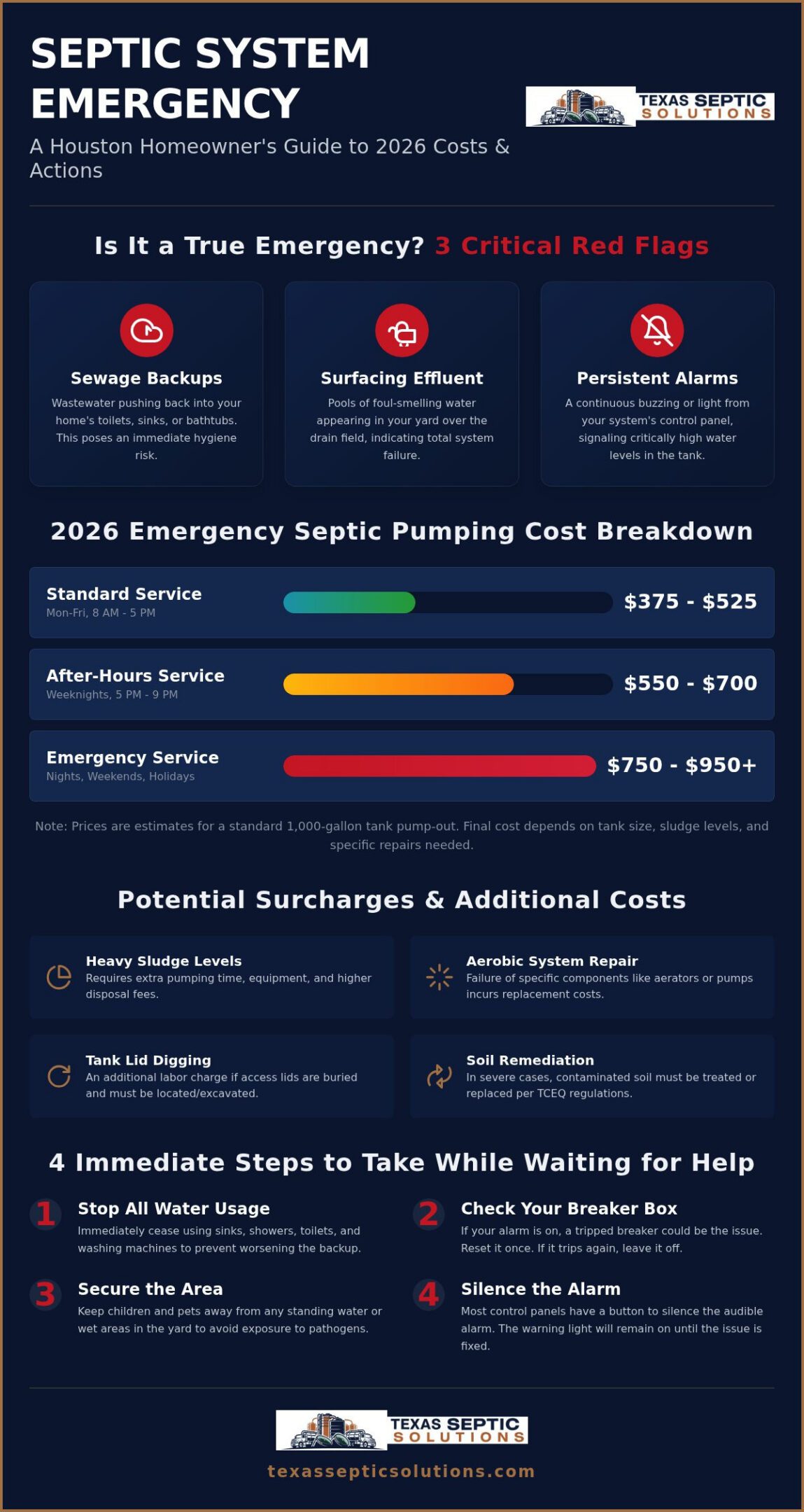
There are three primary red flags that demand an immediate call:
- Sewage Backups: If wastewater is pushing back into your bathtubs, sinks, or toilets, your home’s hygiene is at immediate risk.
- Surfacing Effluent: Large pools of foul-smelling water appearing over your drain field indicate the system has stopped processing waste.
- Persistent Alarms: If you hear a buzzing sound from your control panel, your septic tank alarm going off is a direct signal that the water level in your tank has reached a critical height.
Delaying a repair when these signs appear isn’t just a matter of convenience. Raw sewage carries pathogens that pose significant health risks to your family and pets. Furthermore, a small component failure left unaddressed can lead to a total system collapse, turning a simple pump replacement into a full system overhaul.
The Difference Between Urgent and Emergency
A slow-draining kitchen sink is frustrating, but it’s usually an urgent maintenance item rather than a full-blown emergency. However, if your toilets are gurgling every time the shower runs, you’re looking at a warning sign of an imminent backup. A septic emergency is any failure that threatens property hygiene or system integrity. If you can’t use your plumbing without causing a backup, the situation requires immediate professional intervention to prevent property damage.
Environmental Impact in the Houston Area
Houston’s unique geography makes septic failures particularly messy. Our region’s high water table means that during heavy rains, the ground is already saturated, leaving no room for escaping effluent. Understanding how a septic system works is vital here; if the soil can’t absorb liquid, the waste has nowhere to go but back into your house or across your lawn. The Texas Commission on Environmental Quality (TCEQ) maintains strict regulations regarding sewage leaks, and as a property owner, you’re responsible for containing these failures to prevent groundwater contamination. The heavy clay soil common in East Texas often traps moisture, which can turn a minor leak into a major environmental hazard, ultimately increasing the cost of emergency septic service Houston homeowners face when extensive soil remediation becomes necessary.
Breaking Down the 2026 Emergency Septic Service Rates
Understanding the financial side of a septic crisis helps you make quick, informed decisions when every minute counts. While every job is unique, the 2026 market in Houston shows consistent pricing structures for urgent calls. Pricing isn’t just a random number; it’s a reflection of the immediate mobilization of heavy equipment and specialized labor required to protect your property. Most homeowners find that the cost of emergency septic service Houston providers offer includes a base rate for the work performed plus a dedicated emergency premium for after-hours response.
Standard industry rates for pumping a 1,000-gallon tank serve as the foundation for these costs. When you transition from a scheduled appointment to an emergency dispatch, you’re essentially paying for the priority status of your repair. 2026 Houston rates are heavily influenced by fuel costs and disposal site fees, which fluctuate based on local demand and environmental regulations. To avoid these premiums, it is always best to properly maintain your septic system through routine inspections and scheduled pumping.
Standard vs. Emergency Pumping Costs
The timing of your call is the biggest factor in the final price. A midday call on a Tuesday is handled as part of a standard route, while a Saturday night failure requires a technician to be dispatched specifically to your location. Dispatch fees for the Houston-Cypress corridor are common, covering the logistics of reaching your home quickly. Holiday service typically carries the highest premium due to limited disposal site availability and increased labor rates.
- Standard Service: Monday through Friday, 8:00 AM to 5:00 PM.
- After-Hours Dispatch: Weeknights and weekends with a priority surcharge.
- Holiday Response: Peak premium rates for major calendar holidays.
Factors That Influence the Final Bill
Beyond the time of day, the physical layout of your system impacts the labor required. If your tank lids are buried deep underground, technicians must manually excavate the site before work can even begin. This extra labor adds to the total bill, especially in emergency scenarios where speed is essential. Additionally, distance surcharges may apply for properties in outlying areas like Shepherd or Huffman, reflecting the extra travel time for the vacuum truck. If you haven’t had an inspection lately, a quick check-up from Texas Septic Solutions can help you identify potential issues before they turn into a midnight emergency. Tank size also scales the cost; a 1,500-gallon tank takes longer to pump and incurs higher disposal fees than a standard 1,000-gallon unit.
Common Surcharges for Houston-Area Emergency Repairs
When you’re facing a system failure, the initial quote you receive often covers the basic mobilization and labor. However, the unique variables of your property can shift the final cost of emergency septic service Houston homeowners actually pay. These surcharges aren’t arbitrary; they reflect the extra time, specialized equipment, or heavy-duty effort required to resolve a specific crisis. For instance, if your tank hasn’t been serviced in years, you may encounter “heavy buildup” fees. This happens when sludge has become so compacted that technicians must use high-pressure water to liquefy the waste before it can be pumped out, significantly extending the time spent on-site.
Aerobic System Repair Costs
Many homes in the Houston area utilize aerobic systems, which are more complex than traditional gravity-fed units. If your aerator stops humming or your effluent pump fails, you’re looking at a septic system repair rather than a simple pump-out. In 2026, the price for replacement pumps and air compressors is influenced by both part availability and the urgency of the installation. Electrical troubleshooting is a standard part of these calls, as a technician must verify that the control panel hasn’t been damaged by a power surge or component short. Investing in a consistent maintenance plan is the best way to catch these hardware issues before they trigger a midnight emergency alarm.
Access and Digging Fees
The physical layout of your property plays a major role in the final bill, especially in suburbs like Shepherd or Huffman where large lots are common. If a vacuum truck can’t get within 50 to 100 feet of your tank, you’ll likely see a hose distance surcharge to account for the extra equipment needed. Understanding the common types of septic systems helps you realize why access is so critical for a successful pump-out.
If your tank lids are buried, you can expect a digging fee of $100 or more to uncover them. You can eliminate these recurring costs by installing risers, which bring the access point to the surface. Local Houston technicians also frequently apply surcharges for tanks buried deeper than 24 inches, as the increased depth requires more intensive labor and specialized tools to reach the waste. Navigating around expensive landscaping or tight fences during an emergency response can also add to the labor time, so keeping the area around your tank clear is always a smart move.
How to Handle a Septic Emergency While Waiting for Help
When sewage starts backing up, your first instinct is to do something, anything, to stop the mess. While you wait for a technician to arrive, your actions can actually help control the final cost of emergency septic service Houston providers charge by preventing further property damage and speeding up the repair process. The most important thing you can do right now is stop the flow. Every gallon of water you send down the drain is another gallon that has nowhere to go but your yard or your bathroom floor. Stop the dishwasher, delay the laundry, and avoid flushing the toilets until a professional is on-site.
You should also check your home’s breaker box. Sometimes, a simple tripped circuit is the only thing standing between a failed pump and a working system. If the breaker is fine, leave it alone and wait for the expert. If you need immediate assistance with a system failure, you can contact the experts at Texas Septic Solutions for rapid dispatch across the Houston area. Taking these small steps now ensures that when the truck arrives, the technician can focus on the fix rather than managing a growing flood.
Immediate Triage Steps
If you have an aerobic system, you’re likely dealing with a loud buzzing sound. You can silence the alarm on your control panel to save your ears, but don’t just turn it off and forget it; that buzzer is telling you the water level in the tank is at a critical height. Avoid the temptation to use chemical “emergency” cleaners or additives. These products rarely fix a mechanical failure and can kill the beneficial bacteria your system needs to function properly. Safety is the priority here, so keep children and pets away from any pooling water or the drain field area to prevent exposure to harmful pathogens.
Preparing for the Technician
Time is money during an emergency call. You can help the technician work more efficiently by locating your septic tank lids before they arrive. If your lids are buried, clearing away mulch or dirt can save you from extra labor surcharges. Make sure there is a clear, wide path for a heavy pumper truck to get within 50 feet of the tank. If you have a locked gate or a dog in the yard, secure the pets and unlock the access points now. Having your previous septic system maintenance logs or a map of your system ready can also help the technician identify the clean-out pipe and troubleshoot the failure much faster.
Reliable 24/7 Emergency Septic Solutions in East Texas
Texas Septic Solutions stands ready as your 24/7 partner for critical waste management issues across Houston, Cleveland, and Cypress. We don’t just pump tanks; we provide long-term stability for your home’s most essential utility. Our deep understanding of East Texas soil conditions, particularly the heavy clay and high water tables found from Shepherd to Huffman, allows us to diagnose failures that others might miss. This local expertise is what prevents a one-time repair from becoming a recurring nightmare. We’ve seen every scenario and remain unfazed by the challenges of local terrain.
While the cost of emergency septic service Houston residents pay can vary based on the complexity of the job, our commitment to transparency never wavers. We provide straightforward insights into your system’s health, ensuring you understand exactly what’s needed for immediate relief. Once the crisis is over, the smartest move you can make is transitioning from reactive repairs to a proactive septic system maintenance plan. This approach shifts your focus from high-pressure failures to predictable, routine care that significantly extends the life of your system.
Why Choose a Local Houston Expert?
Navigating the complex permitting and regulations of Harris and Liberty County requires more than just a truck; it requires a partner who knows the local landscape. We handle the red tape so you don’t have to. When you call us, you get direct access to seasoned technicians and the owner, not a detached call center in another state. We live and work in these communities. Our reputation is built on the dependable, neighborly service we provide to our neighbors every single day. We understand the specific environmental pressures that Houston weather puts on your septic components.
Our Emergency Response Process
When you call our 24/7 dispatch line, we move quickly to assess your situation and get a technician on-site. We start with a clear, “no surprises” approach to your estimate, explaining the cost of emergency septic service Houston homeowners should expect based on the specific failure we find. Our goal is to stabilize your system, protect your property from damage, and provide a permanent resolution rather than a temporary patch. If you are facing a backup or an alarm right now, contact Texas Septic Solutions for immediate help and let our team restore your home’s functionality with speed and professionalism.
Secure Your Property with Professional Septic Relief
Facing a septic failure in the middle of the night doesn’t have to be a financial disaster. By understanding how timing and system complexity influence the cost of emergency septic service Houston homeowners face, you can navigate these stressful situations with confidence. Whether you’re dealing with a triggered alarm or a sudden sewage backup, your priority is protecting your home and family from property damage and health hazards. We know that these moments are high-pressure, but having the right information allows you to act decisively.
Don’t let a minor component failure turn into a total system collapse. Our team of licensed and insured local experts provides a 24/7 rapid response dispatch across Houston, Cypress, and Cleveland. We’re here to offer the transparent pricing and immediate relief you need to get your household back on track. Get 24/7 Emergency Septic Help Now and experience the reliability of a partner who understands the unique challenges of East Texas septic systems. You’ve got this, and we’re here to help you every step of the way.
Frequently Asked Questions
How much extra does emergency septic pumping cost in Houston?
Expect to pay a surcharge of $100 to $300 more than standard rates for an emergency call. This premium covers the immediate mobilization of a vacuum truck and technician outside of normal business hours. The total cost of emergency septic service Houston residents pay also depends on whether the call happens at night, on a weekend, or during a holiday. Some dispatch fees might be waived if you proceed with the repair on-site.
Is a septic alarm always an emergency?
You should treat an active septic alarm as a high priority situation that requires immediate attention. The alarm triggers when the water level in your tank is too high or the air compressor has failed. Ignoring this signal leads to sewage backing up into your home or surfacing in your yard. While you can silence the buzzer, the system requires professional troubleshooting to prevent a total failure and more expensive repairs later.
Can I wait until the morning to call for septic service if my toilet is gurgling?
You can wait if you stop all water usage, but gurgling is a final warning sign of an imminent backup. If you continue to shower or run the dishwasher, the air trapped in the lines will eventually be replaced by wastewater in your sinks or tubs. Calling for service now prevents the mess and potential health hazards of a full sewage overflow inside your living space before the morning arrives.
What is the average cost to replace a septic pump in 2026?
Industry data for 2026 suggests that replacing a failed pump typically ranges from $800 to $2,000 depending on the specific model and system type. This price usually includes the specialized part and the labor for installation. Since these pumps are critical for moving effluent out of the tank, a failure usually constitutes an emergency. Regular maintenance is the most effective way to catch a weakening pump before it dies completely.
Do Houston septic companies charge for travel to areas like Huffman or Shepherd?
Many providers apply a distance surcharge for properties located in outlying areas like Huffman, Shepherd, and Cleveland. These locations require extra travel time and fuel for heavy vacuum trucks compared to jobs in the immediate metro area. These fees cover the logistics of getting specialized equipment to your property quickly. It’s best to ask about travel surcharges when you first call for a quote to avoid surprises.
Will my homeowners insurance cover emergency septic repairs?
Standard policies usually only cover septic repairs if the damage was caused by a sudden, accidental event like a lightning strike. They rarely cover failures caused by lack of maintenance or general wear and tear. You should review your policy for a sewer backup rider, which might help with the cleanup costs if your system overflows into the house. Most policies consider the septic system itself to be the owner’s responsibility.
How can I avoid paying emergency septic fees in the future?
The most reliable way to avoid the cost of emergency septic service Houston homeowners face is to stick to a strict maintenance schedule. Have your tank pumped every three to five years and schedule annual inspections for aerobic systems. Keeping your lids accessible with risers also eliminates digging fees. Catching small issues during a standard service call is always much cheaper than a weekend emergency repair when parts are failing.
What should I do if sewage is backing up into my bathtub?
Stop all water usage immediately and call for emergency service right away. Don’t flush toilets or run any faucets, as this will only worsen the backup in your home. Keep children and pets away from the affected area to prevent exposure to harmful bacteria. If you have an aerobic system, check the control panel for an active alarm. Clearing a path for the pumper truck while you wait will help the technician start working faster.