
Conventional Septic System Maintenance in Cleveland TX: The 2026 Homeowner’s Guide
What if the heavy East Texas rainstorms didn’t have to mean a flooded yard or a gurgling, backed-up toilet? For many Cleveland homeowners, a sudden downpour brings the immediate stress of slow-draining pipes and the fear of “gumbo” clay soil failing to absorb waste. You’re likely worried about the septic system repair cost Cleveland TX residents face when a drain field gives out during a storm. We understand that managing Liberty County permit requirements and maintenance schedules can feel like a full-time job when you just want your home to function properly.
At Texas Septic Solutions, we believe your property should be a place of comfort, not utility stress. This 2026 guide will show you exactly how to protect your investment and prevent costly backups with specialized maintenance strategies for our unique local environment. We’ll walk you through a clear pumping schedule tailored to your household size, explain the latest 2026 Liberty County permit rules to help you avoid expensive double-fee penalties, and give you the confidence that your system is built to last for decades.
Key Takeaways
- Understand why Cleveland’s heavy “gumbo” clay soil requires a specialized maintenance approach to keep gravity-fed systems functioning during East Texas rainstorms.
- Discover how routine inspections and professional pumping can significantly reduce your overall septic system repair cost Cleveland TX by preventing catastrophic drain field failures.
- Protect your property’s most expensive utility component by establishing a strict “keep-out” zone to prevent soil compaction over your absorption area.
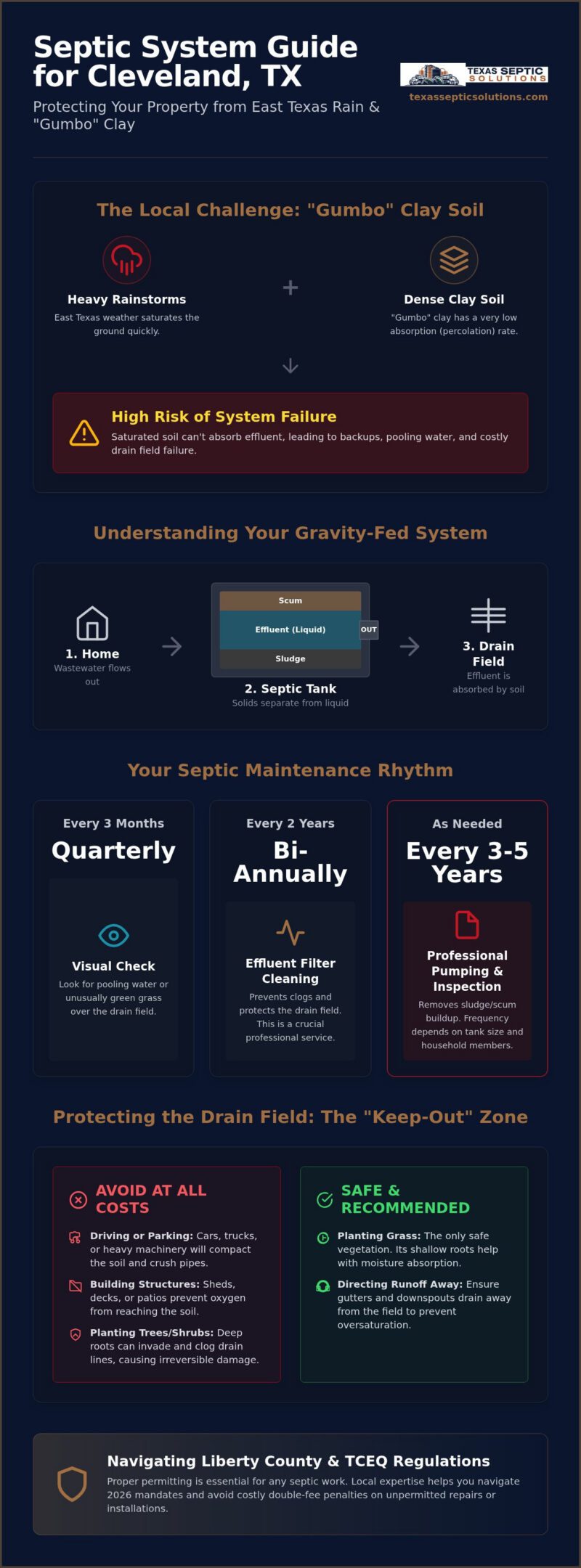
- Establish a reliable maintenance rhythm with a tiered schedule including quarterly visual checks, bi-annual filter cleanings, and professional pumping every 3 to 5 years.
- Navigate the latest 2026 Liberty County permit mandates and TCEQ requirements with local expertise to avoid double-fee penalties on unpermitted work.
Understanding Conventional Septic Systems in Cleveland TX
Conventional septic systems are the primary wastewater solution for many rural properties in Liberty County. These systems rely on a straightforward, two-part process: a watertight septic tank and a soil absorption area, also known as a drain field. Unlike modern aerobic setups that use electricity and air compressors, Conventional Septic Systems operate entirely through gravity. Liquid flows from your home into the tank, where it sits long enough for solids to settle. Understanding this basic layout is the first step in managing your eventual septic system repair cost Cleveland TX, as most issues stem from a breakdown in this natural flow.
It’s vital to distinguish these from aerobic systems to identify your specific needs. While aerobic units treat water with oxygen and spray it over the lawn, conventional systems treat effluent entirely underground. This makes septic system maintenance Texas residents can rely on a long-term investment in their property’s soil health. If you have a conventional system, you aren’t just maintaining a concrete box; you’re protecting the natural filtration capacity of your land.
The Gravity-Fed Mechanism
Inside your tank, wastewater naturally separates into three distinct layers. Heavy solids sink to the bottom to form sludge, while fats and oils float to the top as scum. The middle layer, called effluent, is the relatively clear liquid that exits toward the drain field. A critical component here is the outlet baffle. This simple pipe or filter prevents the scum and sludge from escaping into your lateral lines. If the baffle fails or the tank isn’t pumped, solids enter the drain field and cause clogs. This is a leading driver of high septic system repair cost Cleveland TX. Gravity systems are incredibly reliable because they have no moving parts, but they’re highly vulnerable to soil saturation.
Cleveland’s Soil and Your Drain Field
Cleveland is famous for its “gumbo” clay soil. This heavy, dense earth presents a unique challenge for gravity-fed systems because it has a very low percolation rate. Unlike sandy loam that allows water to pass through quickly, clay holds onto moisture like a sponge. During heavy East Texas rainstorms, the ground can become so saturated that it simply stops accepting new liquid from your tank.
Watch for these warning signs that your soil is no longer effectively absorbing effluent:
- Water pooling in the yard even days after a heavy rain.
- Lush, bright green grass over the drain lines when the rest of the yard is dry.
- Slow-draining toilets or gurgling sounds in your plumbing.
When the soil “shuts down,” pressure builds back into your home. This isn’t just a nuisance; it’s a sign that your system is under extreme stress. Taking action before a total backup occurs is the best way to keep your maintenance manageable and your home functional.
Core Maintenance Tasks and Septic System Repair Cost Factors
Maintaining a conventional system in East Texas isn’t just about avoiding a mess; it’s about financial protection. Most homeowners only think about their septic tank when it fails, but the real work happens behind the scenes. The “Big Three” of septic system maintenance includes regular pumping, professional inspections, and cleaning the effluent filter. By staying ahead of these tasks, you can avoid the massive spikes in septic system repair cost Cleveland TX that occur when systems are neglected for years.
A small, proactive investment in a septic system maintenance plan often makes the difference between a system that lasts 30 years and one that requires a $10,000+ drain field replacement after only a decade. These plans ensure that small issues, like a cracked pipe or a failing baffle, are caught before they destroy your yard’s absorption capacity.
Pumping Frequency for Cleveland Homes
Pumping is the most critical event in a system’s life. You can calculate your ideal interval by looking at your tank size and how many people live in your home. For a standard 1,000-gallon tank with four residents, a three-year cycle is typical. Waiting for a backup to occur is the most expensive way to manage your utilities. Professional technicians use a tool called a sludge judge, which is a clear plastic tube used to accurately measure the depth of the scum and sludge layers to determine if pumping is necessary.
Cleaning and Replacing Effluent Filters
The effluent filter is the most affordable part of your system’s defense, yet it’s often overlooked by property owners. Located in the outlet tee of the tank, this filter catches fine particles before they can reach the drain field. If it clogs, the water stops moving, and you’ll eventually see backups in the house. This component is your primary shield against solids entering your lateral lines.
During a professional check, we pull the filter and clean it using a specific process that prevents raw solids from washing into the lateral lines. Keeping this filter clear with a 6-month check is your best defense against unexpected septic system repair cost Cleveland TX. If you haven’t had your filter checked recently, reaching out to Texas Septic Solutions for a routine inspection is a smart way to prevent a plumbing emergency.
Household water usage also plays a major role in system health. Excessive water from leaking toilets or heavy laundry days can “push” solids through the tank too fast, bypassing the settling process. When you manage your water flow and maintain your filters, you ensure your conventional system operates exactly as intended.
Protecting the Drain Field: The ‘Keep-Out’ Zone
The drain field is the final stage of how a conventional septic system works, and it’s also the most expensive component to fix. In Cleveland, replacing a failed absorption field can easily exceed the cost of the original tank installation. This area relies on the soil’s ability to breathe and filter water naturally. If the soil is crushed or the pipes are cracked, the entire system fails. Protecting this “Keep-Out” zone is your primary strategy for controlling the long-term septic system repair cost Cleveland TX property owners face.
Soil compaction is a silent killer for East Texas systems. When heavy weights press down on the “gumbo” clay, they squeeze out the air pockets required for wastewater treatment. To keep your system healthy, avoid the following “pipe-killers” in your drain field area:
- Invasive Trees: Avoid Willows, Elms, or Maples. Their roots are hard-wired to find water and will aggressively grow into your lateral line perforations.
- Heavy Weights: Never park vehicles, trailers, or heavy equipment over the field. Even livestock like horses or cattle can cause significant compaction over time.
- Hydraulic Overload: Ensure that roof gutters, driveway runoff, and pool drainage pipes point away from the septic area. Adding extra surface water to an already working drain field can cause it to “drown.”
Surface Management and Compaction
The “No-Drive” rule is non-negotiable for conventional systems. Even a standard riding lawnmower can compress wet East Texas clay during the rainy season, sealing off the soil. You can usually identify the footprint of your lateral lines by looking for parallel strips of greener grass or slight depressions in your backyard. To protect these lines, use shallow-rooted groundcovers or native grasses. These plants promote evaporation and transpiration without the risk of root intrusion.
Water Conservation and System Health
Managing the hydraulic load is mostly about timing. The “Laundry Day” trap occurs when a homeowner runs four or five loads of laundry in a single afternoon. This sends a massive surge of water into the tank and out to the field, which can lead to a higher septic system repair cost Cleveland TX if the soil becomes permanently saturated. Spreading laundry throughout the week gives the clay soil time to rest and drain. Fixing a single leaky faucet can save your system from hundreds of gallons of unnecessary water each week. High-efficiency fixtures, such as low-flow toilets and aerated showerheads, reduce the daily volume the soil must process and significantly extend the longevity of a gravity system.
Cleveland Homeowner’s Maintenance and Repair Checklist
Establishing a predictable routine is your best defense against an unexpected septic system repair cost Cleveland TX homeowners often fear. While your system operates mostly out of sight, it shouldn’t be out of mind. We recommend a tiered approach to maintenance that balances simple DIY observations with professional expertise. By following a structured schedule, you ensure that small mechanical issues don’t turn into total system failures that require thousands of dollars in excavation and replacement.
A reliable maintenance rhythm includes the following milestones:
- Quarterly: Perform a visual walk-through of the tank and drain field area.
- Bi-Annually: Clean the effluent filter to ensure wastewater continues to flow freely.
- Every 3 to 5 Years: Schedule a professional pumping to remove accumulated sludge and scum.
Don’t fall for the “additive myth.” Many products claim that enzymes or bacteria starters can replace the need for pumping. While some additives can support a healthy tank environment, they cannot dissolve the inorganic solids and heavy sludge that build up over time. Relying on chemical shortcuts often leads to a higher septic system repair cost Cleveland TX when the system finally fails due to solid carryover into the drain field. Mechanical pumping is the only way to truly reset your tank’s capacity.
Visual cues are your early warning system. If you notice lush, bright green grass over the drain field during a summer drought, your system may be leaking effluent to the surface. Similarly, if the soil feels spongy or “bouncy” underfoot, the field is likely saturated. If you ever hear a septic tank alarm going off, stop using water immediately and call for professional support to prevent a backup into your home.
Monthly Visual Inspections
Once a month, take five minutes to walk your property. Check for sewage odors near the tank or the drain field, especially after a heavy East Texas rainstorm. Monitor the ground wetness; if the septic area is significantly muddier than the rest of the yard, the soil may be struggling to percolate. Ensure that all risers and lids are secure and watertight. Cracked lids or loose seals allow “inflow” from rain, which can overwhelm your system in minutes.
The Annual Professional Audit
An annual check-up by a neighborly expert provides peace of mind that a DIY walk-through cannot. We measure sludge accumulation rates to refine your pumping schedule and test the structural integrity of your tank. This is the best time to check for baffle corrosion. Catching a failing baffle early is much cheaper than fixing a clogged lateral line. For more details on identifying these components, see our septic system repair guide. Schedule your annual professional audit with Texas Septic Solutions today to ensure your system is ready for the next rainy season.
Compliance and Professional Support in Liberty County
In Liberty County, staying compliant is about more than just avoiding a backup; it’s about following the strict guidelines set by the Texas Commission on Environmental Quality (TCEQ). The local authority, the Liberty County Environmental Health department, oversees On-Site Sewage Facilities (OSSF) to protect our community’s groundwater. If you ignore these mandates, you risk more than just a higher septic system repair cost Cleveland TX residents hope to avoid. Effective June 9, 2026, any work requiring a permit that is started without prior approval from the county is subject to a double-fee penalty. This makes professional guidance essential from the very start of any repair or maintenance project.
When maintenance is neglected for too long, the system’s components can fail beyond the point of simple fixes. If your drain field is completely saturated or your tank has structurally collapsed, you may have to consider a full septic system replacement. This is why we advocate for proactive care. It’s much easier to manage a system through scheduled pumping than to navigate the extensive permitting and excavation required for a total overhaul.
Regulatory Record Keeping
Maintaining a detailed “Septic Log” is a smart move for every Cleveland homeowner. This log should include dates of pumping, filter cleanings, and any professional inspections. When it comes time to sell your property, these records serve as legal proof of system care for future buyers and real estate inspectors. In Liberty County, a well-documented history can streamline the resale process and demonstrate that your system is a reliable asset rather than a hidden liability. Remember that while emergency repairs can proceed immediately, they must still be reported to the authorities within 72 hours to remain in good standing with the county.
Why Choose Texas Septic Solutions?
We pride ourselves on being the “Neighborly Expert” Cleveland families can count on. Since 2010, Texas Septic Solutions has focused on providing permanent resolutions rather than temporary quick fixes. We understand that a utility failure doesn’t always happen during business hours. That’s why we offer 24/7 emergency septic service to handle middle-of-the-night backups or alarm failures that simply can’t wait until Monday morning.
Our team is built for both the mundane tasks of everyday upkeep and the high-pressure demands of unexpected failures. We value long-term relationships with our neighbors and treat every property as if it were our own. Don’t wait for a rainy season emergency to find out the condition of your tank. Schedule your conventional septic inspection with Texas Septic Solutions today!
Secure Your Property’s Long-Term Functionality
Your conventional septic system is a vital investment that requires a specialized approach to handle Cleveland’s heavy “gumbo” clay. By respecting the “Keep-Out” zone of your drain field and adhering to a professional pumping schedule, you can effectively manage the septic system repair cost Cleveland TX homeowners often encounter. Staying compliant with Liberty County’s 2026 permit mandates ensures your home remains safe and functional while protecting your property value for the future.
Since 2010, Texas Septic Solutions has served as the neighborly expert for East Texas families. We combine local Liberty County expertise with 24/7 Emergency Service to ensure you’re never left alone during a utility failure. Whether you need a routine audit or immediate support, our team is ready to provide the reliable care your system deserves. Protect your home and budget with a Texas Septic Solutions maintenance plan! We’re here to help you keep your property running smoothly for years to come.
Common Questions About Cleveland Septic Maintenance
How much does septic system repair cost in Cleveland TX?
The total septic system repair cost Cleveland TX residents pay depends on the severity of the component failure. Minor issues like replacing a cracked outlet baffle or cleaning a clogged effluent filter are relatively affordable compared to extensive drain field restoration. Major costs usually arise when the absorption area is permanently damaged by soil compaction or solid carryover. Factors like system age, tank accessibility, and specific soil conditions on your property will ultimately determine the final investment.
How often should a conventional septic tank be pumped in Liberty County?
A conventional septic tank should typically be pumped every 3 to 5 years. This interval varies based on your tank’s total volume and the number of people living in your home. Larger households generate more waste, which fills the sludge layer faster. Regular pumping is the only mechanical way to remove inorganic solids that bacteria cannot break down. Neglecting this schedule is the primary cause of premature drain field failure in East Texas.
What are the signs that my conventional drain field is failing in clay soil?
Signs of failure include water pooling in your yard several days after a rainstorm or patches of grass that stay bright green during a drought. You might also notice a persistent sewage odor near the absorption area or feel a “spongy” texture when walking over the lateral lines. In Cleveland’s heavy clay soil, these symptoms indicate that the earth is no longer absorbing wastewater, which can lead to immediate backups in your home.
Can I use a garbage disposal with a conventional septic system?
It’s best to avoid using a garbage disposal with a conventional system. These units grind up food waste into fine particles that settle slowly, significantly increasing the sludge layer in your tank. This added solid load forces you to pump the tank more frequently to prevent solids from reaching the drain field. If you must use one, ensure you schedule professional inspections more often to monitor the waste levels in the tank.
Is it okay to plant trees near my septic lines in East Texas?
You should never plant trees near your septic lines. Roots from species like willow, elm, or maple are naturally drawn to the moisture and nutrients inside your pipes. These “pipe-killers” can penetrate small cracks or joints, leading to massive clogs and structural damage. Stick to native grasses or shallow-rooted groundcovers that promote evaporation without risking root intrusion. Keeping a clear perimeter around your system protects your underground infrastructure for decades.
Does Liberty County require an annual inspection for conventional systems?
Liberty County does not mandate annual inspections for standard gravity-fed conventional systems, unlike the three inspections required per year for aerobic units. However, we strongly recommend a yearly professional audit to ensure your baffles and filters are intact. Given the 2026 double-fee penalty for unpermitted work, catching a small issue before it requires a major, permitted repair is a smart financial strategy for every local property owner.
What should I do if my toilets are gurgling but the tank isn’t full?
If your toilets are gurgling but the tank isn’t full, you likely have a clogged effluent filter or a blocked plumbing vent. The filter is designed to catch fine solids before they exit the tank; when it’s full, air and water cannot move freely through the system. This creates back pressure that causes the gurgling sound. You should have a professional clean the filter immediately to restore proper flow and prevent a full sewage backup.
Can heavy rain cause my septic system to back up in Cleveland?
Heavy rain is a frequent cause of septic backups in Cleveland because it saturates the dense clay soil. When the ground is full of water, it can’t accept any more effluent from your tank. Additionally, if your risers or lids aren’t watertight, surface water can “inflow” into the tank and overwhelm the system. During these wet periods, it’s critical to reduce indoor water usage to give your drain field time to recover.