
Commercial Septic System Inspection Checklist for Office Buildings in Shepherd, TX
Imagine it’s a busy Tuesday morning in Shepherd, and just as your tenants arrive, the office bathrooms start backing up. It’s a nightmare scenario that halts productivity and damages your professional reputation in an instant. Scheduling a regular septic system inspection for office buildings Shepherd TX is the only way to catch these issues before they become emergencies. You already know that managing a commercial property in San Jacinto County comes with unique headaches, especially when dealing with our heavy East Texas clay soil. It’s easy to put off maintenance when things seem to be working, but commercial systems face hydraulic surges that residential setups never encounter. Most property managers feel the weight of these environmental regulations and the constant fear of a mid-day system failure.
This guide provides a professional-grade checklist to ensure your facility remains compliant, efficient, and entirely backup-free. By following a structured maintenance plan, you can protect your investment and avoid the stress of unexpected utility issues. We’ll walk through the specific TCEQ requirements for aerobic systems, the nuances of local San Jacinto County permitting, and the preventative steps needed to keep your drainage field healthy for the long term. You’ll gain the clarity needed to manage your system with the confidence of a local expert.
Key Takeaways
- Identify the critical differences between residential and commercial systems, including how high-volume usage and office cleaning chemicals impact your system’s bacterial balance.
- Learn why a specialized septic system inspection for office buildings Shepherd TX is essential for evaluating tank integrity and structural stability under heavy commercial loads.
- Understand the mechanical complexity of aerobic units and the specific chlorination requirements needed to remain compliant with state and local regulations.
- Find out how to properly prepare your office property for an inspector to avoid unnecessary labor charges and streamline the reporting process.
- Discover why local expertise in Shepherd’s unique clay soil is your best defense against unexpected system failures and tenant complaints.
Why Office Building Septic Inspections in Shepherd Differ from Residential
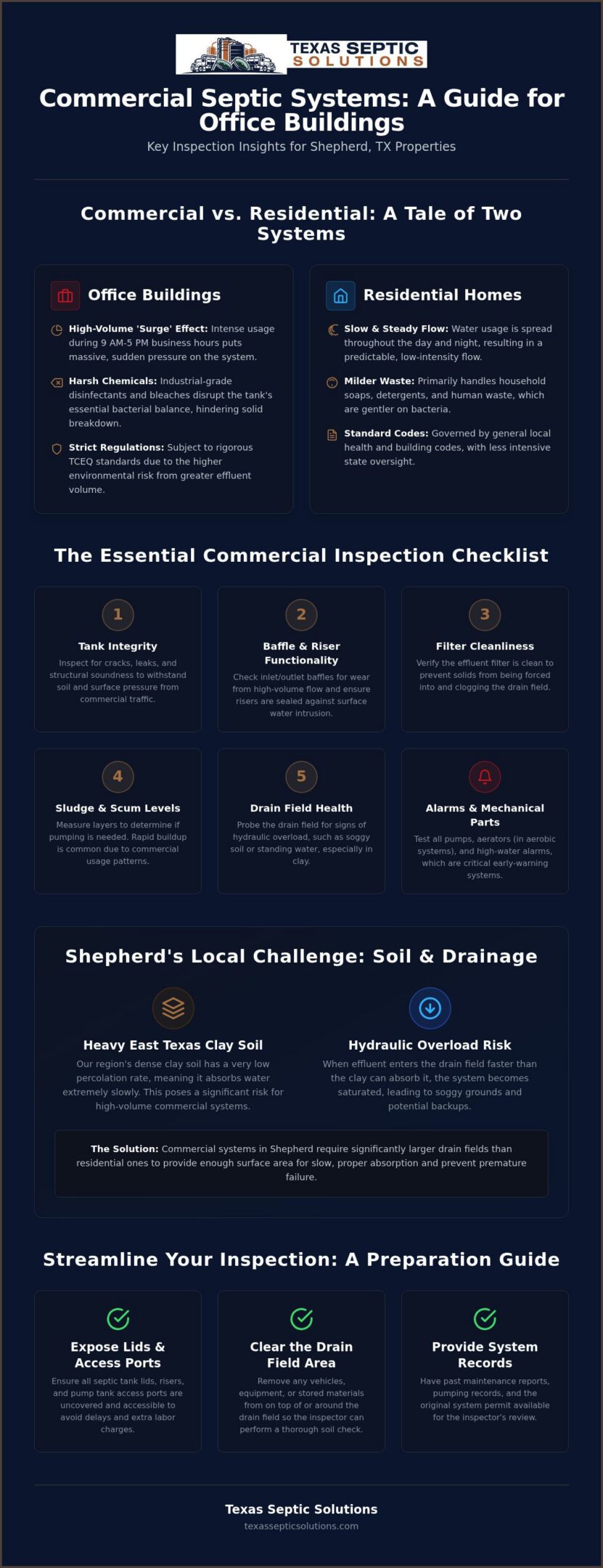
If you’ve ever managed a home septic system, you might think you know what to expect. However, a septic system inspection for office buildings Shepherd TX requires a much higher level of scrutiny because the operational demands are fundamentally different. While a home system handles a slow, steady trickle of water throughout the day and night, an office building experiences extreme surges followed by hours of complete dormancy. Understanding what is a septic system in a commercial context means recognizing that these units are industrial tools, not just household utilities.
The biological health of your system is also at higher risk in a professional environment. Office cleaning crews often use industrial-grade disinfectants and heavy-duty bleaches to keep shared spaces sanitary. While these products are great for hygiene, they can be devastating to the natural bacteria colonies inside your tank. Without these bacteria, solids don’t break down, leading to rapid sludge buildup. In San Jacinto County, commercial properties are held to strict standards by the TCEQ because the higher volume of effluent poses a greater risk to the local environment if a failure occurs.
Understanding the Office Building ‘Surge’ Effect
Peak usage hours, typically between 9 AM and 5 PM, put immense pressure on your infrastructure. During the morning arrival and lunch hour, hundreds of gallons of water can enter the system in a very short window. If your office has a breakroom, grease traps become a critical inspection point; if they aren’t maintained, fats and oils can bypass the tank and clog your soil. Hydraulic overload occurs when the volume of liquid entering the septic tank exceeds its design capacity, forcing solids into the drain field before they can settle properly.
Shepherd Soil and Drainage Realities
Shepherd sits on challenging East Texas clay that doesn’t absorb water quickly. This is a major problem when you’re discharging thousands of gallons of effluent every week. During the rainy season, the high water table makes drainage even harder for commercial systems. These office setups require significantly larger drain fields than residential ones to compensate for the slow percolation rates of the local soil. If you notice slow drains or soggy spots on the lawn during a wet week, it’s time to look for septic system repair signs before the damage becomes permanent and disrupts your tenants.
The Essential Commercial Septic Inspection Checklist
A thorough septic system inspection for office buildings Shepherd TX goes far beyond a simple visual check. It’s a comprehensive audit of every mechanical and structural component. When we perform these inspections, we’re looking for stability in high-capacity tanks that must withstand thousands of pounds of soil and surface pressure. Adhering to TCEQ maintenance requirements isn’t just about avoiding fines; it’s about protecting your property’s long-term functionality. Our checklist focuses on five core areas: tank integrity, baffle functionality, filter cleanliness, sludge levels, and mechanical alarms. For a commercial property, a single failure in any of these can lead to an expensive office-wide shutdown.
Primary Tank and Component Inspection
We start by evaluating the inlet and outlet baffles. These components direct the flow of wastewater and are often the first to show commercial-grade wear from high-volume usage. We also check septic tank risers to ensure they’re sealed tight. This prevents surface water from flooding the tank during Shepherd’s heavy downpours. If you ever find your septic tank alarm going off, treat it as a critical emergency. In a commercial setting, that siren usually means the pump has failed or the water level is dangerously high, threatening an immediate backup into your tenants’ office suites.
Drain Field and Soil Absorption Check
The next phase involves probing the drain field. Shepherd’s clay soil is notorious for saturation, so we look for “soft spots” or surface breakouts where effluent isn’t absorbing properly. We also inspect distribution boxes to confirm that liquid is spreading evenly across the entire field. Finally, we check for invasive roots from local East Texas vegetation. These roots love the moisture in septic lines and can quickly choke a commercial system if left unchecked. Keeping a close eye on these details ensures your building stays operational. If you’re concerned about your current system’s health, scheduling a professional maintenance check is a smart move before the next rainy season hits.
Regular maintenance also includes measuring the sludge and scum layers. In a busy office building, these levels can rise faster than expected. If the sludge layer occupies more than one-third of the tank’s capacity, we recommend immediate pumping. This prevents solids from escaping into the effluent filter and eventually the drain field, which is a much more costly repair. Testing the pump and alarm system ensures that your mechanical components are ready for 24/7 operation, even during peak business hours.
Aerobic vs. Anaerobic Commercial Systems: Inspection Comparison
Choosing between an aerobic or anaerobic setup often depends on your building’s age and the specific plot of land it sits on. Regardless of the type, a septic system inspection for office buildings Shepherd TX must account for the mechanical or biological differences that keep the water flowing. Under Texas septic system regulations, these systems are managed strictly to prevent groundwater contamination, especially in high-traffic commercial zones. Aerobic systems are common in our area because they handle clay soil better, but they require a much more hands-on inspection approach than traditional gravity-fed systems.
Aerobic System Specifics for Offices
Aerobic systems act like miniature sewage treatment plants. They rely on an air compressor and diffusers to inject oxygen into the wastewater, allowing aerobic bacteria to break down waste much faster than traditional methods. This speed is vital for offices where high-strength waste from breakrooms can overwhelm a standard tank. During an inspection, we test the aerator motor and check the spray head patterns or drip lines for clogs. Because of this mechanical complexity, Texas law requires these systems to be inspected every four months. Establishing a septic system maintenance plan is the best way to stay ahead of these mandatory checks and ensure your chlorination levels are always within the legal range.
Anaerobic System Maintenance Focus
Anaerobic systems are simpler but require a different kind of expertise. They rely on gravity flow and anaerobic bacteria to treat effluent in a series of tanks. While they have fewer mechanical parts to fail, monitoring the biomat health in the drain field is critical. In Shepherd’s clay soil, these systems often use pressure distribution to ensure the soil isn’t overloaded in one spot. While anaerobic systems might offer long-term cost benefits due to lower electricity usage, they often require larger footprints that many modern office developments don’t have. We compare the maintenance intervals and sludge accumulation rates to help property managers decide if their current setup is still the most efficient choice for their tenant load.
Key inspection differences include:
- Electrical Components: Aerobic systems need regular checks on timers, compressors, and alarms.
- Disinfection: Commercial aerobic units require consistent chlorine tablet replenishment or liquid bleach injection.
- Distribution: Anaerobic systems focus on the structural integrity of distribution boxes and gravity lines.
- Inspection Frequency: Aerobic systems are mandated for three inspections per year, while anaerobic systems are typically checked during routine pumping every 3 to 5 years.
Preparing Your Shepherd Office Building for an Inspection
Preparation is the difference between a quick, efficient visit and a long, expensive ordeal. Properly preparing for a septic system inspection for office buildings Shepherd TX ensures the process is smooth and cost-effective for your business. Many commercial properties in Shepherd have expanded parking lots or landscaping that inadvertently covers tank lids over time. Locating and exposing these access points before the inspector arrives avoids “lid hunt” labor charges and keeps the project on schedule. If your lids are buried, digging them up ahead of time is a simple way to protect your maintenance budget and ensure a thorough check of the tank’s interior.
Logistics and Accessibility
Your inspector needs more than just a clear path to the tank; we need to see the history of how your system has been treated. Gathering system blueprints and previous service logs is essential for a high-quality audit. Maintaining a thorough log of septic system maintenance Texas records allows our team to identify patterns and troubleshoot potential failures much faster. You should also ensure there is a stable, clear path for a heavy vacuum truck. These vehicles can weigh over 30,000 pounds when full. Clearing away tenant vehicles and movable planters is a necessary safety step to prevent accidental property damage during the service.
Tenant and Staff Communication
Running a busy office while managing utility maintenance requires clear communication with everyone in the building. We recommend scheduling inspections during low-occupancy hours, such as early mornings or weekends, to minimize the impact on your staff’s daily workflow. If the inspection requires a temporary water shut-off or restricted usage, notify your tenants at least 48 hours in advance. This prevents the frustration of mid-day plumbing surprises. After the inspection, we provide a detailed report that you can share with stakeholders to prove compliance with San Jacinto County regulations. If you haven’t had your system checked this year, book your commercial inspection today to keep your office running without interruption.
To help your inspection day go perfectly, follow this quick preparation list:
- Mark all tank and drain field locations with flags if they aren’t easily visible.
- Provide the inspector with a history of any recent occupancy or usage changes.
- Ensure all gates or security points are unlocked or accessible for the crew.
- Keep pets or livestock away from the work area for the duration of the visit.
Why Texas Septic Solutions is Shepherd’s Commercial Choice
Managing a commercial property in San Jacinto County requires a partner who understands more than just the mechanics of a tank. You need a team that knows how Shepherd’s unique environment affects infrastructure over time. Texas Septic Solutions brings years of experience dealing with the heavy East Texas clay soil and the high water tables that often lead to drainage failures during our rainy seasons. When you schedule a septic system inspection for office buildings Shepherd TX with us, you aren’t just getting a checklist; you’re getting a dedicated guardian for your property’s functionality.
We provide a one-stop service model that handles everything from routine maintenance to high-volume pumping and complex repairs. Our team stays current on all San Jacinto County environmental regulations, ensuring your office building remains fully compliant with TCEQ standards. We know that a plumbing failure isn’t just an inconvenience; it’s a threat to your revenue and your relationship with your tenants. That’s why we position ourselves as a reliable local authority, ready to step in before a small issue becomes a building-wide catastrophe.
The Neighborly Expert Advantage
Local knowledge matters when it comes to preventing system failure. We understand the specific Shepherd weather patterns that can overwhelm a commercial drain field. Our “neighborly expert” vibe isn’t just a marketing slogan; it’s our commitment to being there when you need us most. We offer 24/7 emergency response because we know that critical failures don’t wait for business hours. If a pump fails or an alarm sounds at 2 AM, our team is ready to respond, preventing costly office closures and protecting your professional reputation.
Next Steps for Your Office Building
Don’t wait for a backup to think about your septic health. Integrating regular inspections into a long-term maintenance plan is the most cost-effective way to manage your commercial property. We recommend scheduling an annual or bi-annual septic system inspection for office buildings Shepherd TX depending on your specific tenant load and system type. This proactive approach allows us to catch minor wear on baffles or filters before they lead to a system-wide failure.
Getting started is straightforward. Contact Texas Septic Solutions today for a professional assessment of your current infrastructure. We’ll work with you to create a customized schedule that fits your occupancy levels and keeps your building running smoothly. Whether you need a simple inspection, a routine pump-out, or emergency repairs, we are built to handle the high-pressure demands of Shepherd’s commercial sector. Let us take the stress of utility management off your plate so you can focus on running your business.
Secure the Future of Your Shepherd Office Property
Managing a commercial building is a major responsibility that doesn’t leave much room for utility failures. By staying ahead of maintenance and following a professional checklist, you can avoid the stress of office-wide backups and expensive emergency repairs. A thorough septic system inspection for office buildings Shepherd TX is the most reliable way to navigate the complexities of East Texas clay soil and high-volume hydraulic surges. Our team of local soil experts is dedicated to keeping your facility compliant and functional year-round. We provide full-service inspections, pumping, and repairs tailored to the unique demands of Shepherd businesses. If an issue arises after hours, you can count on our 24/7 emergency commercial service to get your system back online quickly. Don’t let a preventable problem disrupt your tenants or your productivity. Schedule Your Commercial Septic Inspection in Shepherd Today and enjoy the peace of mind that comes with a professionally maintained system.
Frequently Asked Questions
How often does an office building in Shepherd need a septic inspection?
Aerobic septic systems in Texas are legally required to be inspected once every four months, totaling three times per year. This schedule is mandated by the TCEQ to ensure mechanical components like aerators and chlorinators are functioning correctly. For a septic system inspection for office buildings Shepherd TX that uses a conventional anaerobic setup, we recommend a professional check-up at least once a year to monitor sludge levels and prevent unexpected backups.
What are the signs that an office septic system is failing before it backs up?
Early warning signs include slow-draining sinks, gurgling noises in the plumbing, or persistent sewage odors near the restrooms. On the property grounds, look for unusually lush green grass or soggy patches over the drain field, even during dry weather. If your system’s high-water alarm sounds, it is a critical signal that the pump has failed or the tank is overloaded. Catching these issues early prevents a total office closure and tenant complaints.
Does a commercial inspection include pumping the tank?
A standard septic system inspection for office buildings Shepherd TX focuses on evaluating the structural and mechanical health of the system, but it does not automatically include pumping. During the inspection, we measure the sludge and scum layers to determine if a pump-out is necessary. If these solids occupy more than one-third of the tank’s working capacity, we recommend scheduling a professional pumping service to protect the longevity of your drain field.
Can a septic inspection be performed during regular office hours?
We can perform inspections during regular business hours, though we often suggest scheduling during low-occupancy times to minimize tenant disruption. The process involves opening tank lids and testing mechanical alarms, which can occasionally cause temporary odors or noise. Our team works efficiently to ensure clear access for our service vehicles while maintaining a professional environment for your staff. We prioritize safety and cleanliness to keep your office property functional throughout the visit.
What happens if my office building’s septic system fails an inspection?
If your system fails an inspection, we provide a comprehensive report detailing the specific components that require attention. A failure usually indicates a mechanical breakdown, a clogged drain field, or a structural leak that could lead to environmental contamination. Our team can immediately transition into performing the necessary septic system repair to bring your facility back into compliance with San Jacinto County regulations. We focus on long-term solutions that prevent a recurrence of the failure.
How does the clay soil in Shepherd affect my commercial drain field’s lifespan?
Shepherd’s heavy clay soil has a very slow percolation rate, meaning it does not absorb wastewater as quickly as sandy soils. In a commercial setting where water usage is high during business hours, the soil can easily become saturated. This saturation can lead to a shortened lifespan for the drain field if the system is not managed correctly. Regular inspections ensure that the effluent is distributed evenly, preventing the clay from becoming permanently clogged by biomat buildup.
Are there specific Texas regulations for commercial septic systems in office buildings?
Yes, Texas regulations require that all commercial septic systems be designed by a Professional Engineer or a Registered Sanitarian. If your office building produces a daily flow exceeding 5,000 gallons, you must obtain a state-level permit directly from the TCEQ. Additionally, San Jacinto County requires specific permits for new installations and mandates that aerobic systems be covered by an active maintenance contract. These rules are in place to protect the local groundwater and public health.
How much does a commercial septic system replacement cost in Shepherd?
The cost of a commercial replacement depends on several factors, including the daily wastewater volume, the type of treatment system required, and the specific drainage challenges of your site. Because these systems must be professionally engineered to handle commercial surges and meet strict environmental codes, they require a more significant investment than residential units. We provide detailed, custom assessments for new installations that account for Shepherd’s soil conditions and all local permitting fees to ensure your new system is built for decades of reliability.