
Choosing the Right Types of Septic Systems for Texas Soil in 2026
Could the very ground you’re building on be the biggest threat to your home’s future? In the Lone Star State, your dirt is the deciding factor for every flush and drain in your house. If you’re dealing with the heavy clay of East Texas or the rocky terrain of the Hill Country, picking the wrong setup can lead to a system that fails long before its time.
We understand that navigating the latest 2026 TCEQ regulations and county permit requirements feels like a full time job. It’s exhausting to balance the need for a reliable system against the high maintenance costs of complex aerobic units. You deserve a solution that works for your specific property without any nasty surprises down the road. You shouldn’t have to worry about whether your utility setup will hold up for more than five years.
This guide will help you discover the most effective types of septic systems for Texas soil based on your lot size, soil profile, and local rules. We’ll explore everything from traditional gravity fed lines to advanced treatment options. You’ll gain a clear understanding of the cost versus benefit for each choice, ensuring your investment remains compliant and functional for decades to come.
Key Takeaways
- Understand why a professional soil analysis is the mandatory first step before selecting any equipment for your property.
- Compare the most common types of septic systems for Texas soil to see which fits your specific geography, whether you have heavy clay or sandy loam.
- Explore specialized solutions like Low-Pressure Dosing and Evapotranspiration systems that solve the challenges of shallow or rocky lots.
- Learn how to navigate the 2026 TCEQ permitting process and local regulations to ensure your new system meets all legal standards.
- Evaluate the long-term maintenance needs and operational costs of each system to choose a reliable solution for your budget.
Understanding Texas Soil and Its Impact on Septic Design
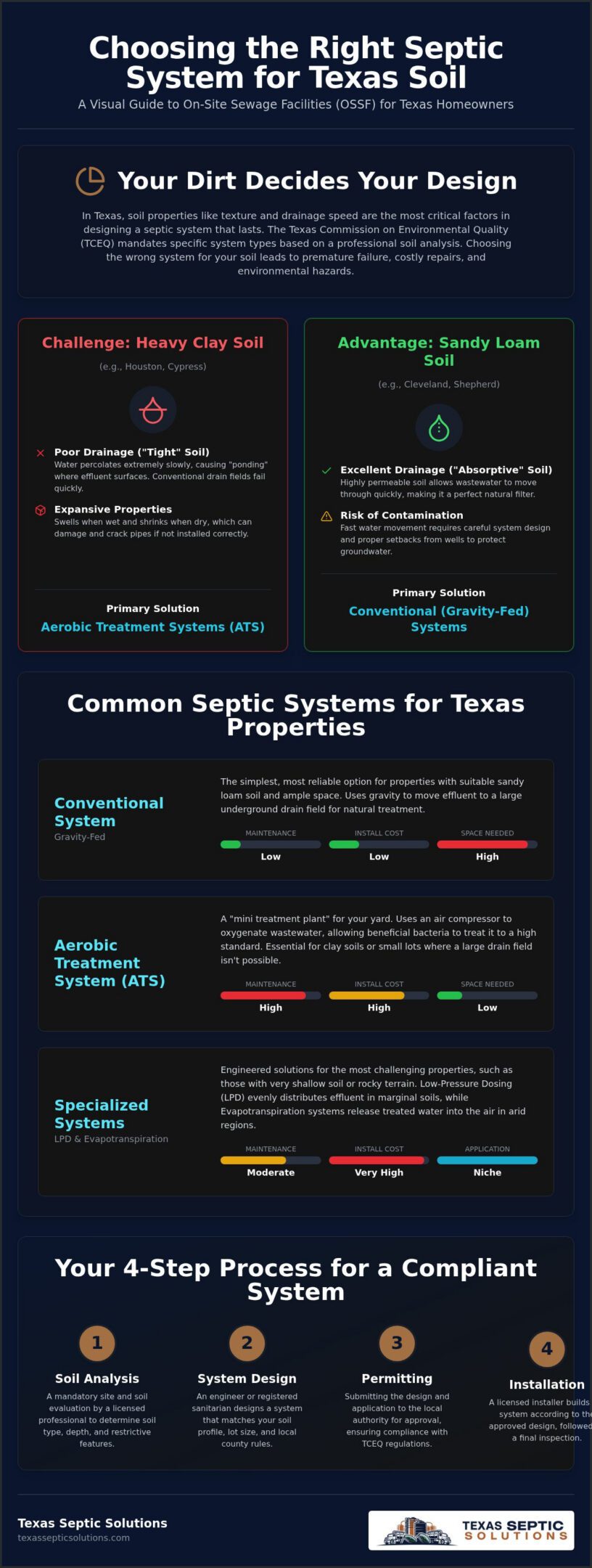
Texas soil varies wildly from one county to the next. What works in a sandy lot near Cleveland won’t function in the heavy clay of Cypress. The Texas Commission on Environmental Quality (TCEQ) sets the rules for all On-site sewage facilities (OSSF) through 30 TAC Chapter 285. These regulations exist because the soil’s ability to absorb and treat wastewater determines which types of septic systems for Texas soil are legally allowed on your property.
Soil is generally categorized by texture and drainage speed. “Absorptive” soils, like sand, allow water to move through quickly. “Tight” soils, like clay, hold onto moisture and prevent drainage. If your soil is too dense or too shallow, you can’t use a standard gravity-fed system. We look at soil texture, depth to groundwater, and restrictive horizons to help design a system that won’t fail in five years. Your lot’s specific profile dictates your permit options and long-term maintenance reality.
The Challenge of Heavy Texas Clay
Property owners in Houston and Cypress often deal with “Class IV” clay. This soil is notoriously difficult because it doesn’t allow wastewater to percolate downward. Instead, water often sits on the surface, a problem known as “ponding.” Traditional leach fields are usually a poor choice here because the earth is essentially non-porous. Beyond drainage issues, Texas clay is expansive. It swells when wet and shrinks when dry, which can shift or crack underground pipes if the installation isn’t handled by experts who understand local ground movement.
Sandy and Loamy Soils in East Texas
If you’re building near Cleveland or Shepherd, you likely have sandy loam. This soil is highly permeable, which is a major benefit for septic design. It allows for simpler, gravity-fed systems that are often more affordable to install and maintain. However, high permeability comes with a catch. Because water moves so fast through sand, there’s a higher risk of groundwater contamination if the system isn’t designed correctly. We ensure your design meets all TCEQ setback requirements, like keeping distance from wells, to keep your water safe while taking advantage of your lot’s natural drainage.
Conventional Septic Systems: The Best Fit for Sandy Texas Soils
If you’re lucky enough to have deep, well-drained sandy loam on your property, a conventional septic system is often the most reliable choice. These setups rely on a straightforward process where gravity moves wastewater from the tank into a network of underground trenches. Because they don’t require air compressors or high-tech control panels, they’re favored by homeowners who want a sturdy, low-maintenance solution. Even these simple designs must follow the specific laws in Texas apply to septic systems, which mandate strict setbacks from property lines and water wells to protect our local environment.
The real work happens in the drain field. As effluent trickles into the soil, natural bacteria break down contaminants before the water reaches the water table. This makes sandy soil the ultimate natural filter. You must remember that these systems require significant space. A standard Texas drain field can take up several thousand square feet. You’ll need a lot size that accommodates both your home and the required absorption area. If your acreage is limited, you might need to look at other types of septic systems for Texas soil, but for large East Texas lots, conventional remains the gold standard.
Gravel-and-Pipe vs. Chamber Systems
Traditional designs use gravel-filled trenches with a perforated pipe running through the center. While effective, the gravel can eventually settle or become clogged with “biomat” over several decades. Many of our neighbors now prefer modern gravelless chambers. These arched plastic structures create a large open space underground, allowing effluent to contact the soil directly without the need for rock. Chambers are lighter to install and often provide a more efficient treatment area in the sandy pockets near Shepherd and Cleveland. Keeping these fields healthy is simple. Don’t drive over them and ensure you schedule regular septic system maintenance Texas protocols to prevent solids from leaving the tank and clogging your soil.
When to Choose a Conventional Setup
A conventional system is typically the most cost-effective option over a 20-year span. Since there are no mechanical parts to burn out, your primary expense is periodic pumping. You should choose this setup if your soil report shows high permeability and your lot is large enough to handle the footprint. It’s a time-tested approach that works with nature rather than fighting against it. If you’re unsure if your property qualifies, we can help you evaluate your options with a professional septic site assessment to see if a gravity-fed design is the right path forward for your home.
Aerobic Treatment Systems (ATS): Solving Clay and Small Lot Issues
When your soil report reveals heavy Class IV clay, a conventional gravity-fed system isn’t an option. In these cases, Aerobic Treatment Systems (ATS) are the standard choice. Unlike traditional setups, these are high-performance machines that function like a miniature sewage treatment plant right in your backyard. They use an air compressor to force oxygen into the wastewater, which allows aerobic bacteria to break down waste much faster and more thoroughly than anaerobic processes. For many homeowners in areas with “tight” soil, this is the most reliable of the types of septic systems for Texas soil because it doesn’t rely on the earth to do the heavy lifting of filtration.
A typical aerobic setup consists of three distinct chambers. First, the trash tank collects solids. Next, the aeration chamber treats the liquid with oxygen. Finally, the pump tank holds the treated water until it’s ready for dispersal. Because these systems rely on mechanical parts like pumps and aerators, they require more oversight. Texas law is very strict here. You’re required to maintain an ongoing service contract with a licensed provider. These contracts typically include three inspections per year to ensure the air compressor is humming and the disinfection levels are correct. This proactive care is what keeps your system running for decades instead of failing in five years.
Aerobic Spray Systems
Spray systems are common across Cypress and Huffman because they’re effective and relatively easy to install. They use sprinkler heads to distribute treated effluent over a designated “spray field” on your lawn. Since the water has been disinfected with either chlorine or UV light, it meets TCEQ standards for surface application. You’ll often see these identified by “purple pipe” components, which signify non-potable water. If you ever hear a loud buzz or see a red light on your control panel, it means your septic tank alarm goes off. This is usually a signal that your pump has stopped or the water level is too high, requiring a quick response to avoid a backup.
Aerobic Drip Irrigation
If you have a small lot or a property with unique landscaping, aerobic drip irrigation is often the better fit. Instead of spraying water into the air, this method uses sub-surface lines to “drip” treated effluent directly into the soil. It’s a discreet, efficient option that works well for high-traffic yards or garden areas where you don’t want active sprinklers. These systems require high-quality filtration to prevent the small emitters in the lines from clogging. While the initial setup is more complex, it provides a functional solution for lakeside properties or tight suburban lots where a traditional spray field won’t fit.
Specialized Systems: LPD and Evapotranspiration for Tricky Lots
Sometimes, the standard types of septic systems for Texas soil just won’t fit the bill. If your property has shallow rock, steep slopes, or a high water table, you need a specialized design. These are often considered “last resort” systems because they require more engineering and oversight than a basic gravity trench. Because of their technical nature, Texas law requires a Registered Sanitarian or a Professional Engineer to handle the design and permitting. This ensures your system protects the local environment while functioning on a lot that others might find unbuildable. We take the guesswork out of these complex designs to ensure your home remains fully functional.
One unique Texas solution is the Evapotranspiration (ET) system. This setup is perfect for regions where the soil is too tight for any drainage but the Texas sun is plentiful. Wastewater is pumped into a lined bed filled with specific sand and rock. Instead of soaking into the ground, the water is drawn up by plants or evaporated by the heat. It’s an airtight solution for properties where you can’t risk effluent entering the native soil. These systems are highly specific to our climate and require precise construction to work effectively.
Low-Pressure Dosing (LPD) Explained
Low-Pressure Dosing is a game changer for the uneven terrain often found across East Texas. In a standard gravity system, water tends to pool at the lowest point of the trench, which can lead to localized failure and smells. LPD solves this by using a pump chamber to force effluent through small-diameter pipes under pressure. This ensures an even distribution across every square inch of the drain field. It’s a highly effective way to manage shallow or rocky soils where you simply can’t dig deep. To keep your LPD system healthy, you should check the pump’s electrical components annually and ensure the distribution valves stay clear of debris. It works reliably when maintained.
Mound Systems for High Water Tables
For neighbors in Huffman and Shepherd, a high water table is a frequent hurdle for new construction. If the groundwater is too close to the surface, a standard system can’t meet the vertical separation requirements set by the TCEQ. Mound systems solve this by moving the treatment process above the natural ground level. We build a sand mound that acts as a natural filter, treating the wastewater before it ever touches the sensitive water table below. While a mound is a visible addition to your yard, it doesn’t have to be an eyesore. Using native grasses or shallow-rooted shrubs can turn a utility necessity into a natural-looking feature of your landscape.
If you’re worried your lot might be unbuildable due to difficult soil conditions, contact us today for a professional new septic system installation consultation.
Professional Soil Testing and System Selection in East Texas
You can’t choose a system based on what your neighbor has. In East Texas, the ground changes too quickly for guesswork. Before any dirt is moved, a professional site evaluation is required by law. While some folks still talk about the old “Perc Test,” modern TCEQ standards focus on the “Profile Hole.” This involves digging a deep pit to examine the actual layers of the earth. It’s the only way to see the full picture of your property’s drainage potential. This data tells us exactly which types of septic systems for Texas soil will pass inspection and function for decades without failing.
Interpreting a soil analysis report can feel like reading a foreign language. Your report will categorize your soil from Class Ia (sandy) to Class IV (heavy clay). To address the gap in clear information, here is how we typically map soil types to systems:
- Class I and II (Sand and Loam): Ideal for conventional gravity-fed systems.
- Class III (Silty Clay): Often requires Low-Pressure Dosing or larger drain fields.
- Class IV (Heavy Clay): Almost always requires an Aerobic Treatment System.
- Rocky or Shallow Soil: Usually necessitates a Mound or LPD design.
Choosing a local expert is vital for both new installations and septic system repair. We know the specific “tight” clay pockets in Cypress and the sandy stretches near Cleveland. We don’t just look at the dirt; we look at the future of your home’s functionality.
The Site Evaluation Process
When our technician visits your Cleveland or Houston lot, they aren’t just looking at the surface. We look for the “Restrictive Horizon.” This is the depth where the soil stops draining, whether due to a rock layer or a change to dense clay. We also map out the legal “setback” distances. TCEQ rules are strict about keeping your system a safe distance from property lines, building foundations, and water wells. Getting these measurements right during the evaluation prevents expensive permit rejections later.
Getting Your Installation Started
It’s important to balance the initial septic system replacement cost with long-term reliability. A cheaper system that isn’t suited for your soil will cost you more in repairs within just a few years. The permitting timeline varies by county. In Harris, Montgomery, or Liberty Counties, the process from application to final approval typically takes 4 to 10 weeks. We handle the paperwork and the engineering so you don’t have to navigate the county offices alone. We ensure your system is designed for the reality of your lot.
Ready for a professional evaluation? Contact Texas Septic Solutions today to get your project moving in the right direction.
Secure Your Home’s Future with a System Built for Texas Soil
Your property’s soil is the foundation of a healthy, long-lasting utility system. Whether you’re building on the heavy clay of Cypress or the sandy loam near Cleveland, matching your setup to the land is the only way to ensure reliability. We’ve explored how different types of septic systems for Texas soil solve specific drainage challenges. From traditional gravity-fed designs to high-performance aerobic units, the right choice protects your investment and keeps your home running smoothly for decades.
Don’t leave your property’s functionality to chance. Our team of Licensed Texas Installers understands the specific demands of local regulations and the unique geography of East Texas. We handle everything from the initial site evaluation to the final permit. If you ever face an unexpected issue, our 24/7 emergency support is always ready to help neighbors across Houston and surrounding areas.
Get a Professional Site Evaluation for Your New Texas Septic System. We are proud to serve Cleveland, Houston, and the surrounding communities with dependable, professional expertise. Let’s get your project started on solid ground today.
Frequently Asked Questions
What is the most common septic system used in Texas?
Aerobic Treatment Systems (ATS) are currently the most common choice among the various types of septic systems for Texas soil. This popularity is due to the prevalence of heavy clay in regions like Houston and Cypress. While conventional systems were standard decades ago, smaller modern lot sizes and stricter environmental protections make aerobic units the go-to solution for new construction. They provide superior treatment levels that meet current state standards for surface dispersal.
Can I install a conventional septic system in heavy clay soil?
You cannot legally install a conventional system in heavy clay because it won’t drain. Clay is classified as “tight” soil, meaning wastewater will simply sit in the trenches and eventually backup into your home or pond on the surface. In these conditions, TCEQ regulations mandate an aerobic system. These units use oxygen to treat the water before it’s sprayed or dripped, bypassing the need for natural soil filtration in non-porous earth.
Why does Texas require a maintenance contract for aerobic systems?
Texas law requires these contracts because aerobic systems are mechanical “mini-plants” that require constant power and disinfection. If the air compressor fails or the chlorine runs out, the system stops treating waste immediately. State regulations under 30 TAC Chapter 285 require a licensed provider to inspect the unit at least three times per year. This ensures the pump, aerator, and disinfection components are functioning correctly to protect the local groundwater and your neighbors.
How much land do I need for a septic system in Harris County?
In Harris County, lot size requirements usually depend on your water source. If you have a private well, you typically need at least one acre to maintain the required setbacks. For properties with public water, you might be able to install a system on a half-acre lot. These rules vary by specific municipal jurisdiction and soil quality, so always check with the local health department or a licensed professional before purchasing land for development.
What happens if my soil fails a percolation test?
If your property fails a standard percolation test or profile hole inspection, it doesn’t mean you can’t build. It simply means you must use one of the more advanced types of septic systems for Texas soil. Options like Low-Pressure Dosing (LPD), mound systems, or evapotranspiration beds are specifically designed for “failing” soil conditions. We work with Registered Sanitarians to design a custom solution that meets TCEQ safety standards despite your lot’s natural drainage limitations.
Is an aerobic system better than a conventional one for Texas homes?
Neither is objectively better; the “best” system is the one that matches your specific soil profile. Aerobic systems provide higher quality treatment and work in any soil, but they require electricity and mandatory maintenance contracts. Conventional systems are significantly cheaper to operate over time because they have no moving parts. However, they require large lots and perfect, sandy soil conditions that aren’t available to every homeowner in East Texas.
How deep should a septic tank be buried in East Texas?
A septic tank in East Texas is typically buried with 6 to 12 inches of soil cover, though some are placed up to three feet deep. The exact depth is determined by the “fall” or slope of the plumbing lines coming from your house. The pipe must drop at least 1/8 to 1/4 inch per foot to ensure solids move efficiently. Burying a tank too deep can make future pumping and maintenance difficult or require expensive risers.
Can I drive over my septic drain field if I have sandy soil?
You should never drive or park vehicles over any part of your septic system, regardless of soil type. Even in sandy East Texas soil, the weight of a vehicle compacts the earth and can crush the underground pipes or chambers. Compaction reduces the soil’s ability to absorb water, which leads to premature system failure. It’s best to fence off your drain field area or use landscaping to keep traffic away from these sensitive components.