
Can You Use a Garbage Disposal with a Septic System? A 2026 Guide
If you’re wondering whether garbage disposal use with septic system care is a good fit for your home, the key is understanding what happens after food scraps leave the sink. They still enter the tank and add to the solids it must handle. A disposal isn’t automatically a problem, but it changes what goes down the drain.
That added waste is worth considering when you think about tank capacity, system condition, and maintenance. Using the disposal sparingly and keeping grease and large amounts of food waste out of the drain can help limit unnecessary strain. The right approach depends on your household and the septic system serving it.
This guide explains how food waste affects a septic system, which habits can help, and when professional pumping, maintenance, or repair may be appropriate. Use it to weigh the convenience of a disposal against the extra material entering your system, and to plan care based on what you know about your property.
Key Takeaways
- Garbage disposal use with septic system care can be compatible, but food scraps add solids that the tank must handle.
- A disposal doesn’t automatically cause septic failure. The system’s condition and the way you use the unit both matter.
- Use the disposal selectively, and keep unnecessary food waste, grease, and non-food materials out of the drain.
- Your tank’s capacity, service history, and household routines are useful context when planning maintenance or pumping.
- Changes in drainage or wastewater where it shouldn’t be are reasons to seek professional septic help.
Can You Use a Garbage Disposal with a Septic System?
Yes, garbage disposal use with septic system care can be possible, but it sends extra food solids into the wastewater stream. Household wastewater flows into the septic tank, where solids and liquid separate to an extent. The liquid effluent then moves toward the drainfield, where it disperses into the soil. The Septic tank overview explains the basic components and function of this type of system.
A disposal changes what enters the plumbing, not the basic treatment process. Wastewater still travels to the tank and then toward the drainfield, but ground-up scraps become part of the material the system must manage. How well a particular system handles that added load depends on factors such as its design, condition, and household use.
A garbage disposal may be compatible with a septic system, but that doesn’t make it the right fit for every household or system. Consider the tank’s capacity, maintenance history, and the amount of food waste your household typically sends down the drain. Those details are more useful than a blanket rule about all disposals or all septic systems.
What happens to ground-up food after it leaves the sink?
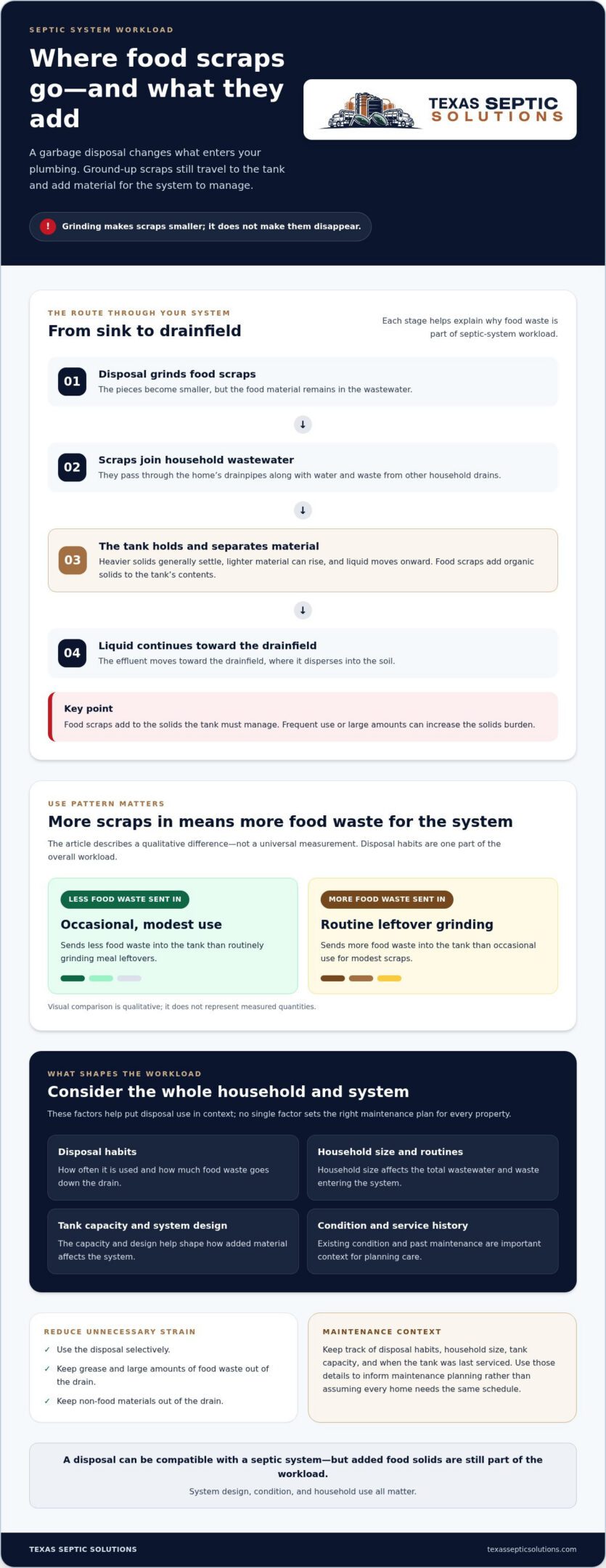
After food scraps pass through the disposal, they travel with sink wastewater through the home’s drainpipes and into the septic tank. Grinding makes the pieces smaller, but it doesn’t make them disappear or remove them from the wastewater. The food material adds organic solids to the tank, alongside waste from toilets and water from other household drains.
Inside the tank, heavier solids generally settle, while lighter materials can rise. The remaining liquid moves toward the drainfield. The tank and drainfield work together, but system designs and conditions vary. Added food waste can contribute to solids accumulating in the tank, which is why disposal use is one factor to consider when planning maintenance and pumping.
Why do septic owners ask whether disposals are safe?
The concern is understandable. Food scraps add material to a system with a finite capacity, and homeowners want to avoid unnecessary maintenance problems. A disposal can also make it easy to send more waste down the drain than intended. The practical question is not only whether the unit runs, but whether its added solids fit the needs and upkeep of your system.
That doesn’t mean every use will cause a failure, and it doesn’t mean a disposal is harmless in every setup. The straightforward point is that the tank must hold and process food solids along with ordinary household wastewater. Frequent use or large amounts of scraps can increase the solids burden. Careful, limited use keeps unnecessary food waste out of the system.
If you don’t know your tank’s capacity, condition, or service history, don’t assume general advice describes your property exactly. Texas Septic Solutions provides septic maintenance and pumping to help assess system care needs. An assessment can give you a clearer basis for deciding how to use the disposal and what maintenance may be appropriate.
How a Garbage Disposal Can Change Septic-System Workload
A septic system receives wastewater from everyday activities such as bathing, laundry, and dishwashing. A garbage disposal adds ground-up food scraps to that flow. The difference matters because the tank must hold and separate material from the home before liquid continues toward the drainfield. Food waste can contribute to solids accumulation, so disposal use is one factor to include when considering system maintenance.
What changes inside the septic tank?
As wastewater enters the tank, heavier solids settle toward the bottom while lighter material can rise to the surface. The liquid between those layers flows onward through the system. Food particles from a disposal join the tank’s contents. Grinding changes their size, but not the fact that they add material. The tank’s settling process still takes place, but the amount and type of incoming waste have changed.
Ordinary household wastewater carries waste from toilets and water from sinks, showers, and appliances. A disposal adds food scraps to that flow. Those scraps are organic material, but don’t assume they vanish immediately or that a tank can handle unlimited amounts. Added food waste is a reason to consider maintenance based on the individual system rather than rely on one pumping interval for every property.
Why capacity and household habits matter
The effect can differ from home to home. A household that uses its disposal occasionally for modest amounts of scraps sends less food waste into the tank than one that routinely grinds meal leftovers. Household size also affects the total wastewater and waste entering the system. These details help describe the workload, but they don’t establish whether a tank is correctly sized or in good condition.
Tank capacity, system design, and existing condition all shape how added material affects the overall picture. For example, a household’s disposal habits may have changed since the system was installed, or the tank may need attention for reasons unrelated to food waste. A professional assessment can connect those details with the system’s maintenance needs.
Because food scraps add solids, disposal use is a reason to consider maintenance in the context of your household and septic system. Keep track of how often the disposal is used, how many people live in the home, and when the tank was last serviced. These details make maintenance planning more practical without assuming that every home needs the same schedule.
If you’re unsure how accumulated solids or system condition affect your household’s maintenance plan, professional septic maintenance and pumping can help assess the system and inform next steps.
Garbage Disposal and Septic System: Separating Risk from Myth
A garbage disposal does not automatically make every septic system fail. A more useful way to think about it is that a disposal adds food waste, and the effect depends on how much you use it and the condition and capacity of the tank. Possible compatibility doesn’t prove that a disposal is the best choice for every household.
Some homeowners value the convenience of clearing small scraps from the sink. Others prefer to keep food waste out of the wastewater stream to limit extra solids. Neither choice tells you by itself whether a particular septic system is working well. Consider the trade-offs, then base decisions about maintenance on the system’s condition and service history.
- Potential convenience: A disposal can make it easier to clear small food scraps from the sink. Its suitability depends on the system’s design and condition.
- Added maintenance consideration: Food waste adds solids for the tank to manage. The effect on service needs varies by household and system, so don’t assume a universal pumping schedule.
Does using a disposal automatically damage a septic system?
No, not as a universal rule. Occasional, careful use differs from routinely grinding large amounts of leftovers, but neither pattern guarantees a particular outcome. Food scraps add material to the tank, and frequent or heavy use may increase its solids burden. That is a reason to pay attention to maintenance, not proof that every disposal will cause damage or failure.
General advice can explain the trade-off, but it can’t establish whether your tank is suitable. Tank size, system design, service history, and present condition all matter. A disposal that causes no obvious trouble in one home isn’t evidence that it’s the right choice for another.
When should homeowners take a more cautious approach?
Be more cautious if the system has had prior trouble, its maintenance history is unclear, or you have concerns about capacity or condition. Changes in system performance are worth taking seriously, but they don’t identify the cause on their own. Don’t assume the disposal is responsible, or that the system can handle added waste without considering its condition.
Texas Septic Solutions provides septic maintenance, pumping, and repair to help address system concerns. Professional maintenance or pumping can help assess accumulated solids as part of ongoing care. That gives you a better basis for deciding whether to keep using the disposal and how to manage it responsibly.
Use the distinction as your guide: a disposal may be compatible with a septic system, but suitability is individual. Balance the convenience against the added waste, and let system-specific information, rather than a blanket myth, shape your decision.
How to Use a Garbage Disposal More Carefully with a Septic System
Careful habits can limit avoidable food waste entering your septic system, though they can’t replace maintenance suited to your tank and household. Use the disposal for convenience, not as a substitute for scraping plates or deciding what belongs in the drain. These steps offer a practical routine for garbage disposal use with septic system care.
Everyday habits that limit unnecessary added waste
Start by keeping substantial leftovers out of the sink. Scrape them into household waste or compost them where appropriate, then reserve the disposal for modest amounts of food scraps. Avoid pouring grease or oils down the drain, and don’t use the disposal for non-food materials. These habits reduce unnecessary inputs without relying on the disposal to manage all kitchen waste.
- Sort scraps first. Put larger amounts of leftover food in the trash or compost rather than pushing them into the sink.
- Use the disposal sparingly. Grind modest scraps as needed instead of treating the unit like a food-waste bin.
- Keep drains for wastewater. Don’t pour grease down the sink or send non-food materials through the disposal.
- Pay attention to household routines. If disposal use becomes more frequent, recognize that more food waste is entering the system and consider that change when planning maintenance.
These are everyday precautions, not a guarantee against septic problems. They help reduce unnecessary waste, but the tank still needs appropriate care. For broader household practices, the Texas septic system maintenance guide provides additional context.
Keep disposal use in the wider maintenance picture
Good sink habits complement, rather than replace, septic-system care. Inspection and pumping needs depend on the individual system and household, so don’t adopt a universal schedule based only on disposal use. Keep track of changes in occupancy, disposal habits, and known service history. These details can help guide system-specific maintenance planning.
If you’re unsure about accumulated solids or your system’s condition, Texas Septic Solutions provides professional pumping and maintenance to help assess what care may be appropriate. Use a maintenance plan as a planning reference, not a substitute for advice based on your property. For help assessing maintenance needs, schedule septic maintenance or pumping.
When to Get Professional Septic-System Advice in Texas
If you’re unsure about your tank’s condition, capacity, or maintenance history, a professional assessment can help you make an informed choice about garbage disposal use with septic system care. General advice can explain how food waste changes the system’s workload, but it can’t determine whether your particular tank is in good condition or what maintenance it needs.
Consider professional advice if you don’t know when the system was last serviced, household or disposal-use patterns have changed, or you have concerns about past septic trouble. Recurring drainage problems or wastewater appearing where it shouldn’t deserve prompt attention. These signs don’t identify the cause, so don’t try to diagnose the system yourself. For urgent concerns, the Texas septic system repair guide offers related guidance.
What information helps assess disposal use?
A few basic details can make a service visit more useful. Note how many people regularly live in the home, how often you use the disposal, and what you know about the system’s service history. You don’t need to estimate tank capacity or make a technical judgment. A service professional can consider your household’s information alongside the system’s condition when discussing appropriate care.
If service records are available, keep them handy. If they aren’t, share what you know and what remains uncertain. Clear information helps distinguish a question about routine maintenance from a concern that may need further assessment.
Find local support for ongoing or urgent concerns
Texas Septic Solutions provides septic pumping to remove accumulated solids, along with septic maintenance and repair. Pumping or maintenance may be useful when system condition or accumulated solids need assessment, but using a garbage disposal doesn’t automatically mean either service is due. The right next step depends on the system and its care history.
Texas Septic Solutions serves homeowners and commercial customers in Cleveland, Houston, Cypress, Huffman, and Shepherd. The company also provides 24/7 emergency septic service for urgent concerns. If you’re dealing with a change in system performance or need help with ongoing care, Texas Septic Solutions can provide pumping, maintenance, repair, or emergency service.
Good disposal habits are one part of caring for a septic system. Pair them with maintenance informed by your property’s needs, and seek help when uncertainty or a change in performance gives you reason to act. Explore Texas Septic Solutions’ septic services for support with pumping, maintenance, repair, or urgent septic concerns.
Make a Septic-Smart Choice for Your Home
Match the convenience of a disposal with what you know about your household and system. If disposal habits have changed, or you’re unsure about the tank’s service history, keep those details in mind as you plan future care. That gives you a practical starting point without guessing what your system can handle.
The right approach to garbage disposal use with septic system care isn’t identical for every home. Keep food waste out of the drain where practical, use the disposal thoughtfully, and seek professional guidance when questions about system condition or upkeep remain. Paying attention to household routines can help you make informed decisions as your needs change.
Texas Septic Solutions provides professional septic pumping and maintenance, along with repair and emergency service for system concerns. Explore septic system services from Texas Septic Solutions for help caring for your home’s system.
Frequently Asked Questions
Does a garbage disposal make you pump your septic tank more often?
It can contribute to a need for more frequent pumping, but it doesn’t set a fixed schedule by itself. Pumping needs depend on factors such as household use, tank size, and accumulated solids. Don’t use a neighbor’s pumping interval as your own benchmark. If disposal use has increased or you don’t know the tank’s service history, professional pumping or maintenance can help assess the system and inform a care plan.
Can you put eggshells down a garbage disposal with a septic tank?
It’s better to keep eggshells out of the disposal when your home uses a septic system. Grinding breaks them into smaller pieces, but doesn’t remove the material from the wastewater. Put shells in household waste or compost them if that suits your setup. If some have gone down the drain, don’t assume they caused a problem. Avoid making them a regular disposal habit and follow your system’s maintenance guidance.
Are garbage disposals bad for septic systems?
Not automatically, but they add food waste that the septic system must handle. That added material makes disposal use a maintenance consideration, not proof that the unit is damaging your tank. For example, a household that uses the disposal to clear full plates sends more scraps down the drain than one that scrapes leftovers into the trash. If your system has a history of trouble, have its condition assessed before relying on general advice.
Can a garbage disposal cause a septic backup?
A disposal alone doesn’t establish the cause of a backup, but food waste can add to solids in the tank, and system problems may contribute to backups. If several drains slow down, wastewater appears in an unexpected place, or a backup occurs, stop using the disposal and seek septic-system help rather than repeatedly running water to test the drains. In Cleveland, Houston, Cypress, Huffman, and Shepherd, Texas Septic Solutions provides septic repair and emergency service.
Is it better to compost food scraps instead of using a disposal with a septic system?
Composting or placing scraps in household waste keeps that food material out of the septic system, so it can be a practical way to reduce added solids. Choose the option that fits your household and local composting setup, and keep grease out of the drain either way. You can still use a disposal selectively, but it shouldn’t replace ordinary food-waste reduction. Texas Septic Solutions can help with system-specific maintenance needs.