
Can a Septic Tank Be Pumped in the Rain? What Texas Homeowners Should Know
Could a rainy day turn routine septic pumping into a risk to your yard or system? If you’re asking, “can a septic tank be pumped in the rain,” the answer is sometimes, but rain alone doesn’t decide. The condition of the ground and whether the truck can reach the tank safely matter too.
It’s understandable to wonder whether an appointment will be canceled, especially when your system needs attention. Light rain may not prevent service, but waterlogged soil can make access difficult and may increase the risk of a tank shifting after it’s pumped. A local septic professional can assess your property and advise whether to proceed or reschedule.
This guide explains which weather and site conditions can affect a pumping visit, what to ask before the appointment, and how to reduce strain on your system if service has to wait. It also covers warning signs, such as sewage backing up into the home, that call for prompt attention rather than simply waiting for the rain to pass.
Key Takeaways
- Whether can a septic tank be pumped in the rain depends on conditions at your property, including safe access, equipment placement, and worker safety.
- Light rain, persistent rain, standing water, and an inaccessible tank area can affect the visit differently. Ask the contractor what they need to confirm before proceeding.
- Before the appointment, contact your provider, describe what you can observe, and identify the tank location. Don’t drive over or uncover the tank unless the provider advises you to.
- Tank pumping and drain field wastewater processing are separate parts of the system, so saturated soil can affect performance even if the tank itself is accessible.
- For service in Cleveland, Houston, Cypress, Huffman, or Shepherd, confirm local availability and conditions, and report worsening symptoms promptly.
Can a Septic Tank Be Pumped in the Rain? The Short Answer
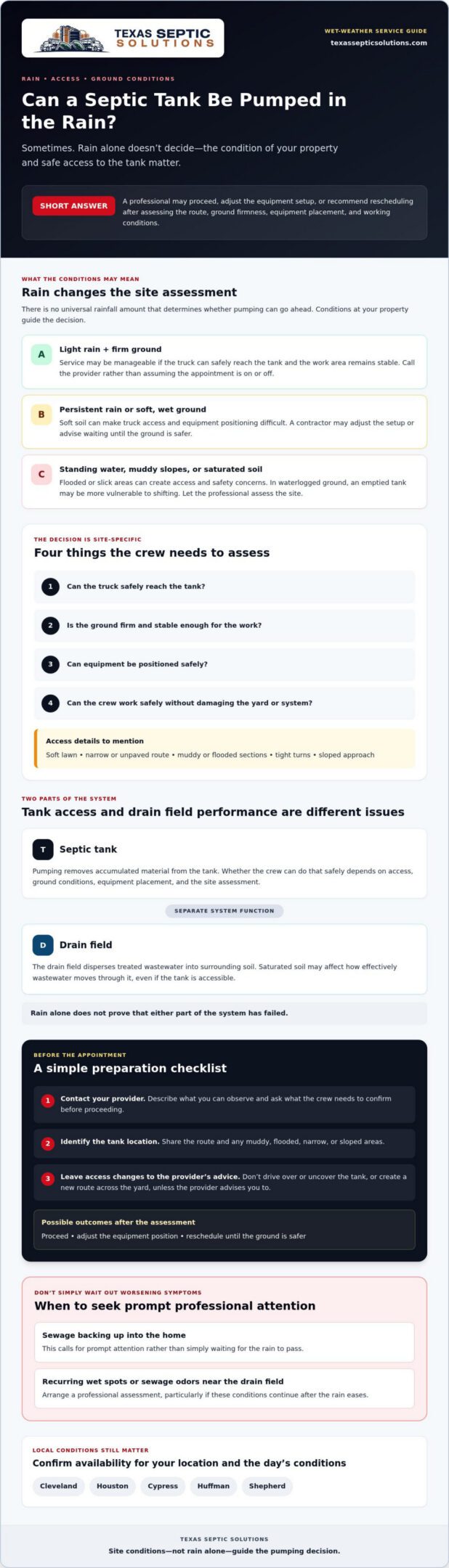
Yes, a septic tank can sometimes be pumped while it’s raining, but rain doesn’t automatically mean the appointment can go ahead. The contractor needs to assess the property, including the route to the tank, ground firmness, equipment placement, and safe working conditions. Light rain on firm ground may be manageable, while prolonged rain, standing water, or saturated soil may make pumping unsafe or unsuitable.
A septic tank is one part of a larger system that collects and separates household wastewater. The Septic tank overview explains its basic function and components. If the surrounding ground is waterlogged, pumping can create added concerns, including the possibility that an emptied tank could shift upward under pressure from wet soil. The contractor’s site-specific assessment should guide the decision.
After checking conditions, a professional may proceed, adjust the equipment position, or recommend rescheduling until the ground is safer. There isn’t a universal rainfall amount that determines the answer. What matters is how the weather has affected your property and whether the crew can work safely without damaging the yard or system.
Does light rain stop a septic pumping appointment?
Not necessarily. If the truck can safely reach the tank and the work area remains stable, light rain may not prevent service. Conditions vary from property to property, so don’t assume the appointment is on or off. Call the pumping company, describe what you see around the access route and tank, and ask whether the crew expects to proceed.
Why can heavy rain change the plan?
Persistent rain can soften soil and make it difficult for a heavy truck to reach or position near the tank. Standing water, muddy slopes, and soft ground can also create site-specific safety concerns. If the soil is saturated, a contractor may recommend waiting because a pumped tank can be more vulnerable to shifting in waterlogged ground. Let the professional assess the conditions rather than setting your own cutoff.
How Rain and Saturated Ground Affect Septic Pumping
Rain can affect a pumping visit before the work reaches the tank. The pump truck needs a safe route to the access point and a stable place to operate. After heavy or prolonged rain, soil may soften, collect standing water, or become slick, changing what’s practical on your property. That doesn’t automatically mean the septic system has failed. It means the site needs to be assessed, especially if conditions have changed since you booked.
Site access and ground conditions help determine whether a contractor can pump safely, needs to adjust the setup, or should reschedule. Share what you can see and let the professional make the site-specific decision.
When wet ground affects truck access
A narrow driveway, unpaved access route, soft lawn, or sloped approach can become harder to navigate when the ground is wet. A heavy truck may rut or sink into soft soil, and a slick slope can make positioning equipment difficult. Before the visit, identify where the tank is and tell the provider about muddy or flooded sections, tight turns, or other access concerns. Don’t create a new route across the yard without asking first.
Rain, the tank, and the drain field are not the same issue
Pumping removes accumulated material from the septic tank. The drain field has a different job: it disperses treated wastewater into the surrounding soil. When that soil is saturated, wastewater may not move through it as effectively, even if the tank is accessible. Rain alone doesn’t prove either component has failed.
Recurring wet spots or sewage odors near the drain field deserve professional assessment, particularly if they continue after the rain eases. The U.S. Environmental Protection Agency’s guidance on maintaining your septic system includes keeping rainwater drainage away from the drain field. That can help limit extra water reaching the area, but it won’t diagnose an existing problem.
If you’re unsure whether can a septic tank be pumped in the rain applies to your property, describe the access route and current ground conditions to a local pumping professional. For a site-specific assessment, you can also ask about septic pumping service and confirm availability for your location and the day’s conditions.
Pump Now or Reschedule? Compare the Conditions at Your Property
Conditions can vary across a single property. Use this comparison to describe what you’re seeing, then ask the contractor what they need to verify before deciding whether to proceed. These are details to discuss, not automatic go-ahead or cancellation rules.
| Condition | What you can observe | What the contractor should confirm |
|---|---|---|
| Light rain | The route to the tank appears firm, with no pooling or obvious mud. | Whether the truck can reach the tank and the crew can work safely in current conditions. |
| Persistent rain | Rain has continued, and the yard or access route feels softer or looks muddier than usual. | Whether the ground can support the vehicle and equipment, or whether the setup needs to change. |
| Standing water | Water has collected near the tank, along the access route, or around the work area. | Whether the water affects safe access, equipment placement, or the suitability of pumping that day. |
| Inaccessible tank area | A flooded path, soft slope, blocked driveway, or other obstacle prevents a clear approach. | Whether another safe route or equipment position is possible, or rescheduling is the better option. |
So, can a septic tank be pumped in the rain at your home? The table can help you share useful details, but only the contractor can make a site-specific decision after assessing access and safe working conditions.
Signs the scheduled visit may still be practical
An accessible tank lid and a route that looks firm are useful observations to report. They don’t guarantee that the job can proceed, since soil may be soft beneath the surface and equipment still needs a stable position. If the company requests them, share photos of the route, tank area, or any trouble spots so the crew can better understand the site before the visit.
Conditions that may call for a delay or revised plan
Standing water, very soft ground, blocked access, or no safe place to position equipment may lead the contractor to recommend a different setup or rescheduling. That decision can help protect your property, the crew, and the equipment. Ask whether the company will reassess conditions before dispatch or on arrival, and what to do if the weather changes before the appointment.
What to Do Before Septic Pumping During Wet Weather
A little preparation helps the pumping company assess your property and keeps everyone safer if the visit goes ahead. Use this checklist before the appointment:
- Contact the provider. Describe the rain and what you can see around the tank, driveway, and yard. Ask whether current conditions in your area could affect access or scheduling.
- Confirm the route and parking spot. Ask where the truck needs to park and how the crew should reach the tank. Mention narrow or unpaved routes, standing water, soft ground, or slopes.
- Identify the tank location. Share its location and any access details you know. Don’t drive over the tank or drain field, and don’t uncover the tank unless the provider specifically advises you to.
- Follow the company’s site instructions. Keep people and pets away from the work area, equipment, and any open lids while the crew is working.
- Ask what to do if the visit is delayed. Find out which symptoms should prompt an urgent call, and use water conservatively if the system is showing signs of strain.
For broader upkeep advice beyond the appointment, see this Texas septic system maintenance guide.
Questions to ask the pumping company
Keep the conversation practical. Ask whether local weather is affecting access or scheduling, where the truck should park, and which route the crew should use to reach the tank. If the visit is postponed, ask what changes in your system should lead you to call promptly. Clear answers help you prepare without guessing about ground conditions or doing risky work yourself.
How to protect the property while waiting
Keep vehicles and heavy equipment off visibly soft ground and the drain field. If the system seems strained, reduce water use where practical, but don’t treat conservation as a repair or a substitute for professional advice. Persistent warning signs, such as recurring backups or sewage odors, need assessment. The Texas septic system repair guide offers additional context on repair concerns.
If you need to discuss a pumping appointment or changing site conditions, contact Texas Septic Solutions about septic pumping and confirm current availability for your location.
When to Call a Septic Professional in Cleveland, Houston, or Nearby
A weather-related scheduling question is different from an active septic symptom. If your appointment is routine and the tank area is wet, call the provider to discuss access and whether the visit should proceed. But sewage backing up into the home, strong sewage odors, or unusual pooling near the system deserve a professional call, even if rain may be contributing. Those signs don’t confirm a specific failure, but they shouldn’t be dismissed as a scheduling issue.
When a delay is a scheduling issue, and when symptoms matter
If wastewater is backing up or surfacing outdoors, keep people and pets away from the affected area and avoid contact with suspected sewage. Tell the professional what you’re seeing and when it began. Rain can affect how a system performs, but it can’t identify the cause on its own. If a septic alarm is part of the situation, follow the system’s instructions and see this septic tank alarm troubleshooting guide for next steps.
Get local guidance for pumping in wet weather
When you call, share your community, the tank’s location, how the truck can reach it, and any current symptoms. That information helps a pumping professional understand both the weather-related access question and whether the system may need prompt attention. Texas Septic Solutions provides septic tank pumping and 24/7 emergency septic service in Cleveland, Houston, Cypress, Huffman, and Shepherd. Confirm current availability for your location and conditions; emergency service doesn’t guarantee a particular dispatch time.
If you’re unsure whether can a septic tank be pumped in the rain applies to your property, get a site-specific assessment rather than guessing from the forecast. For help discussing your symptoms or pumping appointment, contact Texas Septic Solutions about septic pumping.
Make a Confident Plan for Wet-Weather Septic Service
The answer to “can a septic tank be pumped in the rain” depends on your property, not just the forecast. A contractor should consider ground conditions, access to the tank, equipment placement, and crew safety before deciding to proceed or reschedule. Share what you’re seeing, confirm how the crew can reach the tank, and follow instructions while you wait.
Keep routine scheduling questions separate from warning signs. Sewage backing up, strong sewage odors, or unusual pooling call for prompt professional guidance. Rain alone doesn’t prove your system has failed, but worsening symptoms shouldn’t be ignored.
Texas Septic Solutions provides professional septic tank pumping and 24/7 emergency septic service in Cleveland, Houston, Cypress, Huffman, and Shepherd. Confirm current availability for your location and conditions. Contact Texas Septic Solutions for local septic pumping guidance and explain your access concerns or symptoms. With a site-specific assessment, you can make a safer, more informed plan and feel better prepared for the next step.
Frequently Asked Questions
Can a septic tank be pumped in the rain?
Sometimes. The answer to “can a septic tank be pumped in the rain” depends on whether the truck can reach the tank and the crew can work safely. Light rain may not prevent a visit if the route and work area remain stable. Persistent rain, standing water, or saturated soil may change the plan. Call the pumping company before canceling, describe what you see, and ask for a site-specific decision.
Will a septic company pump a tank if the ground is muddy?
Possibly, but the company should assess the access route and tank area first. Muddy ground can make it hard to position a heavy truck, and soft lawns or slopes may be at risk of rutting or sinking. Tell the provider about muddy driveways, standing water, and other obstacles before the appointment. The contractor can then determine whether a safe route or equipment setup is available or whether rescheduling is more appropriate.
Can heavy rain cause a septic tank to overflow?
Heavy rain doesn’t automatically mean the tank has overflowed or failed. Saturated soil can limit how effectively the drain field disperses wastewater, which may contribute to slow drains, backups, or wastewater surfacing. Those symptoms can have other causes, so don’t diagnose the system based on rain alone. If sewage backs up into your home or appears outdoors, keep people and pets away and contact a septic professional for guidance.
Should I reschedule septic pumping because of rain?
Don’t reschedule solely because rain is in the forecast. First, contact the pumping company and explain the conditions at your property, including whether the route is muddy, water is pooling, or the tank area is hard to reach. The contractor can assess access, equipment placement, and safe working conditions. They may proceed, adjust the setup, or recommend a delay based on the site, not a universal rainfall cutoff.
What should I do if septic pumping is delayed by wet weather?
Ask the provider what symptoms should prompt an urgent call and when to check back about scheduling. Until the visit, use water conservatively if the system seems strained, and keep vehicles and heavy equipment off soft ground and the drain field. Don’t uncover the tank or drive over it unless the provider specifically advises you to. Call promptly if you notice sewage backing up, strong odors, or unusual pooling.
Is it safe to walk over a septic tank or drain field after rain?
Avoid walking over visibly saturated ground when you can, especially around tank lids and the drain field. Wet soil may be soft, slippery, or unstable, and walking can disturb the area. Never stand on or open a tank lid. Keep children and pets away from suspected wastewater or a service work area. If you need to reach the tank, ask the septic professional for safe access instructions rather than crossing uncertain ground.
Can rain affect my septic drain field even if the tank is pumped?
Yes. Pumping removes accumulated material from the tank, but it doesn’t make saturated soil absorb or disperse wastewater more effectively. Heavy or persistent rain can leave the drain field soil too wet to handle wastewater as usual. Watch for recurring wet spots, sewage odors, slow drains, or backups, and seek professional assessment if they continue. Homeowners in Cleveland, Houston, Cypress, Huffman, and Shepherd can confirm local service availability with a septic professional.