
Buying a Foreclosed Home With a Septic System: The Ultimate 2026 Risk & Inspection Guide
What if the biggest threat to your foreclosure investment isn’t a cracked foundation or outdated wiring, but a system that looks perfectly fine simply because it hasn’t been used in months? Buying a foreclosed home with septic system issues is a high-stakes move that can quickly turn a bargain into a financial burden. Without maintenance records or a cooperative previous owner, you’re often left guessing about the health of the most expensive utility on the property. We know how daunting it feels to face “as-is” contracts that might be hiding massive repair costs.
You deserve to move forward with confidence rather than fear. This guide provides expert advice on identifying hidden failures and protecting your investment from costly surprises. We’ll walk you through a clear checklist for inspecting a vacant septic, explain the financial risks of a “rested” system, and help you understand the latest Texas-specific regulations for 2026. You’ll learn what to look for on the ground and how to find a reliable local partner to ensure your new home is a sound investment from the day you close.
Key Takeaways
- Understand that “as-is” foreclosure contracts offer no legal recourse, making a professional pre-purchase evaluation your only line of defense against hidden costs.
- Recognize the “rested system” illusion and why buying a foreclosed home with septic system requires a specialized hydraulic load test to reveal failures masked by vacancy.
- Learn why pumping the tank during the inspection is a non-negotiable step to identify structural damage and sludge levels that a visual check will miss.
- Compare the financial impact of common component repairs versus total system replacement to ensure your foreclosure “deal” remains profitable.
- Gain insights into Texas-specific TCEQ regulations and local soil conditions that dictate the maintenance needs of your new property.
The Hidden Risks of Buying a Foreclosed Home with a Septic System
Foreclosures often look like a steal on paper, but the reality under the surface can be much messier. When you’re buying a foreclosed home with septic system components, you’re essentially inheriting a mystery. Most banks and institutional sellers use “as-is” contracts that specifically waive their responsibility for repairs. This means if the system fails a week after closing, you have no legal recourse. A failing system doesn’t just cost money to fix; it can instantly wipe out the equity you thought you were gaining in the foreclosure deal. Without historical pumping records, you have no way of knowing if the tank is full of sludge or if the drain field has been saturated for years.
A standard Septic tank requires consistent attention to stay healthy. In a foreclosure situation, that attention is usually the first thing to go. Previous owners facing financial hardship often prioritize immediate bills over routine utility maintenance. This neglect creates a “maintenance gap” that can last for years before the bank finally takes possession. By the time a buyer steps in, the system might be on the verge of a total breakdown that isn’t immediately visible during a quick walkthrough.
The Financial Distress Maintenance Gap
Homeowners who can’t pay their mortgage rarely spend money on septic pumping or filter cleaning. We often see warning signs of long-term neglect, such as overgrown drain fields or alarms that have been intentionally bypassed to hide mechanical failures. Deferred septic maintenance is a primary risk factor in REO properties because it represents the cumulative failure to perform essential upkeep, which often leads to total system collapse shortly after a new family moves in. When you are buying a foreclosed home with septic system concerns, you have to assume the previous owner did the bare minimum, or perhaps nothing at all, to keep the system running.
Permit and Compliance Audits in Texas
In the Greater Houston area, including Cleveland and Cypress, local regulations are strict. We recommend checking county records for original permits before you finalize any offer. Many older foreclosures have “bootleg” or unpermitted systems that were installed without professional oversight or proper soil testing. Our local Texas soil conditions vary wildly; a system designed for sand won’t work in heavy clay. These unpermitted setups won’t pass modern inspections and can completely stall your plans for future renovations or a clean resale. Non-compliance is a silent deal-killer that can cost you thousands in unplanned permit fees and required upgrades to meet current TCEQ standards. If the county finds an unpermitted system, they may require a total replacement regardless of its current working condition.
Why Vacancy is the Biggest Threat to a Foreclosed Septic System
Vacancy is often mistaken for a fresh start, but in the septic world, it’s a deceptive mask. When you’re buying a foreclosed home with septic system hardware that hasn’t been touched in months, you aren’t seeing the system’s true capacity. You’re seeing it at rest. This “rested” state allows the soil and the tank to hide significant structural and biological failures. A system that looks dry and functional during a ten-minute walkthrough can quickly become a swamp once it’s forced to handle a modern family’s daily water load.
Texas heat and heavy clay soils play a major role here. In areas like Cleveland or Cypress, the clay can bake and crack during a dry spell. While this might seem like it’s creating more drainage space, it’s actually creating a temporary bypass. Once a family moves back in and starts running hundreds of gallons of water a day, that clay swells shut. The system that seemed fine during a quick walkthrough suddenly backs up into the house because the soil can no longer absorb the volume.
The Science of the ‘False Positive’ Inspection
A vacant system often benefits from a process called biomat rejuvenation. The biomat is a layer of bacteria and organic matter in the drain field. When water stops flowing, this layer dries out and becomes porous again. It can pass a basic dye test because the soil is thirsty and the biomat is dormant. However, this is just a temporary fix. Within weeks of regular use, the biomat regrows, and the old clogs return. This is why following standard septic system inspection regulations is vital, but you must go further with a hydraulic load test to simulate real-world usage. Only a sustained flow of water can prove if the drain field is truly healthy.
Mechanical and Electrical Decay During Vacancy
Mechanical parts don’t like sitting still. Aerobic systems, which are common across East Texas, rely on pumps, aerators, and float switches to function. In the humid Houston climate, electrical contacts corrode when they aren’t regularly energized. Insects like ants often move into control boxes, while rodents may chew through wiring. You might find your septic tank alarm going off the very moment you restore power to the property. This isn’t just a nuisance; it’s a sign that the components have seized or shorted out during the months of neglect. If you’re unsure about the state of the equipment, it pays to have a local expert evaluate the system before you sign the contract.
Conducting a Foreclosure-Specific Septic Inspection in Texas
A general home inspector will check if the toilets flush and the faucets run, but they rarely have the tools or the license to evaluate what’s happening six feet underground. When you are buying a foreclosed home with septic system equipment, you need a specialist who understands the unique failure points of dormant systems. A professional septic system inspection is the only defense you have against a five-figure repair bill. We use electronic locators and soil probes to find tanks and drain fields that have been buried under years of overgrown weeds or unpermitted landscaping. Without a map from the previous owner, these tools are essential for mapping out the infrastructure you’re about to buy.
Pumping the tank is a non-negotiable part of this process. If a tank is full of waste, it is impossible to see structural cracks, root intrusions, or the condition of the inlet and outlet baffles. Pumping also allows us to see if groundwater is leaking into the tank from the outside. In the low-lying areas around Cleveland and Houston, high water tables often force “seepage” into cracked tanks, which can overwhelm the pump and drain field. We also evaluate the soil surrounding the field. Texas soil varies from heavy, expansive clay to sandy loam, and each reacts differently to long periods of vacancy and neglect.
The Hydraulic Load Test Protocol
A hydraulic load test is the only way to bypass the ‘rested system’ illusion. Since the home has been vacant, the drain field is likely dry and will accept water easily at first. This can lead to a “false pass” during a quick visual check. We introduce a specific volume of water into the system to simulate 24 to 48 hours of heavy family usage. By monitoring the absorption rate, we can identify slow-failing fields that would otherwise seem functional. If the water level in the tank doesn’t drop at a consistent rate during this stress test, the drain field is likely compromised and won’t survive a week of actual household use.
Visual and Structural Tank Evaluation
Once the tank is empty, we perform a thorough structural dive. We look for high-water marks on the walls, which serve as a historical record of past backups. We also check the integrity of the concrete or plastic baffles. If these components have crumbled, solids can escape the tank and clog the drain field, leading to a total system collapse. We inspect the sludge levels and scum layers to determine how the system was treated before the foreclosure. This data helps us predict the remaining lifespan of the components and whether the “deal” you’re getting on the house is actually worth the investment.
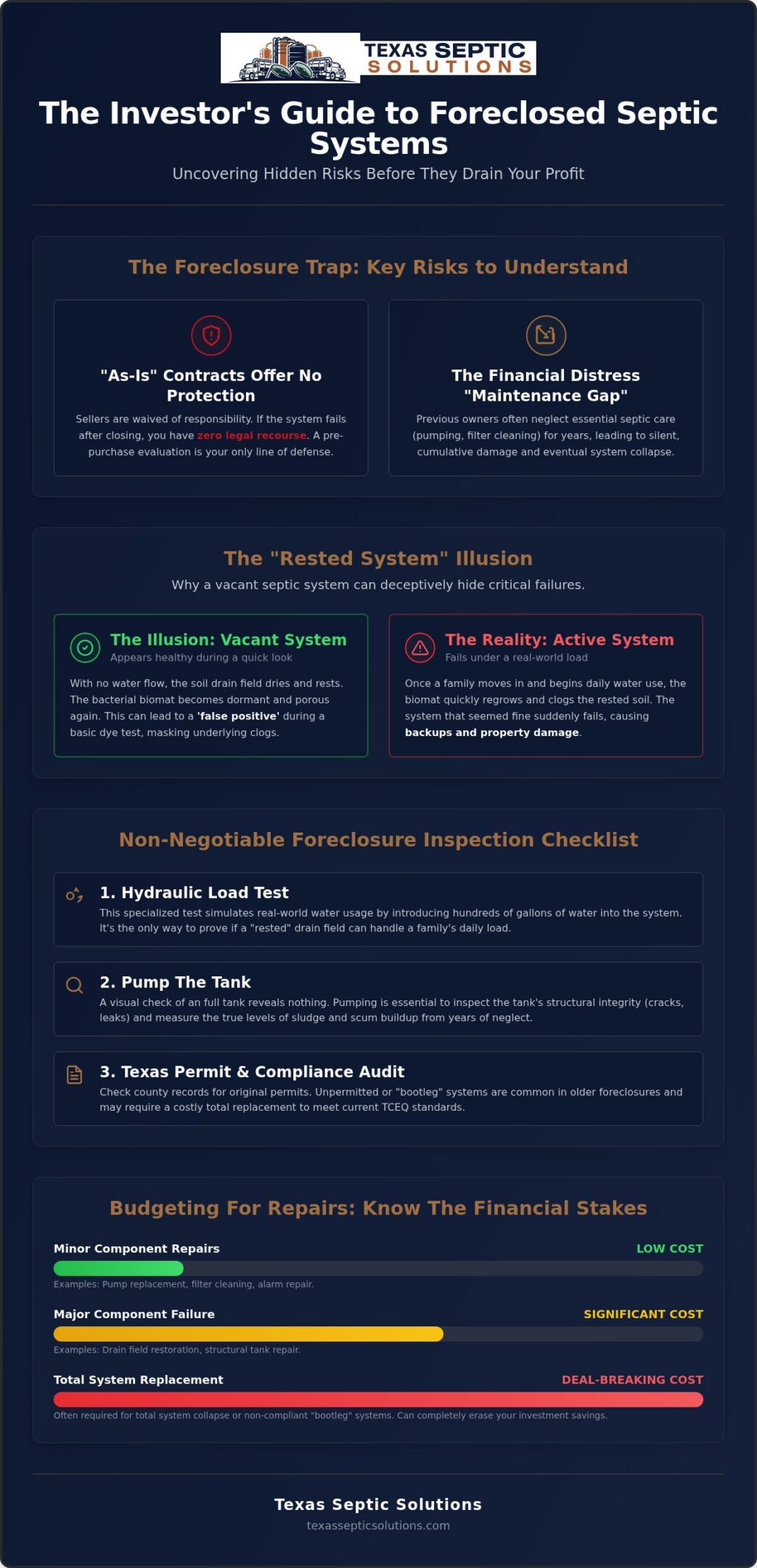
Budgeting for Septic Repairs and Replacement in a Foreclosure
Finding a foreclosure with a low price tag feels like a win, but you haven’t found the real price until you’ve vetted the utilities. When buying a foreclosed home with septic system components, you have to look past the “as-is” sticker. Unlike a new kitchen or fresh flooring, septic work is “invisible equity.” It won’t make the house look better, but it’s the difference between a habitable home and a condemned property. If the system is failing, that “deal” you found could evaporate instantly under the weight of a new installation. You must account for these potential costs before the bank’s deadline passes.
Use your inspection findings as a hard-hitting negotiation tool. Even though banks and lenders prefer to sell properties without making repairs, a detailed professional report showing a failed drain field or a cracked tank can force them to reconsider the price. They don’t want to lose a buyer over a utility that prevents the house from being financed by FHA or VA lenders. We recommend prioritizing any mechanical or structural issues that affect safety or sanitation before you even think about moving in. Getting these issues resolved early prevents an emergency call-out during your first week of homeownership.
Estimating Potential Repair Scenarios
Not every foreclosure requires a total overhaul. Sometimes, the issue is as simple as a seized pump or a faulty float switch that gave up during the vacancy. For these smaller issues, a focused septic system repair can get the system back online quickly. However, major failures like a collapsed tank or a saturated drain field require a much larger budget. Modernizing an outdated system to meet 2026 TCEQ standards often involves upgrading control panels or adding secondary treatment tanks. This adds to the initial investment but ensures your property remains compliant with local health department regulations.
Replacement as a Factor in Your Offer
There are moments when the best move is to walk away. If our evaluation reveals that the septic system replacement cost exceeds the property’s potential value, the bargain isn’t worth the headache. Soil testing, specifically a professional perc test, is vital here. In the heavy clay soils of East Texas, a replacement might require a complex aerobic system rather than a standard gravity setup. This significantly changes your budgeting and your move-in timeline. If you’re currently weighing an offer on a property, contact us for a pre-purchase evaluation to ensure you aren’t overpaying for a hidden liability.
Securing Your Investment with Texas Septic Solutions
Buying a foreclosed home with septic system issues requires more than a simple walkthrough; it requires a partner who understands the local terrain. In the Greater Houston area, including Cleveland and Cypress, the ground beneath your feet dictates how your utilities perform. We’ve spent years troubleshooting systems that were left to rot during the foreclosure process. Our team acts as your neighborly expert, providing the calm reliability you need when dealing with the high-pressure environment of “as-is” real estate contracts. We don’t just look at the tank; we look at the entire health of the property to ensure your investment is protected.
Local expertise matters because Texas soil is unforgiving. A system that works in the sandy loam of one county might fail miserably in the heavy clay of another. We understand these nuances and bring that specific knowledge to every evaluation. Our goal is to alleviate the stress of home buying by providing straightforward, honest assessments. We’re built for the long haul, valuing the relationship with the homeowner as much as the immediate repair or installation.
Professional Pre-Purchase Evaluation
Banks and institutional sellers won’t tell you if the aerator is burnt out or if the drain field is saturated. In most cases, they honestly don’t know the status of the utilities. Our pre-purchase evaluation is designed to uncover those silent failures before they become your financial burden. We provide a detailed, professional report that your real estate agent can use as a powerful negotiation tool. Having a clear record of the system’s condition allows you to ask for price reductions or repair credits based on facts rather than guesswork. This process gives you the peace of mind that your foreclosure “deal” won’t turn into a money pit the moment you move in.
Long-Term Care for Your New Property
Once you’ve secured the property, the focus shifts from assessment to stability. A distressed system needs a baseline established through professional pumping and a mechanical check-up. We help you transition from a neglected system to a managed one by establishing a septic system maintenance plan. This proactive approach keeps you compliant with TCEQ standards and prevents the sudden, costly failures common in older foreclosures.
Setting up a septic system maintenance Texas schedule for 2026 is the best way to ensure your home remains functional for decades. We also know that moving into a vacant home can be unpredictable. If you experience a backup or an alarm on your first night, our 24/7 emergency septic service is ready to respond. We are your one-stop partner for repairs, pumping, and future system upgrades, ensuring your new home remains a safe and healthy environment for your family.
Secure Your Investment and Start Your New Chapter
You’ve done the hard work of finding a property with potential. Now, it’s time to ensure the infrastructure can support your future. Buying a foreclosed home with septic system equipment doesn’t have to be a gamble if you approach it with the right data. Remember that a system at rest is a system in disguise. Only a rigorous hydraulic load test and a full structural pumping can reveal the truth behind an “as-is” contract. By identifying these issues early, you protect your budget and gain the leverage needed to finalize a fair deal with the lender.
Our team provides the local expertise you need in Cleveland, Houston, and the surrounding communities. Whether you’re dealing with a complex aerobic setup or a traditional conventional system, we have the tools to verify its health. We even offer 24/7 emergency septic service for those unexpected move-in day surprises. Don’t let a hidden utility failure derail your investment. Schedule your foreclosure septic evaluation with Texas Septic Solutions today and move into your new home with total confidence. Your path to a reliable, worry-free property starts with a professional evaluation.
Frequently Asked Questions
Can I get a septic inspection on a foreclosure if the water is turned off?
Yes, you can still perform an inspection, but you must provide an external water source. Professionals often bring water trucks or large storage tanks to the site to conduct a hydraulic load test. Without water flow, it is impossible to evaluate how the drain field handles a typical household volume. You should coordinate with the bank to restore utilities if possible, as this is the most efficient way to test the plumbing and system simultaneously.
Will a bank pay for septic repairs on a foreclosed home?
Banks rarely pay for repairs directly because they sell properties in “as-is” condition to limit their liability. However, a failed inspection report is a powerful negotiation tool. If you discover a major failure, you can often negotiate a lower purchase price to cover the anticipated costs. While they won’t cut a check for the contractor, they are often willing to reduce the sale price to keep the deal from falling through.
How long does a septic system usually last if it hasn’t been maintained?
A well-maintained system can last 20 to 40 years, but neglect can cut that lifespan in half. When buying a foreclosed home with septic system components that have been ignored, the risk of premature failure is high. Without regular pumping, solids eventually escape the tank and clog the drain field. This damage is often permanent and requires an expensive replacement rather than a simple repair, making the lack of maintenance records a significant financial risk.
What happens if I buy a foreclosure and the septic system is unpermitted?
Buying an unpermitted system can lead to a legal and financial nightmare. Local Texas authorities may require you to replace the entire system to meet current TCEQ codes, regardless of whether the current setup is working. An unpermitted system can also prevent you from obtaining permits for future home renovations or additions. It is vital to check county records in Cleveland or Houston before closing to ensure the system was legally installed and inspected.
Is an aerobic septic system harder to maintain in a vacant home?
Aerobic systems are much more sensitive to vacancy because they rely on active mechanical parts and electricity. When a home is vacant and the power is cut, the aerator stops providing oxygen to the beneficial bacteria, causing them to die off. Mechanical components like pumps and float switches can also seize up due to humidity and lack of movement. These systems require a professional restart and mechanical tune-up before you resume normal household use.
How much water is used during a hydraulic load test?
A standard hydraulic load test typically uses between 300 and 500 gallons of water to simulate a full day of heavy usage. The exact amount depends on the size of the tank and the number of bedrooms in the home. This volume is necessary to stress the drain field and see if it can absorb water at a sustainable rate. Using too little water will fail to reveal the slow-draining soil issues common in “rested” foreclosure systems.
Can a septic system be ‘saved’ if it has been sitting for two years?
Most systems can be successfully brought back online even after two years of dormancy. The process involves a thorough pumping to remove old sludge and a mechanical inspection of all pumps and alarms. Once you begin using the system again, the bacterial colony will naturally repopulate within a few weeks. However, a professional evaluation is essential to ensure the tank hasn’t developed structural cracks or leaks while it was sitting empty and dry.
Does homeowners insurance cover septic failure in a newly purchased foreclosure?
Standard homeowners insurance policies rarely cover septic failures caused by wear, tear, or previous neglect. Insurance is designed to cover sudden and accidental damage, such as a pipe bursting or a vehicle driving over the tank. When you are buying a foreclosed home with septic system issues, the “as-is” nature of the sale means any existing failures are your responsibility. You should assume that any repairs needed after the sale will be out-of-pocket expenses.