
Average Cost of Septic Repair in Houston: 2026 Price & Buying Guide
Imagine waking up on a humid Houston morning only to find your backyard has transformed into a swamp that smells nothing like rainwater. It’s a moment of pure panic, followed immediately by the fear of how much this is going to drain your bank account. You aren’t alone in this frustration. Finding the average cost of septic repair in Houston can feel like a guessing game when you’re stuck between conflicting quotes and technical jargon about aerobic versus anaerobic systems.
We understand that your home’s functionality is your top priority, and you deserve a straightforward answer without the sticker shock. This guide provides a clear, honest breakdown of what septic repairs actually cost in our local area so you can budget effectively and avoid being overcharged. We will walk through the price factors for specific components like pumps and lids, help you determine if your system is salvageable, and give you the tools to find a reliable local professional who knows Houston’s unique clay soil. By the time you finish reading, you’ll have the confidence to handle your utility failure and get your property back to normal.
Key Takeaways
- Learn the typical price ranges for common repairs, ranging from minor component fixes to significant drain field restorations.
- Discover how Houston’s unique “Black Gumbo” soil and heavy rainfall directly impact the average cost of septic repair in Houston compared to other Texas regions.
- Identify the specific repair needs for both aerobic and anaerobic systems, including critical components like aerators, spray heads, and distribution boxes.
- Apply the “50% rule” to determine whether it is more cost-effective to repair your existing unit or invest in a full system replacement.
- Understand why TCEQ licensing and 24/7 readiness are essential requirements when choosing a local expert to handle urgent septic failures.
What is the Average Cost of Septic Repair in Houston?
Understanding the average cost of septic repair in Houston starts with recognizing that price tags vary based on the severity of the failure. While national averages provide a baseline, our local market is shaped by unique environmental factors. You might spend as little as $200 to replace a broken lid, but major drain field restoration can easily climb past $5,000. Houston prices frequently diverge from the broader Texas state average because of higher labor demand in the metro area and specific waste disposal fees at local facilities. Before diving into the numbers, it helps to understand what a septic system is and how its components work together to keep your home safe.
Labor rates in Southeast Texas reflect the expertise required to work in our challenging terrain. The high water table often means repairs require specialized equipment to manage groundwater, which adds to the final invoice. If you face a backup in the middle of the night, emergency 24/7 response times will also impact your costs. Mobilizing a crew for an immediate fix involves additional overhead compared to a scheduled appointment, but it often prevents much more expensive property damage.
Common Houston Repair Price Ranges
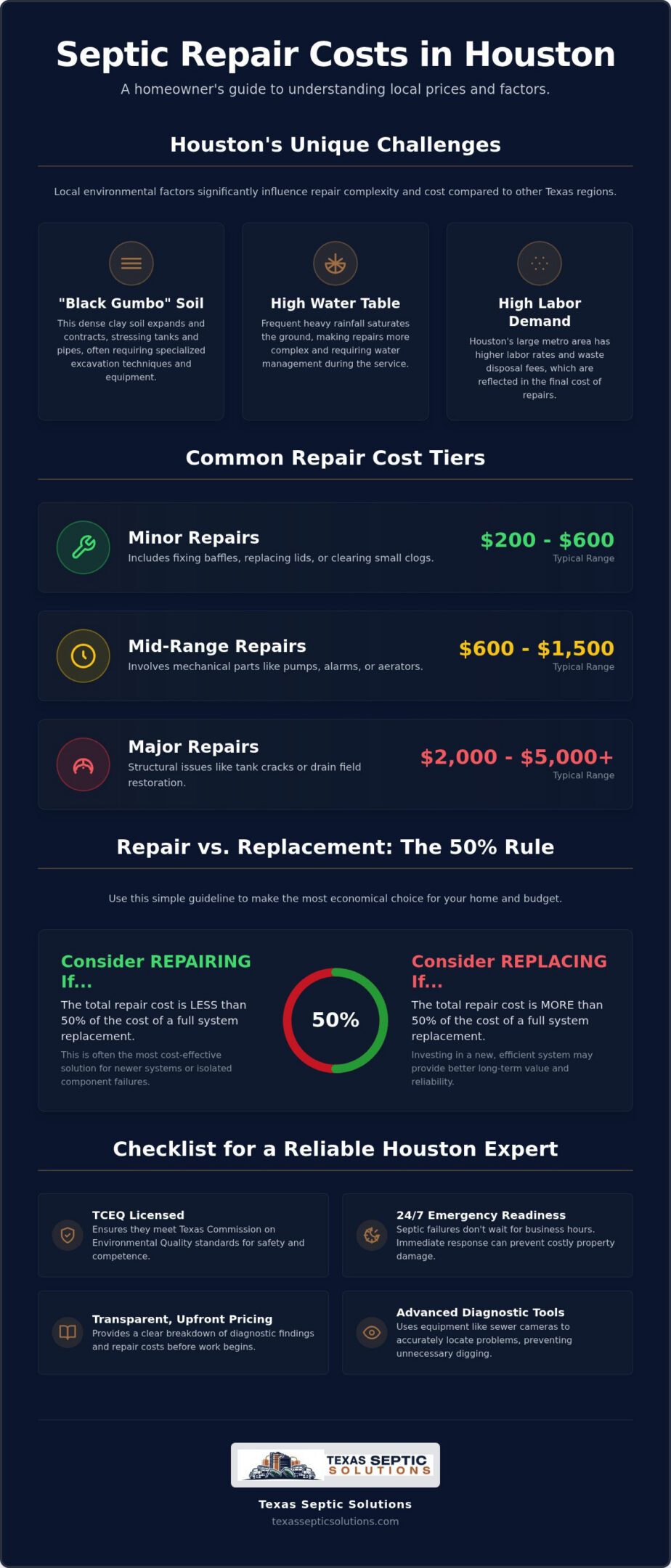
Repair costs generally fall into three tiers based on the complexity of the job. Minor repairs include fixing baffles, replacing lids, or clearing small clogs, usually costing between $200 and $600. Mid-range repairs often involve mechanical components. Replacing a pump, alarm, or aerator typically falls within the $600 to $1,500 range. Major structural repairs are the most significant investment. If you are dealing with tank cracks or a failing drain field, expect to see quotes between $2,000 and $5,000 or more, depending on the extent of the excavation required.
Service Call vs. Total Repair Cost
Don’t confuse the initial service call with the total repair bill. A service call covers the technician’s travel and the time spent diagnosing the problem. In the Houston market, this initial fee often includes a basic visual inspection. However, if the technician needs to use diagnostic tools like sewer cameras to locate a hidden break, the starting price will increase. These cameras are vital because they prevent unnecessary digging and ensure the fix is accurate the first time. Texas Septic Solutions emphasizes transparent upfront pricing to eliminate confusion. We provide a clear breakdown of the diagnostic findings so you can see exactly where your money is going before the actual repair labor begins.
Breaking Down Costs by Septic System Component
The average cost of septic repair in Houston is heavily influenced by which specific component has reached the end of its lifespan. While a full system overhaul is a major investment, many issues involve individual parts that can be swapped or serviced. Houston’s unique climate plays a significant role here. Our intense humidity and frequent thunderstorms often lead to premature electrical failures in control panels and sensors. If you have an aerobic system, you are likely dealing with spray heads, aerators, and timers that require more frequent attention than the passive components found in older anaerobic setups.
Hearing your septic tank alarm going off can be stressful, but it’s often a simple sensor fix or a tripped breaker rather than a total mechanical failure. Understanding these distinctions helps you avoid unnecessary panic. Regular maintenance significantly lowers the long-term cost of repairing or replacing these vital parts. If you suspect a component is failing, it’s best to have a professional from Texas Septic Solutions take a look before a small part failure leads to a full system backup.
Mechanical Repairs: Pumps and Aerators
Mechanical failures are common in aerobic systems because they rely on constant movement and airflow. Replacing an effluent pump in the Houston area typically ranges from $800 to $2,000 depending on the horsepower and brand. Aerator pumps, which provide the oxygen necessary for bacteria to break down waste, can sometimes be rebuilt for a fraction of the cost of a full replacement. A standard mechanical swap generally requires two to four labor hours. This makes it one of the more straightforward repairs if the electrical wiring is still in good condition.
Structural Repairs: Tanks and Baffles
Structural issues are often more labor-intensive because they involve excavation. A collapsed baffle, which prevents solids from exiting the tank and clogging your drain field, is a critical fix. Replacement costs for baffles usually fall between $300 and $800. Sealing tank cracks can be an effective way to stop groundwater intrusion, provided the cracks aren’t so extensive that they compromise the tank’s integrity. We also recommend installing risers and sturdy lids during these repairs. Adding risers might cost a few hundred dollars now, but it saves you money on every future service call by providing easy, ground-level access to your system.
Factors Influencing Your Houston Septic Repair Bill
Determining the average cost of septic repair in Houston isn’t just about the price of a pump or a pipe. Local geography and regulatory standards play a massive role in your final invoice. If you live in Harris or Montgomery County, you are dealing with specific environmental challenges that contractors in other parts of Texas don’t face. From the composition of the earth beneath your lawn to the strict permitting requirements for major structural work, these variables dictate how many labor hours and what type of equipment our team needs to bring to your property.
Accessibility is another often overlooked factor. If you’ve built a beautiful deck over your tank or planted dense landscaping near your lines, the labor costs will naturally rise. Our technicians need clear access to excavate and repair components without damaging your home’s exterior features. When a repair requires heavy machinery, any obstacle that limits movement increases the time on site, which is why we always recommend keeping the area around your tank clear of permanent structures.
The Impact of Local Soil and Weather
Houston is famous for its “Black Gumbo” clay soil. This heavy, expansive clay is notoriously difficult to work with because it holds moisture and resists drainage. For leach field repairs, this means more intensive labor and specialized backfill materials are required to ensure the system functions correctly. Additionally, our high water table can complicate tank excavations. If groundwater enters an open pit during a repair, it requires additional pumping and stabilization efforts to keep the job site safe and effective. The 2026 rainfall patterns in Houston have significantly increased the hydraulic load on local systems, leading to a higher frequency of saturated drain field failures that require urgent attention.
System Age and Maintenance History
Your system’s history is the biggest predictor of your repair bill. Homeowners who invest in a septic system maintenance plan typically see much lower individual repair costs because issues are caught before they turn into emergencies. There is also a “legacy system” tax to consider. If you have an older anaerobic system, finding matching parts can be more expensive and time-consuming than sourcing components for a modern aerobic unit.
Routine care is the best way to protect your wallet. As noted by the U.S. Environmental Protection Agency on septic maintenance costs, the price of regular inspections and pumping is a small fraction of the cost you’ll face for a full drain field failure. When solids aren’t pumped out regularly, they migrate into your drain field and cause clogs that eventually require complete replacement. Staying ahead of the pumping schedule is the most effective way to avoid the most expensive category of septic repairs.
Repair vs. Replacement: Making the Economical Choice
Deciding whether to fix a failing system or start fresh is one of the toughest financial choices a homeowner faces. While the average cost of septic repair in Houston often makes patching the problem look attractive, it isn’t always the smartest long-term move. We generally recommend the “50% rule” for our customers. If the cost to get your current system back in working order exceeds half the price of a brand-new installation, you are likely better off investing in a replacement. This prevents you from “throwing good money after bad” on a system that is fundamentally reaching the end of its life.
Patching an aging tank might buy you another year or two, but it won’t address underlying structural fatigue. In Houston’s expansive clay soil, a weakened tank is prone to further shifting and cracking. Choosing a new aerobic system can offer a better return on investment, as these modern units are specifically designed to handle the drainage challenges of Southeast Texas. For a deeper look at what a full upgrade entails, check our septic system replacement cost guide. If you’re unsure which path to take, contact Texas Septic Solutions for an honest assessment of your system’s health.
When to Choose Repair
Mechanical failures are often the best candidates for repair, especially if your system is less than 15 years old. If your effluent pump or aerator stops working, swapping the part is a standard procedure that costs much less than a full overhaul. Minor clogs or broken baffles that haven’t yet affected the drain field are also worth fixing. Sometimes, a simple professional pumping is all it takes to restore full functionality and clear out the sludge that’s causing slow drains. These isolated issues don’t typically indicate a systemic failure, so a repair is the most economical path.
When Replacement is Inevitable
Unfortunately, some problems can’t be solved with a simple fix. Total drain field failure is the most common reason for a full replacement. This happens when a thick layer of “biomat” slime builds up in the soil, preventing water from leaching out. This is especially common in older anaerobic systems that haven’t been maintained. Extensive structural cracking in concrete or plastic tanks is another red flag. If groundwater is pouring into your tank through cracks, a patch is rarely a permanent solution. Finally, older systems may no longer meet current Harris County or TCEQ environmental codes. In these cases, upgrading isn’t just an economical choice; it’s a legal requirement to protect our local groundwater.
Finding a Reliable Houston Septic Repair Expert
Choosing the right professional is just as important as understanding the average cost of septic repair in Houston. A cut-rate contractor might save you a few hundred dollars today, but if they don’t understand the specific engineering of your aerobic system, you’ll pay for it in repeat service calls. In Texas, any person paid to work on an on-site sewage facility must be licensed by the Texas Commission on Environmental Quality (TCEQ). This isn’t just a suggestion; it’s a non-negotiable requirement that protects your property and the local environment from shoddy workmanship.
Houston’s unpredictable weather, especially during the heavy rainfall of hurricane season, means you need a partner who is ready to move when things go wrong. Heavy storms can cause immediate backups that require urgent intervention to prevent home damage. A reliable expert knows that septic failures don’t follow a 9-to-5 schedule. Beyond just being available 24/7, they should have deep roots in areas like Cypress and Huffman. Local codes and permitting requirements can vary by county, and having a pro who knows these nuances saves you both time and administrative headaches during a major repair.
Questions to Ask Your Septic Contractor
Before signing a contract or authorizing a major repair, protect yourself by asking these specific questions. A reputable provider will be happy to offer transparent answers that build your confidence in their service. We recommend getting these details in writing before any work begins on your property.
- Do you provide a detailed written estimate after the diagnostic visit?
- Are you familiar with the specific “Black Gumbo” soil conditions and high water table levels in my part of Houston?
- What is your specific warranty on both parts and labor for aerobic mechanical repairs?
Why Texas Septic Solutions Stands Out
We position ourselves as the reliable local authority because we’ve seen every possible scenario in the Houston dirt. Whether you manage a small residential tank or a complex commercial system, our team is built for both routine upkeep and high-pressure emergency failures. We take a neighborly approach to every job, focusing on grounded advice that helps you avoid unnecessary septic system maintenance Texas costs. Our commitment to 24/7 readiness means we’re always just a phone call away when a storm hits or a pump fails. We don’t just fix pipes; we provide the peace of mind that your home’s most critical utility is in expert hands.
Secure Your Home’s Functionality and Budget
Dealing with septic issues doesn’t have to be a source of constant anxiety. By understanding the average cost of septic repair in Houston and the environmental factors that influence it, you can make informed decisions about your property. Whether you are facing a simple sensor fix or weighing the benefits of a full system replacement, having a clear breakdown of component costs helps you avoid overpaying. Knowing when to repair and when to replace ensures you get the most value from your utility system.
At Texas Septic Solutions, our TCEQ licensed technicians provide honest, grounded advice across Houston, Cypress, and Huffman. We understand that utility failures don’t wait for a convenient time; that’s why we offer 24/7 emergency service to keep your home running smoothly. Don’t let a small mechanical failure turn into a major excavation. Get a Professional Septic Repair Estimate in Houston Today. You’ve done the work to educate yourself; now take the next step to ensure your system remains reliable for years to come.
Frequently Asked Questions
Is it cheaper to repair or pump a septic tank in Houston?
Pumping is almost always the more affordable option because it falls under routine maintenance rather than structural restoration. While a standard pump-out typically costs a few hundred dollars, the average cost of septic repair in Houston for broken baffles or pumps starts much higher. Regular pumping prevents solids from escaping into your drain field, which is the most expensive failure a homeowner can face. It’s a small investment that prevents thousands in damages.
How much does a septic pump replacement cost on average?
Replacing a failed effluent or aerator pump typically ranges from $800 to $2,000 depending on the specific model and horsepower required for your system. This price often includes the cost of the new unit and the labor for installation. Because Houston’s high humidity can lead to electrical corrosion, we recommend choosing high-quality components with solid warranties. Prompt replacement is vital to prevent sewage from backing up into your home or yard.
Can Houston’s clay soil cause my septic system to fail early?
Yes, Houston’s “Black Gumbo” clay soil is one of the leading causes of premature system failure in our region. This heavy clay expands and contracts aggressively with moisture changes, putting immense physical stress on tanks and underground piping. It also holds water rather than allowing it to drain away, which can lead to a saturated drain field. Homeowners in Cypress and Huffman must be especially diligent with maintenance to combat these environmental stressors.
What happens if I ignore my septic tank alarm?
Ignoring a septic alarm is a recipe for a household disaster and potential environmental fines. The alarm usually indicates a high water level or a mechanical failure in the pump or aerator. If you don’t address it immediately, the tank will overflow, leading to sewage backups in your bathtubs or a swampy, contaminated mess in your backyard. In Harris County, allowing a system to discharge raw sewage can lead to significant daily penalties and health hazards.
Do I need a permit for septic repairs in Harris County?
Yes, Harris County and the TCEQ require permits for most septic repairs and any system modifications. While minor fixes like replacing a lid might not require one, major work involving the tank or drain field definitely does. These permits typically cost between $100 and $150, and a final inspection fee of $150 is often required to verify the work meets local codes. We handle the paperwork to ensure your repair is fully compliant with state law.
How long do most septic repairs take to complete?
Most mechanical repairs, such as replacing a pump or an aerator, are completed within two to four hours. However, structural repairs or drain field restorations are much more involved and can take anywhere from two to five business days. Factors like Houston’s unpredictable rain and soil saturation levels can also extend the timeline. Our team prioritizes efficiency to restore your service as quickly as possible while ensuring the job is done right the first time.
What is the most expensive part of a septic system to repair?
The drain field is the most expensive component to repair or replace. If the soil becomes clogged with solids or the pipes collapse due to shifting clay, restoration costs can range from $2,500 to $8,000. This is exactly why we emphasize the importance of consistent maintenance. Protecting your drain field is the single best way to keep the average cost of septic repair in Houston under control and avoid a total system replacement.
Can I use my water while my septic system is being repaired?
We strongly recommend that you stop or severely limit water usage while our technicians are working on your system. Using showers, laundry machines, or dishwashers can flood the tank or the open excavation site, making the repair difficult and potentially dangerous. Once the specific component is replaced and the system is tested, you can return to your normal routine. We always notify homeowners as soon as it’s safe to turn the water back on.