
Agricultural Septic System Inspection Checklist for Shepherd, TX Properties (2026)
You’ve just finished a long day on the ranch only to realize your heavy tractor might have crushed a buried line, or worse, your livestock have over-compacted the drain field. For local landowners, a routine septic system inspection for agricultural properties Shepherd TX is a critical part of land management that goes beyond standard residential care. You already know that maintaining a working farm is hard enough without the threat of a system failure during your busiest season. It’s often frustrating to deal with the uncertainty of TCEQ 10-acre rules versus the specific 2026 San Jacinto County requirements.
We’re here to help you protect your land health and avoid the high cost of emergency repairs. This specialized 2026 agricultural septic inspection guide ensures your Shepherd property stays compliant and functional. We’ll walk you through a professional checklist that covers everything from soil compaction to the latest local permit standards. You’ll gain the peace of mind that comes with knowing your infrastructure is as sturdy as the rest of your operation, keeping your land ready for future sales or subdivisions.
Key Takeaways
- Learn why a specialized septic system inspection for agricultural properties Shepherd TX is vital for managing high clay soils and increased waste loads from bunkhouses.
- Discover the 2026 inspection checklist items, including how to verify tank integrity and baffle status to prevent field failure.
- Understand how to protect your infrastructure from heavy machinery damage and soil compaction caused by livestock traffic.
- Navigate the complex 2026 San Jacinto County regulations, including the 10-acre rule and mandatory aerobic maintenance contracts.
- Find out how proactive maintenance plans can prevent costly emergency repairs during your peak agricultural seasons.
Why Agricultural Septic Inspections in Shepherd Differ from Residential
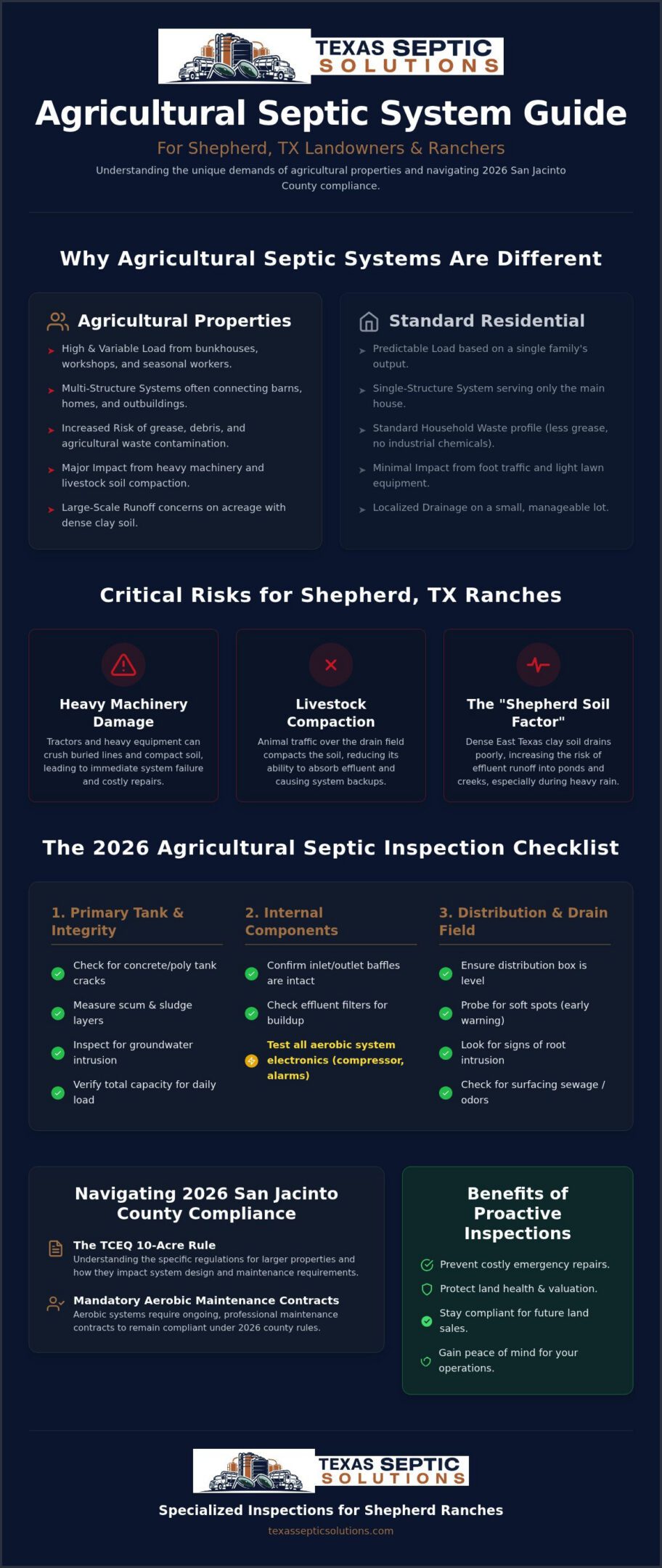
Agricultural properties in San Jacinto County face pressures that a standard backyard system simply isn’t built to handle. When we perform a septic system inspection for agricultural properties Shepherd TX, we look at the entire land ecosystem. Residential inspections usually focus on a single family’s output. A ranch is different. It often supports seasonal workers in bunkhouses, equipment washing in barn facilities, and specialized shops. This increased hydraulic load can overwhelm a system designed for a typical home, leading to backups when you least expect them.
Standard residential inspections frequently miss the specific environmental risks associated with farming. They might check the tank, but they often ignore how the surrounding acreage interacts with the system. In 2026, maintaining your property’s valuation depends on a fully functional, compliant infrastructure. A failed system is a major red flag for future land sales or subdivisions, making these specialized checks a vital part of your long-term land management strategy.
Load Capacity and Multi-Structure Systems
Ranches often utilize multi-structure systems that might share a primary tank or have independent setups for various outbuildings. We evaluate the total daily gallon usage across all facilities to ensure the tank size matches the actual demand. It’s common to find cross-contamination points where agricultural waste lines from a shop accidentally tie into residential lines. Understanding how septic systems function on this scale is vital. We check if your current setup can handle the peak usage during harvest or calving seasons when activity levels spike. Our goal is to ensure your system doesn’t become a bottleneck for your daily operations.
Environmental Impact on Large Acreage
The “Shepherd Soil Factor” is a reality every local landowner deals with. East Texas is famous for its dense clay. This soil doesn’t drain as quickly as sandy loam. On large acreage, this leads to significant runoff risks. If a large-scale drain field becomes saturated, effluent can migrate into livestock ponds or nearby creeks. With Shepherd’s 2026 rainfall patterns showing increased intensity, your soil health becomes a primary defense against system failure. We assess the risk of runoff to protect your livestock and the local watershed. Healthy soil is the foundation of effective effluent absorption, and we help you maintain that balance through careful site monitoring.
The Comprehensive Agricultural Septic Inspection Checklist
Maintaining a ranch means your infrastructure takes a beating. A proper septic system inspection for agricultural properties Shepherd TX follows a strict protocol to ensure nothing is missed. We look at the tank integrity first. Concrete tanks can shift in heavy clay, while poly tanks might crack under the weight of saturated soil. We also measure the scum and sludge layers to determine if it’s time for a pump out. For aerobic systems, we test every electronic component, from the compressor to the high water alarm, ensuring they meet 2026 performance standards.
As you are Navigating San Jacinto County Agricultural Compliance, having a documented checklist is your best defense against fines and failures. Checking these components isn’t just about rules; it’s about preventing a total system collapse during your peak season. We also probe the drain field for soft spots. These squishy areas are early warnings that your field is struggling to absorb effluent before it becomes a surfacing sewage problem.
Primary Tank and Internal Components
We verify the condition of inlet and outlet baffles to keep solids where they belong. In agricultural settings, effluent filters often deal with more grease or debris from shop sinks, so we check them for any buildup. Groundwater intrusion is another major concern. During heavy Shepherd storms, even a small crack can let in hundreds of gallons of rainwater, which quickly overwhelms your system. If you haven’t had your multi structure system checked recently, a quick visit from Texas Septic Solutions can identify these hidden issues before they cause a backup.
Distribution and Drain Field Analysis
The distribution box is the heart of your drain field. We ensure it’s level and providing an even flow to all lateral lines. Root intrusion is a constant battle on large acreage, as trees and thick brush seek out the moisture in your lines. We look for signs of anaerobic conditions, such as black, foul smelling soil or standing water. These indicators tell us the soil has lost its ability to treat waste. Identifying these soft spots early allows for targeted repairs rather than a full field replacement. This proactive approach keeps your land healthy and your property value high.
Livestock and Land Management: Protecting Your Infrastructure
A working ranch in Shepherd is a high traffic environment. Unlike a suburban lawn, your septic area faces the weight of livestock and heavy machinery daily. Protecting this infrastructure is a core part of your Livestock and Land Management strategy. When we conduct a septic system inspection for agricultural properties Shepherd TX, we often find that the biggest threats aren’t internal clogs, but external physical pressure. Soil that has been packed down loses its ability to “breathe,” which is essential for the natural processes that treat wastewater.
Strategic fencing is your first line of defense. Isolating the septic tank and the drain field from your primary grazing areas or equipment paths can save you from a total system collapse. We also look at vegetation management. While grass is beneficial for absorbing moisture, deep rooted brush or certain trees can invade your lateral lines, seeking out the constant water source. Keeping these areas clear ensures that your system remains accessible for maintenance and free from structural interference.
Compaction and Livestock Proximity
Cattle and horses exert massive amounts of pressure through their hooves. This constant trampling “seals” the soil, cutting off the oxygen exchange needed for aerobic bacteria to thrive. If your livestock spend significant time over your lateral lines, you might notice surfacing effluent or unusually lush, boggy patches of grass. These are clear signs that the subsurface irrigation is failing. Fencing these animals away from the drain field is a simple step that prevents the need for a complete soil restoration project later on.
Heavy Machinery and Vehicle Traffic
Tractors, hay balers, and trailers are essential for ranch life, but they are lethal to buried septic lines. We recommend mapping out “no drive” zones around your septic components to prevent crushed pipes or shifted tanks. Even a single pass with a loaded trailer during a wet Shepherd season can cause irreparable damage. If you suspect your lines have already been compromised by heavy traffic, you may need professional septic system repair to restore proper flow. Identifying these hazards early during an inspection allows us to help you reroute traffic patterns and protect your investment for the long haul.
Navigating San Jacinto County Agricultural Compliance
Understanding the legal landscape for a septic system inspection for agricultural properties Shepherd TX is often more complex than the technical work itself. In 2026, San Jacinto County continues to act as the “Authorized Agent” for the Texas Commission on Environmental Quality (TCEQ). This means local officials, not state bureaucrats in Austin, handle the permitting and enforcement for your ranch. One of the biggest points of confusion for Shepherd landowners is the 10-Acre Rule. While state law (30 TAC Chapter 285) technically exempts single-family dwellings on 10 acres or more from certain permitting, local jurisdictions often have stricter overrides. San Jacinto County requires specific compliance to protect groundwater, especially when systems are near property lines or shared water sources.
Compliance isn’t just about avoiding a fine; it’s about protecting your land’s legal standing. If you plan to subdivide your acreage or sell the property in the future, having a documented history of inspections is mandatory. For properties with “Commercial and Other” classifications, which often include agricultural shops and bunkhouses, the county maintains rigorous standards. Keeping your records organized ensures that your agricultural tax status remains unchallenged and your property value stays intact.
Shepherd and San Jacinto Permitting Steps
Verifying if your current system is “grandfathered” or compliant is the first step toward long-term peace of mind. If you add a new bathroom to a barn or build a specialized ranch shop, the county typically requires a new site and soil evaluation. This process ensures the existing drain field can handle the additional load without failing. Working with a licensed OSSF inspector is the only way to guarantee your official county filings are accurate. We help you navigate these San Jacinto County requirements, ensuring every outbuilding is permitted correctly so you don’t face a “stop-work” order during a construction project.
2026 Maintenance Standards
For Shepherd property owners with aerobic systems, 2026 regulations require a maintenance contract with a licensed provider. These systems must be inspected three times per year, or once every four months, to ensure the mechanical components and chlorine levels are functioning correctly. A septic system maintenance plan is your best defense against unexpected county audits and expensive fines. Documenting every repair and inspection keeps you in good standing with environmental authorities. If you need to bring your ranch into compliance or start a new maintenance schedule, contact Texas Septic Solutions to secure a licensed professional for your agricultural property.
Texas Septic Solutions: Specialized Inspections for Shepherd Ranches
Shepherd isn’t just a dot on a map for us; it’s our home. We understand that a ranch is a complex, living operation where every utility must function perfectly to keep your business moving forward. Choosing a professional for a septic system inspection for agricultural properties Shepherd TX means hiring a team that knows the local soil profiles, understands San Jacinto County officials, and respects the unique stresses of East Texas farm life. We bring a “neighborly expert” approach to every property, combining deep technical knowledge with the straightforward, honest communication you expect from a local partner.
Our team is built for both the mundane tasks of routine upkeep and the high-pressure demands of unexpected failures. We operate as a one-stop-shop for agricultural property managers, handling everything from initial site evaluations to complex repairs and new installations. This comprehensive care model ensures you don’t have to juggle multiple contractors to keep your infrastructure in peak condition. We take full accountability for your system’s health, acting as a guardian of your property’s functionality and long term value.
Our Agricultural Inspection Process
On large acreage, finding buried components is often the hardest part of maintenance. We perform full site mapping to identify every tank, lid, and lateral line across your property. This ensures future land work or fencing projects don’t accidentally compromise your system. We also stress-test the setup for multi structure peak usage. By simulating the load from bunkhouses, shops, and main residences simultaneously, we verify that your system can handle the reality of your operations. Every inspection concludes with a detailed report, providing prioritized repair recommendations so you can plan your maintenance budget effectively.
Long-Term Support for Shepherd Farmers
We know that your schedule is dictated by the seasons, not a standard work week. That’s why we offer customizable maintenance plans tailored to the agricultural calendar. Our goal is to perform service during your downtime, preventing interruptions when you’re at your busiest. Agricultural failures are often urgent, which is why our 24/7 emergency readiness is a core part of our service. If you experience a septic tank alarm going off on a remote part of your property, we respond rapidly to resolve the issue before it impacts your livestock or land health. Your ranch is your legacy, and we are here to help you protect it. Schedule your Shepherd agricultural inspection today and secure the reliable local authority your property deserves.
Secure Your Ranch’s Future with Proactive Maintenance
Managing a property in Shepherd involves balancing land health with operational efficiency. A specialized septic system inspection for agricultural properties Shepherd TX is the best way to ensure your subsurface infrastructure survives the unique stresses of ranch life. By identifying soil compaction early and verifying tank integrity, you protect both your investment and the surrounding environment. Our TCEQ licensed professionals bring deep expertise in San Jacinto County standards to every site evaluation. We’ve served this community since our inception, providing the reliable local authority you need to navigate complex 2026 regulations.
Whether you’re managing a single residence or a multi-structure agricultural complex, our team is ready to support your operation. If you’re ready to secure your property’s functionality, Request a Professional Agricultural Septic Inspection in Shepherd today. With 24/7 emergency service available, we’re always here when you need us most. Your land is your legacy; let’s work together to keep it running smoothly for years to come.
Frequently Asked Questions
Does the 10-acre rule mean I don’t need a septic inspection in Shepherd?
No, the 10-acre rule doesn’t exempt you from all local requirements. While 30 TAC Chapter 285 provides state level exemptions for large properties, San Jacinto County is an Authorized Agent for the TCEQ. They often enforce stricter local standards to protect groundwater. Skipping an inspection can lead to compliance issues during land sales or subdivisions. Professional oversight ensures your system meets the specific 2026 county codes for agricultural land.
Can cattle grazing on my drain field cause the septic system to fail?
Yes, livestock traffic is a primary cause of system failure on Shepherd ranches. Cattle and horses exert significant hoof pressure that compacts the soil. This compaction prevents the oxygen exchange necessary for effluent treatment. Over time, the soil “seals” up, leading to surfacing sewage or backups in your lines. We recommend fencing off your drain field to keep your infrastructure safe from heavy grazing animals.
How often should an agricultural septic tank be pumped compared to a residential one?
Agricultural systems often require more frequent pumping than standard residential setups. The increased load from bunkhouses, seasonal workers, or shop bathrooms causes solids to accumulate faster. While a house might go three to five years, a ranch system should be evaluated annually. During a septic system inspection for agricultural properties Shepherd TX, we measure the sludge and scum levels to determine the exact pumping schedule needed for your specific operation.
What happens if my tractor drives over the septic tank or lateral lines?
Driving a tractor or hay baler over your system can cause catastrophic structural damage. The weight of heavy ag machinery can crush lateral lines, shift tank lids, or even collapse older concrete tanks. This often leads to immediate system failure and requires emergency septic service. We suggest mapping out your property and establishing “no-drive” zones with markers to prevent accidental crossings that result in expensive ranch repairs.
Do I need a separate septic system for my barn or workshop in San Jacinto County?
It depends on your current system’s capacity and the distance from the new structure. San Jacinto County requires a site evaluation to determine if your existing infrastructure can handle the additional hydraulic load. If the barn is too far away or the load is too high, a separate system is usually necessary. Our team handles the permitting and installation process to ensure your new workshop meets all 2026 environmental standards.
Are there specific 2026 regulations for aerobic systems on East Texas farms?
Yes, 2026 regulations for aerobic systems in East Texas are quite specific. Property owners must maintain a valid service contract with a licensed maintenance provider. This includes mandatory inspections every four months, totaling three times per year. These checks verify that the mechanical components, such as the aerator and pump, are functioning correctly. Keeping these records is vital for staying in good standing with the San Jacinto County environmental health department.
How can I tell if my ranch’s septic system is contaminating my livestock’s water source?
Warning signs include unusually lush, green grass near ponds or creeks and foul odors around your livestock’s water. Contamination often happens when effluent runs off saturated clay soil during heavy Shepherd rains. A professional inspection uses dye testing to track the flow of wastewater and ensure it isn’t reaching your water sources. Protecting your livestock’s water is a top priority for maintaining a healthy and productive agricultural operation.
What is included in a professional agricultural septic inspection report?
A professional agricultural report provides a complete overview of your system’s health. It covers tank integrity, the condition of inlet and outlet baffles, and current sludge levels. We also test the distribution box and lateral lines for even flow. For aerobic systems, we include a full diagnostic of the electronic components and alarms. You’ll receive a prioritized list of repair recommendations and a site map to help with future property planning.