
Aerobic vs Conventional Septic System in Texas: 2026 Comparison Guide
The cheapest septic system on paper often ends up being the most expensive mistake for a Texas homeowner. We know the stress of looking at a patch of heavy clay or a stack of TCEQ paperwork and feeling like you’re in over your head. It’s normal to worry about whether you’re overpaying for an aerobic system or if a conventional one will actually hold up in our local soil. Understanding the septic system installation process Texas requires is the first step toward a reliable home, and we’re here to help you get it right from the start.
This 2026 comparison guide breaks down exactly how soil type, state regulations, and 10-year cost projections determine which system fits your property. We’ll show you which setup the law likely requires for your specific lot and give you the facts you need to choose a local installer with confidence. You’ll walk away with a clear understanding of the maintenance reality for each option, ensuring your investment stays underground and out of mind for years to come.
Key Takeaways
- Identify how your property’s soil profile and the mandatory “perc test” determine which system the TCEQ will actually allow you to install.
- Navigate the septic system installation process Texas homeowners must follow, including the necessary permits and site evaluations required for a legal build.
- Compare the mechanics of traditional conventional systems against advanced aerobic treatment units to find the best fit for your land’s specific terrain.
- Evaluate the long-term cost of ownership by weighing initial installation expenses against recurring maintenance needs like pumping and mandatory inspections.
- Learn the specific steps to coordinate with local county authorities and licensed professionals to get your project approved without unnecessary delays.
Understanding OSSFs: What Texas Homeowners Need to Know
If you’re building a home outside the reach of city sewer lines, you’ll need an On-site sewage facility (OSSF). This is the technical term the Texas Commission on Environmental Quality (TCEQ) uses for any system that treats and disposes of wastewater right on your property. While it might sound like a simple tank in the ground, an OSSF is a complex piece of infrastructure that must meet strict environmental standards to protect our local groundwater. Because every piece of land is different, there’s no one-size-fits-all solution for your backyard.
The septic system installation process Texas mandates begins long before any heavy machinery arrives. You’ll first work with a licensed site evaluator who examines your property’s topography, proximity to water wells, and soil composition. This professional isn’t just looking for a flat spot to dig; they’re determining whether your land has the natural ability to process waste or if you need mechanical help. Their report is the foundation of your permit application, and without their seal of approval, your project won’t move forward.
The Role of TCEQ and Local Authorities
The TCEQ sets the baseline safety and environmental rules for the entire state, but they often hand the keys to local “Authorized Agents.” In counties like Liberty and Harris, the local health department or engineering office manages the day-to-day oversight. It’s common to find that regulations in specific areas like Cypress or Huffman are stricter than the state minimums. This is usually due to high water tables or dense populations. You must obtain a formal “Authorization to Construct” before any dirt is moved, as installing a system without a permit can lead to heavy fines and a refusal of your certificate of occupancy.
Why Texas Soil Dictates Your Septic Choice
Your soil is the most influential factor in your septic system installation process Texas journey. Soil scientists categorize Texas dirt into different classes, ranging from Class Ia sandy soils to Class IV heavy clays. Sandy soil is excellent for drainage, allowing liquid to filter through naturally. However, much of East Texas is famous for its “gumbo” clay. This Class IV soil is so dense that water simply sits on top of it rather than soaking in. Because of this, conventional systems are often banned in high-clay areas because the drain field would inevitably fail and cause a backup.
A soil percolation test, or perc test, is a mandatory site evaluation that measures the water absorption rate of your land to determine if the soil can effectively filter effluent. If your soil fails this test by draining too slowly, you’ll likely be required to install an aerobic system regardless of your personal preference or budget.
Conventional Septic Systems: The Traditional Texas Choice
A conventional septic system is the most straightforward way to manage wastewater if your property has the right natural characteristics. Often called anaerobic systems, these setups rely on gravity and biology rather than electricity and mechanical parts. The septic system installation process Texas homeowners experience with a conventional setup is generally faster because the design is less complex. These systems function by letting solids settle in a tank while liquid effluent flows out to a drain field where the soil provides the final stage of treatment.
The system consists of three primary components that work together without the need for a power source. First, the septic tank collects waste and allows bacteria to break down organic matter. Next, a distribution box ensures the liquid is spread evenly across the final component: the drain field, also known as a leach field. Because they don’t require air compressors or control panels, these systems are often viewed as the “set it and forget it” option for properties with deep, well-draining soil. Following Texas Commission on Environmental Quality (TCEQ) regulations ensures these components are sized correctly for your home’s usage.
Ideal Conditions for a Conventional System
You’ll find conventional systems most frequently in rural parts of the state where land is plentiful. They require a significant footprint because the drain field needs enough space to let the soil absorb liquid naturally. If you have sandy or loamy land that passes a perc test with flying colors, this is usually the most budget-friendly path. There is no impact on your monthly utility bill since no electricity is required to keep the system running. If you’re unsure if your land qualifies, a professional septic system installation team can help evaluate your site’s potential.
Potential Drawbacks and Failure Points
While simple, these systems aren’t invincible. The most common failure point is soil saturation or the buildup of a “biomat.” This is a slimy layer of bacteria that forms in the drain field over time and eventually prevents water from soaking into the ground. Additionally, these systems are strictly regulated and often prohibited near the Edwards Aquifer or other sensitive water tables because the risk of untreated effluent reaching the groundwater is too high. You might notice signs of trouble if you see patches of bright green, spongy grass over the leach field or experience slow drains inside the house. Regular pumping is the only major maintenance task required to prevent these failures.
Aerobic Septic Systems: Advanced Treatment for Tough Texas Terrain
When your property’s soil can’t handle the drainage requirements of a traditional system, an Aerobic Treatment Unit (ATU) becomes the necessary solution. These systems function like a miniature municipal treatment plant right in your backyard, using oxygen to accelerate the breakdown of waste. The septic system installation process Texas requires for aerobic units is more technical than gravity-based setups because it involves electrical components and mechanical aeration. By forcing air into the system, we create an environment where oxygen-loving bacteria can thrive, cleaning the water much faster and more thoroughly than the bacteria found in a conventional tank.
The typical aerobic setup uses a three-tank process to ensure the water is safe for surface dispersal. First, waste enters a trash tank where heavy solids settle. It then moves into the aeration chamber, which is the heart of the system; here, an air compressor bubbles oxygen through the liquid to fuel the treatment process. Finally, the clarified water enters a pump tank for disinfection, usually with chlorine, before being dispersed through specialized spray heads or drip lines. For a deeper look at how these components differ from traditional setups, the Texas A&M AgriLife Extension provides extensive research on aerobic maintenance and operation.
Why Aerobic is Mandatory for East Texas Clay
In regions like Houston and throughout East Texas, the ground is often packed with dense, “fat” clay that refuses to absorb water. Aerobic systems are the standard for Houston-area clay soils because they treat wastewater to a high quality before it ever touches the ground, allowing for surface irrigation rather than relying on soil absorption. This technology is a game-changer for homeowners on smaller suburban lots where a massive conventional drain field simply won’t fit. You get a much smaller footprint, which leaves more of your yard available for landscaping or outbuildings.
Operational Reality: Electricity and Power Outages
Owning an aerobic system comes with a few unique responsibilities that conventional owners don’t have to worry about. The air pump and discharge pump require a constant connection to your home’s electrical grid, which will add a small but consistent amount to your monthly power bill. It’s also vital to have a plan for the frequent Texas power outages; when the power goes out, your pumps stop working. You’ll need to limit water usage immediately to prevent the tanks from overfilling. If you hear the system’s alarm sounding, it’s usually a signal that the air pressure has dropped or the water level is too high, requiring a prompt check of the mechanical components to keep everything running smoothly.
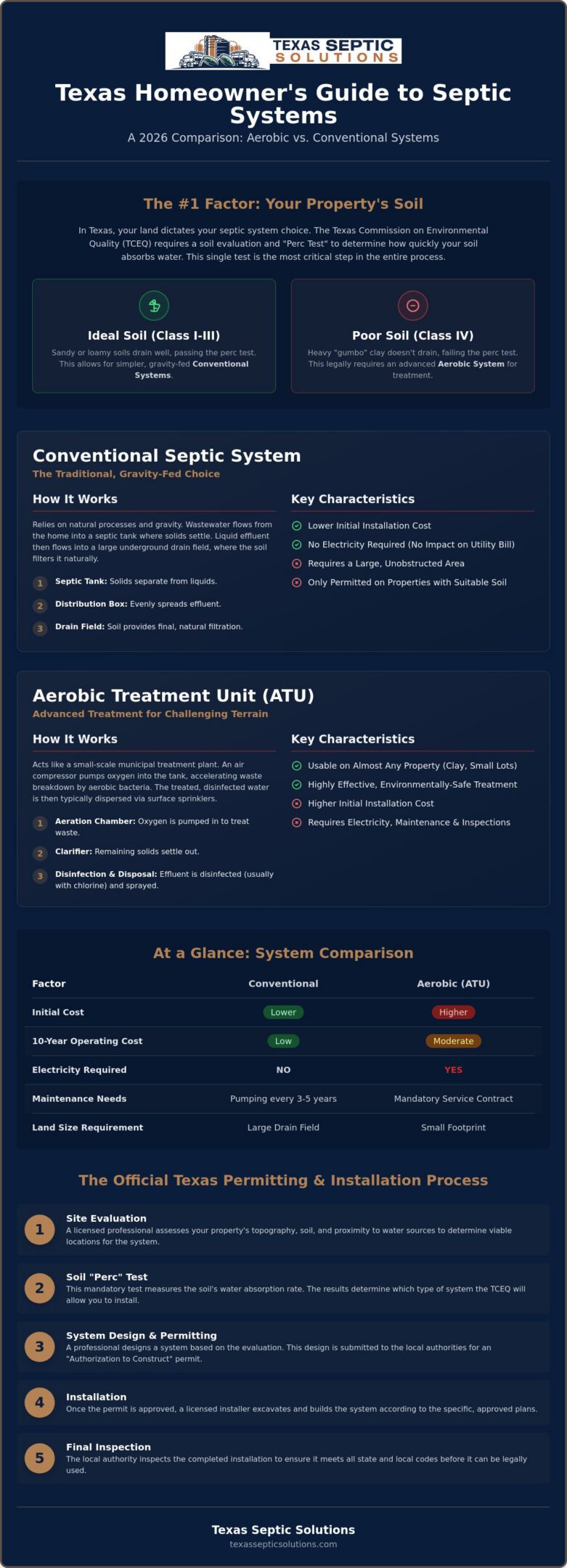
Head-to-Head: Aerobic vs Conventional Septic Comparison
Choosing between these two systems often comes down to your budget and your backyard’s limitations. While the septic system installation process Texas requires for a conventional system is typically more affordable upfront, it isn’t always an option. If your land allows for it, a conventional system offers a lower initial investment and fewer recurring headaches. However, aerobic systems provide superior wastewater treatment, which protects our local groundwater and allows for a more flexible layout on smaller lots. Conventional systems need long, deep trenches for a drain field, while aerobic systems use surface spray heads that can work in tight spaces where trenches would fail.
Environmental protection is another major factor in this comparison. Aerobic units produce a much cleaner effluent because the oxygen-rich environment breaks down waste more effectively. This makes them the safer choice for properties near sensitive water sources. On the other hand, conventional systems are incredibly reliable because they have no moving parts to break. They don’t require power, so they keep working perfectly even during our frequent Texas summer storms. If you’re ready to see which system makes sense for your specific lot, our team can provide a professional septic system installation assessment.
The Mandatory Maintenance Contract (Aerobic Only)
Texas law is very specific when it comes to aerobic systems. Because they rely on mechanical pumps and air compressors to keep the water clean, you’re required to have a maintenance contract with a licensed provider. These professionals must inspect your system three times a year to check chlorine levels, test the pumps, and measure sludge buildup. This ensures your “miniature treatment plant” isn’t spraying untreated water into your yard. For a deeper look at these requirements, check out our Septic System Maintenance Texas: The Complete Homeowner’s Guide for 2026.
Total Cost of Ownership (10-Year Outlook)
When you look at the long-term numbers, the gap between the two becomes clearer. Conventional owners mainly worry about scheduling a professional pumping every three to five years to keep the tank clear. Aerobic owners have a steady stream of smaller costs, including electricity for the air pump, chlorine tablets for disinfection, and the annual cost of the mandatory service contract. Over a decade, these operational costs add up, making the aerobic system a more significant financial commitment. You can find more details on how to budget for these differences in our Septic System Replacement Cost in Texas: 2026 Homeowner Guide.
Making the Right Choice for Your Texas Property
The final decision for your property isn’t just about personal preference; it’s about what your land and the law will allow. To successfully navigate the septic system installation process Texas requires, you must follow a specific sequence of steps to avoid costly delays. First, you’ll need to order a professional site evaluation and perc test. This mandatory report determines your soil classification and tells you exactly which systems are legally viable for your lot. Without this document, no county official will issue a permit to build.
Once you have your soil data, take the time to review the specific requirements of your local county health department or river authority. Regulations can vary significantly even between neighboring towns. You’ll also need to evaluate your long-term budget. While a conventional system might save you money on day one, an aerobic system might be the only way to build the home you want on a smaller lot. Finally, consult with a local expert who understands the specific Cleveland and Houston soil dynamics. The transition from sandy piney woods to heavy coastal clay happens quickly in our region, and your installer needs to be prepared for both.
Questions to Ask Your Septic Installer
Before you sign a contract or pay a deposit, you need to vet your contractor thoroughly. A “good deal” can quickly turn into a legal nightmare if the installer isn’t following state protocols. Ask these three critical questions during your initial consultation:
- “Are you licensed by the TCEQ for both installation and maintenance?” You want a partner who can handle the entire lifecycle of your system, not just the initial dig.
- “Does the quote include the first two years of the maintenance contract?” Most new aerobic installations include a standard two-year service agreement, but you should always confirm this in writing.
- “What is the expected lifespan of the air compressor in this specific model?” Mechanical parts will eventually fail, so it’s best to know the durability and replacement cost of the components being put in your ground.
Why Texas Septic Solutions is Your Local Authority
We’ve built our reputation as a reliable local authority by helping homeowners in Shepherd and Huffman manage their utility needs with zero stress. Our team handles the entire septic system installation process Texas residents expect, from the initial permitting and design to the final inspection. We pride ourselves on being a one-stop shop that treats every customer like a neighbor, ensuring your system is built for long-term stability rather than just a quick fix.
We don’t just walk away once the system is in the ground. We stay on as your maintenance partner to ensure your investment lasts for decades. For more information on how to keep your new setup running at peak efficiency, read our Septic System Repair in Texas: The 2026 Homeowner’s Reference Guide. Whether you’re dealing with heavy clay or sandy loam, we have the expertise to get the job done right the first time.
Get Started on Your Texas Septic Project
Choosing between an aerobic and conventional system is a major milestone for any property owner. You now understand that while your soil dictates the legal requirements, your choice impacts your maintenance schedule and monthly budget for years. Whether you’re working with sandy loam or heavy East Texas clay, the right system is the one that protects your home and the local environment without causing constant stress.
Navigating the septic system installation process Texas mandates is much simpler with a reliable partner by your side. At Texas Septic Solutions, our licensed TCEQ installers are dedicated to serving Cleveland, Houston, and all surrounding East Texas communities. We’re built for the long haul, offering everything from new builds to 24/7 emergency septic service.
Don’t let paperwork or soil tests hold up your progress. Get a Professional Septic System Consultation from Texas Septic Solutions today to ensure your property remains functional and compliant. We’re here to turn your utility worries into a solid, long-term solution you can trust.
Frequently Asked Questions
Is an aerobic septic system better than a conventional one in Texas?
Neither system is universally “better” because the right choice depends entirely on your property’s soil and size. Aerobic systems are superior for heavy clay or small lots because they treat water thoroughly before dispersal. Conventional systems are often preferred for large, sandy properties because they’re more affordable and don’t require electricity or mechanical parts to function.
Can I install my own septic system in Texas if I am the homeowner?
No, you cannot install your own septic system for new construction in Texas. State law requires all installations to be performed by a TCEQ-licensed installer to ensure environmental safety and proper design. This is a vital part of the septic system installation process Texas mandates to secure a legal permit and final certificate of occupancy.
How much electricity does an aerobic septic system use per month?
Most aerobic systems use a modest amount of power, roughly equivalent to running a 60-watt lightbulb or a small refrigerator. You’ll see a consistent but small increase in your monthly utility bill. This electricity keeps the air compressor running 24/7 to fuel the bacteria that treat your wastewater.
What happens if I don’t have a maintenance contract for my aerobic system?
Operating an aerobic system without a maintenance contract is a violation of Texas state law. Local authorities can issue significant fines, and you’ll likely face issues when trying to sell your home. Counties require proof of three professional inspections per year to ensure the system is not discharging untreated waste into the environment.
Does a conventional septic system smell worse than an aerobic one?
Neither system should produce a noticeable odor if it’s functioning correctly. Conventional systems keep all waste underground, while aerobic systems spray treated water onto the surface. If you notice a “rotten egg” smell with an aerobic system, it’s usually a sign that the air pump has failed and the water is no longer being treated properly.
Can I switch from a conventional to an aerobic system later?
Yes, you can switch systems, but it requires a completely new site evaluation, design, and permitting process. Homeowners often make this switch when a traditional drain field fails or when they want to reclaim yard space. It’s a significant project that involves bypassing the old leach field and installing new treatment tanks.
How often does a conventional septic tank need to be pumped in Texas?
A conventional septic tank should typically be pumped every three to five years. The exact frequency depends on your household size and water usage habits. Regular pumping is the best way to prevent solids from clogging your drain field, which can lead to a total system failure that is very expensive to fix.
What are the signs that my aerobic system air pump has failed?
The most immediate sign is the system’s alarm sounding a loud buzz or showing a red light on the control panel. You might also notice a foul odor in the yard or see that the water in the aeration tank has stopped bubbling. If the pump fails, the system stops treating waste effectively, so you should call for repair immediately.