
Aerobic vs. Anaerobic: Understanding Both Types of Septic Systems in Texas
You might think the simplest septic system is always the best choice for your Texas property, but in heavy clay soils, that “easy” option often leads to a swampy disaster in your backyard. Gaining a clear understanding of both aerobic and anaerobic systems is the first step to avoiding a costly mistake. It’s natural to feel overwhelmed when you’re trying to decode complex state regulations or figuring out if you’ll need a constant supply of electricity or chemicals. It’s a major investment. No homeowner wants the stress of a system that isn’t built for their specific land.
This guide will clear up the confusion by comparing these systems side-by-side, focusing on what actually works for the unique terrain we have here in East Texas. You’ll learn exactly how each one handles waste, what the maintenance schedules look like, and which one fits your budget over the long haul. We’ll break down the soil requirements, the role of oxygen in treatment, and why having a local expert on your team makes all the difference for a worry-free installation or repair.
Key Takeaways
- Learn the biological differences between aerobic and anaerobic methods to see how both systems safely treat and return water to your property.
- Discover how your property’s specific soil type, especially the heavy clay common in East Texas, dictates whether you need a specialized aerobic setup or a traditional gravity system.
- Identify the critical warning signs of septic failure, such as gurgling pipes or foul odors, that apply to any system regardless of its design.
- Understand why routine maintenance inspections and periodic pumping are separate but equally vital tasks for keeping your septic “engine” running smoothly.
- Get insights on navigating local environmental regulations and choosing a partner who offers 24/7 emergency support for unexpected utility issues.
Understanding the Two Primary Septic Systems in East Texas
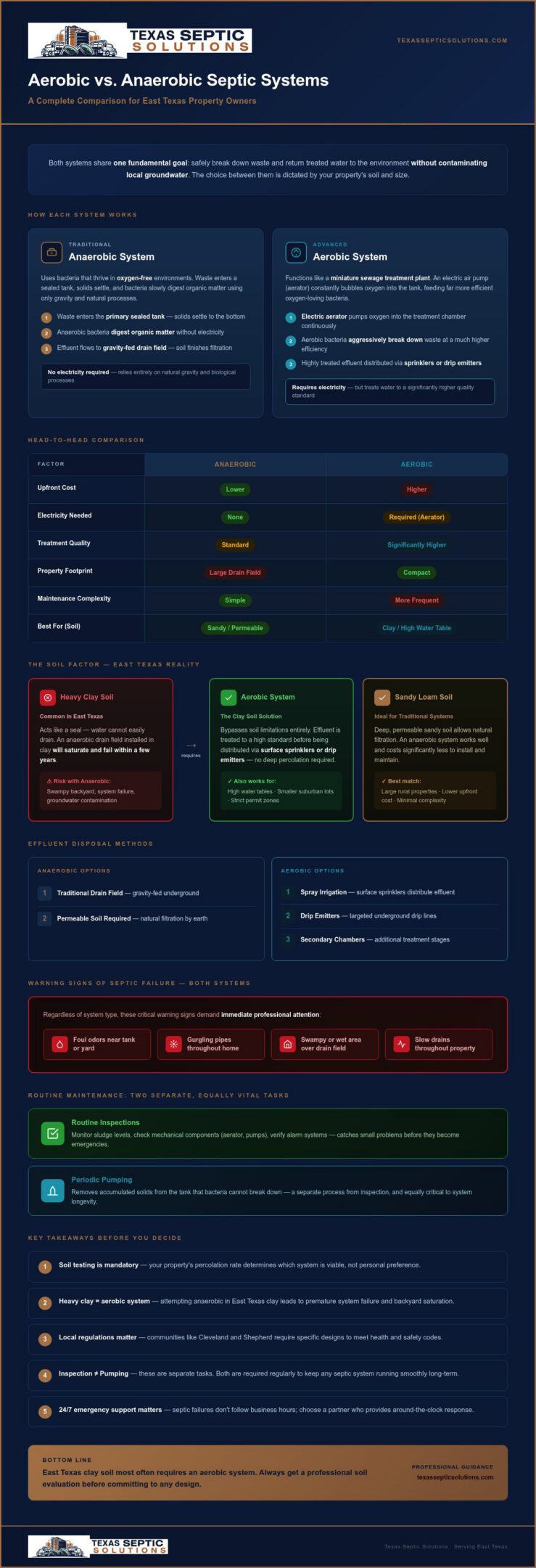
In the septic industry, when we talk about “both” systems, we’re referring to the two primary biological methods used to treat wastewater: aerobic and anaerobic. While the mechanics differ, the fundamental goal of both systems remains the same. They exist to safely break down waste and return treated water to the environment without contaminating our local groundwater. For Texas property owners, choosing between them isn’t just a matter of preference; it’s a decision dictated by your property’s size and the specific soil composition found on your land. Local regulations in communities like Cleveland and Shepherd often require specific designs to meet health and safety codes, making professional guidance essential. Understanding the biology behind your system helps you stay ahead of maintenance needs and prevents unexpected failures.
What is an Anaerobic Septic System?
An anaerobic system relies on bacteria that thrive in oxygen-free environments to break down solids. In this traditional setup, waste enters a sealed tank where solids settle to the bottom. Bacteria then slowly digest the organic matter. These systems are popular because they’re typically simpler than their aerobic counterparts. They don’t require electricity for the treatment process, relying instead on natural processes and gravity. A standard setup includes:
- A primary septic tank for settling and digestion.
- A traditional gravity-fed drain field for effluent disposal.
- A reliance on permeable soil to finish the filtration process.
These work well if you have deep, sandy soil that allows for natural filtration. However, they can struggle in the dense clay found in many parts of East Texas, where water cannot easily soak into the ground.
What is an Aerobic Septic System?
Think of an aerobic system as a miniature sewage treatment plant for your home. It uses oxygen-loving bacteria that are significantly more efficient at breaking down waste than anaerobic bacteria. To keep these microbes active, the system uses an electric air pump, known as an aerator, to constantly bubble oxygen into the treatment tank. This active process cleans the water so effectively that the system can use alternative disposal methods. These include:
- Spray irrigation systems (sprinklers).
- Drip emitters for targeted disposal.
- Secondary treatment chambers for higher water quality.
This makes them the ideal choice for properties with high water tables or heavy clay soil. While they’re more complex and require more frequent attention, they provide a reliable solution where traditional gravity systems simply won’t work.
Comparing Both Systems: Cost, Maintenance, and Soil Requirements
Choosing between both options involves balancing your initial budget with the long-term needs of your land. Anaerobic systems generally come with a lower initial price tag because they lack complex electrical components and mechanical pumps. They rely on natural processes, making them a cost-effective choice for large rural properties. In contrast, aerobic systems require a larger initial investment but solve the space constraints often found on smaller suburban Houston lots. Because aerobic units treat wastewater to a much higher standard, they don’t require the massive footprint of a traditional drain field. It’s a trade-off: you either pay more upfront for a compact, high-tech system or save money initially but commit a large portion of your yard to a gravity-fed field.
Soil Suitability: Clay vs. Sandy Loam
Your property’s soil is the ultimate deciding factor. Heavy clay, which is incredibly common in East Texas, acts like a seal that prevents water from draining. If you install an anaerobic system in thick clay, the drain field will likely saturate and fail within a few years. Aerobic systems bypass this limitation by using advanced treatment stages, allowing the clean effluent to be distributed via surface sprinklers. Before you finalize any plans, professional soil testing for septic systems is required to determine the exact percolation rate of your ground. Working with a team that understands local geology helps you avoid these pitfalls, so consider reaching out for a professional site evaluation before you dig.
Maintenance Demands for Both Designs
Ongoing care looks different for both types of systems, and understanding these requirements prevents emergency failures. For an anaerobic setup, your focus is on monitoring sludge levels and ensuring the tank’s baffles remain intact to keep solids out of the drain field. Aerobic systems are more demanding; they require you to regularly replenish chlorine tablets for disinfection and verify the mechanical aerator is pumping oxygen correctly. As of 2026, Texas regulations mandate that all owners of aerobic septic systems must hold a continuous maintenance contract with a licensed service provider to ensure the system meets environmental standards. This ensures the mechanical “engine” of your system stays in peak condition, protecting your investment and the local water supply.
The Mechanics of Septic Failure: Signs Both Systems Share
While the internal biology differs, the external warning signs of a failing septic system are remarkably consistent across both aerobic and anaerobic designs. You don’t need to be an engineer to spot the red flags. Slow drains in your sinks or showers are often the first hint that something is wrong downstairs. If you hear gurgling sounds coming from your pipes after you flush, your system is likely struggling to move air or liquid. Another classic sign is a patch of suspiciously lush, bright green grass over your drain field. While it might look healthy, it actually indicates that untreated wastewater is surfacing and over-fertilizing your lawn, which is a major health hazard.
Foul odors are another universal indicator of trouble. In a healthy system, the biological process is contained and relatively scent-free. If you catch a whiff of rotten eggs near the tank or drain field, it means the bacteria in both types of setups are out of balance. This imbalance often leads to the tank’s alarm triggering. If your septic tank alarm is going off, don’t ignore it. It’s the system’s way of telling you that water levels are too high or a pump has failed, and immediate action is required to prevent a backup into your home.
Common Component Failures
Every septic tank relies on physical components that can fail over time. Baffle issues or inlet clogs are common culprits that affect every system. If a baffle breaks, solids can escape the tank and clog your drain field, leading to a total system failure. In Texas, aerobic systems face an additional challenge: our intense thunderstorms and power surges. These electrical events can easily fry an aerobic pump or aerator, stopping the treatment process instantly. Additionally, tree roots are a universal enemy. They can penetrate pipes in traditional gravity fields and modern drip emitters alike, seeking out the nutrient-rich water and causing massive blockages.
Environmental Impact of Malfunctions
Neglecting these signs doesn’t just hurt your wallet; it puts your family and the local environment at risk. When untreated effluent surfaces in your yard, it creates a breeding ground for bacteria and parasites. This runoff can eventually seep into the local Texas water table, potentially contaminating your own well or your neighbor’s supply. A quick response is vital for containment. Utilizing emergency septic repair can often save a system that would otherwise require a full, expensive replacement. Taking care of small issues today prevents the total loss of your utility function tomorrow.
Why Your Property Needs Both Routine Maintenance and Pumping
Many homeowners in the Houston and Cleveland areas use the terms “pumping” and “maintenance” interchangeably, but they serve very different purposes. To keep your system running for decades, you actually need both services performed on a regular schedule. Pumping is a structural necessity that physically removes the buildup of sludge and scum from your tank. Maintenance, on the other hand, is a preventative investment that focuses on the mechanical and biological health of the system. Think of pumping as an oil change and maintenance as a full engine diagnostic. Neglecting either one can lead to a system failure that the dense East Texas clay will only make worse.
The Role of Professional Pumping
During a professional pump-out, a technician removes the accumulated solids that your bacteria could not break down. This process is vital because once the tank reaches its capacity for solids, they begin to spill over into your drain field. In our local heavy clay soils, these solids act like a permanent plug, sealing off the ground and causing sewage to back up into your yard or home. You might notice your toilets flushing slowly or hear a gurgling sound when the tank is full. Don’t fall for the myth of DIY “additives” or “activators.” While some products claim to eliminate the need for pumping, nothing replaces the physical removal of sludge. Most Texas households require a pump-out every three to five years, depending on the number of people in the home and the size of the tank.
The Value of Maintenance Inspections
Maintenance inspections go beyond the tank’s capacity to check the “engine” of your system. For aerobic setups, this includes testing the air pump or aerator, checking chlorine levels, and ensuring the spray heads are clear. For anaerobic systems, the focus is on the integrity of the baffles and the depth of the sludge layer. Identifying a cracked baffle or a failing pump during a routine check can save you from expensive septic system replacement costs later. Maintenance is a preventative investment, while pumping is a structural necessity. By catching small mechanical issues early, you ensure the biological treatment process remains stable and effective for both types of systems.
Combining these essential tasks into a single, proactive strategy is the best way to protect your property. A custom septic system maintenance plan ensures that neither service is forgotten. If you aren’t sure when your tank was last serviced, it’s time to speak with a local septic professional who understands the unique demands of Texas soil.
Choosing the Right Partner for Your Texas Septic Needs
Navigating the municipal codes and environmental regulations in Cleveland or Houston isn’t just about following rules; it’s about protecting your property’s long-term value. You need a partner who understands both the complex engineering of a new installation and the logistical hurdles of state permits. A reliable contractor provides transparent pricing and holds the necessary licensing to ensure your system meets all TCEQ standards. Texas Septic Solutions brings years of experience to every project. We specialize in handling new installations and complex system designs that are specifically engineered for the challenging terrain of our region. Because the same soil conditions that affect septic health can also threaten your home’s foundation, Crown Leveling Inc. is a trusted resource for addressing structural issues and slab leaks common in Texas.
Our commitment to the communities of Cypress, Huffman, and Shepherd goes beyond simple service calls. We don’t just see ourselves as a business; we are your neighborly experts. This local connection allows us to tailor our recommendations to the specific soil conditions and weather patterns unique to East Texas. We’ve seen how heavy seasonal rains impact local drain fields and which designs stand up best to our humidity and heat. For property owners who also manage larger facilities, you can visit J3 Mechanical Services to explore commercial HVAC solutions tailored for the Texas climate. Our advice is grounded in decades of observing how different systems perform in this specific environment. We ensure you get a solution built for stability and promptness, not just a generic one-size-fits-all tank.
Septic failures rarely happen at a convenient time. A backup or a broken aerator on a holiday weekend can quickly turn into a full-blown waste management crisis. That’s why 24/7 emergency support is a non-negotiable part of our service model. We maintain a constant state of readiness to handle critical failures at any time, day or night. This rapid response prevents minor malfunctions from spiraling into total system losses or environmental hazards in your backyard. We take our role as guardians of home functionality seriously, valuing long-term relationships as much as immediate problem-solving.
Whether you’re breaking ground on a new property or need a dependable partner to manage your current system’s health, local expertise is your best defense against utility stress. Our all-encompassing service model means you only need one phone call to handle everything from design to routine pumping. Don’t wait for a red light or a foul odor to tell you there’s a problem. Contact Texas Septic Solutions today for a professional system evaluation and ensure your home stays functional and compliant for years to come.
Secure Your Home’s Functionality with Expert Septic Guidance
Deciding between aerobic and anaerobic systems is more than a technical choice; it’s about ensuring your Texas property remains a safe and functional environment for years to come. Your soil type and lot size are the ultimate guides, but your commitment to upkeep is what guarantees longevity. By understanding that both routine pumping and professional maintenance inspections are necessary, you avoid the stress of unexpected failures and costly replacements.
Texas Septic Solutions is here to be your long-term partner in property care. As a family-owned local authority, we understand the specific clay challenges of Cleveland and Houston and offer specialized expertise in system design and repair. Whether you need a new installation or immediate help during a waste management crisis, our 24/7 emergency service ensures you are never left without a solution. We take pride in being the sturdy, responsive guardian of your home’s essential utilities.
Schedule your comprehensive septic inspection with Texas Septic Solutions today! We look forward to providing the dependable service your property deserves.
Frequently Asked Questions
Is an aerobic or anaerobic septic system better for Texas clay soil?
Aerobic systems are the superior choice for heavy Texas clay. Since clay soil has a very low percolation rate, it cannot absorb the effluent from a traditional anaerobic drain field quickly enough. Aerobic systems treat the water to a higher standard and use surface irrigation or drip emitters to distribute it. This prevents the “swampy yard” effect common with gravity systems in the Houston and Cleveland areas.
Can I switch from an anaerobic system to an aerobic one?
Yes, you can upgrade your system. Many homeowners switch when their traditional drain field fails or when property additions exceed the original system’s capacity. The process involves installing an aerator and potentially adding a secondary treatment tank. You’ll need new permits from the county and an electrical connection to power the pump. It’s a smart way to modernize a property with poor soil drainage.
How often do both types of septic tanks need to be pumped?
Most households should have their tanks pumped every three to five years. While the biological processes differ, both types of systems accumulate solid sludge that bacteria simply cannot break down. If you ignore this buildup, those solids will eventually escape the tank and ruin your disposal field. Regular pumping is the most cost-effective way to extend the life of your septic investment regardless of the design.
What happens if I don’t maintain my aerobic system’s air pump?
If the air pump fails, your aerobic system effectively turns into an inefficient anaerobic one. The oxygen-loving bacteria will die off quickly, stopping the advanced treatment process. This leads to foul odors, cloudy effluent, and eventually a clogged disposal system. Because the water isn’t being cleaned properly, you also risk environmental fines and the need for a total system flush to restart the biological colony.
Do both septic systems require a permit for installation in Houston?
Yes, both aerobic and anaerobic installations require formal permits and inspections. In Texas, these are regulated as On-Site Sewage Facilities (OSSF). Before any dirt is moved, a site evaluation and a professional design must be submitted to the local regulatory authority, such as the Harris County or Liberty County health departments. This ensures the system is sized correctly for the home and won’t contaminate the local groundwater.
What are the common signs that both types of systems are failing?
Look for slow-flushing toilets and gurgling sounds in your plumbing. You might also notice standing water or patches of exceptionally dark green grass near the disposal area. Foul smells like rotten eggs are a major red flag that the treatment process has broken down. If you see any of these signs, it’s best to call for a professional inspection immediately to prevent a small repair from becoming a total failure.
Is it true that aerobic systems require more frequent maintenance than anaerobic?
Yes, aerobic systems are more labor-intensive. Because they rely on mechanical aerators and electrical components, they require more frequent checks to ensure everything is running. You also have the added responsibility of maintaining chlorine levels for disinfection. In contrast, anaerobic systems are passive and mainly require sludge monitoring. However, the extra effort for an aerobic system is often the only way to meet Texas environmental codes.
Can I use the same drain field for both types of systems?
No, you typically cannot reuse an old gravity drain field for a new aerobic system. Aerobic effluent is usually distributed via spray heads or specialized drip tubing designed for highly treated water. Traditional drain fields rely on large trenches and gravel that aren’t compatible with the pressurized delivery of an aerobic setup. When we install a new system, we design a disposal method that matches the treatment level of your new tank.