
Aerobic System Spray Heads Not Working: Troubleshooting and Repair Guide
If your yard is starting to smell like a swamp and your lawn looks suspiciously dry, your aerobic septic system is trying to tell you something. A silent sprinkler is rarely just a minor annoyance; it’s a signal that your wastewater treatment process has hit a wall. When you realize your aerobic system spray heads are not working, the immediate worry is often a messy backup or a massive repair bill. It’s a stressful situation for any homeowner, but most of the time, the fix is closer than you think if you know exactly where to look.
We understand the anxiety that comes with utility failures, and we’re here to help you regain control of your property. In this guide, you’ll discover the most common reasons these sprinklers fail, from simple nozzle clogs to more complex pump and electrical issues. By following our step-by-step troubleshooting process, you can identify the root cause, restore your system’s functionality, and protect your yard from potential damage. We’ll walk through the diagnostics together so you can avoid unnecessary emergency fees and keep your home’s infrastructure running smoothly.
Key Takeaways
- Identify early warning signs like soggy “hot spots” and uneven spray patterns to catch system issues before they damage your landscape.
- Pinpoint the primary causes for aerobic system spray heads not working, including common issues like debris clogs in the nozzles or obstructed effluent filters.
- Master a safe troubleshooting routine, including using your control panel’s manual override to test the spray cycle.
- Learn to distinguish between simple DIY maintenance and complex repairs, such as effluent pump replacements or electrical wiring faults.
- Discover how regular maintenance plans and 24/7 emergency support can prevent unexpected backups and foul odors.
Common Signs Your Aerobic System Spray Heads Are Failing
Recognizing the early warning signs of a malfunction can save you from a soggy yard and expensive emergency repairs. Most homeowners first realize their aerobic system spray heads are not working when they notice localized pooling or “hot spots” near specific sprinkler heads. While a healthy system distributes treated effluent evenly across the spray field, a failing one often leaves behind standing water that doesn’t drain away, even on dry days. Catching these cues early is the best way to maintain the stability of your system and avoid a complete backup.
Watch for these specific indicators that your distribution system is struggling:
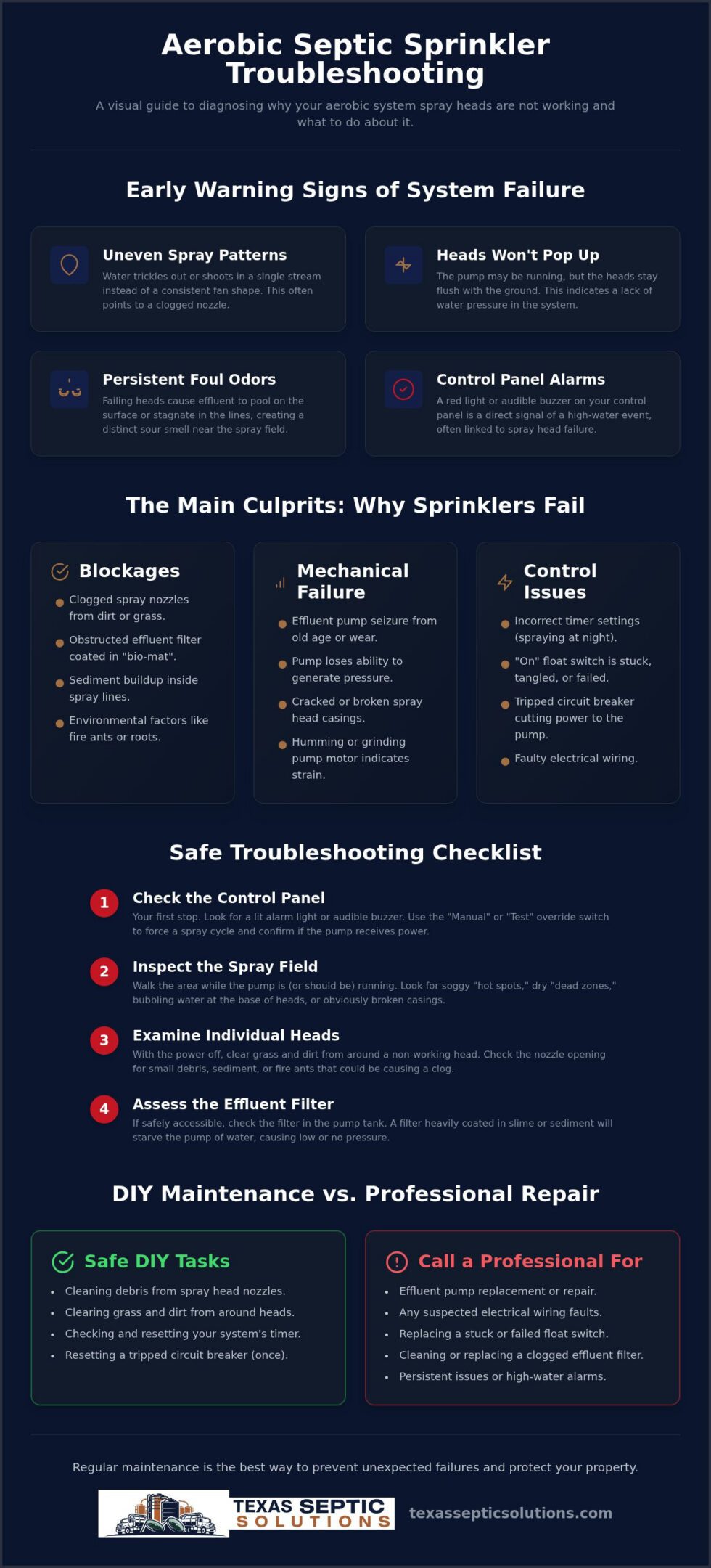
- Uneven spray patterns: Water should fan out in a consistent arc; if it’s just trickling or shooting in a single stream, the nozzle is likely obstructed.
- Heads that won’t pop up: If the pump is running but the heads stay flush with the ground, there isn’t enough pressure to lift the internal piston.
- Persistent foul odors: While treated effluent is generally odorless, failing heads can cause water to stagnate in the lines or pool on the surface, creating a sour scent near the spray field.
- A humming pump: If you hear the pump vibrating but no water is being distributed, the system is trying to work but hitting a blockage.
Visual Cues in the Spray Field
Identifying “dead zones” where grass is browning despite the system running is a classic sign of a blocked head. You should also check for broken or cracked spray head housings caused by lawnmowers. These mechanical failures prevent the head from popping up fully, leading to water bubbling at the base rather than spraying. Finally, recognize the difference between treated effluent and simple rainwater pooling; if the water smells sour and won’t evaporate during a sunny afternoon, you’re likely dealing with a septic issue.
Auditory and System Alerts
What a struggling effluent pump sounds like compared to normal operation is distinct. A healthy pump hums quietly, but a failing one may grind, rattle, or fall silent while the alarm light glows. A septic tank alarm going off often coincides with spray head failure because the water has nowhere to go, causing the levels in your pump tank to rise. Your control panel signals a pump high-water event by activating a red light or buzzer when the float switch detects the effluent level has reached a critical height. When you discover your aerobic system spray heads not working, checking these alerts is your first step toward a clear diagnosis.
Why Aerobic Septic Sprinklers Stop Working: The Main Culprits
When you find your aerobic system spray heads not working, it’s easy to assume the heads themselves are broken. However, these sprinklers are just the final stage of a complex distribution process. A failure at any point in the chain, from the pump tank to the electrical panel, will stop the spray. Identifying the specific culprit requires looking past the surface to understand what’s happening inside your system’s components. Most issues boil down to a lack of pressure, a lack of power, or a physical obstruction.
- Mechanical Wear: Effluent pumps have a finite lifespan and can eventually seize or lose the ability to create pressure.
- Electrical Timing: Many systems use timers to spray only during early morning hours; if the clock is set incorrectly, you might never see them run.
- Float Failures: If the “on” float switch is stuck or tangled by debris, the pump won’t receive the signal to discharge water.
- Sediment Buildup: Over time, fine particles that bypass the treatment process can settle in the lines, eventually choking the nozzles.
The Role of the Effluent Filter
The effluent filter is your system’s primary defense against clogs. Its job is to catch small solids before they reach the pump and spray lines. In Southeast Texas, where systems often work overtime, these filters can become completely coated in a thick “bio-mat” or heavy sediment. A dirty filter starves the pump of water, which prevents the pressure needed to lift the spray heads. While a simple rinse can sometimes restore flow, a filter that is brittle or permanently stained usually requires professional replacement to ensure your pump doesn’t burn out from the strain. If you’re unsure about the state of your components, scheduling regular septic system maintenance can prevent these small blockages from turning into major failures.
Environmental Blockages: Fire Ants and Roots
Living in the Houston area brings unique challenges that standard troubleshooting guides often overlook. Fire ants are a notorious nuisance; they’re attracted to the electrical warmth of control panels and the moist, sheltered environment inside spray head housings. Their nests can physically jam the pop-up mechanism or short out the wiring. Similarly, aggressive grass roots can grow into the spray head nozzles, effectively sealing them shut. Heavy rainstorms, common in Cypress and Shepherd, can also wash silt and mud into the heads if they aren’t properly sealed. Keeping the area around your spray heads clear of tall grass and ant mounds is a simple but vital part of protecting your investment and ensuring your aerobic system spray heads not working becomes a thing of the past.
Troubleshooting Your Aerobic Septic Sprinklers: A Step-by-Step Guide
Safety is the absolute priority when you begin troubleshooting. Because you are dealing with treated effluent that can still contain pathogens, always wear heavy-duty waterproof gloves and eye protection before handling any components. If you’ve discovered your aerobic system spray heads not working, taking a systematic approach will help you determine if the problem is a simple clog or a mechanical failure that requires professional intervention. While these systems are designed to be hands-off, a bit of targeted investigation can often reveal a simple fix.
Step 1: Testing the Control Panel
Start at the control box, which is usually mounted on the side of your home or a nearby post. Most modern panels include a “Manual” or “Test” switch that allows you to bypass the timer. Toggle this switch to see if the pump engages immediately. If the heads pop up and spray during this test, your issue is likely a misconfigured timer. It’s common for timers to lose their settings after a power surge or battery failure, meaning the system might be spraying at 3:00 AM when you aren’t awake to see it. If the panel doesn’t respond to the manual override at all, you are likely facing an electrical fault or a seized pump.
Step 2: Cleaning the Spray Heads
If the pump runs but the water only trickles out, you need to inspect the individual heads. Unscrew the top nozzle assembly carefully. Use a bucket of clean water and a small wire or stiff brush to clear away any sediment, fire ant debris, or grass roots from the openings. Flush the lines by running the pump for a few seconds while the nozzles are off to push out any trapped grit. If a head housing is cracked or the internal spring has snapped, it’s better to replace the unit entirely rather than attempting a temporary patch. Keeping these components clear of debris ensures the pressure remains consistent throughout the spray field.
Step 3: Evaluating the Pump and Filter
When the heads fail to pop up despite the pump running, the flow is being restricted before it reaches the yard. Open the pump chamber lid and check the water level; if the tank is full, the pump isn’t moving the effluent. Locate the effluent filter, which is often a mesh screen or a plastic cylinder attached to the pump or the discharge line. Pull the filter and rinse it thoroughly with a garden hose to restore flow. To verify if power is reaching the pump, check for a tripped circuit breaker in your home’s main electrical panel or look for a blown fuse inside the septic control box itself.
When to Call a Professional for Aerobic System Repair
Troubleshooting is a great first step, but some mechanical and electrical failures require a licensed expert to resolve safely. If you’ve cleaned the nozzles and checked the breakers but find your aerobic system spray heads not working, the problem likely sits deeper in the system’s infrastructure. Attempting to rewire a control panel or pull a heavy pump from a wet chamber without the right tools can lead to injury or further system damage. We recommend calling for professional assistance if you encounter electrical faults, a seized pump, or a septic alarm that won’t stop buzzing.
- Persistent Foul Odors: If your yard smells like raw sewage even when the sprinklers aren’t running, it suggests a treatment failure that a simple nozzle cleaning won’t fix.
- Continuous Alarms: A red light or audible buzzer that stays on after you’ve cleared obvious clogs indicates a high-water event or a pump failure.
- Control Panel Wiring: Burned out relays or complex timer issues require specialized diagnostic tools to prevent short-circuiting the entire system.
The Risks of DIY Pump Replacement
Replacing an effluent pump isn’t as straightforward as swapping out a garden hose. Every aerobic system is designed around specific Gallons Per Minute (GPM) and head pressure requirements. If you install a pump that doesn’t match these specs, your spray heads may fail to pop up or, conversely, the excessive pressure could crack your distribution lines. Professional installation ensures that electrical connections are perfectly sealed against moisture. It also protects your equipment warranty, which is often voided if the pump isn’t installed by a licensed technician.
The Value of a Maintenance Plan
Most issues with aerobic system spray heads not working can be avoided entirely with proactive care. A structured Septic System Maintenance Plan provides the regular inspections required by Texas law, catching sediment buildup and worn float switches before they cause a total system shutdown. Routine cleaning of effluent filters and spray nozzles keeps the pressure consistent and prevents the pump from overworking. Investing in a maintenance plan is a smart way to avoid the high costs of emergency repairs and ensure your system remains compliant with local health regulations. If you’re facing a sudden failure, our team at Texas Septic Solutions offers the expertise and rapid response needed to get your yard back to normal.
Expert Aerobic Septic Solutions in Cleveland and Houston
Texas Septic Solutions stands as the reliable local authority for aerobic system repair and maintenance across Cleveland and Houston. We recognize that a malfunctioning septic system isn’t just a utility problem; it’s a threat to your property’s comfort and your family’s health. Our team utilizes comprehensive diagnostic tools to pinpoint exactly why your aerobic system spray heads are not working, ensuring we fix the root cause rather than just treating a symptom. From Cypress and Huffman to Shepherd, we’re dedicated to keeping Southeast Texas yards safe and functional. By maintaining these systems properly, we protect our local groundwater and ensure that our community remains a healthy place to live for years to come.
Why Southeast Texas Homeowners Trust Us
Our technicians bring years of experience dealing with the specific environmental challenges of the Greater Houston area. We understand how the local clay-heavy soil and frequent heavy rainstorms impact drainage and system pressure. When you find your aerobic system spray heads not working, it’s often a signal of a deeper environmental or mechanical issue that requires local expertise. When you work with us, you receive transparent repair recommendations and straightforward communication without the stress of hidden fees. For a deeper look at navigating these challenges, see our guide on Septic System Repair in Texas. We take pride in being a dependable partner for our neighbors, offering stability when utility failures create high-pressure situations.
Get Your System Back in Working Order Today
Don’t let a minor spray head issue turn into a yard-wide disaster or a costly emergency. We’ve built our service model to be responsive and thorough, ensuring your home’s wastewater treatment remains invisible and efficient. If your troubleshooting efforts haven’t restored flow, it’s time to bring in the experts who have seen every possible scenario in the field. Our goal is to provide a resolution that addresses everything from electrical timing to mechanical pump failures. We offer a sense of readiness that few can match, positioning ourselves as the guardian of your home’s most critical infrastructure. We provide:
- 24/7 emergency septic service for those moments when you can’t wait until Monday morning.
- Advanced diagnostic testing to verify pump health and control panel integrity.
- Local expertise tailored to the unique needs of Cypress, Huffman, and Shepherd residents.
Scheduling a diagnostic visit is simple and fast. Whether you need a quick nozzle replacement or a complete pump overhaul, we’re ready to help. Reach out to Texas Septic Solutions today to restore your peace of mind and get your aerobic system back to peak performance.
Restore Your Yard’s Safety and Functionality
Dealing with aerobic system spray heads not working doesn’t have to be a source of constant stress for your household. By recognizing the visual cues of pooling water and taking a systematic approach to cleaning filters and nozzles, you can resolve many minor obstructions on your own. However, if the pump remains silent or the control panel alerts persist, it’s a sign that your system needs the attention of a seasoned professional to prevent a total backup into the house. Catching these issues early protects your landscape and avoids the high costs of a complete system failure.
Whether you’re in Cleveland, Houston, or the surrounding East Texas communities, you don’t have to tackle these high-pressure failures alone. At Texas Septic Solutions, we specialize in expert aerobic system troubleshooting and provide the reliability you need during a utility crisis. We offer 24/7 emergency service availability to ensure your property remains safe and functional at any hour. Don’t let a small clog turn into a major repair. Contact Texas Septic Solutions for 24/7 emergency repair and get your sprinklers back in peak condition today. We’re here to keep your home’s infrastructure dependable and your yard healthy.
Frequently Asked Questions
Is it safe to touch the water coming out of aerobic spray heads?
No, it’s not safe to touch the water because it’s treated effluent that may still contain harmful pathogens. While aerobic systems do a great job of disinfecting wastewater, the spray is not potable and should never be used for drinking or irrigation of vegetable gardens. Always wear gloves and eye protection if you’re troubleshooting aerobic system spray heads not working. Keep children and pets away from the spray field during and immediately after a cycle.
Can I replace a single aerobic spray head with a regular lawn sprinkler?
No, you cannot use a standard lawn sprinkler as a replacement because aerobic spray heads are specifically designed for wastewater distribution. They feature larger nozzles to prevent clogs and are calibrated to handle the specific pressure and flow rates of an effluent pump. Using a standard irrigation head will likely lead to rapid clogging and can cause backpressure issues that might damage your pump or trigger a system alarm.
Why does my aerobic system only spray at night?
Most systems are programmed to spray at night to minimize human contact with the effluent and to comply with local Texas health regulations. Your control panel likely has a timer set to engage the pump between midnight and 5:00 AM. If you suspect your aerobic system spray heads are not working, you can use the manual override switch on your control panel to test the system during the day for a short period.
What should I do if my septic alarm is on but the sprinklers are working?
You should check your aerator first, as many alarms signal a loss of air pressure rather than a high-water event. If the sprinklers are still cycling, your effluent pump is likely functional, but the treatment process is compromised because the aerobic bacteria lack oxygen. This is a critical issue that requires a professional diagnosis to ensure your system continues to treat wastewater effectively before it is discharged into your yard.
How often should I clean the effluent filter in my aerobic system?
You should ideally inspect and clean your effluent filter every four months during your scheduled maintenance visits. In Southeast Texas, heavy usage or high sediment levels can cause these filters to clog more frequently than in other regions. A regular cleaning schedule prevents the filter from starving the pump of water, which is a common reason for homeowners to find their aerobic system spray heads not working properly.
Can fire ants really stop my septic sprinklers from working?
Yes, fire ants are a major cause of system failure in Texas because they’re attracted to the electrical heat of control panels and the moisture in spray heads. They can build mounds inside the pop-up housings, physically jamming the mechanism and preventing it from lifting. They also tend to chew on wiring insulation or pack dirt into electrical contactors, which can short out your system and stop the pump.
How much does it typically cost to replace an aerobic effluent pump?
The cost of replacing an effluent pump varies based on the specific horsepower and Gallons Per Minute requirements of your system. While we don’t provide fixed pricing without a site inspection, it’s generally one of the more significant repairs for an aerobic system. Investing in a maintenance plan is the best way to extend the life of your pump and avoid the stress of an unexpected and expensive replacement.
Will heavy rain cause my aerobic spray heads to stop working?
Heavy rain won’t directly stop the spray heads, but it can cause the pump tank to fill up faster due to groundwater infiltration. If your yard is flooded, the spray heads may be submerged, which prevents them from popping up correctly. Additionally, runoff can wash silt and debris into the heads, leading to clogs. It’s best to wait until the ground dries out before manually testing your system after a storm.