
How to Prevent Root Intrusion in Septic Lines: A Texas Homeowner’s Guide
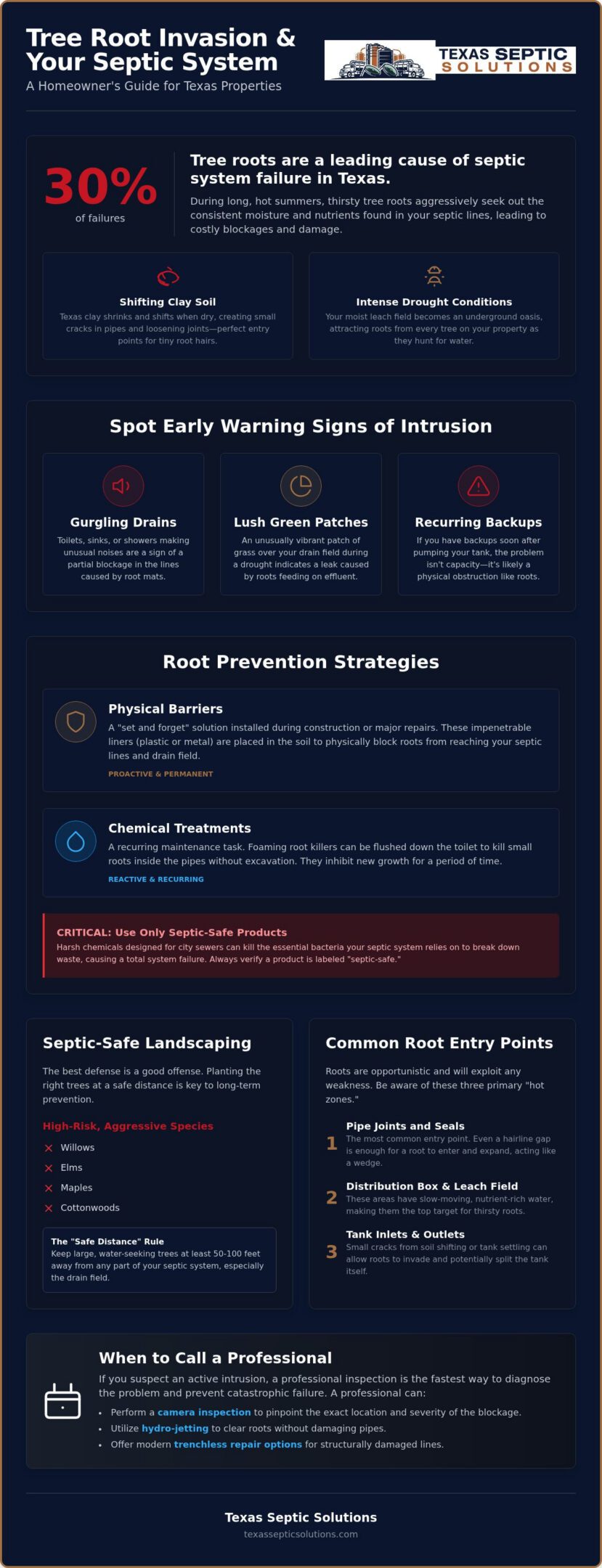
Did you know that tree roots are responsible for nearly 30% of all septic system failures across Texas? It’s a frustrating reality for homeowners who love their shade trees but dread the sound of a gurgling drain. You’ve likely spent nights worrying if that beautiful oak is slowly crushing your pipes or if the root killer you bought will actually work without destroying your system’s beneficial bacteria. We understand that stress because we see the damage roots can do every single day. This guide provides a clear roadmap for preventing root intrusion in septic lines while keeping your landscape intact.
You’ll learn the most effective physical barriers, safe chemical treatments, and landscaping strategies to protect your property. We’ll also break down the critical differences between DIY fixes and professional removal so you can lower your long-term repair costs. By the end of this article, you’ll have a proactive plan to stop roots from invading your system and avoid the high cost of a total leach field replacement. Let’s get started with the essential steps to keep your pipes clear and your trees healthy.
Key Takeaways
- Understand how Texas droughts drive thirsty roots toward your pipes and why early detection is the only way to avoid system failure.
- Discover the most effective physical and chemical methods for preventing root intrusion in septic lines without harming your system’s essential bacteria.
- Identify high-risk Texas trees and learn the “safe distance” rule to protect your drain field from aggressive species like Willows and Elms.
- Use our five-step checklist to spot early warning signs and learn how a professional camera inspection can save you thousands in repair costs.
- Recognize the signs that roots have caused structural damage and explore modern trenchless repair options to restore your system.
Why Tree Roots Invade Septic Lines (The Texas Context)
Root invasion is a biological process where microscopic root hairs find tiny gaps in your plumbing to reach water and oxygen. In East Texas, this isn’t just a plumbing issue; it’s a battle for survival. During our long, hot summers, the ground dries out completely. Trees become desperate. They don’t just grow downward; they hunt for moisture with incredible precision. Your septic system, which stays consistently moist, becomes the primary target for every thirsty tree on your property.
The heavy clay soil in areas like Cleveland and Huffman makes this problem even more complex. When our Texas clay dries, it shrinks and shifts, often putting immense pressure on your buried pipes. This shifting can cause tiny cracks or loosen pipe joints. Once a single root hair finds its way inside, it begins to expand rapidly. Successfully preventing root intrusion in septic lines starts with understanding that your system is essentially an underground oasis. To a tree, your drain field represents a reliable water source that never runs dry, even in the worst August heatwave.
Older systems in East Texas are particularly at risk, especially those using clay or concrete pipes. These materials are naturally porous and feature numerous joints that can weaken over decades. Once roots penetrate these lines, they experience what we call the “Fertilizer Effect.” Septic effluent is incredibly rich in nitrogen, phosphorus, and potassium. It’s the perfect nutrient source. What started as a fine, thread-like hair quickly matures into a thick, woody mass that can completely block flow or even shatter your pipes from the inside out.
Vulnerable Points in Your Septic System
Roots are opportunistic and focus on specific “hot zones” where water is most accessible. You should be aware of these three primary entry points:
- Pipe joints and seals: Even a gap the size of a fingernail is enough for a root to enter. As the root grows, it acts like a wedge, forcing the joint further apart.
- The distribution box and leach field lines: These areas often have slower-moving water and are surrounded by soil that is naturally saturated with nutrients, making them the most common entry points.
- Tank inlets and outlets: If your tank has settled over time or developed small structural cracks, roots will find them. They can eventually split concrete or plastic tank walls if left unaddressed.
Signs of an Active Root Intrusion
You don’t always need a professional camera to spot the early warning signs of a problem. Keep a close eye on your yard and your plumbing for these specific red flags:
- Gurgling sounds: If your toilets make strange noises or sinks drain slowly, it’s often a sign of a partial blockage caused by root mats.
- Unusually lush, green patches: If one area of your yard stays vibrant and green during a drought while the rest turns brown, roots are likely feasting on your effluent.
- Recurring backups: If you experience sewage backups shortly after a septic tank pumping, the issue is almost certainly a physical obstruction like roots in the lines rather than a full tank.
Physical vs. Chemical Barriers for Root Prevention
When you’re focused on preventing root intrusion in septic lines, you generally have two paths: stop them with a physical wall or discourage them with a chemical treatment. Both methods have their place, but they serve different roles in your long-term maintenance strategy. Physical barriers are a “set and forget” solution often installed during construction or a major septic system repair. Chemicals, on the other hand, are a recurring maintenance task that can keep existing roots at bay without the need for heavy machinery.
The most important distinction for any Texas homeowner is the difference between “sewer-safe” and “septic-safe” products. Many harsh chemicals sold in big-box stores are designed for municipal sewer lines where biological health doesn’t matter. In a septic system, you rely on a delicate balance of bacteria to break down waste. If you use the wrong chemical, you might kill the roots, but you’ll also kill your system’s ability to function. Following official EPA guidelines for care ensures you don’t accidentally cause a system-wide failure while trying to solve a minor root problem.
Using Chemical Root Killers Safely
Foaming root killers are generally superior to liquid versions. Because roots enter from the top of the pipe, liquids often flow right past the problem area. Foaming agents expand to fill the entire pipe diameter, coating the roots directly. Copper sulfate is a common alternative, but it should be used sparingly. While it’s effective, high concentrations can settle at the bottom of your tank and inhibit the natural breakdown of solids. In Texas, the best time for application is late fall. This is when trees are storing nutrients for the winter and are most likely to absorb the treatment.
Installing Physical Root Shields
Physical barriers offer a permanent defense that chemicals simply can’t match. These shields typically consist of heavy-duty plastic sheets or geotextile fabrics impregnated with specialized root inhibitors. To be effective against aggressive Texas Oak roots, these barriers must be buried at least 24 to 36 inches deep. While the upfront cost is higher than a bottle of chemical killer, a properly installed shield can last for decades. This makes them the most cost-effective choice for protecting a new drain field or a vulnerable distribution box. If you aren’t sure which barrier fits your soil type, we can help you evaluate your system maintenance needs to find the right fit.
Ultimately, a combination of both strategies often works best. You might install a physical shield near high-value trees while using a septic-safe foaming agent once a year as a secondary precaution. This “defense-in-depth” approach is the most reliable way to ensure your pipes stay clear and your backyard stays beautiful.
Landscaping Strategies: Choosing Septic-Safe Trees
While physical and chemical barriers provide a strong defense, your landscape design is the most sustainable way of preventing root intrusion in septic lines. Choosing the wrong tree can lead to expensive repairs, but you don’t have to settle for a bare yard. It’s about understanding root architecture and how different species react to the moisture-rich environment of a Texas septic system. A proactive planting plan allows you to enjoy a shaded, beautiful property without risking the structural integrity of your underground utilities.
The “Safe Distance” rule is your most reliable guideline. As a rule of thumb, you should plant trees at a distance from the septic system that is at least equal to their mature height. For most species, this means a minimum of 15 to 20 feet from the tank and drain field. In the heavy clay soils of Cleveland and Cypress, roots can travel surprisingly far during a dry spell. Giving your system extra breathing room is always the safest bet. If you already have established trees, we recommend using regular maintenance to monitor any potential encroachment before it becomes a crisis.
The ‘Do Not Plant’ List for Septic Owners
Some trees are simply too aggressive for a property with a septic system. These species have “water-seeking” root systems that can detect moisture from a great distance. You should avoid planting the following near your system:
- Willows: These are the number one enemy of the leach field. Their roots are incredibly invasive and will find even the smallest microscopic opening in a pipe joint.
- Cottonwoods and Poplars: These species thrive in wet soil. In our local climate, they grow rapidly and can easily overwhelm a distribution box within a few years.
- Silver Maples and Elms: Both are known for shallow, aggressive root systems that can lift pipes and crack tank lids as they mature.
- Large Oaks: While iconic in Texas, an Oak’s root spread can be massive. If planted too close, they can shift the soil enough to cause pipe disconnects.
Safe Alternatives for Texas Yards
You can still have a lush landscape by selecting species with less invasive root structures. Slow-growing trees and those with taproots rather than wide-spreading lateral roots are much safer choices. Dogwoods and Redbuds are excellent options for the Houston area; they provide beautiful blooms and remain manageable in size. For areas closer to the drain field, consider ornamental grasses or herbaceous perennials. These plants have fibrous root systems that stabilize the soil and prevent erosion without the strength to penetrate your septic lines. Stick to grass or flowers directly over the leach field to ensure the evaporation process remains efficient and your pipes stay clear.
How to Detect and Stop Early Intrusion (5-Step Checklist)
Catching a problem early is the difference between a minor maintenance visit and a total system overhaul. If you wait until sewage is backing up into your bathtub, the roots have already won the first round. We recommend a systematic approach to preventing root intrusion in septic lines by following this 5-step checklist at least once a year. Being proactive doesn’t just save your pipes; it protects your wallet from the high costs of emergency excavation.
- Perform a visual inspection: Walk your drain field and look for “indicator plants.” These are patches of grass or weeds that look suspiciously lush or vibrant compared to the rest of your yard.
- Schedule a camera inspection: If you suspect an issue, don’t guess. A professional camera line inspection locates the exact point of entry and the extent of the growth.
- Apply foaming root killer: At the first sign of slow-draining sinks or gurgling toilets, use a septic-safe foaming herbicide. This stops fine root hairs before they have a chance to thicken and cause structural damage.
- Clear roots mechanically: If the blockage is already significant, you’ll need to clear the lines using an auger or hydro-jetting before the roots can shatter the pipe.
- Update your maintenance plan: Ensure your septic system maintenance plan includes specific root checks and annual treatments to keep the lines clear long-term.
The Power of Camera Inspections
Guessing where roots have entered your system is a fast way to waste money on chemicals that might never reach the target. Fiber-optic cameras allow us to see exactly where joints have failed or where cracks have formed in the line. This precision means we can treat the specific entry point rather than guessing. A professional camera inspection can save you thousands of dollars by identifying a single bad pipe joint before the pressure from root growth shatters the entire line. If you’ve noticed your drains slowing down, schedule a professional inspection to see what’s happening underground before a backup occurs.
Mechanical Root Removal Techniques
When roots have already formed a thick mat, chemicals alone won’t clear the path. You’ll need mechanical intervention. Auguring, or snaking, involves a rotating blade that cuts through small, localized clogs. For more severe cases, hydro-jetting uses high-pressure water to scour the pipe walls completely clean. It’s important to remember that mechanical removal is only a temporary fix. Because the physical entry point remains open, roots will grow back even faster unless you follow up with a chemical treatment or a permanent pipe repair.
When to Call the Pros: Professional Root Remediation
Recognizing the “Point of No Return” is vital for your property’s safety. While DIY foaming agents help with general maintenance, they can’t fix a pipe that has already been structurally compromised. If roots have cracked your tank or collapsed a distribution line, you need professional intervention to avoid a total system failure. The type of system you have significantly changes the stakes. For aerobic systems, roots invading the pump chamber can lead to expensive motor burnout or clogged spray heads. In conventional anaerobic systems, roots usually target the leach field, leading to surfacing sewage and soil saturation that requires immediate attention.
Licensed professionals use heavy-duty commercial herbicides and high-pressure equipment that aren’t available to the general public. These treatments are the most effective way of preventing root intrusion in septic lines when growth has become aggressive. At Texas Septic Solutions, we handle root-damaged lines across Cleveland and Houston by first diagnosing the extent of the damage with fiber-optic cameras. This ensures we aren’t just treating the symptoms but solving the underlying structural problem before it destroys your entire drain field.
Trenchless Pipe Repair vs. Excavation
Cured-in-Place Pipe (CIPP) lining is a modern alternative to traditional excavation. This trenchless technology involves inserting a resin-coated liner into the damaged pipe, which then hardens to create a seamless, root-proof seal inside the old line. It’s often more cost-effective than digging up your entire yard, though it isn’t an option if the pipe has already collapsed. When a line is too far gone, a full replacement is the only safe way to restore your property’s functionality and prevent recurring backups.
The Importance of Regular Professional Maintenance
The best way to manage roots is to never let them get a foothold. Routine pumping is the perfect time for a technician to check your baffles and tank walls for early signs of stress. By signing up for a septic system maintenance Texas plan, you ensure that experts are looking at your system regularly. This proactive approach identifies small issues before they turn into expensive replacements. If you’re worried about nearby trees or have noticed slow drains, contact Texas Septic Solutions today for a professional root inspection and system health check. We’re built to handle everything from routine upkeep to high-pressure emergency failures.
Take Control of Your Septic Health Today
You now have the tools to protect your property from one of the most common causes of system failure in Texas. By combining smart landscaping choices with proactive chemical treatments, you can keep your yard beautiful while successfully preventing root intrusion in septic lines. Your septic system is a major investment in your home’s functionality. Catching a fine root hair during a routine check is much simpler and more affordable than replacing a collapsed pipe or a saturated drain field later.
Don’t wait for a backup to signal a crisis. Our team of licensed septic system specialists brings deep local Cleveland and Houston expertise to every job. We ensure your system stays clear through every summer drought and spring rainy season. Whether you need a routine health check or a 24/7 emergency response, we’re ready to help. Protect your system from root damage—Schedule an inspection with Texas Septic Solutions today! We’re here to be your long-term maintenance partner and keep your home running smoothly for years to come.
Frequently Asked Questions
Will copper sulfate kill the bacteria in my septic tank?
Copper sulfate can indeed kill essential bacteria if you use it excessively or too frequently. While it effectively stops roots, it settles at the bottom of the tank and can disrupt the natural breakdown of solids. We generally recommend using it sparingly or opting for herbicide based foaming agents that are specifically labeled as septic safe to protect your system’s biological health.
How do I know if tree roots are in my septic lines?
Look for slow draining sinks, gurgling toilets, or sewage backups as primary indicators. You might also notice unusually vibrant, green patches of grass directly over your drain field lines even during a Texas dry spell. These hot spots suggest that roots have successfully accessed the nutrient rich effluent. A professional camera inspection is the only way to confirm the exact location of the intrusion.
What is the best foaming root killer for septic systems?
The most effective products for preventing root intrusion in septic lines are foaming herbicides containing Dichlobenil. Unlike liquid treatments that flow along the bottom of the pipe, foam expands to coat the entire interior surface. This ensures the chemical reaches roots entering from the top or sides of the joints. Always verify the label specifically states the product is safe for septic tanks and won’t harm beneficial bacteria.
Can I plant anything over my septic drain field?
You should only plant shallow rooted vegetation like turf grass or herbaceous flowers over your drain field. Avoid any woody shrubs or trees, as their roots can quickly penetrate and clog the perforated distribution lines. Keeping the area clear of large plants also ensures proper evaporation and oxygen exchange, which are critical for the soil’s ability to treat waste effectively.
How much does it cost to remove roots from a septic line professionally?
Professional root removal costs vary depending on the severity of the blockage and the equipment required. A standard service involving a camera inspection and mechanical cutting typically falls within a few hundred dollars. If the roots have caused structural damage requiring pipe replacement or trenchless relining, the expenses will increase significantly. Investing in routine maintenance is always more affordable than dealing with a collapsed line.
Is hydro-jetting safe for older septic pipes?
Hydro-jetting is generally safe for most pipes, but a camera inspection should always be performed first on older clay or concrete systems. If the pipes are already brittle or have significant cracks, the high pressure water could cause further damage. When performed by a licensed professional, hydro-jetting is one of the most effective ways to scour pipe walls clean without the abrasive impact of mechanical snakes.
How often should I treat my septic lines for roots?
Most homeowners should apply a septic safe root treatment once a year to keep growth under control. In the Houston and Cleveland areas, late fall is the ideal time because trees are actively seeking moisture and nutrients to store for winter. If you have aggressive species like Willows or Elms nearby, you might need to schedule a professional inspection more frequently to ensure your lines remain clear.
Can roots actually crack a concrete septic tank?
Yes, aggressive tree roots can exert enough pressure to expand existing hairline cracks in concrete tanks. Over time, these roots can split the tank walls or lift the lid, leading to structural failure and groundwater contamination. This is why maintaining a safe distance between large trees and your septic components is a fundamental part of preventing root intrusion in septic lines.