
2026 Septic Care Guide for Rural Cleveland TX Homes
Imagine hosting your family’s annual barbecue in Cleveland when a sudden sewage backup forces everyone inside and leaves you with a massive repair bill. It’s a nightmare scenario that many rural homeowners fear, especially when dealing with the stubborn clay soil of East Texas. Proper septic system care for rural properties Cleveland TX is more than just a chore; it’s the only thing standing between you and a total system failure. We understand that between Liberty County permit mandates and slow-draining yards, managing your utilities can feel overwhelming.
You shouldn’t have to guess when your tank needs pumping or worry if a heavy rain will ruin your drain field. This 2026 guide simplifies the process, giving you the tools to master the unique environmental challenges of our region. You’ll learn how to establish a clear maintenance schedule, protect your property from costly damage, and recognize exactly when a problem requires an emergency call. By the end of this article, you’ll have the confidence to keep your system running smoothly for years to come.
Key Takeaways
- Understand how Cleveland’s “Gumbo” clay expands and contracts, and why this requires a unique drainage strategy for your rural property.
- Discover how to prevent hydraulic overloading by managing your household water usage to protect your tank’s settling process.
- Implement a proactive maintenance schedule for septic system care for rural properties Cleveland TX to avoid expensive sewage backups.
- Learn to use the “Septic Senses” test to identify early warning signs of system stress through sight, smell, and sound.
- Gain peace of mind by knowing when a slow drain is a minor fix or requires an emergency call from a local East Texas expert.
Why Rural Septic Care in Cleveland, TX Requires a Specialized Approach
Rural septic management isn’t just about calling a truck once every few years. It’s a precise balance of soil science, proactive land management, and daily usage habits. In Cleveland, rural properties face a much steeper challenge than suburban homes tied to municipal lines. You’re essentially responsible for your own private wastewater treatment plant. If it fails, your property value plummets and your daily life halts. Effective septic system care for rural properties Cleveland TX starts with understanding that your land is unique. Unlike a cookie-cutter subdivision, your acreage has its own drainage patterns and soil composition that dictate how your system functions.
The Impact of East Texas Geography
Cleveland and the surrounding Shepherd areas are known for high water tables and relatively flat terrain. During the rainy season, this combination often leads to ponding. When water sits on the surface, it saturates the ground and prevents septic drain fields from absorbing effluent. This is why site-specific evaluations are critical for rural acreage. A system designed for a dry hill won’t work in a low-lying East Texas meadow. We see many systems struggle because the land wasn’t graded to move surface water away from the tank and lateral lines. Managing your land’s topography is just as important as managing what goes down your drains.
Navigating Liberty County Regulations in 2026
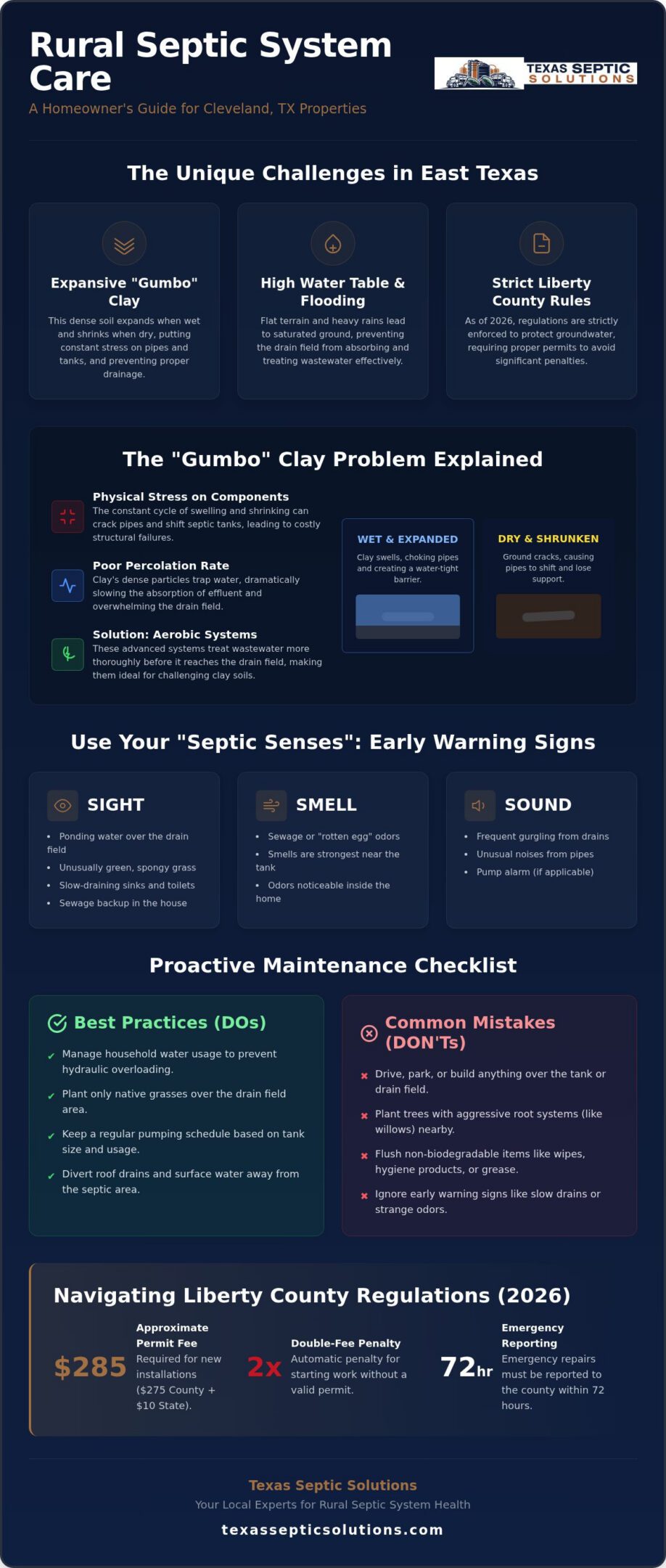
The Liberty County Permit and Inspection Department acts as the local “Authorized Agent” for the TCEQ. As of June 2026, the county has tightened enforcement to protect local groundwater. If you start a new installation without the correct permits, you’ll face an automatic double-fee penalty. For most residential systems, the 2026 permit fee is approximately $275 plus a $10 state fee. These rules exist to ensure systems are built to handle the specific soil conditions of our region.
Compliance isn’t just about avoiding fines; it’s about protecting your investment. If you face an unexpected failure, emergency repairs can proceed without a prior permit, but you must report the work to Liberty County Environmental Health within 72 hours. Staying within these 2026 standards ensures that when you eventually sell your property, the inspection goes smoothly. A documented maintenance history and valid permits are essential for rural property transfers in East Texas. We help neighbors stay on top of these requirements so their systems remain a functional asset rather than a legal liability.
Analyzing Cleveland Soil: How East Texas Clay Impacts Your Drain Field
Cleveland is famous for its “Gumbo” clay, a soil type that creates major headaches for homeowners. This clay is highly expansive; it swells when wet and shrinks during the dry Texas summers. This constant movement puts physical stress on your buried components, which can lead to shifted tanks or cracked pipes. Because clay has such small pores, it holds onto moisture for a long time. Once the ground is saturated after a typical East Texas storm, your system’s capacity to absorb more effluent drops to nearly zero. Effective septic system care for rural properties Cleveland TX requires a design that accounts for this slow absorption rate. Many rural lots in Liberty County now require aerobic systems because traditional lateral lines simply can’t “breathe” in this heavy soil. To properly maintain your septic system, you must understand that the soil is your system’s final treatment stage.
The Role of Soil Testing and Perc Rates
A percolation (perc) test is the first step in any rural installation or major repair. It measures how quickly water drains through a pre-soaked hole in your yard. If your soil has high clay content, your perc rate will be slow, which usually means you’ll need a larger drain field or a more advanced treatment method. Clay particles are microscopic and flat, forming a dense barrier that inhibits wastewater from moving downward into the earth. If you’re unsure about your current soil health, a professional expert site evaluation can determine if your system is still sized correctly for your family’s needs.
Protecting the Drain Field Area
Your drain field is the most sensitive part of your property. In 2026, we still see many failures caused by soil compaction. Never drive heavy equipment, like tractors or trucks, over your lines. Even livestock like horses or cattle can pack the clay down so tightly that it stops filtering water. Stick to planting native grasses over the area. Avoid trees with aggressive root systems, such as willows or water oaks, as they’ll quickly find and clog your pipes. You should also check that runoff from your barn or shop isn’t directed toward the field. Extra water from a roof can overwhelm the soil, leading to a backup in your home.
Rural Water Management: Protecting Your System from Heavy Loads
Hydraulic overloading is the leading cause of premature failure for rural septic systems. It occurs when a massive volume of water enters the tank faster than the system can process it. This sudden surge prevents solids from settling at the bottom. Instead, those solids get pushed out into the drain field, where they clog the narrow pores in the clay soil. Proper septic system care for rural properties Cleveland TX requires a shift in how you view your daily water usage. Unlike city dwellers, you can’t simply “set it and forget it” when it comes to your taps and appliances.
Rural life often involves hosting large family gatherings or holiday parties. These events create a massive “surge load” that can overwhelm even a healthy system. If you’re expecting a dozen guests for a weekend, consider having your tank pumped a few days prior. This provides a “buffer” of empty space to handle the extra flushing and showering. Without this pre-planning, you risk a messy backup right in the middle of your celebration.
Step-by-Step Water Conservation for Septic Health
Protecting your system starts with reducing the daily strain on your tank. Install high-efficiency showerheads and low-flow toilets to cut your total gallon load by nearly 30 percent. You should also change how you approach chores. Doing five loads of laundry on a Saturday is a common mistake. This “laundry day” habit sends hundreds of gallons of soapy water into the tank at once, which disrupts the bacterial balance. Spread your laundry out over the week to give the tank time to settle. Finally, hunt down silent leaks. A running toilet can dump 200 gallons of water into your system every single day, which is enough to saturate a drain field in less than a week.
Managing External Water Sources
In East Texas, our heavy storm seasons present a unique threat. You must ensure that rainwater from your roof isn’t making its way into your septic components. Check your gutter downspouts and ensure they’re directed at least 10 feet away from your tank and drain field. If your yard is flat, you might need to install a French drain or regrade the area to prevent ponding over your lines. Additionally, be careful with water softeners. The “clear water” from the regeneration cycle adds unnecessary volume to your tank. If possible, route the softener discharge to a separate dry well. This keeps the brine and the extra water out of your primary treatment system, ensuring your septic system care for rural properties Cleveland TX remains effective even during the wettest months.
Complete Guide to Rural Septic System Maintenance
Effective septic system care for rural properties Cleveland TX relies on a proactive approach. You don’t need a degree in engineering to keep things running; you just need to use your “Septic Senses.” Once a week, take a walk near your tank and drain field. Look for standing water or unusually lush, dark green patches of grass. Smell for any hint of rotten eggs or sulfur. Listen to your indoor drains for a telltale gurgling sound. These signs are your system’s way of telling you that the bacterial balance is off or the tank is reaching capacity.
In 2026, the standard for pumping remains every three to five years for a typical family of four. However, if you’re on a smaller 1,000-gallon tank or have a larger household, you might need a pump-out more frequently. Keeping accurate records of these visits is essential for Liberty County compliance. If you ever sell your home, having a documented history of professional septic system care proves that you’ve been a responsible steward of the property.
The Homeowner’s Monthly Checklist
- Walk the drain field to ensure no new trees or heavy objects have been placed over the lines.
- Check your septic tank risers. Ensure the lids are bolted down tightly and there are no cracks where rainwater could leak in.
- If you have an aerobic system, check the spray heads. They should pop up and distribute water evenly without pooling in one spot.
- Verify that your alarm system is functioning and that the control panel hasn’t tripped.
Professional Maintenance vs. DIY Care
Many people ask about chemical additives that promise to “break down solids.” In reality, these are often unnecessary and can even be harmful. They can stir up the sludge layer, causing it to flow into your drain field and cause a clog. The best way to support your tank’s bacteria is to limit the use of harsh bleach and anti-bacterial soaps. During a professional visit, we do more than just pump. We inspect the baffles, measure the sludge layers, and ensure the mechanical components are in top shape. If it’s been a while since your last check-up, you should schedule your 2026 maintenance to prevent small issues from turning into expensive emergencies.
Partnering with Local Cleveland Septic Experts for Long-Term Health
Choosing a local partner is about more than just proximity. It’s about finding a team that understands that Cleveland clay isn’t just dirt; it’s a shifting, living challenge that dictates how your home functions. We’ve seen how the high water tables in Liberty County can turn a standard drain field into a swamp overnight if not managed correctly. When you invest in a septic system maintenance plan, you’re paying for local insight that prevents costly failures before they start. We also take the burden of paperwork off your shoulders by handling all the 2026 Liberty County permit filings and reporting requirements for you.
Professional septic system care for rural properties Cleveland TX ensures that your system remains a silent, reliable asset. A well-maintained tank is the foundation of a healthy rural property, protecting both your groundwater and your investment. By partnering with experts who live and work in East Texas, you gain access to a “neighborly expert” vibe that prioritizes your family’s safety over quick fixes.
When to Call for Emergency Help
If you wake up to your septic tank alarm going off, you should treat it as a critical warning. That red light or buzzer means your pump has failed or your water levels are dangerously high. While gurgling pipes or slow drains might seem like minor annoyances, they are often the first signs of a blockage that can lead to a messy indoor backup. Don’t wait 24 hours to see if the problem fixes itself. Delaying a response can turn a simple repair into a full septic system replacement, costing you thousands in avoidable expenses.
The Texas Septic Solutions Difference
We are deeply committed to the Cleveland, Houston, and Cypress communities. Since 2010, our team has provided reliable emergency septic service to families who feel isolated on their rural acreage. We use specialized, high-flotation equipment designed to navigate soft East Texas terrain without compacting your soil or damaging your yard. Our “can-do” attitude means we’re ready for everything from routine pumping to the high-pressure demands of a total system failure. Join our network of satisfied homeowners and enjoy a worry-free rural lifestyle knowing your home’s most critical utility is in expert hands.
Securing Your Property’s Future in Cleveland
Managing your home’s wastewater treatment doesn’t have to be a source of stress. By understanding the unique “Gumbo” clay on your acreage and practicing smart water habits, you can prevent the most common causes of system failure. Mastering septic system care for rural properties Cleveland TX is about being proactive rather than reactive. Whether you are adjusting laundry schedules to protect the drain field or monitoring your aerobic spray heads, these small steps build long-term stability for your property and protect your investment.
Since 2010, our team has served as Liberty County regulatory experts, helping neighbors navigate everything from complex permit paperwork to 24/7 emergency responses. We have seen every scenario in the East Texas terrain and remain ready to protect your home’s functionality at any hour. Our 24/7 emergency response team is built for the high-pressure demands of unexpected failures, ensuring you are never left isolated on your rural lot. Keep your rural system running smoothly; schedule your 2026 maintenance check with Texas Septic Solutions today! You’ve worked hard for your rural lifestyle; let us handle the heavy lifting to ensure your home remains a safe and worry-free sanctuary for years to come.
Frequently Asked Questions
How often should I pump my septic tank on a rural property in Cleveland?
Pumping should occur every three to five years for a standard household. However, rural properties with high water usage or smaller tanks might need service every two years to prevent solids from reaching the drain field. Regular pumping is the cornerstone of septic system care for rural properties Cleveland TX. It removes the sludge that natural bacteria cannot break down, ensuring your system doesn’t overflow during heavy East Texas rains.
Can I plant trees or a garden over my septic drain field?
You should only plant native grasses over your septic drain field. Avoid planting trees, large shrubs, or vegetable gardens in this area. Tree roots are naturally drawn to the moisture and nutrients in your lines, which leads to expensive clogs and pipe damage. Additionally, gardening involves tilling and extra watering that can saturate the soil and disrupt the filtration process required for safe wastewater treatment.
What should I do if my septic tank alarm starts beeping after a heavy rain?
If your alarm sounds after a storm, it usually indicates that your tank is overfilled by groundwater or the pump has failed. You should immediately reduce your indoor water usage and check your breaker box. Because Cleveland experiences significant rainfall, these alarms are common during flood events. If the light remains red after you’ve stopped using water, contact our 24/7 emergency team to prevent a backup into your home.
Are septic tank additives necessary for healthy rural systems?
Most septic tank additives are unnecessary and can even harm your system’s natural balance. Your household waste already contains the bacteria needed to break down solids. Some chemical cleaners can actually kill these beneficial colonies or stir up settled sludge, sending it directly into your drain field. Instead of using additives, focus on routine maintenance and avoiding harsh bleach or antibacterial soaps that disrupt the tank’s biology.
How does East Texas clay soil affect my septic system’s lifespan?
The heavy “Gumbo” clay in Cleveland can significantly shorten your system’s lifespan if it isn’t managed correctly. This soil type doesn’t absorb water quickly, which puts constant pressure on your drain field. Without proper drainage and regular maintenance, the soil can become permanently clogged with solids. A well-maintained system in East Texas clay can last 25 years, but neglect can lead to total failure in less than a decade.
What are the Liberty County permit requirements for septic maintenance in 2026?
In 2026, Liberty County requires a permit for all new installations and major repairs, with a residential fee of approximately $275 plus a state charge. If you perform emergency repairs, you must report the work to the Environmental Health department within 72 hours to remain compliant. For those with aerobic systems, Texas law also mandates a maintenance contract with inspections performed every four months to ensure the system meets TCEQ standards.
Can I drive my tractor or truck over the septic tank area?
You must never drive tractors, trucks, or heavy equipment over any part of your septic system. The weight of these vehicles can crush your pipes or crack the septic tank itself. Even if the components remain intact, the heavy weight compacts the clay soil. This compaction destroys the soil’s ability to filter wastewater, which is a critical part of septic system care for rural properties Cleveland TX.
What is the difference between an aerobic and anaerobic system for rural Texas homes?
Anaerobic systems use gravity and bacteria that thrive without oxygen to treat waste in underground lines. Aerobic systems use an air pump to grow oxygen-loving bacteria, which treat waste more thoroughly before spraying it onto the lawn. Because of the dense clay soil in Cleveland, many rural homeowners find that aerobic systems are more reliable since they don’t depend entirely on the soil’s slow absorption rates for final treatment.