
Signs of a Damaged Septic Line in Huffman and What to Watch For
Several warning signs together can point to a damaged septic line: slow drains in more than one room, gurgling pipes, sewage odors, wet ground, unusually green grass, or wastewater backing up into the home. If you’re asking what the signs of a damaged septic line in Huffman are, watch for these changes, especially when they appear around the same time. They can signal a line problem or another septic-system issue, but a professional diagnosis is needed to identify the cause.
A single slow sink may have a local clog, so it’s understandable to wonder whether a change is serious or just an everyday plumbing nuisance. This guide explains how septic-line damage can affect drains, what outdoor signs and odors may mean, how wastewater could pose a contamination concern, and when to seek professional help. You’ll also learn what to do if sewage backs up and how septic system repair can address the underlying trouble. Recognizing the pattern early can help you respond calmly and protect your home and yard.
Key Takeaways
- Several slow drains together can point to a septic-system issue, while a single slow fixture may have a more localized cause.
- Notice how wet ground, unusually green grass, and sewage odors near the system can add context to drainage changes.
- If wastewater backs up or pools outdoors, keep people and pets away and seek professional help to assess the problem.
- Roots, blockages, or damaged pipes between the home and tank can interfere with wastewater flow and may need professional diagnosis.
- Learn how septic system repair, maintenance, and pumping can help address trouble and support system care.
Multiple slow drains as a sign of septic-system trouble
One slow sink often points to a local clog, not a failing septic system. Multiple slow drains deserve closer attention, especially when toilets, showers, and sinks change together. If washing-machine water also drains slowly, the problem may involve the shared septic system rather than one fixture. Sluggish flow across several rooms can signal an overfilled tank, a clogged outlet filter, or a drainfield that cannot accept wastewater.
Notice whether symptoms affect separate fixtures and persist after ordinary use. A slow kitchen sink alone differs from a shower, toilet, and laundry drain all struggling around the same time. Gurgling sounds or wastewater backing up add urgency because the system may not be moving sewage away from the home. These signs point to broader trouble, but they don’t prove the line itself is damaged.
Check the drainfield for standing water, muddy patches, or unusually wet ground when recent rain hasn’t soaked the area. Grass that stays greener or grows faster than nearby lawn may also indicate wastewater reaching the soil. These changes matter most when they appear alongside slow drains or sewage odors, rather than as an isolated difference in the lawn.
A damaged line should be repaired or replaced based on the confirmed cause and pipe condition. A localized blockage or limited damaged section may be repairable; more extensive deterioration may call for replacement. Slow drains alone can’t determine which option is appropriate. Diagnosis should locate the restriction and establish whether the pipe remains sound.
Do Harris County or Texas rules require permits for septic line repairs in Huffman? Permit requirements depend on the work’s scope and applicable local rules. Before work begins, check with the relevant Harris County or Texas authority about the specific repair.
Tank maintenance can also affect drainage. A tank that needs pumping may produce symptoms similar to a blockage or drainfield problem. Pumping frequency depends on household size and system use, so timing alone cannot diagnose a damaged line. A professional assessment can distinguish a tank that needs attention from a pipe restriction or a drainfield that cannot accept wastewater.
Keep track of which fixtures slow down, when symptoms began, and whether wet ground or greener grass appears near the drainfield. This pattern helps distinguish a single-fixture clog from broader septic trouble. Several drains changing together, for example, suggests a different problem than one sink draining poorly. If wastewater backs up, reduce water use and arrange a professional assessment instead of treating each fixture separately.
Safety steps and professional help for system failure
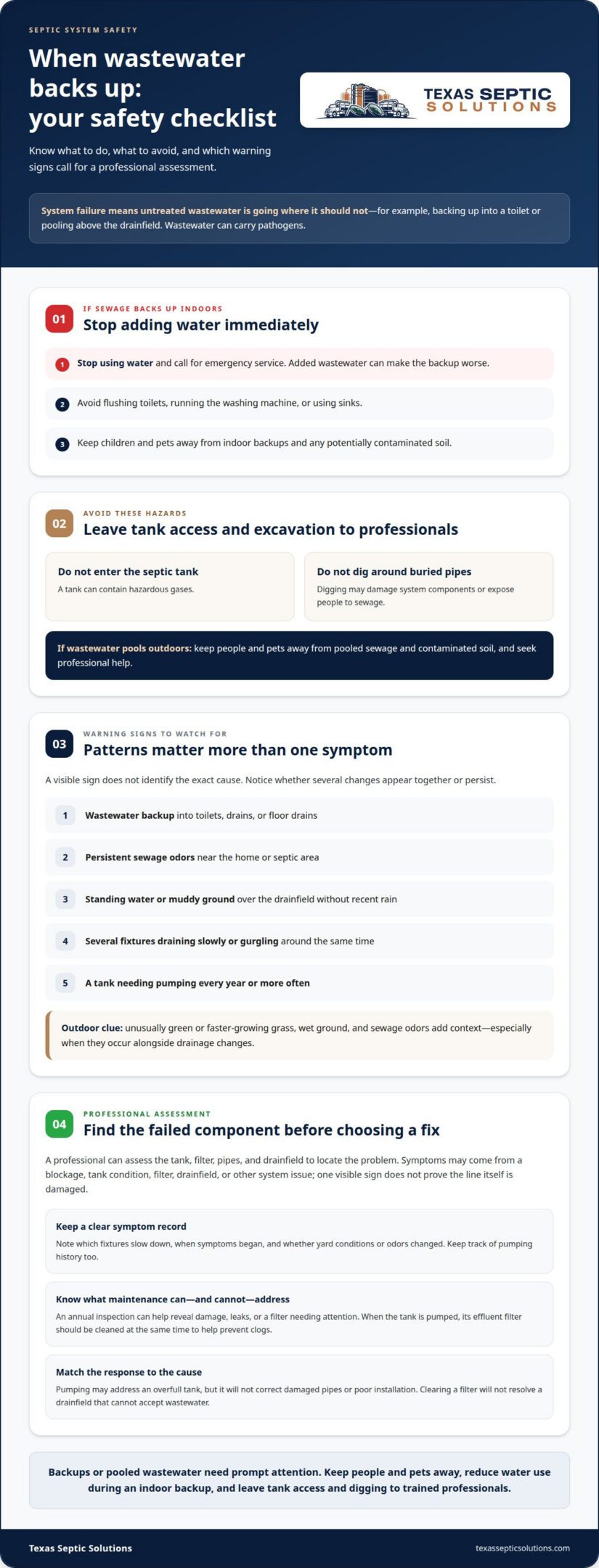
A septic system failure occurs when untreated wastewater goes where it should not. Examples include sewage backing up into a toilet or pooling above the drainfield. These signs need prompt attention because wastewater can carry pathogens. Keep children and pets away from pooled sewage, indoor backups, and contaminated soil.
If sewage backs up inside, stop using water immediately and call for emergency service. Avoid flushing toilets, running a washing machine, or using sinks, since added wastewater can worsen the backup. Don’t enter the septic tank or dig around buried pipes. A tank can contain hazardous gases, and digging may damage components or expose people to sewage.
System failure can have several causes, and a visible symptom doesn’t identify the exact one. A professional assessment can examine the tank, filter, pipes, and drainfield to locate the problem. Common warning signs include:
- Wastewater backing up into toilets, drains, or floor drains.
- Persistent sewage odors near the home or septic area.
- Standing water or muddy ground over the drainfield without recent rain.
- Several household fixtures draining slowly or gurgling.
- A tank that needs to be pumped every year or more often.
Design or installation problems can also contribute to failure. For example, a system that doesn’t suit the property’s wastewater load or soil conditions may struggle to move and disperse effluent. Poor placement, an unsuitable layout, or installation defects can affect how wastewater travels from the home through the tank and into the drainfield. These issues require an assessment of the system as a whole, not just repeated clearing of one drain.
Maintenance helps identify developing problems before they become extensive failures. An annual inspection can help reveal damage, leaks, or a filter that needs attention. When the tank is pumped, its effluent filter should be cleaned at the same time to help prevent clogs. Keep track of pumping history and changes in drainage, odors, or yard conditions; those details help show how symptoms have changed.
A professional can determine whether the problem involves a blockage, tank condition, filter, or drainfield, then recommend work suited to the cause. Pumping may address an overfull tank, but it won’t correct damaged pipes or poor installation. Likewise, clearing a filter won’t resolve a drainfield that cannot accept wastewater. Matching the response to the failed component is essential.
Act quickly when sewage enters the home or surfaces in the yard. Keep people and pets away, stop adding water during an indoor backup, and leave tank access and excavation to trained professionals. For less urgent signs, arrange an inspection when symptoms persist or several warning signs appear together.
Can my failing septic system contaminate the water?
Yes. A septic system failure can release untreated sewage into groundwater or surface water. Yard and waterway changes can help flag a concern, but they don’t identify contamination by themselves.
Surface Signs of Possible Contamination
Unusually bright grass, standing water, and persistent odors near a septic area are surface signs associated with wastewater escaping or dispersing poorly. Excess nutrients in effluent can feed greener growth, while wet or muddy soil can indicate liquid waste is reaching the surface instead of filtering through the drainfield.
These signs matter because wastewater can carry nitrates and other contaminants toward nearby groundwater. A sewage odor close to wet ground adds context, especially when several changes occur together. Yard clues cannot identify what is in a well, so treat them as reasons to investigate the septic system, not proof of unsafe drinking water.
For example, a lush patch above a drainfield beside persistent standing water deserves more attention than greener grass alone. Note where the changes occur and whether odors or wet soil appear in the same area. A pumping record from 5 years ago cannot establish whether current water is contaminated or whether a leak has developed since then.
Waterways, Algae, and Plant Overgrowth
Algae blooms and unusual plant growth near a lake, stream, or other waterway can indicate excess nutrients entering surface water. Nitrogen and phosphorus from a failing septic system can contribute to sudden algae growth, while wastewater nutrients can encourage plants to grow more vigorously near affected areas.
This matters because a septic failure can release untreated sewage into surface water, not only soil or groundwater. A sudden algae bloom near a property’s waterway is different from ordinary seasonal plant growth, particularly when septic odors or wet ground are also present nearby. The visible change raises concern, but it does not prove the septic system caused it.
Private well users should consider water quality separately from yard appearance. Abnormal nitrate or coliform bacteria levels in drinking water can indicate contamination associated with a failing septic system. Green grass or a nearby bloom cannot confirm well contamination; a water test is needed to assess nitrate and bacteria levels. If results are abnormal alongside septic warning signs, arrange a professional assessment of the system.
Keep people and pets away from standing wastewater, and avoid using a suspected contaminated well for drinking until its water quality has been assessed. Share the location of wet ground, odors, green patches, or nearby algae changes during the septic inspection. Together, these observations help professionals assess possible pathways from the tank or drainfield toward groundwater or waterways.
Clogged or damaged pipes from the house to the tank
The pipe between a home and its septic tank carries wastewater out of the building. A blockage or break along this route can slow flow, cause gurgling, or allow sewage to back up. A single clogged fixture can have a local cause, but trouble affecting several drains may point to a shared line or another part of the septic system.
Listen for gurgling from toilets or sinks after water drains. Trapped air can make household pipes bubble when a severe blockage restricts flow. A full tank or clogged outlet filter can create similar sounds, so gurgling alone doesn’t identify a damaged line. If several fixtures are affected, that pattern gives a professional useful context when assessing the route to the tank.
Tree roots can grow into septic pipes, obstruct effluent flow, and damage the pipe. Mention nearby trees during an assessment, particularly if drainage trouble develops around the same time. Heavy objects placed over septic components can also cause damage. Avoid driving or storing heavy loads over the system, since pressure can harm buried pipes or other components.
What enters the plumbing can add to blockages. Disposable wipes don’t break down in septic systems and can collect in the tank, filter, or drainfield pipes. Wet wipes, food scraps, fats, oils, and grease can also obstruct flow. Flush human waste and toilet paper only; keep cooking grease and food scraps out of sinks. These habits help limit clog risks, though they can’t undo existing pipe damage.
A septic professional can assess a clogged pipe from the house to the tank and determine whether clearing the line is appropriate. That may address an obstruction, but a damaged or root-intruded pipe can need a different response. Diagnosis matters: repeated clearing without identifying why a line is restricted can leave the underlying problem unresolved.
Tell the professional which drains are affected, when symptoms began, and whether gurgling or backups occur. A toilet and nearby shower slowing together, for example, present a different pattern from one kitchen sink draining poorly. Mention nearby tree roots, recent heavy loads over the system, and any known history of recurring clogs. These details help narrow down the possible cause without assuming every slow drain means a broken pipe.
A leak can also let wastewater reach the surrounding soil, creating a possible route toward groundwater or surface water. Nitrates are among the concerns associated with septic contamination, but a clogged pipe alone doesn’t establish that water is contaminated. If you suspect a damaged line, keep people away from any sewage that surfaces and arrange a professional assessment of the pipe and affected septic components.
Foul indoor and outdoor septic odors
A sewage smell inside the home or near a septic tank deserves attention. Odors may point to a full tank, blocked vents, or a drainfield that isn’t processing wastewater correctly. The smell’s location offers a useful clue: odors around a toilet or sink differ from persistent smells near the tank or drainfield. Neither location alone identifies the failed component.
Inside, notice whether the smell is strongest near toilets, sinks, or other plumbing fixtures. Sewer odors around household sinks can result from escaping gases linked to ventilation problems. Cracked vent pipes may let gases escape, while a blocked vent can interfere with ventilation. A smell near one fixture can also have a different cause than odors across several rooms, so note where it occurs and whether it returns.
Outside, check whether odors cluster near the septic tank, its lid, or the drainfield. A damaged tank-lid seal can allow gases to escape around the access point. A drainfield that isn’t processing wastewater properly may let effluent rise toward the soil surface, producing odors alongside damp ground or standing water. Green grass or unusually lush growth in the same area adds context, particularly when the smell persists.
Don’t mask the smell with air freshener or fragrance. Masking changes the odor, not the underlying condition, and can make it harder to notice whether it continues. Instead, record the location and timing. Note whether the odor returns near the tank after water use, stays close to a sink, or appears across the yard. Those observations help distinguish a localized plumbing or vent concern from a broader septic-system problem.
Pay attention to combinations. An odor near the drainfield together with wet soil suggests a different pattern from a brief smell near one indoor fixture. Sewage odors alongside slow drains, gurgling, or wastewater backing up warrant professional assessment. The system may need attention to its tank, vents, seals, pipes, or drainfield; repeatedly cleaning a fixture won’t resolve a problem elsewhere.
Keep people and pets away from visible sewage or wastewater, and don’t open or enter the septic tank. A qualified professional can assess where gases are escaping and whether effluent is reaching the surface. Describe the odor’s location, persistence, and nearby signs rather than trying to locate buried components yourself. A timely diagnosis helps identify the source and the appropriate septic-system repair.
If persistent septic odors are affecting your home or yard, request septic system repair to address the underlying problem.
Texas Septic Solutions
Texas Septic Solutions helps Huffman property owners identify whether slow drains, odors, or wet ground point to septic trouble. A professional assessment can narrow down whether the cause involves a pipe, tank, filter, or drainfield, so the next step fits the problem. Depending on the system’s condition, septic system repair, maintenance, or pumping may address the issue; a new installation may be appropriate when an existing system cannot be repaired effectively.
Share which fixtures are affected and describe any changes around the septic area. This gives the team useful context as it assesses the system and discusses suitable service. For help with suspected septic trouble, contact Texas Septic Solutions.
Take the Next Step With Confidence
Understanding what the signs of a damaged septic line in Huffman look like gives you a clearer starting point, but identifying the cause guides the right response. Before an assessment, gather practical details: which fixtures are affected, when the change began, and where you’ve noticed odors or unusual ground conditions. These observations can help focus the conversation without requiring you to inspect buried pipes or septic components yourself.
For a persistent symptom or a change that’s getting worse, don’t wait for the problem to become harder to manage. A professional evaluation can help determine what needs attention and what action suits your system. Contact Texas Septic Solutions to discuss the signs you’ve noticed and the next step for your property.
With clear observations and the right assessment, you can move forward with a better understanding of your septic system.
Frequently Asked Questions
What are some common reasons a septic system doesn’t work properly?
Common causes include excess household water, blockages, damaged pipes, and a tank or drainfield that cannot handle wastewater effectively. Several loads of laundry close together, for example, can add more water than the system can process at once. Roots can also obstruct or damage pipes, while wipes, grease, and food scraps can build up and impede flow. Similar symptoms can have different causes, so diagnosis should consider the system’s components.
What happens when a septic system fails?
A failure means untreated wastewater isn’t staying within the system and may back up indoors or surface outside. That can disrupt normal use of toilets, sinks, and other drains and create contact with sewage. Keep people and pets away from pooled wastewater or indoor backups. Stop adding water during an indoor sewage backup, then arrange professional help to identify the source and determine which components need attention.
How can I prevent a failure?
Use water thoughtfully by spacing out laundry and dishwasher loads instead of running several water-heavy tasks together. Keep wipes, including those labeled flushable, paper towels, toilet paper, feminine hygiene products, grease, garbage-disposal food scraps, and harsh chemicals out of the septic system. Keep heavy vehicles and objects off the drainfield, and maintain the system regularly. These habits reduce avoidable strain, though they can’t correct an existing damaged component.
What Are the Warning Signs That Your Septic System Needs Repair?
Arrange an assessment if several changes appear together, such as recurring plumbing trouble, sewage odors, or a wet patch near system components. A toilet that gurgles while other fixtures drain poorly gives a different warning pattern than one isolated slow sink. Also note whether symptoms return after pumping or clearing a clog. That history helps distinguish a short-lived obstruction from a problem needing further repair.
What are common signs of a damaged septic line?
For Huffman homeowners asking what the signs of a damaged septic line are, recurring backups, gurgling plumbing, and drainage trouble across multiple fixtures are useful clues. Note whether symptoms occur in separate parts of the home or appear after particular water use. These signs can also stem from the tank, filter, or drainfield, so they don’t confirm a broken line. Record when symptoms happen to help guide an assessment.
How can you tell a septic line is clogged versus broken?
Huffman property owners wondering what signs distinguish a clogged septic line from a broken one should know that symptoms alone can’t reliably tell them apart. Both conditions can restrict wastewater flow and cause backups. A blockage may be cleared, while a damaged section may require repair or replacement. A professional assessment needs to locate the restriction and evaluate the pipe’s condition, rather than repeatedly clearing a line without finding why it keeps clogging.
What causes septic lines to crack, collapse, or leak?
Tree roots can grow into septic pipes, obstruct effluent, and damage the line. Heavy objects or vehicles over buried components can also put damaging pressure on pipes. Installation problems or deterioration may affect a line’s condition as well. The cause depends on the damage’s location and the pipe’s condition. Avoid digging to find it, since excavation can cause additional damage or expose sewage.
How do you inspect a damaged septic line safely?
Don’t climb into the septic tank or dig up pipes yourself. Keep children and pets away from sewage or wastewater on the surface, and avoid touching pooled waste. Instead, note the affected fixtures, odor locations, and visible wet areas, then share those observations with a septic professional. A trained inspection can assess buried components without putting you in direct contact with sewage or risking damage through unsupervised excavation.