
Septic Tank Cleaning in Houston: Pumping and Service
A dependable pumping schedule starts with a simple rule: pump your septic tank at least every 2 to 3 years. For septic tank cleaning in Houston, use that interval as a planning baseline, and watch for warning signs that may call for service sooner.
It’s easy to put septic maintenance out of mind when everything seems to be working. But understanding what pumping removes, how often to schedule it, and which symptoms need attention can help you plan service before a small concern becomes a bigger disruption. This guide explains septic tank cleaning in Houston, what happens during sludge removal, and the signs that your system needs attention. You’ll also learn how to prepare for service and choose the right next step for your property.
Key Takeaways
- Use the recommended pumping interval as a starting point, then account for your household’s use and system conditions.
- Notice changes in how plumbing drains or smells; they can help you recognize when the system needs attention.
- Understand what sludge removal does and why routine pumping is only one part of septic system care.
- When choosing a septic company, look for service that fits your system’s needs, from maintenance to repairs.
- Texas Septic Solutions provides pumping, maintenance, repair, and new system installation for septic needs.
Houston-area service coverage
Houston-area coverage depends on the property address, the service needed, and travel logistics. Houston and Greater Houston cover a broad region, so a company’s local presence alone doesn’t show whether every address falls within its working area. For septic tank cleaning in Houston, the practical first step is to identify the property’s exact location and the work required.
A 50-mile radius can help describe distance, but it doesn’t establish a service boundary by itself. Travel routes, traffic, crew schedules, and the location of the service base all affect how far a team can reasonably travel. A property 50 miles away by straight-line measurement could take longer to reach than one farther away along a direct route. Distance should be considered with the actual drive, not as a guarantee of coverage.
Greater Houston also includes addresses beyond Houston city limits. A homeowner in an outlying community could have different travel needs from someone near central Houston. When describing the location, use the street address and community name rather than relying only on “Houston area.” That gives dispatch a clearer basis for assessing the trip and planning equipment access.
Same-day service availability depends on the schedule and the job. An urgent backup and a planned maintenance visit can require different timing and equipment. Travel distance, current calls, site access, and the service needed all shape the dispatch plan. Same-day service is not determined by a 50-mile radius alone. Clear details about the property and symptoms help the team assess urgency and organize a workable visit.
Houston-area septic services can involve pumping, maintenance, repairs, or a larger system concern. The right service area question is therefore not only “Is this address covered?” It’s also whether the team can reach the tank, bring the needed equipment, and address the reported problem. For example, a property with a narrow access route may need a different arrival plan than a home with an open driveway.
- Share the location: Give the property address and community name.
- Describe the need: Explain whether the request concerns regular maintenance, pumping, or a current problem.
- Note access details: Mention gates, narrow driveways, or other obstacles near the tank.
- Explain timing: Say whether the issue is urgent or planned, so dispatch can assess scheduling.
These details connect location, timing, and septic system needs. They also help clarify whether a trip within Greater Houston, including a location described as 50 miles away, fits the service plan.
How often should I pump my septic tank?
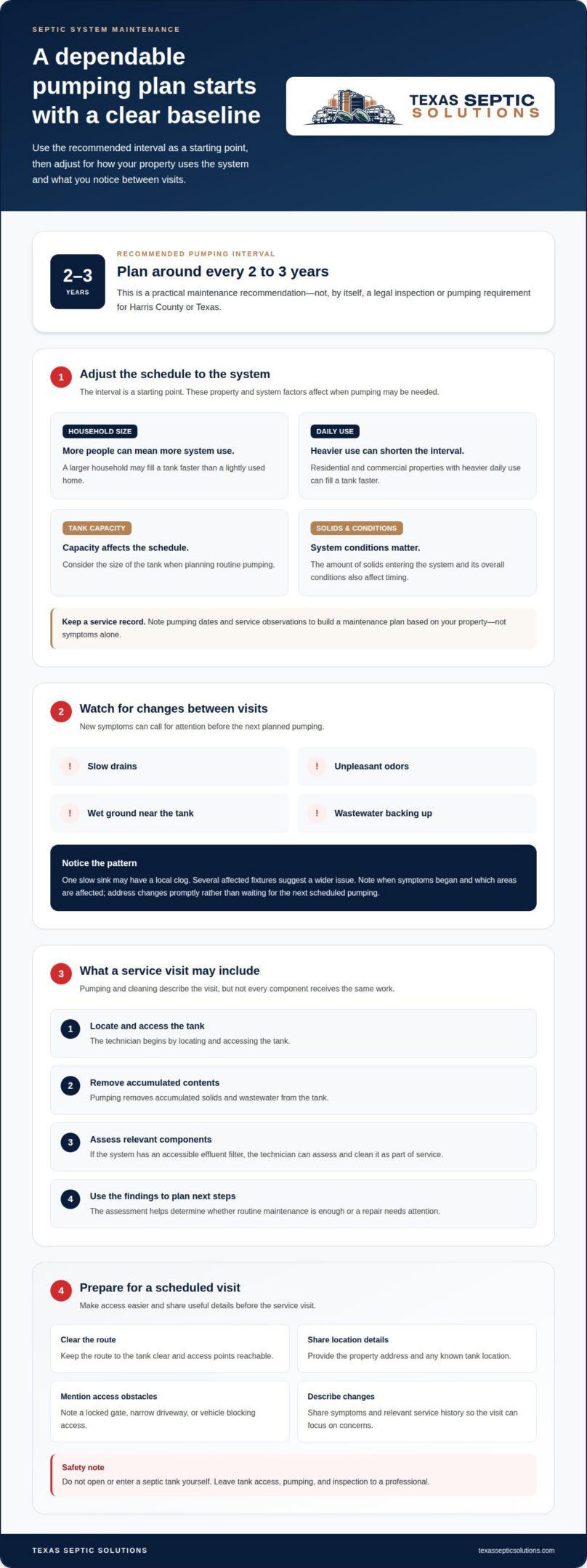
A practical starting point is pumping every 2 to 3 years. Actual timing depends on tank use, household size, and system conditions.
Recommended Pumping Frequency
Plan around the 2-to-3-year interval, then adjust for how the property uses its system. A larger household or a residential and commercial property with heavier daily use can fill a tank faster than a lightly used home. Tank capacity and the amount of solids entering the system also affect the schedule.
Keep a record of pumping dates and service observations. That history helps establish a regular maintenance plan instead of relying on symptoms alone. If drains slow down or odors appear between visits, address them promptly rather than waiting for the next scheduled pumping. The interval is a maintenance recommendation, not a legal rule for Harris County or Texas.
Harris County or Texas rules should not be inferred from a maintenance interval. The 2-to-3-year recommendation above does not, by itself, establish a legal inspection or pumping requirement.
A service visit generally begins by locating and accessing the tank. The technician removes accumulated contents with pumping equipment and assesses relevant components, including an accessible filter. The findings help determine whether routine maintenance is enough or whether a repair needs attention.
Don’t open or enter a septic tank yourself. Tank access and handling require care, so leave pumping and inspection to a professional. If you notice a problem between planned visits, contact Texas Septic Solutions and describe the symptoms and property use.
Before a scheduled visit, clear the route to the tank and make access points reachable. Share the property address, any known tank location, and relevant access details. For example, mention a locked gate or a vehicle blocking the driveway. Avoid opening the tank to locate or prepare it.
Tank Pumping and Filter Cleaning
Pumping removes accumulated solids and wastewater from the tank. Filter cleaning addresses a separate component: where the system has an accessible effluent filter, the technician can assess and clean it as part of service. The filter helps limit solids moving onward from the tank, so its condition matters alongside the tank contents.
Septic tank cleaning and pumping are often used to describe the same service visit, but cleaning doesn’t mean every component receives identical work. The technician’s assessment helps identify what the tank and filter need. Share any history of slow drains or prior service so the visit can focus on relevant concerns.
For septic tank pumping and cleaning, timing and preparation both matter. A regular schedule supports planned maintenance, while new symptoms call for attention between appointments. Keep the access route clear, explain what has changed, and let the service professional assess the tank and its components.
What signs indicate that my septic system needs servicing?
Changes around your home can signal that the septic system needs attention. Watch for slow drains, unpleasant odors, wet ground near the tank, or wastewater backing up. One slow sink may have a local clog, but several affected fixtures suggest a wider issue. Note when symptoms began and which areas show them. That information helps assess whether the concern involves plumbing, drain lines, or the septic system.
Pay attention to patterns, not just one isolated event. For example, a toilet that repeatedly drains slowly alongside a sluggish shower may point beyond one fixture. Gurgling sounds from drains, especially when several fixtures are used, also deserve attention. Record whether the problem affects one room or the whole property. A brief description gives a service professional useful context without requiring you to open the tank or handle wastewater.
If a septic tank is backing up or overflowing in Houston, stop running water and keep people away from affected wastewater. Contact a septic professional promptly, explain where the backup appears, and report any visible overflow. Avoid using toilets, sinks, showers, or laundry equipment until the cause is assessed.
Routine maintenance helps identify developing concerns before they disrupt daily use. Keep service dates and observations together, including recurring odors or wet patches after normal household water use. Note changes near the tank and the area where wastewater disperses. A damp patch or unusually strong odor in those locations calls for assessment, particularly when it appears alongside slow drains. Maintenance findings can guide whether the next step involves cleaning, pumping, or repairs.
Drain line maintenance matters too. A blockage between the home and tank can cause symptoms that resemble a full tank. For example, if one bathroom backs up while other fixtures drain normally, the issue may be localized. If several fixtures slow down together, report that pattern. Don’t pour harsh chemicals into drains to force a quick fix; describe what you’ve already tried instead.
- Track the symptom: Note the affected fixture, room, and time it began.
- Look for patterns: Record whether several drains slow down together.
- Describe the location: Report odors, wet ground, or visible wastewater near the system.
- Reduce water use: Stop using plumbing during a backup or overflow.
Recurring symptoms deserve attention even if they improve temporarily. A drain that clears and slows again, or an odor that returns near the same spot, can indicate an unresolved problem. Share those details during assessment. Clear information helps distinguish routine maintenance needs from drain line concerns or repairs, so the response addresses the underlying issue rather than only the symptom.
Septic tank cleaning and sludge removal
A septic tank separates household wastewater into distinct layers. Heavy solids settle at the bottom as sludge. Grease and lighter materials rise, forming a surface layer called scum. Partially clarified liquid remains between them and flows toward the next part of the system. Sludge removal means pumping accumulated contents from the tank so solids don’t keep building up. It doesn’t mean every part of the property’s wastewater system receives the same work.
During a service visit, a technician accesses the tank and removes its contents with pumping equipment. The technician can then assess visible tank components and accumulated material. This helps distinguish ordinary sludge buildup from an issue that needs further attention. For example, damage or an obstruction won’t be solved simply by removing tank contents. Pumping addresses accumulation; repairs address damaged or malfunctioning components.
The phrase “tank cleaning” can describe a pumping visit, but it doesn’t always mean the tank is scrubbed or disinfected. The practical goal is removing accumulated wastewater and solids while assessing the tank. Household additives are not a substitute because they don’t remove the physical sludge layer. Any recommended additional work should relate to an observed tank or system condition.
Property owners can help the visit go smoothly without opening the tank. Keep the access route clear, share the tank’s known location, and mention any recent backups or odors. A record of earlier service can also help explain how quickly sludge has accumulated. Don’t enter the tank or reach inside its openings. Leave access, pumping, and inspection to the service professional.
After sludge removal, pay attention to what the technician reports about the tank and outlet components. Ask for a clear explanation of any observed buildup, damage, or blockage. If wastewater has backed up, describe which fixtures were affected and whether the problem continues. Those details help separate a tank issue from a drain line concern or another repair need.
- Sludge: Solids that settle at the tank bottom.
- Scum: Grease and lighter material that collect at the surface.
- Pumping: Removal of accumulated tank contents.
- Assessment: Review of visible components and reported symptoms.
Think of septic tank cleaning as one part of system care, not a cure for every wastewater problem. Pumping removes accumulated contents; it cannot correct a broken line, damaged tank, or other defect. A clear service explanation should connect the work performed to the property’s observed condition. That distinction helps you understand whether the visit addressed routine buildup or identified a separate concern requiring repairs.
Choosing a septic company
Start by matching the service to the problem. Planned tank pumping differs from a repair for a damaged line or recurring backup. Texas Septic Solutions provides pumping, maintenance, and repairs, with the recommended work based on the system’s condition. For example, pumping removes accumulated tank contents, but it won’t fix a broken pipe. A clear scope helps you understand what the service can address.
Look for a direct connection between the symptoms and the recommended work. If several drains are slow, describe which fixtures are affected and when the issue began. If a technician recommends repairs, the explanation should identify the observed concern and how the repair addresses it. A clear estimate describes the work and its scope, rather than naming a service without explaining what it includes.
The word “licensed” describes a credential, not the full quality of a service plan. Consider whether the company explains which work it will perform and how it will assess the system. A clear explanation should distinguish pumping, maintenance, and repairs. For instance, a recommendation to pump should connect to tank accumulation, while a line repair should relate to a reported or observed line issue.
Use these points to assess whether the proposed service fits your property:
- Service scope: Does the explanation identify pumping, maintenance, or repair?
- System findings: Are observed conditions connected to the recommended work?
- Access planning: Are tank location, driveway access, and gates included?
- Next steps: Is it clear what happens if the visit finds another issue?
Timing matters too. A scheduled maintenance visit can be planned around property access, while a backup needs prompt attention. Share the address, symptoms, known tank location, and any access limits. For example, mention a locked gate or narrow driveway. These details help the service team plan around the actual site and reported problem.
For a residential property, explain household usage and service history. For a commercial property, describe how the system is used and whether multiple facilities are affected. Those details help the technician understand the operating context. A clear estimate should separate the immediate work from additional recommendations, so you can see which concern each proposed step addresses.
If pumping, maintenance, or repairs are the next step, request septic service with the symptoms and access details ready. A specific description helps connect your property’s needs with the right service.
Texas Septic Solutions
Texas Septic Solutions helps property owners plan septic care and address system concerns across Cleveland, Houston, Cypress, Huffman, and Shepherd. If you’re unsure whether your tank needs pumping or symptoms point to a repair, share what you’ve noticed and the system’s service history. The team provides septic system pumping and maintenance, along with repairs when a system needs attention. For properties needing a new system, installation is also available. The right next step depends on your septic system’s condition, not just its last service date.
Contact Texas Septic Solutions to discuss your septic system and arrange the service you need.
Make your next septic service decision with confidence
Use your service history and any new symptoms to start a clear conversation about your system. Sharing what changed, when it began, and which parts of the property are affected can help frame the next step. For septic tank cleaning in Houston, the goal is to understand what your system needs and why, not simply to schedule a visit. That conversation can also help you plan ongoing care rather than waiting until a concern interrupts normal use.
Texas Septic Solutions can help you discuss your septic system needs, whether you’re planning ahead or responding to a problem. Reach out with your questions and the details you’ve noticed, and take the next step toward a practical service plan.
Contact Texas Septic Solutions to get started.
Frequently Asked Questions
How much does septic pumping cost?
Septic pumping cost depends on the property and work required. Texas Septic Solutions provides pricing after a quote request. Factors include tank size, access to the tank, the amount of material to remove, and any additional work identified during service. For example, a blocked route to the tank can affect the work plan. Sharing the tank location and access details helps the estimate reflect the actual job.
How much does septic tank cleaning cost in Houston, TX?
The cost of septic tank cleaning in Houston depends on the tank and service needs at your property. Texas Septic Solutions provides pricing after a quote request, based on the details of the job. Tank size, access, location, and the work required can affect the estimate. Include the property address and any known access restrictions in your request to help describe the service accurately.
How often should a septic tank be pumped in Houston?
For residential systems, the recommended pumping frequency is every three to five years. Texas Septic Solutions also lists approximately every 2-3 years as the average. Household usage and service history help shape a practical schedule. Garbage disposals increase solid waste; schedule more frequent inspections/pumping if used regularly. Keep prior service dates available to help plan the next visit.
What factors affect septic tank pumping prices in Houston?
Tank size, access, the amount of material to remove, and the work required can affect the estimate. A tank that’s difficult to reach may require a different service plan than one with clear access. Texas Septic Solutions provides pricing after a quote request. Include the tank’s location, property address, and any known access obstacles, such as a locked gate, when describing the job.
What are the signs a septic tank needs cleaning or pumping?
Slow drains affecting several fixtures, recurring odors, wet ground near the system, or wastewater backing up can signal a service need. Note where the problem occurs and whether it returns after normal use resumes. For example, a backup affecting more than one bathroom gives a different picture from one slow sink. Share those observations when arranging an assessment.
How do I find a licensed septic service provider in Houston?
Texas Septic Solutions serves the Greater Houston area, including Cleveland, Houston, Cypress, Huffman, and Shepherd. Its credentials include InstallerII license OS0029925 and Maintenance provider license MP000 1859. The relevant credential depends on the work needed. For example, installation and maintenance involve different license categories. Describe whether you need pumping, maintenance, a repair, or a new system so the service request matches the work.