
Septic System Maintenance for Cleveland, TX Properties
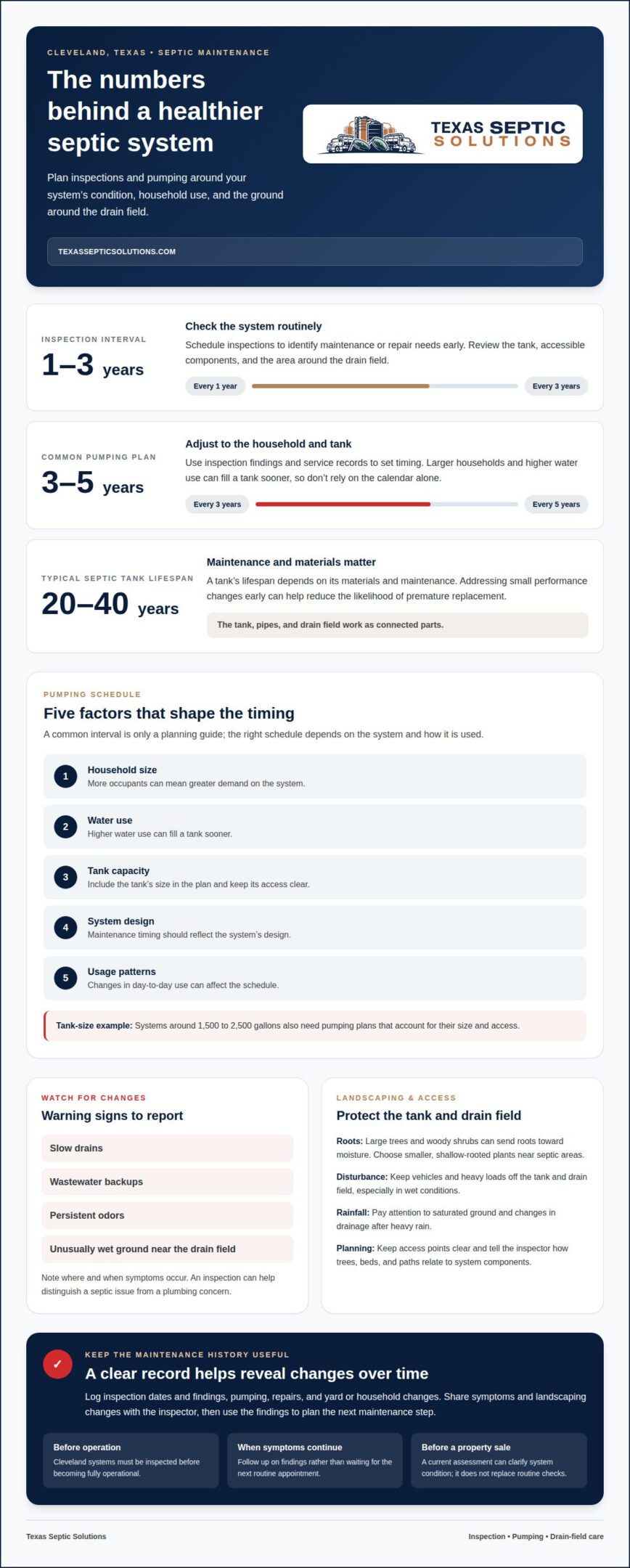
A septic system in Cleveland, TX should be inspected every 1-3 years. For septic system maintenance on properties with extensive landscaping in Cleveland, TX, regular inspections are especially useful for catching changes around the tank and drain field before they become bigger problems.
It makes sense to ask whether trees, garden beds, or heavy rain could affect your septic system, and how often pumping belongs on your maintenance calendar. Pumping needs depend on household size, water use, tank capacity, and system design. This guide explains how to plan inspections and pumping, spot warning signs, and protect the drain field when landscaping or saturated soil may affect it.
Key Takeaways
- Plan septic inspections every 1-3 years, and use the results to identify maintenance or repair needs early.
- Set a pumping schedule based on household size, water use, tank capacity, system design, and usage patterns.
- Learn which changes around your home can signal a failing system, so you can respond before the problem worsens.
- Protect the drain field from landscaping disturbances and pay attention to how saturated ground after heavy rain affects drainage.
- Understand how maintenance and system condition relate to the typical 20-to-40-year septic tank lifespan.
Routine inspections, pumping, and repairs
Cleveland homeowners should schedule septic inspections every 1-3 years to identify maintenance needs. Septic tanks are commonly pumped every 3-5 years, with household size, water use, tank capacity, system design, and usage patterns affecting the schedule.
Inspection and Pumping Schedules
Use inspections to review the tank, accessible components, and the area around the drain field. Keep a record of inspection dates, findings, repairs, and pumping so you can track changes over time. Larger households and higher water use can fill a tank sooner, so base your pumping plan on the system’s condition rather than relying only on calendar reminders.
Local rules matter, too. In Cleveland, septic systems must be inspected before they become fully operational. If you’re planning a new system or major work, establish the applicable inspection steps before putting the system into service. For a landscaped property, show the inspector how trees, garden beds, paths, and other features sit in relation to the tank and drain field.
A property sale is a practical time to arrange an inspection, even when there are no obvious symptoms. A current assessment helps clarify the system’s condition for both seller and buyer, while service records show when the tank was last pumped and what repairs were completed. Gather those records before the inspection and share them with the person assessing the system. A sale inspection does not replace routine checks.
Inspection Warning Signs
During an inspection, note slow drains, wastewater backups, persistent odors, or unusually wet ground near the drain field. These signs can point to a developing problem, but an inspection can help distinguish a septic issue from a plumbing concern. Record where and when symptoms occur, such as a slow bathroom drain after heavy water use, and share those details with the inspector.
Follow up on inspection findings instead of waiting for a routine appointment if symptoms continue. A repair may address a damaged component or another diagnosed fault; the right work depends on what the inspection reveals. Keep vehicles and heavy loads off the tank and drain field, especially during wet conditions. Leave these areas accessible for inspection and service.
- Keep a dated log of inspections, pumping, and repair work.
- Share drainage symptoms and landscaping changes with the inspector.
- Use inspection findings to set the next maintenance step.
How long does a septic system in Cleveland last?
A septic tank typically lasts 20 to 40 years, depending on its materials and maintenance. For Cleveland homeowners, preserving that lifespan means addressing small performance changes before they develop into system failures. Proper maintenance can extend system life and reduce the likelihood of premature replacement.
Think of the tank, pipes, and drain field as connected parts. A problem in one area can affect wastewater movement elsewhere, so repair decisions should follow an inspection rather than guesswork. Keep dated records of pumping, cleaning, repairs, and changes to the yard. These records can show whether a recurring symptom followed a repair or a change in household water use.
A home addition can change how the property uses its septic system. More occupants or increased water use may place greater demands on the system. Before changing the home or landscaping, consider how the plans relate to the tank and drain field. Keep access points clear, and avoid placing structures or directing heavy traffic over system components.
Take particular care with large trees and woody shrubs near septic pipes and drain fields, since roots can grow toward moisture. Choose smaller, shallow-rooted plants near these areas, and keep trees and large shrubs outside the system’s footprint. No single distance suits every property; consider the plant’s mature root spread and the location of septic components.
Drain-field repairs depend on what has failed. Soil fracturing may be considered for a failing system, but whether it is suitable depends on the soil and drain-field condition. Don’t assume one repair method will resolve every drainage problem. An assessment should identify the affected area and the work needed before landscaping or soil work begins.
Hydro jetting may be considered when a line needs cleaning, but clearing a pipe is not the same as repairing a damaged component or restoring a failing drain field. First identify where the restriction or failure is. Then match the work to that specific problem instead of treating a temporary improvement in flow as proof that the entire system is sound.
Use these steps to reduce avoidable strain:
- Keep maintenance and repair records together.
- Plan home additions and planting around the system layout.
- Respond to recurring drainage changes with an inspection.
- Base repair work on the diagnosed fault, not a general cleaning alone.
For Cleveland properties, protecting the drain field from root intrusion and unnecessary disturbance supports the system’s long-term function. You can still have shade and garden beds, provided planting choices respect the tank, pipes, and drain-field area.
Routine septic tank pumping and maintenance
In Cleveland, routine pumping helps remove accumulated solids before they interfere with normal tank function. A common planning interval is every 3-5 years, but the right timing depends on household size, water consumption, tank capacity, system design, and usage patterns. Use inspection findings and service records to adjust the schedule instead of treating the calendar as the only guide.
For example, a household with heavier daily water use may need a different pumping plan than a smaller household using the same tank capacity. Larger tanks, including systems around 1,500 to 2,500 gallons, also require planning around their size and access. Keep your septic records together, including the last pumping date, tank capacity, household changes, and any maintenance or repair work.
A thorough service visit should focus on the tank and the work being done, not just the date on a reminder. Before the appointment, locate the tank access and clear away plants, stored items, and other obstructions. Share useful details, including recent changes in water use or recurring drainage trouble. Afterward, record the work completed and any recommended next steps.
For Cleveland properties, pumping needs and the work involved vary with factors such as tank size and access. Keep comparisons focused on the same scope of service, such as whether the visit includes pumping alone or additional maintenance. No single approach fits every property, so share relevant details about the system and its accessibility when arranging service.
Routine pumping and emergency service address different situations. A scheduled visit follows the system’s maintenance needs; emergency service is for sudden backups or other urgent symptoms. Don’t wait for a scheduled date if wastewater backs up into the home or persistent drainage problems develop. Prompt attention can help identify whether the issue involves the tank, plumbing, or another system component.
Use this simple recordkeeping routine after each visit:
- Write down the service date and pumping completed.
- Record changes in household size or water use.
- Save inspection findings and repair details with the tank records.
- Set the next reminder based on system condition and usage.
For a property with extensive landscaping, keep tank access clear when planning garden beds or paths. Avoid placing heavy features over access points, and record landscape changes in your maintenance notes. These steps make future pumping more straightforward and give the service team useful context about the property.
What are signs my septic system is failing?
Slow drains in several rooms, sewage backups, persistent odors, or unusually wet ground near the drain field can signal a problem. Cleveland homeowners should contact Texas Septic Solutions when these signs appear, especially if they recur or worsen.
Look for patterns, not just one slow sink. If a toilet and nearby shower drain poorly at the same time, note both fixtures and when the problem began. A blockage in one fixture can have a different cause from drainage trouble affecting several parts of the home. Those details help an inspection focus on the system’s condition.
Outside, look for soggy patches, standing wastewater, or grass that stays unusually green compared with the surrounding lawn. A wet or lush strip above the drain field can indicate that wastewater isn’t dispersing as expected. After heavy rainfall, saturated soil can also affect drainage, so note whether the change began during or after wet weather.
Odors matter, too. A sewage smell near the tank, drain field, or inside the home deserves attention, particularly when accompanied by slow drains or wet ground. Don’t enter the tank or try to inspect its contents yourself. Keep people and pets away from wastewater, and note where the smell occurs.
Common observations to share during a service visit include:
- Which drains are slow, and whether several are affected.
- Where odors or wet patches appear around the property.
- When symptoms began and whether rainfall preceded them.
- Any recent changes in water use or landscaping.
Several conditions can contribute to failure, including accumulated solids, damaged components, restricted flow, or a drain field that can’t disperse wastewater properly. Symptoms alone don’t identify the cause. An inspection can connect visible signs with the tank, plumbing, and surrounding soil to help determine whether pumping, cleaning, or repair is appropriate.
Act promptly if sewage backs up into the home or wastewater appears on the ground. Avoid contact with sewage, and don’t direct additional water toward the affected area. Share your observations and maintenance history with Texas Septic Solutions. Details such as a recurring backup after laundry can help with diagnosis.
If problems continue after a repair, an assessment can clarify whether the existing system remains suitable or whether septic system installation should be considered. That decision depends on the diagnosed condition and property needs, not one symptom alone. Recording signs early gives Cleveland homeowners a clearer starting point for choosing the next step.
Drain-field and rainfall considerations
Heavy rainfall around Cleveland can saturate soil and make it harder for wastewater to drain. Planning septic system maintenance for properties with extensive landscaping in Cleveland, TX means considering water movement, plant placement, and clear access to system components.
Planning Landscaping Around Septic Areas
Before adding garden beds, paths, or lawn features, mark the tank and drain-field locations. Keep access points reachable, and avoid digging or changing ground levels above system components. Choose landscaping that doesn’t require frequent deep digging or soil additions. A simple property sketch can help household members and landscaping crews locate the system before work begins. If your project includes decks or paved living spaces, structural outdoor contractors like Cascade Outdoor Services emphasize coordinating construction footprints around underground utilities to preserve proper clearance and drainage.
Protecting the Drain Field from Loads
Vehicles, heavy equipment, and garden structures can compact soil or put weight on buried components. Keep traffic and material storage away from the tank and drain field, especially during landscaping work. Manage irrigation carefully, since excess water can saturate soil after rainfall. Make sure downspouts and watering systems don’t direct concentrated flows toward the treatment area.
Improving Drain-Field Drainage
Use ground cover that limits erosion without requiring deep roots or regular disturbance. Preserve the property’s natural surface-water flow, and avoid creating low spots where water collects. Don’t add soil or reshape the area over the drain field without considering the effects on treatment, drainage, and access.
After heavy rain, check whether water remains standing near the drain field or household drains slow at the same time. Note where pooling occurs and whether it follows a downspout, slope, or recently changed garden bed. This can help distinguish surface runoff from a possible system concern. Avoid adding irrigation while the ground remains saturated.
Landscaping can help manage surface water when it preserves natural flow away from septic components. For example, a shallow swale outside the drain-field area may guide runoff without sending it toward another low spot. Keep grading gentle, and don’t excavate over buried pipes. Before changing a slope, consider how the work could affect the soil around the field.
For properties with extensive landscaping in Cleveland, TX, a practical septic system maintenance plan should account for seasonal rain and planned yard work. Before a project begins, mark the tank and drain field, keep equipment and materials clear, and leave service access open.
- Mark the tank and drain-field boundaries before digging.
- Keep vehicles and material piles off the treatment area.
- Check downspouts and irrigation for water flowing toward the field.
- Record where standing water appears after rainfall.
If pooling or slow drains persist after wet weather, don’t cover the area with new soil or hardscape. Those changes can hide symptoms and restrict access. An assessment can help identify whether the concern involves runoff, saturated soil, or the septic system itself. Get help with drain-field concerns before changing the landscaping further.
Texas Septic Solutions: New Septic System Installation
Texas Septic Solutions helps Cleveland property owners with septic system maintenance, pumping, and repairs. If inspections reveal recurring problems or the existing system no longer suits the property, new septic system installation may be the next step.
For landscaped properties, share the locations of garden beds, trees, paths, and areas where rainwater collects. This context helps relate the system’s condition to the property layout and supports a practical maintenance or repair plan. If wastewater backs up or drainage problems persist, describe the symptoms and where they occur when arranging service.
Whether you need routine care, pumping, a diagnosed repair, or a new system, contact Texas Septic Solutions to discuss the next step for your property.
Keep Your Property Plan Moving
Make the septic system part of your landscape plan, not an afterthought. For properties with extensive landscaping in Cleveland, TX, septic system maintenance works best when access, planting, drainage, and future yard projects are considered together. Keep a simple record of changes around the system so the next service visit has useful context.
When you need help deciding between routine care, a repair, or a new installation, Texas Septic Solutions provides septic system maintenance, septic system repair, and new septic system installation. Share what you’ve noticed and how your property is laid out to start a practical conversation about the work ahead.
Contact Texas Septic Solutions to discuss your septic system needs. A thoughtful plan can help you care for the system while keeping your outdoor space usable and welcoming.
Frequently Asked Questions
How often should I have my septic tank inspected in Cleveland?
Regular inspections can help identify potential septic system issues early. Pumping guidance gives two intervals: every three to five years for residential systems, and approximately every 2-3 years as an average. Keep your inspection findings and pumping dates together, then use them to understand how household water use and system condition affect the next service date. If you notice a new backup or persistent odor, don’t wait for the annual inspection.
How do I find a licensed septic company in Cleveland, Texas?
Look for a company whose relevant license details are clear and whose services match your need. Texas Septic Solutions lists InstallerII license OS0029925 and Maintenance provider license MP000 1859. These credentials relate to installation and maintenance, respectively. The company serves Cleveland, Houston, Cypress, Huffman, and Shepherd, so local homeowners can discuss whether their issue calls for maintenance, pumping, repair, or installation.
What Causes Septic System Failures?
Failures can follow excess solids, restricted flow, damaged components, or drain-field trouble. Everyday habits matter: Only human waste should be flushed; never flush wipes (even “flushable” ones), paper towels, toilet paper, feminine hygiene products, grease, garbage-disposal food scraps, or harsh chemicals. Garbage disposals increase solid waste; schedule more frequent inspections/pumping if used regularly. Note unusual drainage or alarm activity to help identify what changed.
What are typical septic pumping and inspection costs in Cleveland, TX?
Pumping and inspection needs vary with the system and the work required. Factors include tank size, access, and the condition of the system. For example, a tank with obstructed access may require different preparation from one with a clear service area. Describe the issue and share your system records when arranging service so the work can be scoped appropriately.
What Texas and Liberty County rules apply to septic system maintenance and repairs?
In Cleveland, septic systems must be inspected before becoming fully operational. Liberty County requires permits for new well construction and major repairs. These requirements concern system approval and significant work, not a blanket rule that every routine maintenance visit needs a permit. If your project involves major repairs or a new well, include the relevant permit and inspection steps in your planning.
How do drought, heavy rain, clay soils, and flooding affect septic systems in the Cleveland, Texas area?
Heavy rain can saturate soil around the drain field and make it harder for wastewater to drain. Heavy rain can saturate soil around the drain field; avoid parking heavy vehicles over the drain field during wet conditions. Clay soils and flooding can keep the ground wet longer, while drought changes soil moisture. Watch for standing water or slower household drains after weather changes, and note where symptoms appear before changing irrigation or landscaping.