
Septic System Care for Off-Grid Homes in Texas
The right septic system for a rural Texas property depends on the site, household wastewater needs, and local requirements, not simply on being off-grid. Septic system care for off-grid homes in Texas starts with a site evaluation, which must happen before an on-site sewage facility is constructed or installed. An occupied home with plumbing and no public sewer connection must have a permitted system or connect to an approved wastewater system.
It’s understandable to focus first on the tank, but soil, slope, household size, and property layout all influence which system can work. This guide explains how those factors shape system selection, what to know about Texas permitting and local rules, and how daily water use, inspections, and pumping help protect a system over time. You’ll also learn how to recognize when professional maintenance or repair may address a concern before it becomes a larger problem.
Key Takeaways
- Choose a system based on site conditions and household wastewater needs, not just the fact that the home is off-grid.
- A conventional gravity system works without electricity, pumps, motors, or control panels.
- Plan pumping every 3-5 years as a general interval, adjusting for water use, household size, and system type.
- Protect the drainfield by spreading laundry loads through the week and keeping vehicles off the area.
- Setback requirements can depend on local rules, so the property’s county and city matter when planning a system.
How do I know what type of septic system my rural Texas property needs?
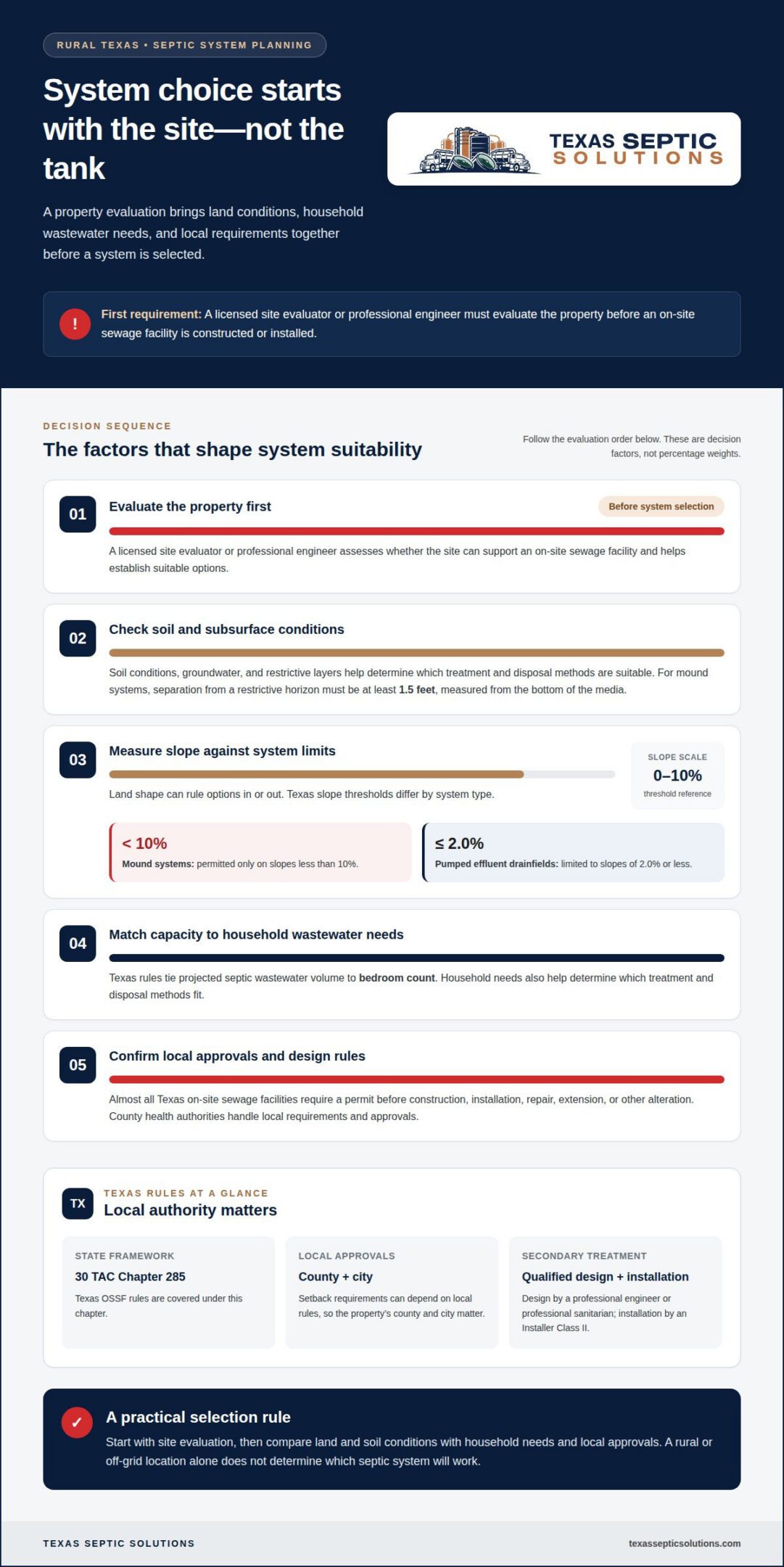
Start with the site, not a preferred tank. Before an on-site sewage facility is constructed, installed, altered, extended, or repaired, a licensed site evaluator or professional engineer must evaluate the property. Texas rules also tie projected septic wastewater volume to bedroom count. Soil conditions, slope, groundwater, restrictive layers, and household needs help determine which treatment and disposal methods are suitable.
System limits matter. In Texas, mound systems can be installed only where slope is less than 10%, and they need at least 1.5 feet of separation from a restrictive horizon, measured from the bottom of the media. Pumped effluent drainfields are limited to slopes of 2.0% or less. These thresholds show why a site evaluation must account for land shape and soil, rather than relying on a tank’s capacity alone.
Installation mistakes often start before construction: choosing a system before evaluating the site, overlooking local approval requirements, or treating every rural lot as suitable for a conventional layout. Almost all Texas on-site sewage facilities require a permit before construction, installation, repair, extension, or other alteration. County health authorities handle local requirements and approvals, while Texas OSSF rules fall under 30 TAC Chapter 285. For secondary-treatment systems, design must come from a professional engineer or professional sanitarian, and installation must be by an Installer Class II.
Aerobic treatment units need ongoing attention to mechanical parts, disinfection, and treatment performance. Texas requires maintenance providers to check, troubleshoot, and test systems as specified in 30 TAC §285.91(4). Some aerobic systems allow homeowner maintenance two years after initial installation, but local permitting authorities may require training or continued licensed maintenance. A missed service visit can leave a mechanical fault or treatment issue unnoticed.
Build a simple record for the property: keep permit and service documents, note inspection findings, and record repairs or changes to the lawn near the system. Wet or unusually lush patches can help flag a possible concern, while heavy landscaping or vehicles over system components can complicate access. Annual professional inspections are recommended; aerobic systems should be inspected quarterly. Effluent screens should be cleaned every 1-2 years. Repair pricing depends on the fault, access, parts, and extent of damage; a quote request establishes the project price. Regular records make it easier to spot patterns and plan maintenance before small problems grow.
How conventional septic systems work
A conventional septic system moves household wastewater through a tank and drainfield, relying largely on gravity. Understanding each component helps explain why solids, effluent, and the soil treatment area all matter.
Gravity System Operation
A conventional gravity septic system uses elevation to move wastewater and does not require electricity, pumps, motors, or control panels. That can suit an off-grid home because wastewater can flow without an electrical supply. The tank and drainfield still need suitable placement and maintenance. A blockage, damaged pipe, or overloaded drainfield can interrupt the flow, even without mechanical equipment.
Inside the septic tank, wastewater separates into layers. Heavier solids settle as sludge, while oils and grease rise to form scum. The liquid between those layers, called effluent, flows toward the drainfield. The tank holds solids back from the soil treatment area, where the effluent receives further treatment.
Think of the system as a connected path, not a standalone septic tank. Household plumbing carries wastewater to the tank, and an outlet directs effluent to the drainfield, where soil helps treat it. Every component matters: a tank can be intact, but a blocked outlet or saturated drainfield can still disrupt the system. For example, slow drainage throughout the house may point to a system-wide issue rather than a single fixture.
Tank Pumping
Conventional septic tank pumping removes accumulated sludge and scum from the tank. It matters because those solids take up space that wastewater needs, and excess buildup can move toward the outlet and drainfield. In Texas, pumping is typically done every 3-5 years, depending on household size, water use, and system type. Household changes can shift the schedule, so the interval isn’t identical for every home.
Pumping doesn’t repair a damaged pipe or restore a struggling drainfield. It removes tank contents, while an inspection can identify other concerns. Keep service records with the date and observations, such as unusual buildup or an outlet problem. This history helps show whether household water use or occupancy has changed since the previous visit.
Daily water use affects how the system handles incoming wastewater. Several loads of laundry in a short period can send a surge toward the tank and drainfield, so spread loads across the week to reduce sudden demand. Keep industrial or hazardous waste, chemicals, and non-septic-safe items out of household plumbing. Texas on-site sewage facilities are designed for domestic sewage, not industrial or hazardous waste or chemicals.
Conventional systems have fewer mechanical components than aerobic systems, but gravity doesn’t make them maintenance-free. Keep vehicle traffic off the drainfield and watch for slow drains or unusually wet ground. These signs can help homeowners spot a concern early and arrange an inspection before a minor issue affects more of the system.
Pumping and inspection schedules
Schedule tank pumping and system inspections separately. The right timing depends on household use, system type, and observed condition.
Routine Pumping
Routine pumping removes accumulated solids from the septic tank before they interfere with wastewater flow. In Texas, septic tanks typically need pumping every 3-5 years, depending on water use, household size, and system type. A full-time household may place different demands on its system than a home used seasonally, so keep a record of occupancy and water-use changes.
Pumping removes solids, but it doesn’t replace inspection or repair. Ask for the service date and findings to be recorded, including unusual buildup or problems at the tank outlet. These notes help you compare visits and adjust the schedule if household use changes. Don’t assume recent pumping alone explains slow drains or sewage odors.
Inspection Schedules
A septic inspection checks whether the tank, treatment components, and disposal area are working properly. Annual inspections are recommended for on-site sewage facilities, while aerobic systems should be inspected quarterly. A maintenance provider checks, troubleshoots, and tests systems as specified in 30 TAC §285.91(4). That review can identify a concern that pumping alone wouldn’t address.
Aerobic systems need attention to their mechanical components and treatment performance. Texas maintenance providers may have reporting reduced to every six months when a system has specified electronic monitoring and notification features. That reporting interval does not replace the inspection schedule. Keep service records together so you can distinguish a monitoring report from an in-person maintenance visit.
Use an inspection to understand the system’s condition, not just to mark a date on the calendar. A provider can examine accessible parts, look for signs of wear or blockage, and test operation. For aerobic equipment, checks can include mechanical components and chlorine service. If an inspection identifies a fault, record the finding and completed repair with the system’s service history.
Local requirements can also shape maintenance duties. County permitting authorities may set conditions for an aerobic system, including continued licensed maintenance or training for a homeowner maintaining an eligible system. Keep the permit, site evaluation, and maintenance records together. If sewage backs up, drains slow throughout the home, or the yard becomes unusually wet, note where and when it happens and arrange an assessment rather than waiting for the next scheduled visit.
Septic-safe water use and drainfield care
Texas soil, clay, and seasonal drought influence how quickly water moves through a site and which disposal method fits. For off-grid homes in Texas, septic system care starts with understanding how soil, groundwater, restrictive horizons, and slope affect system design and daily demands.
Homeowners can protect treatment performance by managing water use and keeping the drainfield surface clear. Texas on-site sewage facilities are designed for domestic sewage, not industrial or hazardous waste or chemicals. Keep those materials out of household drains. Spread laundry loads through the week instead of sending several loads into the system at once, reducing sudden wastewater surges that can stress the tank and distribution area.
Protect the drainfield from vehicle traffic and heavy use. Don’t park or drive over it, and avoid placing structures or activities that obstruct access to the system. Watch for persistent wet patches or unusually lush growth above a drainfield, and note where they appear. Those observations can help describe a change in system performance during an inspection. Surface drainage controls also matter: Texas requires them for on-site sewage facilities when the slope is less than 2%.
A distribution box directs effluent toward the drainfield, where soil provides further treatment. If distribution is uneven, one part of the field may receive more wastewater than another. Drainfield design must account for soil and site limits, rather than assuming every rural lot can use the same layout. In Texas, absorptive drainfields are sized and constructed under §285.33(b)(1). They require at least 2 feet of separation from groundwater and a restrictive horizon, measured from the bottom of the media.
Soil substitution is a separate design approach, not a homeowner repair for poor drainage. Texas soil substitution drainfields use a 24-inch-thick Class Ib and II soil buffer below and along all sides of the drainfield excavation. This defined layer is part of the design, so soil placement and excavation boundaries matter. The Texas Commission on Environmental Quality regulates septic system standards, and site conditions guide which approved approach applies.
Slope can rule out some disposal methods before installation. In Texas, drainfield areas with slopes greater than 30% or complex slopes are unsuitable for the listed disposal methods. Drip-irrigation disposal with secondary treatment and a filter requires at least 1 foot of separation from groundwater, plus 6 inches from a restrictive horizon, measured from the bottom of the media. Emitter spacing should follow the system design and applicable requirements. These requirements show why the distribution layout, soil profile, and elevations must work together.
A septic system care plan for off-grid homes in Texas should include practical routines: keep the drainfield accessible, manage household water use, and record changes in surface conditions. These observations provide useful context about system behavior through wet and dry periods.
What are Texas septic system setback distances from wells, property lines, and waterways?
Texas does not have one setback distance that applies uniformly to every off-grid property. State rules work alongside local ordinances, and county and city requirements can determine key siting details. A distance that applies to one rural lot may not apply to another, even when both properties are in Texas.
Before placing a septic tank or drainfield on a site plan, identify nearby wells, property boundaries, waterways, buildings, and other relevant features. Then compare the proposed layout with the rules for the property’s county and city. The governing authority and system type matter: a conventional layout and an alternative treatment system may have different siting considerations.
Well separation protects health because wastewater must be treated before it can affect groundwater. Required spacing depends on applicable local rules and site conditions. A site evaluation considers the property, including soil and groundwater. Mark the well and proposed disposal area on the same plan so their relationship can be assessed together.
Required distances from property lines and waterways also depend on local rules. A boundary can limit where a tank, treatment unit, or drainfield fits, while nearby surface water can affect which parts of a lot are suitable. Don’t estimate from a fence line or visible water’s edge alone. Show these features on the site plan and have the layout reviewed against the ordinances that apply to the address.
Start practical planning with a clear property map showing the home, well, lot boundaries, waterways, access routes, and potential septic locations. Note features that could limit the layout, such as a narrow building area or a sloped section near a creek. The map can help explain why a system may need a different footprint or disposal method, without assuming that one statewide setback applies.
For a Texas on-site sewage facility, permitting includes site evaluation, system design, permit issuance, installation, and final inspection. Keep these stages in order: the evaluation informs the design, and the approved design guides installation. County governments control approvals for off-grid properties, while state rules provide the broader framework. Apply local requirements to the specific county and city, rather than borrowing rules from a neighboring property or a generic online diagram.
Plan setbacks before construction or property changes. A proposed addition, new well, or revised drive can affect the space available for a permitted system. Keep the site plan and permit records together and refer to them when considering changes. If you’re planning a new layout, resolve the well, boundary, and waterway relationships during design, not after installation.
Texas Septic Solutions: New Septic System Installation
Texas Septic Solutions provides New Septic System Installation for rural properties that need a system planned around the site and household needs. Turn to the team when developing an off-grid home, replacing a system, or addressing one that no longer serves the property well. Site conditions, wastewater needs, and local requirements all shape the installation.
For an existing system, Septic System Repair, Septic System Maintenance, and Septic System Pumping address specific operating and upkeep needs. Focusing service on the system’s actual condition helps you plan the next step, whether you’re building, maintaining, or resolving a problem.
Contact Texas Septic Solutions to discuss your property’s septic needs, or visit Texas Septic Solutions online.
Make Your Next Property Decision With Confidence
Treat your septic plan as part of the property’s long-term layout, not a utility detail to leave until other decisions are made. Before changing a building footprint, access route, or outdoor space, consider how the change could affect future system access and use. Connecting septic system care for off-grid homes in Texas with broader property plans helps you make informed choices as household needs evolve. Similarly, for property owners overseeing site improvements or managing rural land assets, teams like Northwest Security Services highlight how physical security and access monitoring help protect remote facilities, equipment, and property investments.
If you’re planning a new system or dealing with a concern about an existing one, Texas Septic Solutions can help identify a practical next step. Share your plans or what you’ve noticed so the discussion can focus on your property’s needs.
Contact Texas Septic Solutions to discuss your septic system. With a clear plan and the right support, you can move forward with greater confidence in your off-grid home.
Frequently Asked Questions
What Waste Management Regulations Apply to Off Grid Homes?
In Texas, an occupied home with plumbing and no public sewer connection needs a permitted on-site sewage facility or a connection to an approved wastewater system. Almost all OSSF construction, installation, repair, extension, or alteration requires a permit. County and city rules can add siting and approval requirements, so those for a property in Cleveland may differ from those elsewhere. Keep the permit and approved system plan with the property records.
What is an on-site sewage facility, and why are OSSFs important?
An on-site sewage facility, or OSSF, treats and disposes of household wastewater on the property rather than sending it to a public sewer. Its components manage sewage so the system can treat domestic wastewater on site. For rural homes without sewer connections, an OSSF provides a permitted way to manage household sewage. It is designed for domestic sewage, not industrial or hazardous waste.
What kind of maintenance do they need?
Maintenance depends on system type. A conventional system needs attention to tank contents, outlets, and the drainfield; an aerobic unit also has mechanical parts and disinfection needs. Texas maintenance providers must check, troubleshoot, and test systems under 30 TAC §285.91(4). Keep inspection findings, pumping dates, repairs, and changes in household water use together. For aerobic systems, note chlorine service and mechanical checks in the same record.
What septic system types are allowed for off-grid homes in Texas?
Texas options include conventional gravity systems, aerobic treatment units, and standard intermittent sand filters, but the site and permitted design determine what fits. Gravity systems operate without electricity, while aerobic systems use mechanical treatment components. Secondary-treatment systems must be designed by a professional engineer or professional sanitarian and installed by an Installer Class II. Soil, slope, groundwater, and household wastewater needs all affect system selection.
How often should septic tanks be inspected and pumped in Texas?
Professional inspections are recommended annually for septic systems and quarterly for aerobic systems. Texas Septic Solutions gives residential pumping frequency as “every three to five years” and its FAQ also states “approximately every 2-3 years” as the average. Pumping needs depend on water use, household size, and system type. Keep dates and inspection notes so you can track service history and discuss changes in household use.
How should water use and wastewater be managed in an off-grid Texas home?
Spread laundry loads across the week and keep hazardous chemicals out of household drains. Only human waste should be flushed; never flush wipes (even “flushable” ones), paper towels, toilet paper, feminine hygiene products, grease, garbage-disposal food scraps, or harsh chemicals. Garbage disposals increase solid waste; schedule more frequent inspections/pumping if used regularly. Heavy rain can saturate soil around the drain field; avoid parking heavy vehicles over the drain field during wet conditions.
What are signs of septic system failure, and what should homeowners do?
Slow drains throughout the home, sewage backups, an overflowing tank, or persistent wet ground can signal a system problem. Note where symptoms appear and reduce water use while arranging an assessment. If septic alarm goes off: immediately minimize water use, check circuit breaker, and contact Texas Septic Solutions right away. Don’t ignore recurring symptoms or assume pumping alone will resolve a mechanical fault or drainfield issue.
What septic system maintenance records and service providers should Texas homeowners use?
Keep the permit, site plan, inspection reports, pumping dates, repair details, and aerobic-system service notes together. Use licensed professionals for paid septic installation, repair, or maintenance, and retain their findings for future visits. Texas Septic Solutions serves the Greater Houston Metro area within a 100-mile radius of Cleveland, TX, including Cleveland, Houston, Cypress, Huffman, and Shepherd. A consistent record helps connect service history to new symptoms or household changes.