
How to Handle a Weekend Septic Emergency in Houston
A sewage backup or overflow is a septic emergency, not a problem to wait out until Monday. Knowing how to handle a septic emergency on a weekend in Houston starts with stopping household water use, keeping people and pets away from sewage, and contacting a septic professional. Strong sewage odors, gurgling drains, slow drainage, or a soggy yard can also signal a serious system problem.
Seeing wastewater where it shouldn’t be is stressful. Quick, careful action can limit exposure and prevent more water from entering an overloaded system. This guide explains which warning signs need urgent attention, how to identify health hazards and visible overflow, and what to avoid while you arrange help.
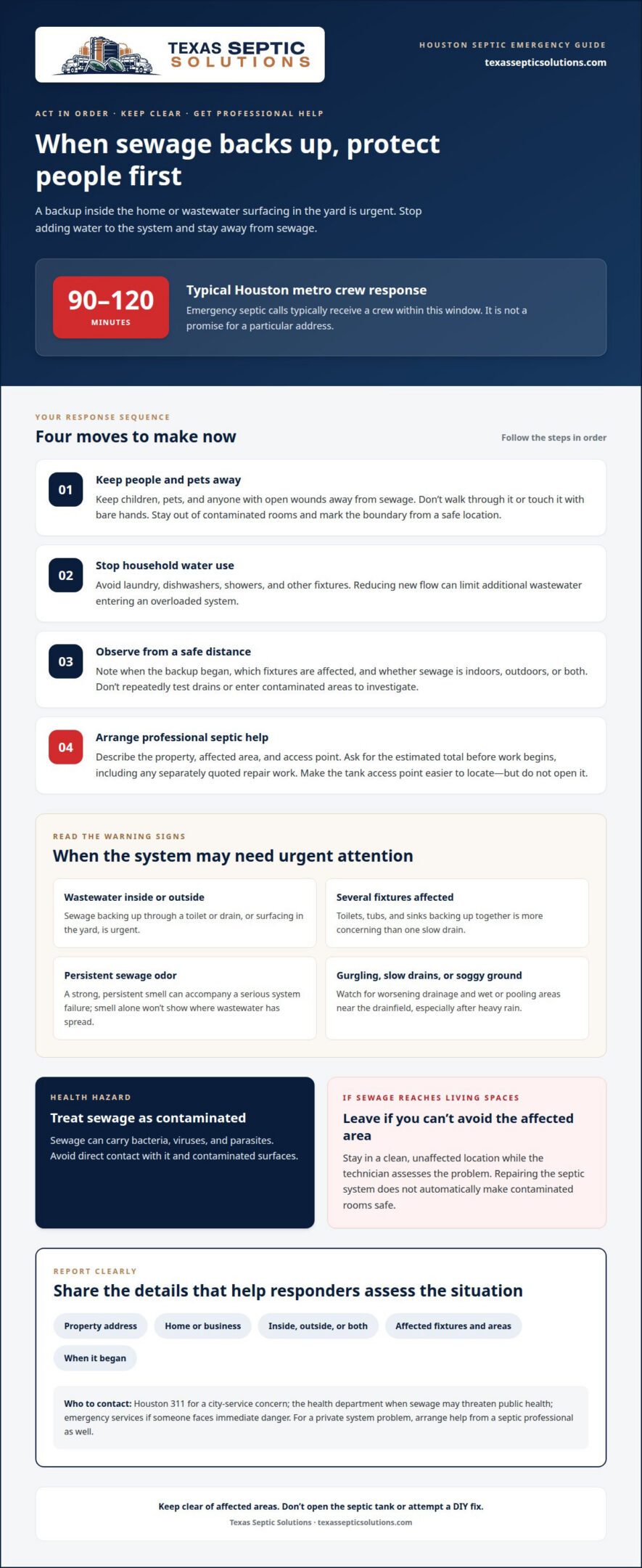
Follow the steps in order: protect people first, reduce water use, observe the affected area from a safe distance, and arrange professional help. You’ll also learn when a backup may make living spaces unsafe and why opening the septic tank or attempting a DIY fix can put you at risk.
Key Takeaways
- Treat sewage backing up into the home or pooling in the yard as urgent, and reduce household water use.
- Keep children, pets, and anyone with open wounds away from sewage, and avoid touching it with bare hands.
- Watch for warning signs such as persistent sewage odors, gurgling drains, slow drainage, and soggy ground near the drainfield.
- Don’t open the septic tank or attempt a DIY fix; keep clear of affected areas and arrange professional septic help.
- After heavy rain, inspect the yard from a safe distance for pooling or visible overflow, especially in low-lying areas.
What counts as a septic emergency?
In Houston, treat sewage backing up into a home or surfacing in a yard as urgent. A septic emergency can disrupt a home or business, expose people to wastewater, and require prompt professional attention.
Who regulates septic systems and emergency repairs in Houston and Harris County? Texas septic permitting, inspection, and record-keeping requirements vary by county, so the applicable authority depends on the property’s location. When reporting an issue, provide the address and describe whether sewage is inside, outside, or both.
When should you call Houston 311, the health department, or emergency services for a septic overflow? Contact Houston 311 about a city-service concern, the health department when sewage may threaten public health, and emergency services if someone faces immediate danger. For a private system problem, arrange help from a septic professional as well.
Does homeowners insurance cover septic emergencies in Texas? Review your policy’s septic backup, equipment, and water-damage provisions, then report the incident to your insurer. Coverage for repairs or resulting damage depends on your policy terms.
- Identify whether the problem needs emergency attention. Sewage backing up through a toilet or drain, wastewater escaping into the yard, or multiple fixtures failing can indicate a serious system issue. A single slow sink may have a different cause, but worsening drainage across the home warrants a prompt assessment. Businesses should also act quickly if backups affect restrooms or interrupt safe use of the premises.
- Limit further wastewater entering the system. Stop household or workplace water use while arranging septic help. Avoid running laundry, dishwashers, showers, and other fixtures. This step reduces additional flow into a system that may already be overloaded. Note when the backup began and which fixtures are affected, so the technician can understand the sequence.
- Arrange emergency septic service and ask about the quote. Emergency visits in Houston can involve dispatch, septic pumping, repairs, or a combination of work. Costs depend on the location, time, access, and problem. Ask for the estimated total before work begins, including any separately quoted repair work.
- Give the responder clear details about access and scope. Describe the property as a home or business, identify the affected area, and explain whether sewage is indoors or outdoors. Emergency septic calls in the Houston metro typically receive a crew within 90 to 120 minutes, though that is not a promise for a particular address. Keep people away from affected areas and make the tank access point easier to locate without opening it.
Is a sewage backup a health hazard?
Yes. Sewage can carry bacteria, viruses, and parasites, so treat contact with it and contaminated rooms as immediate health concerns.
-
Move people and pets away
Move children, pets, and anyone with open wounds away from the affected area. Keep them away from sewage in toilets, drains, floors, and yards, even if the water appears shallow. Don’t let anyone walk through it or touch it with bare hands. Mark the boundary from a safe location, and keep others out while you arrange emergency septic service.
-
Assess exposure and household safety
Stay out of rooms where sewage has entered, and avoid direct contact with contaminated surfaces. A strong, persistent sewage odor can accompany a serious system failure, but smell alone won’t show where wastewater has spread. If you can open a window without entering the affected area, do so to improve ventilation. Don’t handle contaminated belongings or investigate drains yourself.
-
Plan evacuation and cleanup
Leave the home if sewage has reached living spaces and you can’t safely avoid the affected area. Keep household members together in a clean, unaffected location while a technician assesses the septic problem. A backup inside the home may mean residents need to stay out until the situation is resolved. Don’t return just because toilets stop backing up; contaminated areas may still need attention.
- Arrange professional assessment before cleanup. Explain whether sewage reached a bathroom, kitchen, living area, or several rooms. Describe any exposure and where the odor is strongest. These details help the technician assess the system and affected areas without asking you to enter them. After the septic emergency is controlled and repairs are underway, cleanup may involve disinfecting and decontaminating affected spaces. If sewage contacted indoor surfaces or belongings, professional remediation may be needed after the system problem is resolved. Keep people and pets away until affected areas have been assessed and cleaned. Don’t assume wiping visible wastewater removes contamination from surfaces. Treat septic repair and cleanup as separate steps: resolving the cause does not automatically make contaminated rooms safe to use.
While emergency septic service is pending, stay clear of affected areas and limit movement through them. Ensure proper ventilation only from a safe position, without entering contaminated spaces.
Recognizing septic emergencies and urgent warning signs
- Check which fixtures are affected. If toilets, tubs, and sinks are backing up together, treat the situation as more urgent than one slow drain. Multiple affected fixtures may point to a septic system issue. Stop running water and note which drains are affected. For example, record whether flushing one toilet causes water to rise in another fixture. Share these observations with a septic professional instead of repeatedly testing the drains.
- Listen for new gurgling or bubbling. Sounds from drains can signal a blockage or overflow, especially alongside slow drainage or backups. Notice where the sound starts, such as a bathroom sink after a toilet flush. One unusual sound doesn’t identify the cause, but a repeated pattern across the home’s plumbing is useful information. Avoid flushing toilets to reproduce the noise. Write down when it began and whether drainage has slowed.
- Pay attention to persistent sewage odors. A strong smell inside or around the home can indicate a serious septic problem, particularly when drains are also gurgling. Note whether the odor is strongest near a bathroom, laundry area, or outside near the system. Don’t enter a wet or contaminated area to investigate its source. Instead, observe from a safe location and tell the responding professional where the smell is strongest and whether it changes.
- Compare symptoms and act on the combination. One slow sink drain is different from several fixtures failing at once, but worsening symptoms deserve attention. Sewage backing up into toilets or surfacing in the yard is a clear emergency warning sign. A soggy area near the drainfield can also signal a system problem. Stop household water use when symptoms point to a system-wide issue, keep people away from visible sewage, and arrange professional assessment. Clearly describe the affected fixtures, odors, sounds, and any visible wastewater.
A strong sewage smell paired with gurgling drains is especially concerning because it can indicate a serious blockage or overflow. Gurgling or bubbling drains may signal a septic system blockage or overflow. Treat either sign seriously, especially when both occur together.
Actions to avoid during a septic emergency
Do septic repairs in Houston require permits or inspections? Septic permitting and inspection requirements vary by county in Texas, so they depend on the property’s jurisdiction and the work involved.
- Stop adding wastewater to the system. Don’t run the washing machine, dishwasher, shower, or other water-using fixtures while the septic system is failing. Don’t keep flushing a toilet to see whether a backup has cleared. Each additional use sends more wastewater through the plumbing and can worsen an overflow. Tell everyone in the home or business to pause water use until a septic professional assesses the problem.
- Keep away from the septic tank opening. Never open the tank lid or lean over an access point to inspect it. Septic gases can be deadly, and opening the tank exposes you to hazards without identifying a safe repair. Don’t enter a tank or send anyone else inside. Leave access and inspection to trained septic professionals, and keep children and pets away from the area.
- Don’t attempt repairs yourself. Avoid digging around the tank or drainfield, removing components, or trying to clear a suspected blockage. A mistaken repair can worsen system damage, disrupt wastewater flow, or expose you to sewage. Even if the visible backup seems limited to one toilet, the underlying issue may involve another part of the system. Describe the symptoms and let a professional determine the necessary repairs.
- Keep chemicals and unsuitable items out of drains. Don’t pour harmful chemicals into the septic system to clear a blockage or control an odor. Avoid flushing non-biodegradable items, including products that won’t break down in the tank. These actions can create further problems instead of resolving the cause. If something has already gone down a drain, note what it was and tell the technician.
- Don’t mistake a temporary pause for a completed repair. If a toilet stops backing up after water use ends, the underlying failure may still need attention. Avoid resuming normal water use or testing several fixtures before the system is assessed. Record which fixtures showed symptoms and when they occurred. Permit or inspection requirements for repairs vary across Texas counties; give the septic professional the property’s location and describe the work involved.
Checking for pooling water and visible overflow
Inspect the yard from a dry, safe location. In Houston, heavy rain can flood septic systems in low-lying areas near bayous and floodplains.
- Scan the ground without walking through wet areas. Look for standing wastewater, unusually soggy soil, or a wet patch near the drainfield. A waterlogged yard, especially near the drainfield, may signal a septic problem. Note where the wet ground starts and whether it appears connected to visible overflow. Don’t step into pooled water or approach a suspected leak to investigate it more closely.
- Compare the wet area with recent rainfall. Heavy rain can flood septic systems in low-lying Houston locations, including areas near bayous and floodplains. Note whether pooling appeared after rain and whether it sits near the system or drainfield. Rain may explain saturated ground, but visible sewage or wastewater still needs prompt attention. Keep your observation factual: record the location, appearance, and whether the wet area is growing.
- Check for signs beyond standing water. From a safe distance, look for sewage surfacing, persistent odors, or nearby drains and toilets backing up. A wet patch combined with those symptoms is more concerning than damp ground alone. Don’t flush fixtures or run water to test whether the pooling changes. Instead, note which plumbing problems are happening and when they began.
- Keep the area clear and report what you see. Sewage pooling in a yard is a health and environmental hazard that needs same-day attention. Keep people and pets away, and don’t touch or move anything in the affected area. Give the septic professional a clear description: where pooling is visible, whether sewage appears present, whether rain preceded it, and whether indoor drains are affected. These details help guide the response and inspection.
- Arrange septic help rather than waiting for the ground to dry. A puddle can change as rainwater drains away, but that alone won’t establish whether the septic system is working. If you see wastewater or pooling near the drainfield, explain those observations when arranging service. For a possible overflow or system failure, request septic emergency service so the cause can be assessed and the next steps identified.
Texas Septic Solutions: New Septic System Installation
Texas Septic Solutions provides septic system repair and pumping when a system needs professional attention. After an overflow is controlled, maintenance can help support ongoing system care. If an assessment shows the existing system needs replacement or a new system is needed, Texas Septic Solutions also handles new septic system installation.
Share what you observed, such as indoor backups, pooling wastewater, or persistent odors, and explain whether the issue has happened before. Those details help clarify whether the next step is repair, pumping, maintenance, or installation. For septic help after an emergency, contact Texas Septic Solutions to discuss your property’s needs.
Build a steadier plan for your property
A weekend septic problem can also prompt you to prepare for future decisions. Once the immediate issue is resolved, keep your system paperwork and service notes together. A clear record can help you explain what changed if symptoms return and support conversations about the property’s longer-term needs.
If you’re still deciding how to handle a septic emergency on a weekend in Houston, focus on the next practical step: arrange an assessment of the system and what it needs. The right path may involve addressing a current fault or planning ahead for the property. Texas Septic Solutions can discuss your situation and available septic services.
Contact Texas Septic Solutions to talk through your septic needs. A clear plan can make the next decision feel more manageable.
Frequently Asked Questions
Do you charge extra for weekend or holiday emergency calls?
Emergency call charges depend on the situation and are provided after a quote request. The estimate can reflect factors such as the property’s location, timing, access, and the work needed. Describe whether the issue involves indoor sewage, outdoor overflow, or both when requesting an estimate. That helps clarify the service needed before work begins, without assuming every weekend or holiday call has the same scope.
How fast can you respond to an emergency in Houston?
Texas Septic Solutions offers 24/7 service for septic-related needs, including emergency system failures and critical repairs. For a Houston-area emergency, share the property address, the main symptoms, and whether sewage is affecting indoor spaces. Also mention any access issue around the septic system. Clear details help the team understand the situation and discuss the appropriate next step without assuming every call has the same response timing.
Is a Full Septic Tank Always the Cause of a Backup?
No. A full tank is one possible cause, but a blockage or drainfield problem can also contribute to backups. Heavy rain may saturate soil around the drainfield, while excess water use can overload a tank. Note whether several fixtures are affected or just one drain, and whether the problem began after rainfall. These clues help distinguish a system-wide issue from a localized plumbing symptom.
What causes sudden septic system failure?
Sudden problems can follow heavy rain, a blockage, or too much wastewater entering an already stressed system. A soggy drainfield, sewage odors, and several slow fixtures happening together can point to a broader issue. Keep track of recent rainfall, unusual household water use, and when the first symptom appeared. That timeline gives the service professional useful context without requiring you to inspect or open system components.
What’s involved in emergency services?
Emergency service starts with understanding the symptoms and assessing what the septic system needs. Depending on the problem, the work may involve pumping or repairs; not every call requires both. Explain whether wastewater is backing up indoors, surfacing outside, or affecting several fixtures. Keep the area around the system accessible, and share any history of similar problems so the professional can focus on the likely source.
What counts as a septic system emergency?
Sewage entering a home, wastewater surfacing in the yard, or multiple fixtures backing up are urgent signs. A persistent sewage smell combined with gurgling drains also deserves prompt attention. For example, if flushing one toilet affects another fixture, stop using water and report the pattern. A single slow drain may have a different cause, but worsening symptoms or visible sewage should not wait for routine maintenance.
What should you do immediately during a septic backup or overflow?
A practical answer to how to handle a septic emergency on a weekend in Houston is to reduce water use, keep people away from sewage, and arrange professional help. Tell the household or workplace to pause water-using fixtures. Note where the backup or overflow appeared and which fixtures are affected. If a septic alarm goes off, immediately minimize water use, check the circuit breaker, and contact Texas Septic Solutions right away.
What should you avoid flushing or using during a septic emergency?
Only human waste should be flushed; never flush wipes (even “flushable” ones), paper towels, toilet paper, feminine hygiene products, grease, garbage-disposal food scraps, or harsh chemicals. During an emergency, don’t use a toilet or drain to test whether the backup has cleared. More wastewater can add strain, while chemicals or unsuitable materials may create further problems. Tell the technician if an item or product has already entered the system.