
Avoiding Septic Tank Problems When Selling a Houston House
A septic problem doesn’t automatically end a Houston home sale. Buyers may still purchase when the system’s condition is disclosed and the repair or cost is addressed in the sale terms. Avoiding septic tank problems when selling a house in Houston starts with understanding what an inspection may reveal and deciding how to handle any needed work.
It’s understandable to worry that a failing tank or drainfield could derail a sale, especially when buyers are weighing repair needs and uncertainty. A pre-listing inspection can clarify the system’s condition, while maintenance and pumping records give buyers useful context.
This guide explains how inspections, repairs, pumping, and buyer options can shape a sale. You’ll learn what to consider if the system needs attention, how a buyer might proceed, and how to prepare for a clearer conversation about the property.
Key Takeaways
- A septic failure doesn’t automatically rule out a sale; compare repair options with the buyer’s preferred way to address the issue.
- Clear information about the system’s condition and service history can help buyers assess the property and shape their offer.
- Gather inspection, pumping, and repair records so you can explain what’s been done and what may need attention.
- The U.S. Environmental Protection Agency recommends inspecting a household septic system at least every 3 years; a pre-listing inspection can help uncover concerns before they complicate negotiations.
- Understand how excess water and sludge affect system performance, and whether pumping or further maintenance is appropriate.
Repair or Replace a Failing Septic Tank Before Selling?
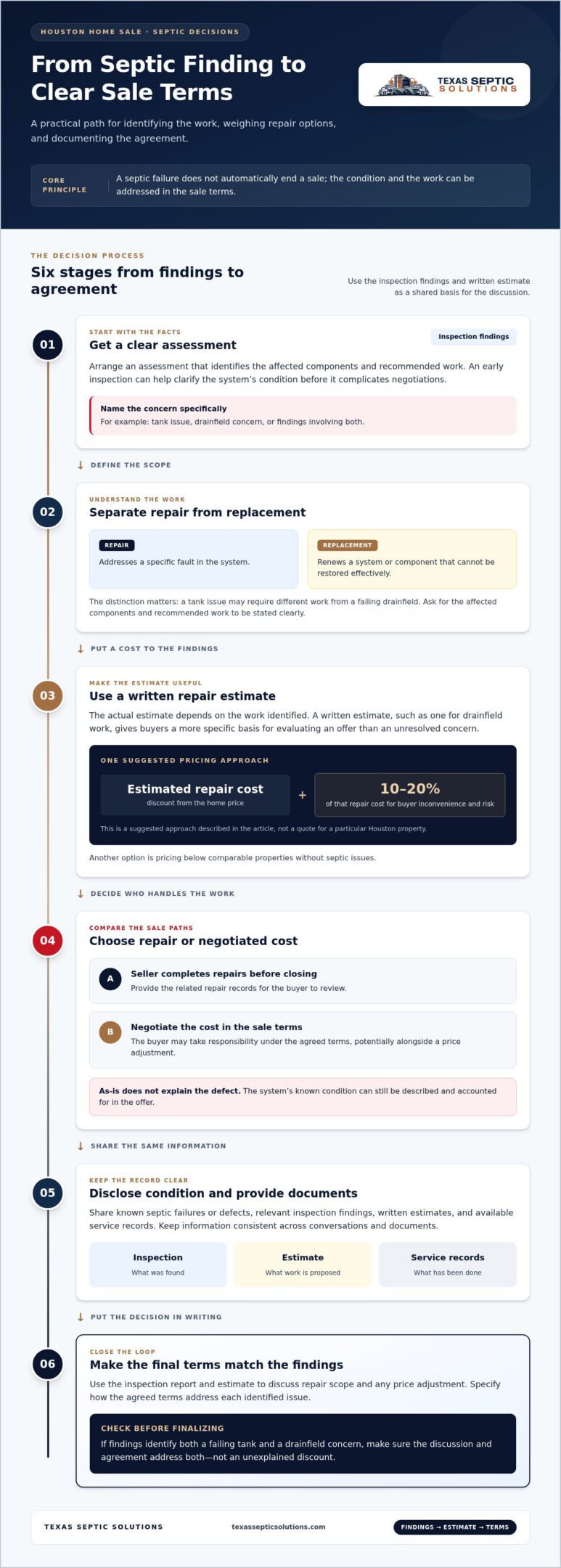
In Texas, a seller can repair a failing septic system before closing or negotiate with the buyer over the cost. Inspection findings and a repair estimate help determine which approach fits the system and sale. For sellers focused on avoiding septic tank problems when selling a house in Houston, an early assessment makes repair decisions clearer.
Repairing or Replacing a Failing System
Repairing addresses a specific fault, while replacement renews a system or component that can’t be restored effectively. The distinction matters because a tank issue may require different work from a failing drainfield.
Ask for an assessment that identifies affected components and recommended work. Separating tank repairs from drainfield work, for example, gives buyers a clearer picture of the scope. A practical part of avoiding septic tank problems when selling a house in Houston is finding out which component failed before setting sale terms. The assessment can also help distinguish targeted repairs from a need for replacement.
Pricing for Repair Costs and Buyer Risk
Repair costs and uncertainty can influence buyer offers. One suggested pricing approach is to discount the home by the estimated repair cost, plus an additional 10-20% of that cost for the buyer’s inconvenience and risk.
Sellers can also price below comparable properties without septic issues. This is general market context, not a quote for a particular Houston property. The actual estimate depends on the work identified. For example, a written drainfield estimate gives buyers a more specific basis for evaluating an offer than an unresolved concern.
Disclosures, Estimates, and As-Is Sales
Disclosure means telling prospective buyers about a known septic failure or defect. A written estimate and available service records can explain what was found, which components are affected, and what work is proposed.
An as-is sale can still describe the system’s condition and account for it in the offer. The term alone doesn’t tell buyers whether the tank or drainfield has a known issue. For example, sharing an estimate for a documented drainfield concern is more useful than describing the system only as “as-is.”
Negotiating Repairs or Price Reductions
Negotiation determines whether the seller completes work or the buyer takes responsibility under the agreed sale terms. Both sides can use the inspection report and estimate to discuss repair scope and a possible price adjustment.
If the seller completes repairs, provide the related records for the buyer to review. If the parties choose a price reduction instead, specify how the agreed terms address the identified work. For example, if findings identify both a failing tank and a drainfield concern, make sure the discussion covers each one. Clear terms ensure the final agreement reflects the known condition rather than an unexplained discount.
Are There Buyers Who Will Still Purchase A Home With Septic Problems?
Yes, some buyers will consider a Houston home with septic issues, especially when they understand the system’s condition. A clear inspection, complete disclosure, and realistic offer terms help buyers assess the work involved.
How Septic Problems Affect Offers
A septic problem can affect an offer because buyers weigh repair needs, uncertainty, and the home’s value together. Some will proceed if the system’s condition and likely work are clearly documented.
Pricing below comparable homes without septic issues may help account for a known defect. Sellers can use an inspection report to explain the affected components, rather than leaving buyers to guess whether the issue involves the tank, drainfield, or both.
Buyers may also propose revised terms after reviewing the findings. One buyer, for example, might prefer a price adjustment, while another may want repairs completed before closing. The report gives both sides a shared basis for that conversation.
Inspections and Buyer Due Diligence
Due diligence means investigating the septic system before committing to the purchase. A seller can arrange a pre-sale septic inspection to identify concerns early, while a buyer can schedule an independent professional inspection.
A standard home inspection may not fully evaluate a septic system. A professional septic inspection can focus on the system’s operation and components, helping buyers understand whether the findings point to maintenance, repairs, or further evaluation.
Buyers should review the inspection report alongside available pumping, repair, and service records. For example, they can compare a report noting a specific concern with past records to see whether the issue was addressed or remains unresolved.
Sometimes an inspection reveals a system that functions but needs attention. That distinction matters: buyers can use the findings to discuss practical terms instead of treating every concern as proof that the entire system needs replacement.
Disclosing the System’s Condition
Disclosure means giving prospective buyers accurate information about the septic system’s known condition. Sellers should disclose a known failure and share relevant inspection findings, repair records, and service documents with buyers.
Sellers are generally expected to disclose the existence and condition of a septic system. Disclosure requirements can depend on applicable rules and circumstances, so don’t present a general practice as a specific Texas legal requirement.
Keep information consistent across conversations and documents. If a pre-listing inspection showed a drainfield concern, provide the report and explain whether any work followed. Clear records let buyers evaluate the same facts and decide whether to proceed.
A home with septic problems can still attract buyers when its condition is addressed plainly. If a documented issue needs repair, Houston septic system support can be a practical next step.
Is the seller required to get a septic tank inspection before closing?
Requirements can vary: some counties require septic inspections or certifications before a home sale closes. Sellers should account for applicable requirements and keep the system’s condition, service history, and outdoor layout clear for prospective buyers.
Septic System Practices Before a Sale
Good septic practices protect the system from avoidable damage and help sellers prepare a property for sale. Keep vehicles and heavy equipment off the tank and drainfield, since their weight can damage buried components.
Mark the system before utility or maintenance work so workers can avoid driving or digging over it. Before digging, call 811 to help prevent damage to underground utilities. Keep grease, wipes, and chemicals out of drains, and put tissues, tampons, and paper towels in the trash.
Landscaping matters, too. Avoid placing heavy structures or directing concentrated runoff over the septic area. Identify the tank and drainfield locations before planning a patio, planting, or yard project. Protecting the ground above the system can reduce the chance of damage during routine property work.
Selling With a Failed System
Selling with a failed septic system means making the system’s condition part of the transaction rather than presenting it as functioning normally. Buyers can still assess the property, but clear information helps them understand the environmental and practical implications of the failure.
Use inspection findings to describe which components failed and what work is recommended. Then discuss whether repairs will be completed before closing or addressed in the sale terms. A documented drainfield failure, for example, gives buyers a specific issue to evaluate, unlike a vague warning that the system has “problems.”
When marketing the home, describe it accurately and make the septic arrangement clear. Avoid language that suggests the system works normally if records show a failure. A listing that identifies the system and includes supporting documents helps prospective buyers decide whether the property fits their needs.
Compliance and Service History
Compliance and service history records show how the system was installed, inspected, and maintained. These documents help sellers answer practical questions and buyers understand the system’s condition.
Gather the installer’s records, inspection reports, pumping receipts, and repair or upgrade documents. Organize them by date and component so buyers can follow the work performed. If a report identifies a defect, include the related repair record or explain that the issue remains unresolved.
According to the U.S. Environmental Protection Agency, a household septic system should be inspected at least every 3 years. A report can give buyers a useful snapshot, while older service records show the system’s maintenance history. Together, these records support a more accurate account of the property before closing.
Pre-listing septic inspections
Before listing a Houston-area home, arrange a professional septic inspection and gather the system’s service records. Some counties require an inspection or certification before closing, so a seller’s obligations depend on the property’s location.
Pre-Listing Inspection Process and Costs
A pre-listing inspection assesses the septic system before buyers evaluate the property. The findings can reveal concerns early, giving sellers time to understand the work and avoid an expensive surprise during negotiations.
The inspection may examine the tank, drainfield, and wastewater flow, then document the findings for the seller.
Keep the written report with pumping and repair records. If the inspection identifies a drainfield concern, for example, the report helps distinguish that finding from a tank problem and gives buyers specific information to review.
Inspection Timing and Pumping Schedules
Inspection timing means considering both routine system care and the upcoming sale. The U.S. Environmental Protection Agency recommends inspecting a household septic system at least every 3 years.
For a home nearing its listing date, a recent report can show the system’s condition before buyer due diligence begins. If the last inspection is older, scheduling another can help identify concerns before negotiations become time-sensitive.
Pumping is a separate maintenance task, not a substitute for inspection. A commonly recommended schedule is every 2-3 years, although system use and solids buildup affect the need. Keep pumping receipts so buyers can see when service occurred and whether the inspection recommends follow-up.
Title V and Local Seller Responsibilities
Title V is a Massachusetts regulation that requires a septic system inspection before a home sale closes. It does not establish the rule for a Houston property, so sellers shouldn’t treat the Massachusetts requirement as a Texas obligation.
Local requirements can differ: some counties require septic inspections or certifications before closing. For a Houston-area sale, identify the property’s county and applicable transaction requirements early. This helps sellers plan for required documentation instead of discovering a certification issue near closing.
Keep the installer’s information, inspection reports, and service records together. These documents help show what is known about the system, even when a local rule calls for different paperwork.
Septic Inspection Contingencies
A septic inspection contingency is a purchase-contract term that makes the transaction subject to inspection findings. It matters because it sets out how the buyer and seller will handle concerns uncovered during due diligence.
The parties can use the report to discuss repairs, a price adjustment, or other agreed terms. For example, a contingency can address what happens if inspection findings identify a wastewater treatment problem before closing.
Clear terms help prevent confusion about deadlines, access, and how inspection results affect the purchase. Pairing a contingency with an existing inspection report gives both sides a more informed starting point for negotiations.
Excess water, sludge levels, and pumping
Excess water can strain a septic system, while accumulating solids reduce the tank’s available capacity. Before a Houston-area sale, understanding both can help you decide whether pumping is useful or an inspection should investigate another problem.
Excess Water and Sludge Levels
Sludge is the layer of settled solids that collects at the bottom of a septic tank. As it grows, less space remains for wastewater, and solids can move toward the outlet instead of staying in the tank.
A septic tank should be pumped and cleared when solids exceed one-third of the liquid depth. A garbage disposal adds solids and speeds sludge buildup, so its use can affect how soon the tank needs attention. Excess water can also affect system performance. Pumping removes accumulated sludge, but it doesn’t repair a damaged tank or drainfield.
For example, if wastewater backs up after heavy household water use, pumping records alone won’t explain the cause. A professional assessment can help distinguish a full tank from a drainage or system problem before buyers draw conclusions.
Pumping Intervals and Sale Preparation
Pumping intervals are maintenance schedules shaped by system type, household use, and solids accumulation. Recommendations vary: one commonly cited interval is every 2-3 years, while a traditional system at a permanent home may be pumped every 3 to 5 years.
Those intervals aren’t a substitute for checking sludge levels. A household with a garbage disposal may build solids faster than one without, while a lightly used home may have different needs. The tank’s condition and maintenance history help determine whether pumping before a sale makes sense.
Plan pumping around the sale, not as a last-minute cosmetic step. A tank that has just been pumped may still have a separate defect, so pair the service record with an inspection when concerns exist. That gives buyers clearer information during the transaction and buying process.
Pumping and Maintenance Records
Pumping and maintenance records show when service occurred and what the technician noted. Keep receipts, inspection reports, and repair documents together, with dates and a short description of the work.
A receipt showing a recent pump-out documents that service, while a separate report may identify a damaged component requiring attention. Presenting both helps buyers understand what pumping addressed and what remains unresolved. If the tank was pumped after a backup, retain the related service notes as well.
Before listing, review records for gaps and share relevant documents with prospective buyers. If the tank needs pumping, schedule professional septic tank pumping and keep the service record with your sale documents.
Texas Septic Solutions: New Septic System Installation
Texas Septic Solutions provides New Septic System Installation when a property needs a new system rather than a repair. If an inspection identifies a failing component, Septic System Repair can address the repair needs. For ongoing care, Septic System Maintenance and Septic System Pumping support routine upkeep.
Before a home sale, use inspection findings and service records to identify work that fits the system’s condition. This helps you decide whether to pursue a repair, arrange pumping, or consider a new installation as part of preparing the property.
Contact Texas Septic Solutions to discuss septic work for your property.
Move Forward With a Clear Septic Plan
The next step is to turn inspection findings into a practical plan for the sale. Decide which work addresses the system’s condition, keep supporting records together, and make sure the agreed sale terms reflect what buyers have been told. This gives everyone a clearer starting point as the transaction moves forward.
A focused plan also helps you avoid treating every septic concern the same way. Depending on the findings, Texas Septic Solutions offers new system installation, septic system repair, and septic system maintenance. The right work can help you prepare the property and explain its condition clearly.
If you’re focused on avoiding septic tank problems when selling a house in Houston, connect your next step to the system’s actual needs. Contact Texas Septic Solutions to discuss septic work for your property and keep your sale moving with a thoughtful plan.
Frequently Asked Questions
Does a home septic tank change the way an agent markets a home for sale?
Yes, the listing should clearly identify the property’s septic system and avoid implying it connects to municipal sewer. Agents can highlight practical information buyers need, such as the system’s location, available records, and known issues. For example, a home with a recent service record can be described accurately without promising future performance. Clear wording helps prospective buyers understand the property before arranging a visit.
How Can I Negotiate Or Offset Septic Issues In The Selling Price?
Use a written estimate and specific inspection findings as the basis for negotiation. Buyers and sellers can agree that the seller completes defined work, adjust the price, or set another arrangement in the purchase terms. An estimate that separates tank work from drainfield work, for example, helps prevent a broad discount from obscuring what needs attention. Keep the final agreement clear about which party handles each identified repair.
I’m dealing with a failed Title V septic inspection, now what?
Title V applies to Massachusetts, not Houston. If a property in Massachusetts fails that inspection, use the report to identify failed components and required follow-up, then clarify the sale conditions with the buyer. For a Houston-area property, don’t treat a Title V result as a Texas certification. Instead, organize the inspection findings and system records relevant to the property’s location and transaction.
What type of maintenance is required to keep the septic tank in selling condition?
Keep the system in good working order by limiting what enters the drains and protecting buried components. Put wipes, paper towels, tissues, tampons, grease, and chemicals in the trash rather than flushing or pouring them down drains. Keep vehicles off the tank and drainfield, and mark the system before yard or utility work. These habits help reduce preventable strain and damage before a sale.
How much does a septic inspection cost in Houston, Texas?
Inspection costs depend on the property and the work needed to access and evaluate the system. Factors include tank depth, whether the tank must be uncovered, and the inspection’s scope. Ask for a written quote that explains what the inspection covers and whether access work is separate. That breakdown helps you assess the quote against your property’s needs without confusing inspection work with repairs or pumping.
What septic system problems commonly delay home sales in the Houston area?
Sales can slow when inspection findings raise unanswered questions about backups, a damaged tank, poor drainage, or a failing drainfield. Missing records can also make it harder for buyers to understand the system’s service history. For example, a report noting a drainage concern without identifying its cause can lead to further evaluation and negotiation. Organizing relevant documents helps buyers focus on the actual issue and next steps.
Are septic inspections or repairs legally required when selling a Texas home?
Some counties require septic inspections or certifications before closing, so sellers should account for local requirements rather than assume one rule applies everywhere in Texas. An inspection requirement is also different from a requirement to repair every defect. Review the applicable county requirements and contract terms, and distinguish required documentation from repairs negotiated between buyer and seller.
What Texas and Harris County rules apply to septic systems during a home sale?
Requirements depend on the property’s location and sale circumstances; some counties require an inspection or certification before closing. Don’t apply Massachusetts Title V rules to Harris County. For a specific transaction, identify the county, review the purchase contract, and determine whether local documentation is required. Keep the system’s records available so the buyer can understand the property and address any findings through the agreed sale terms.