
5 Ways to Keep Your Houston Septic System Working Efficiently
Keep a Houston septic system working efficiently by pumping it on schedule, limiting what enters the drains, conserving water, and responding to warning signs early. In Harris County, septic tanks should be pumped every two to three years. Learning how to reduce septic system operating costs in Houston starts with preventing avoidable strain before it leads to a backup or larger repair.
Routine care may feel like one more household task, but daily choices affect how hard your septic system works. Too much water at once and unsuitable waste can put extra strain on the tank and drainfield.
This guide covers practical ways to manage upkeep, including how maintenance needs differ between conventional and aerobic systems. You’ll learn how pumping, careful disposal, water conservation, and early attention to warning signs can help you plan care and keep your system working reliably.
Key Takeaways
- Set a pumping plan around your tank size, household, water use, and the solids entering the system.
- Keep wipes, grease, food scraps, and harsh chemicals out of septic drains to limit extra strain and buildup.
- Spread laundry, dishwashing, and showers across the week, and fix leaking faucets or toilets to manage wastewater flow.
- Watch for slow drains, odors, gurgling, wet drainfield areas, or sewage backups, and address warning signs early.
- Learn how care needs differ between conventional and aerobic systems so you can plan maintenance around your system type.
1. Routine septic tank pumping to support efficient operation
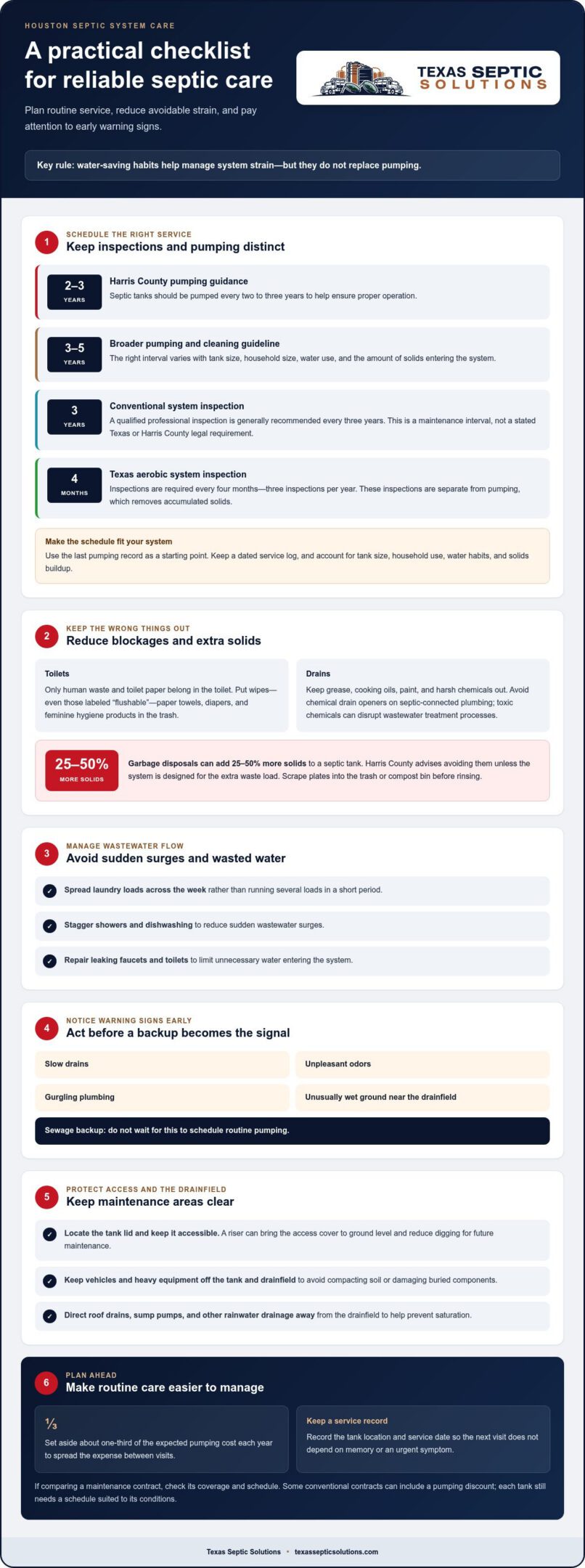
For conventional systems, a qualified professional inspection is generally recommended every three years; this is a maintenance interval, not a stated Texas or Harris County legal requirement. Texas aerobic septic systems require inspections every 4 months, or 3 inspections per year. Those aerobic-system inspections are separate from pumping, which removes accumulated solids.
In Harris County, septic tanks should be pumped every two to three years to help ensure proper operation. A broader routine guideline recommends pumping and cleaning every three to five years. These intervals differ because the right schedule depends on tank size, household size, water use, and how much solid waste enters the system. Use your last pumping record as a starting point, then keep a dated service log for the next visit.
Don’t wait for a sewage backup to schedule pumping. As solids build up, less tank capacity remains for wastewater to settle and separate. Professional pumping removes accumulated material and can help identify concerns early. Slow drains, unpleasant odors, gurgling plumbing, and unusually wet ground near the drainfield are signs to act on, not reasons to postpone routine care.
Water habits affect system strain, but conserving water doesn’t replace pumping. Repair leaking faucets and toilets, and spread laundry loads across the week instead of running several loads in a short period. Stagger showers and dishwashing, too. These steps reduce sudden wastewater surges, while the pumping schedule still depends on solids buildup and household conditions.
Plan for the recurring task by setting aside about one-third of the expected pumping cost each year. That approach spreads the expense across the years between visits without relying on a last-minute budget. Keep the tank location and service date in household records, so scheduling doesn’t depend on memory or an urgent symptom.
Neighbors with similar service timing can coordinate appointments and discuss a shared maintenance arrangement. Some conventional septic maintenance contracts can include a discount on pumping; compare the coverage and schedule before choosing one. Coordinating routine visits may make planning easier, but each tank still needs a schedule suited to its size, household use, and solids load.
To plan your next visit, review the tank’s last service date, household water habits, and any signs of trouble. These details help establish a practical pumping routine and prevent small maintenance needs from becoming urgent problems.
Routine septic tank pumping in Houston helps keep systems working properly and reduce the risk of backups or overflows. The right schedule depends on tank size, household size, water usage, and the amount of solids entering the system. Scheduling pumping according to your system’s needs can limit solids buildup and support reliable operation.
Comparing contract terms with your tank’s needs can support timely maintenance and reduce the chance of paying for urgent work.
2. Avoiding household waste and toxic chemicals in the system
Only human waste and toilet paper belong in a septic system toilet. Wipes, paper towels, diapers, feminine hygiene products, and other nondegradable materials can collect in pipes or tanks instead of breaking down. Put them in the trash, even if a package describes a wipe as flushable. This simple habit reduces blockages and unnecessary strain on wastewater flow. Heavy pet hair washed down bathroom drains poses a similar risk, which is why outsourcing washes to doorstep mobile grooming services like Pawgo can be a practical way to prevent stubborn fur clogs.
Keep grease, cooking oils, paint, and harsh chemicals out of drains. Pouring cooking oil into a sink can leave residue in plumbing, while toxic chemicals can disrupt the biological processes that help a septic system treat wastewater. Use the trash for grease and food scraps, and avoid chemical drain openers on septic-connected plumbing. Harris County advises against disposing of household solid waste or toxic chemicals in an on-site sewage facility.
A garbage disposal also adds material for the tank to handle. Using one can add 25-50% more solids to a septic tank. Harris County advises avoiding garbage disposals unless the on-site sewage facility is designed to accommodate the extra waste load. Scrape plates into the trash or compost bin before rinsing them in the sink. This step limits food solids entering the tank and helps keep plumbing clear.
Make the tank easier to access before the next service visit. Locate the tank lid and keep the area clear. A septic tank riser brings the access cover to ground level, reducing the need to dig during future maintenance. Keep the lid accessible, and don’t cover it with landscaping or structures.
Protect the drainfield from physical damage and excess water. Keep vehicles and heavy equipment off the tank and drainfield, as weight can compact soil or damage buried components. Direct roof drains, sump pumps, and other rainwater drainage away from the drainfield. Excess runoff can saturate the area, leaving less room for wastewater treatment. During routine inspections, note unusually wet ground and keep traffic away from those areas.
Careful disposal and drainfield protection help preserve a private system, but they don’t determine whether a property has access to municipal sewer service or what utility charges apply. Focus on keeping the existing system in good condition rather than assuming household habits can remove sewer bills. For help with system upkeep, explore professional septic system care as part of a practical maintenance plan.
3. Typical septic system repair and maintenance costs
A septic budget works best when it separates planned maintenance from urgent repairs. Inspections can identify issues such as a damaged baffle, failing pump, or blocked pipe before wastewater backs up into the home. A repair may involve one component, while a damaged drainfield or aging system can require more extensive work. Keep inspection findings, repairs, and follow-up needs together in your records.
Build a household reserve around the tasks your system needs: inspections, scheduled maintenance, and eventual pumping. Set money aside regularly rather than treating each service visit as an emergency expense. Keep receipts and service reports in one folder. If you notice slow drains, gurgling plumbing, sewage odors, or wet ground, record where and when they occur. Those details can help identify whether the concern is plumbing-related or septic-related.
Repair costs depend on the problem, the affected parts, access to the system, and whether the drainfield needs work. A clogged line differs from a failed pump or damaged tank component. The cost of a specific repair depends on the work and site conditions, so get a quote based on your situation.
For permits, Harris County requires an on-site sewage facility permit application to include one (1) set of OSSF drawings and a site evaluation report. A registered professional engineer or registered sanitarian must prepare those documents. This applies to the stated OSSF application requirements; it does not establish a blanket rule for every repair. Keep design and service records together when planning an upgrade.
Maintenance contracts or service plans can help with budgeting when they include scheduled upkeep and clearly defined service. Conventional septic maintenance contracts can provide a discount on pumping. Compare the included visits, covered maintenance, and renewal terms with the work your system needs. A plan is most useful when its schedule matches your household’s system, rather than paying for tasks you don’t need.
If you’re considering assistance with septic repairs in Texas, treat potential funding as separate from routine maintenance planning. Eligibility can depend on location, household circumstances, and the type of repair. Keep inspection reports, repair estimates, and proof of property ownership organized, as these details may be needed to assess an application. Don’t delay a sewage or drainfield problem while waiting for assistance.
Early attention can help prevent a component problem from affecting the whole system. Log warning signs, keep inspection and repair records, and budget for recurring care. These steps make it easier to plan work, understand its scope, and prepare for an unexpected repair without confusing it with routine maintenance.
4. Water conservation
Everyday ways to reduce septic water use include fixing leaks, spacing out water-heavy chores, and avoiding unnecessary running water. Repair a leaking toilet or faucet promptly, since steady drips add wastewater even when nobody is using a fixture. Run the dishwasher with a full load and spread laundry across different days. These habits reduce demand on the system and can also lower household water use.
Timing matters as much as total use. Several showers, a laundry cycle, and dishwashing in quick succession can send a large volume through the tank. That surge gives the system less time to separate solids, liquids, and naturally occurring bacteria. Stagger showers and appliance use instead. For example, run a laundry load after the morning shower rush rather than during it.
Harris County advises conserving water to help keep an on-site sewage facility working. A practical routine starts by checking toilets and faucets for leaks, then watching for changes in water use. Use shorter showers, turn off taps while brushing teeth, and avoid running water while waiting for a sink to fill. Each step reduces flow entering the tank without requiring special equipment.
Houston-area conditions matter, too. Clay soils and high water tables are local factors in septic system design and long-term reliability. A drainfield needs suitable site conditions to receive and treat wastewater. Avoid adding unnecessary water during wet conditions, and direct roof drains, sump pumps, and other rainwater away from the field. Rainwater should not flow into the area designed to handle household wastewater.
Water conservation doesn’t mean putting off needed plumbing or septic work. If drains slow, plumbing gurgles, or sewage backs up, reduce water use while addressing the problem. Excess liquid can overload the drainfield, causing sewage to surface or back up into sinks and toilets. Treat an active backup as urgent, not as a reason to keep testing fixtures.
Keep disposal habits in mind as you manage water flow. A garbage disposal sends additional food solids into the tank, so scrape plates into the trash before rinsing. Pour grease into a container and put it in the trash, not down the sink. These steps limit extra material, while water-saving habits reduce the liquid load.
To make these changes stick, choose a simple household plan: assign laundry days, fix leaking fixtures, and note unusual wet spots near the drainfield. Review the routine after a busy week or household gathering, when showers and dishwashing may cluster. Consistent water use helps avoid sudden strain and supports reliable operation in Houston’s varied soil and groundwater conditions.
5. Annual costs for conventional and aerobic septic systems
Compare septic budgets by system type, because conventional and aerobic designs have different routine needs. For a conventional system, plan for inspections, pumping, and a reserve for repairs. An aerobic system also uses electrical power and disinfection tablets, along with its maintenance needs. There is no single annual cost that applies to every system. Instead, track the recurring items your own system requires. Understanding these differences is a practical part of how to reduce septic system operating costs in Houston.
Track the system’s power use across a full billing cycle, then include the total in your yearly household budget. Aerobic systems also need chlorine or disinfection tablets. Check what your maintenance contract covers before budgeting separately for tablets.
Conventional systems don’t have the electricity and tablet expenses associated with aerobic systems, but their upkeep still belongs in the budget. Record inspection findings, pumping dates, and repairs in one calendar or spreadsheet. Set aside money regularly for scheduled work and unexpected problems. Clear records can reveal changes, such as more frequent service or a repair affecting the drainfield.
For either system, separate recurring upkeep from occasional repairs. Include planned maintenance in the annual budget, then keep a separate reserve for problems such as damaged components or backups. Household habits also affect system strain: keep garbage, wipes, and cooking grease out of drains, and avoid unnecessary water surges. These steps don’t replace normal maintenance, but they can limit avoidable stress on the tank and drainfield as you work to reduce septic system operating costs in Houston.
Use a simple comparison when reviewing yearly records: note the system type, recurring service, electricity, supplies, and repairs. For example, an aerobic-system budget should account for electricity and disinfection tablets, while a conventional-system budget should track its own scheduled upkeep. When comparing costs, distinguish a year with a major repair from an ordinary year. Ground conditions, household water use, and system condition can also affect the work required.
The main takeaway is to budget for the actual equipment and service needs, not just the system label. Keep invoices, tablet purchases, and utility bills together, then review the totals each year. For help planning care around your system type, schedule septic system maintenance.
Texas Septic Solutions: New Septic System Installation
Texas Septic Solutions provides septic system maintenance and pumping for ongoing care, along with septic repairs when warning signs or component problems need attention. If an existing system can’t meet the property’s needs, the company also offers new septic system installation.
Keep inspection notes and service records handy when discussing your system. Details such as recurring backups, wet ground near the drainfield, or changes in household water use help clarify what needs attention. A maintenance or repair visit addresses an existing system’s needs; a new installation is for a different situation, not a shortcut to lower routine costs.
For guidance on the right septic service for your situation, contact Texas Septic Solutions.
Make your next septic decision with confidence
Long-term savings come from matching care to the system’s actual condition, not postponing work until a small concern disrupts the household. Keep service records together and note changes in drainage, odors, or wet areas. That history helps guide decisions about how to reduce septic system operating costs in Houston without overlooking needed repairs.
Texas Septic Solutions provides septic system maintenance, pumping, and repairs for systems that need ongoing care or attention. If the property needs a new system, the company also offers new septic system installation. Choose the next step based on the issue, whether that means maintaining an existing system, addressing a repair, or planning a replacement.
For help deciding how to move forward, contact Texas Septic Solutions. A clear plan can make septic care easier to manage and help you keep your home’s wastewater system on track.
Frequently Asked Questions
How do I keep it working?
Keep your septic system working by knowing its type, preserving its layout and service records, and arranging care before problems interrupt use. Use property records to locate the tank, drainfield, and any aerobic control panel, then keep those areas accessible. If you buy a home in Houston, Cypress, or Cleveland, review the system documents and service history during the handover so you can start your maintenance plan with useful information.
How often should Houston homeowners pump and inspect a septic tank?
Houston homeowners should schedule conventional tank pumping every 2-3 years and professional inspections every three years. Aerobic systems have a different inspection schedule: every 4 months, or 3 inspections per year. Track inspection and pumping dates separately, because an inspection doesn’t remove accumulated solids. Household size, tank capacity, water use, and solids entering the system can affect when pumping is due.
How can Houston homeowners prevent septic drainfield failures and expensive repairs?
Help prevent drainfield failure by matching system use to the property’s wastewater demand. Before adding a bathroom, laundry hookup, rental unit, or guest suite, assess whether the existing system can handle the added flow. Keep system records available during landscaping or renovation, and protect the drainfield from construction activity. If a project changes household demand, arrange an evaluation before work begins.
How do septic system costs compare with city sewer bills in Houston?
Compare the full annual ownership picture, not one sewer bill against one septic visit. Include municipal sewer charges and any applicable connection charges, then compare them with septic maintenance, pumping, repairs, and a reserve for eventual replacement. The result depends on sewer availability, utility billing, system type, household use, and system condition. Use your Houston-area utility statements and septic records to make a fair comparison.