
How to Fix Slow Drains With a Septic Tank and Find the Cause
Slow drains across the house often point to a septic-system issue, while one slow fixture may have a local clog. Learning how to fix slow drains with a septic tank starts with noting which drains are affected and when the tank was last pumped. The U.S. Environmental Protection Agency says septic tanks should typically be pumped every 3-5 years.
It’s frustrating when water lingers in a sink or shower, and guessing at the cause can make the problem worse. If you’re figuring out how to fix slow drains with a septic tank, first consider whether the issue is in a fixture, pipe, tank, or drain field. Pumping isn’t always the answer.
This guide covers common causes of slow septic drains, signs of possible drain-field trouble, and what you can safely check at home. You’ll learn when reducing water use may help, when pumping makes sense, and when persistent clogs or sewage backups need professional attention.
Key Takeaways
- Check whether one fixture or several drains are slow to help narrow down a local clog versus a septic-system issue.
- Standing water, soggy soil, sewage odors, or unusually green grass can point to a drain-field problem.
- During drainage trouble, reduce water use and spread out laundry and other high-water tasks.
- Use your last pumping date to judge whether routine pumping may be due, but don’t try to pump or dig around the system yourself.
- Treat sewage backing up indoors as urgent and get professional help for persistent slow drains or recurring tank problems.
Can You Fix a Septic Tank That Isn’t Draining Yourself?
Try simple fixture-level steps, but don’t pump or dig around a septic tank yourself. For a slow drain, start with a plunger or clean the fixture’s P-trap. Avoid chemical drain cleaners.
Reviewing Pumping History and Water Use
Pumping history and household water use help show whether a tank may be full or overdue for service. The U.S. Environmental Protection Agency says septic tanks should typically be pumped every 3-5 years.
Find the date on your last pumping receipt or maintenance record, then note any changes in household water use. Extra laundry, long showers, or several loads of dishes in a short period can send more wastewater into the tank. A tank pumped recently is less likely to be full, so a blockage in a branch drain or pipe may better explain slow drainage.
Recognizing When a Tank Needs Pumping
A tank may need pumping when solids build up, wastewater drains slowly across the home, or sewage backs up indoors. These signs matter because a tank that cannot receive wastewater normally can contribute to drainage problems.
Look for multiple affected fixtures, gurgling drains, sewage odors, or standing water near the tank or drain field. One slow sink alone points more toward a local clog than a tank-wide problem. If the tank fills again soon after pumping, pumping alone may not address the cause. An inspection can help distinguish accumulated solids from an outlet obstruction, tree root, or drain-field trouble.
Safely Unclogging a Septic Drain
To unclog a septic-connected drain safely, treat the fixture rather than forcing the blockage toward the tank. A plunger can help with a toilet or sink clog, and cleaning the sink’s P-trap may remove trapped debris.
If you use a manual drain snake, limit it to an accessible household drain and stop if resistance persists. Don’t pour chemical drain cleaners into the system; harsh chemicals can disrupt the tank’s helpful bacteria. Don’t keep flushing a toilet to test whether drainage has improved, since that adds wastewater when flow may already be restricted.
When several drains remain slow, sewage backs up, or a snake meets a firm blockage, stop DIY attempts. A professional can inspect the tank and connected pipes, then determine whether pumping or a repair fits the cause. Never open or enter a tank to check its contents.
What Causes Slow Drains in My Septic System?
Repair permit requirements depend on the work involved and local jurisdiction. Before repairs begin, check the applicable local requirements for that specific job.
A septic system receives household wastewater through an inlet pipe, then separates solids from liquid inside the tank. Solid waste settles, while liquid effluent leaves through an outlet and travels toward the drain field. Bacteria help break down organic material in the tank. A blockage or disruption at any point can slow drainage through connected fixtures.
The tank, inlet and outlet pipes, effluent filter, and drain field all affect wastewater flow. For example, a filter clogged with solids can restrict the tank outlet, while compacted soil may limit absorption in the drain field. These problems can produce similar symptoms indoors, so note how many fixtures are affected and where they are.
A clog limited to one fixture often sits in its drain, trap, or connecting branch. If the kitchen sink drains slowly but bathroom fixtures work normally, grease or food debris near the sink may be responsible. Two or more slow drains in a septic home suggest a broader issue, such as a restricted main pipe, full tank, or drain-field trouble.
Skip chemical drain cleaners in septic systems. Harsh chemicals, antibacterial soaps, and excessive bleach can disrupt beneficial bacteria and slow waste breakdown. A cleaner might also fail to reach the obstruction. For one affected sink, a plunger or careful P-trap cleaning targets the fixture without adding chemicals to wastewater.
Grease, wipes, and other non-degradable items can collect in pipes or obstruct the tank’s inlet and outlet. Tree roots may enter a pipe through a damaged joint, narrowing the passage over time. If several fixtures slow together, repeatedly treating one drain can miss the shared obstruction. The pattern across the house can help show where flow is restricted.
Design or installation flaws can also affect wastewater flow through a septic system. Improper pipe alignment, inadequate drainage, or a system that does not suit household use can cause recurring trouble. These issues call for an assessment of the full system, not repeated treatment of individual fixtures. Persistent symptoms after a local clog clears deserve closer inspection.
Track which fixtures are slow, whether symptoms worsen after heavy water use, and whether odors or gurgling accompany them. One affected fixture points toward a local drain; several affected areas raise concern about shared plumbing or septic components. This distinction helps narrow the cause before choosing a repair.
Whether a permit is required depends on the repair and your local jurisdiction. Confirm the requirements for the specific job with the appropriate local authority before work starts.
How do I know if my drain field is failing?
Watch for standing water, soggy ground, sewage odors, or unusually green grass over the drain field. These signs can mean wastewater isn’t dispersing properly, though prolonged rain or a temporary surge in household water use can also affect drainage.
Recognizing Drain-Field Warning Signs
Look across the drain field for wet patches that remain after surrounding ground dries, foul odors, or grass growing greener than nearby areas. Note where each sign appears and whether it changes after rainfall. A single wet spot can help focus an inspection on one area, while widespread soggy ground suggests a broader drainage concern.
Soil and system conditions affect how well the field accepts wastewater. Compacted soil can restrict movement, and accumulated solids or grease can interfere with flow through the system. Biological clogging can develop gradually over many years. These causes matter because a failing field may need a different response from temporary saturation after heavy rain.
Understanding Hydraulic Overload
Hydraulic overload occurs when wastewater reaches the drain field faster than the soil can absorb it. Heavy laundry use, consecutive showers, or several water-using appliances running together can create a short-term surge. Prolonged or heavy rainfall can also saturate the soil, reducing its capacity to receive wastewater.
To spot a possible overload, record periods of heavy water use and compare them with slow drains or wet areas outside. If symptoms follow a day of back-to-back laundry and showers, the timing offers a useful clue. If soggy ground and odors continue after water use eases, possible causes include compaction, solids, or gradual biological clogging.
Reducing Water Use and Maintaining the System
During drainage trouble, reduce household water use for 24 to 48 hours. Spread out laundry, shorten showers, and avoid running multiple appliances at once. This pause can give a system strained by temporary overload time to recover. Keep track of whether indoor drainage and outdoor wet patches improve during this period.
For routine water conservation, fix leaking fixtures and choose habits that reduce repeated surges. Direct roof runoff and surface water away from the septic system whenever practical. Keep vehicles and heavy equipment off the drain field, since compacted soil can make absorption harder. Avoid planting deep-rooted trees over the field, because roots can invade pipes.
Use your observations to see whether conditions improve with lower water use or persist. Persistent standing water, sewage odors, or recurring slow drainage call for a professional inspection to identify the cause and needed repairs. A maintenance inspection can also reveal developing trouble before visible symptoms spread across the drain field.
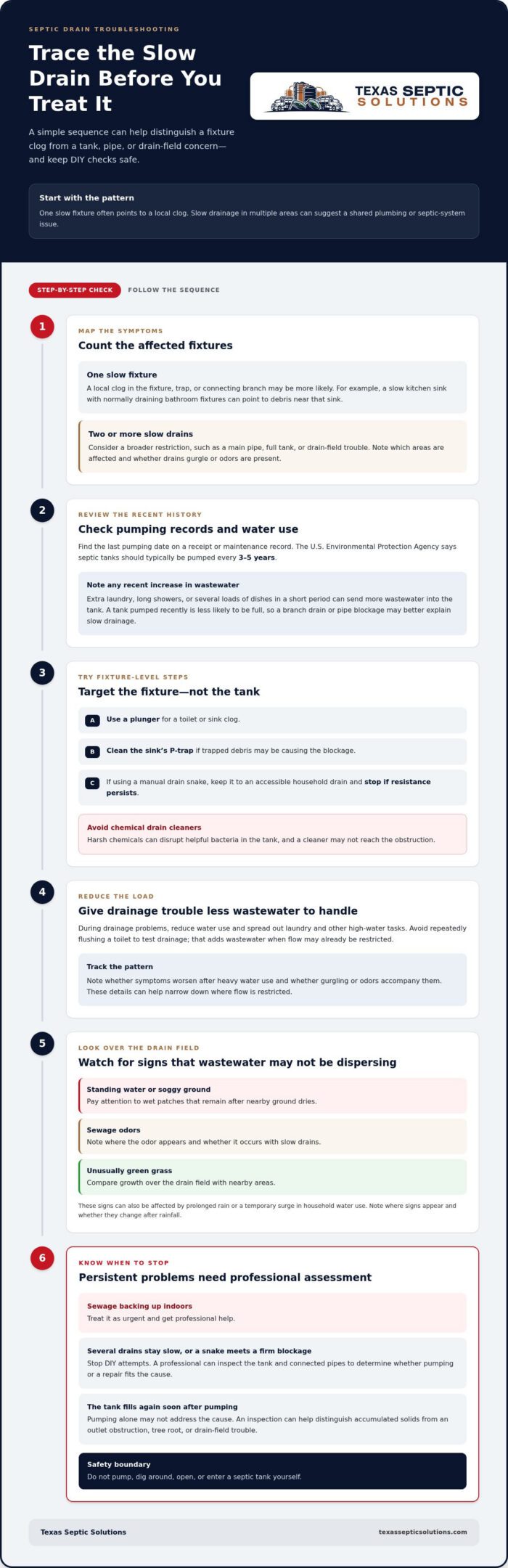
When to pump a tank or call a septic professional
Choose your next step based on the symptom pattern, pumping history, and outdoor signs. A localized sink clog needs a different response from sewage backing up through several toilets or a drain field that cannot absorb wastewater.
When pumping may be the right step
Check your pumping record and compare it with current symptoms. A tank due for routine pumping, or one showing signs of accumulated solids, may need professional pumping. Pumping removes solids from the tank, but it won’t repair a blocked pipe or restore a drain field that cannot accept wastewater.
If the tank becomes full again soon after pumping, contact a septic professional rather than scheduling repeated pumping alone. A recurring problem can point to an outlet restriction, excessive water entering the system, or drain-field trouble. A professional can assess the tank and connected components to identify the cause.
When plumbing or septic expertise is needed
A plumber can address a clog limited to one fixture, such as a bathroom sink, while the rest of the home drains normally. If several fixtures slow at once, or toilets gurgle when a sink drains, the issue may involve shared plumbing or the septic system. Persistent symptoms need an inspection that considers both.
Call a septic professional when slow drainage continues, the tank fills again soon after pumping, or tree roots may have entered a septic pipe. An inspection can help distinguish a localized obstruction from a tank, pipe, or drain-field problem. Avoid chemical cleaners, since harsh products can disrupt the bacteria that help break down waste.
Responding to urgent warning signs
Sewage backing up into sinks, tubs, showers, or toilets is an emergency. Stop adding wastewater by limiting water use, and don’t keep flushing toilets to test the system. Sewage can spread beyond the affected fixture, while more water may worsen an already restricted system.
Standing water, soggy ground, or sewage odors near the drain field also warrant professional attention. Heavy rain can temporarily saturate soil, but persistent wet areas or repeated indoor backups need closer assessment. Keep vehicles and heavy equipment off the field, and direct roof runoff away from the septic area whenever practical.
Don’t attempt to pump the tank or dig around septic pipes yourself. Digging can disturb buried components, and pumping requires handling tank contents and equipment. Instead, gather the last pumping date, note which fixtures are affected, and record whether symptoms follow heavy water use. These details help a professional assess whether pumping, plumbing repairs, or broader septic-system work is needed.
Slow drains and septic tank clogs
A septic clog can form at several points, and its location determines the right response. A slow sink may have a local obstruction, while several affected fixtures can point to a shared pipe, tank filter, or drain-field restriction. Note which drains are slow and whether symptoms change after household water use.
Grease and food scraps can build up in kitchen plumbing, while wipes and other non-degradable items may obstruct septic pipes. These materials don’t break down like toilet paper and human waste. Limit grease going down the sink, and keep wipes out of toilets, even when packaging describes them as flushable.
A septic effluent filter catches solids before wastewater leaves the tank. If the filter becomes clogged, it can restrict flow and contribute to slow drains or backups. The filter should be cleaned every 1 to 2 years. Because it sits near tank contents, leave access and cleaning to a septic professional rather than reaching into the tank.
Septic treatment products aren’t all alike. Some use emulsifiers to break solids apart without digesting them. Those smaller particles can travel onward and clog the drain field rather than disappear from the system. Don’t treat a slow-drain symptom with additives alone; note what you used and when, then share that information during an inspection.
Don’t keep flushing toilets to test whether a clog has cleared. Each flush adds wastewater, and repeated testing can worsen an obstruction or backup. Chemical drain cleaners can also disrupt helpful septic bacteria. For a single fixture, use a plunger or clean an accessible sink P-trap; stop if the clog persists or multiple drains become slow.
Tank and drain-field problems can look similar indoors, but their causes differ. A restricted filter or outlet can limit flow from the tank; grease, solids, or biological buildup can affect the drain field. Standing water, sewage odors, or unusually green grass outside provide important clues. Record these signs, the affected fixtures, recent heavy water use, and the last filter service.
That record helps a professional determine whether the issue involves a localized pipe clog, filter cleaning, pumping, or a broader repair. If wastewater backs up or several household drains remain slow, arrange an inspection instead of continuing DIY attempts. Schedule septic system repair when persistent clogs point beyond one fixture.
Texas Septic Solutions: New Septic System Installation
Texas Septic Solutions can help identify the next step when slow drains point beyond a single fixture. If the tank is due for service, Septic System Pumping may be appropriate; recurring clogs or damaged components may call for Septic System Repair. Routine Septic System Maintenance can help keep system components working as they should.
New Septic System Installation is an option when an existing system needs replacement rather than another localized repair. The right path depends on what an inspection finds, including whether the restriction is in the tank, pipes, or drain field. Share which drains are affected, any outdoor warning signs, and the last pumping date to give the service team useful context.
Contact Texas Septic Solutions to discuss your septic drainage issue, or visit texassepticsolutions.com.
Take the Next Step Toward Reliable Drainage
Knowing how to fix slow drains with a septic tank starts with choosing a response that addresses the cause, not just the symptom. If the same drainage trouble keeps returning, use your notes about affected fixtures, water use, and outdoor changes to guide the next conversation. This gives an inspection a practical starting point and helps focus attention on the system component that needs care.
Texas Septic Solutions can provide Septic System Repair when a component needs attention and Septic System Maintenance to support ongoing care. If an existing system needs replacement, New Septic System Installation may be the appropriate next step. The right service depends on the system’s condition and inspection findings.
Take the next step with a clear record of what you’ve noticed and discuss the issue with the team. Contact Texas Septic Solutions to talk through your septic drainage concerns and move toward a practical solution.
Frequently Asked Questions
Does One Slow Drain or Multiple Slow Drains Matter More?
Multiple slow drains usually point to a shared plumbing or septic-system issue, while one slow fixture more often suggests a local blockage. For example, a slow kitchen sink with normally draining bathroom fixtures narrows attention to the sink’s trap or branch pipe. If a toilet, shower, and sink all drain sluggishly, note which areas changed first and whether gurgling occurs. That pattern helps identify where the restriction may be.
What Happens If You Ignore Slow Drains?
Ignoring slow drains can allow a restricted pipe or overloaded system to worsen, potentially leading to indoor sewage backups or drain-field damage. In some cases, the time between a tank filling and drain-field damage can be as short as a few months. Don’t wait for every fixture to stop draining. Record when symptoms began and whether they spread, then arrange an assessment if the problem persists.
When Should You Call a Septic Professional?
Call a septic professional for sewage backing up indoors, several fixtures draining slowly, repeated problems after pumping, or signs of tree-root intrusion. These symptoms may involve more than a fixture-level clog. Homeowners in Cleveland, Houston, Cypress, Huffman, and Shepherd can note affected drains, odors, and recent water use to explain the problem clearly when contacting Texas Septic Solutions.
What Causes Slow Drains in a Septic System?
Slow drainage can result from pipe obstructions, a tank or filter restriction, excess water entering the system, or a drain field that accepts wastewater poorly. Grease and wipes can obstruct pipes, while harsh chemicals can interfere with the tank’s helpful bacteria. Regular garbage disposal use is associated with an estimated 30 to 50 percent increase in septic-tank sludge accumulation, adding solids that require management.
How Can I Tell Whether a Slow Drain Is a Clog or a Septic Tank Problem?
Compare how nearby fixtures behave before deciding where the problem lies. One slow sink with normal drainage elsewhere often indicates a local clog; sluggish fixtures in separate rooms suggest a shared line or septic component. Note any gurgling, odors, or changes after ordinary household water use. Don’t repeatedly flush toilets as a test, since extra wastewater can aggravate restricted drainage.
Can I Use Chemical Drain Cleaners With a Septic Tank?
No. Chemical drain cleaners can disrupt beneficial bacteria that help break down organic waste in a septic tank. For a single sink, try a plunger or clean the accessible P-trap instead. Keep grease, wipes, and other non-degradable waste out of the system. If the clog remains or more fixtures begin draining slowly, stop treating it as a simple household blockage.
How Do I Check Whether a Septic Tank Is Full or Needs Pumping?
Start with the last pumping record and watch for recurring slow drainage, gurgling, or backups across multiple fixtures. The U.S. Environmental Protection Agency says septic tanks should typically be pumped every 3-5 years, though household use affects the timing. Don’t open the tank or try to measure its contents yourself. A septic professional can inspect the system and determine whether pumping or another repair is appropriate.
What Are Signs of a Failing Septic Drain Field?
Standing water, persistently soggy ground, sewage odors, or unusually green grass over the drain field can signal trouble. Compare the area with nearby ground after rainfall: rain-saturated soil can temporarily limit absorption, while symptoms that persist or return deserve attention. Note where wet patches appear and whether indoor drainage changes at the same time. These details help focus a drain-field inspection.