
Septic Tank Pumping for Cypress Disaster Recovery Zones
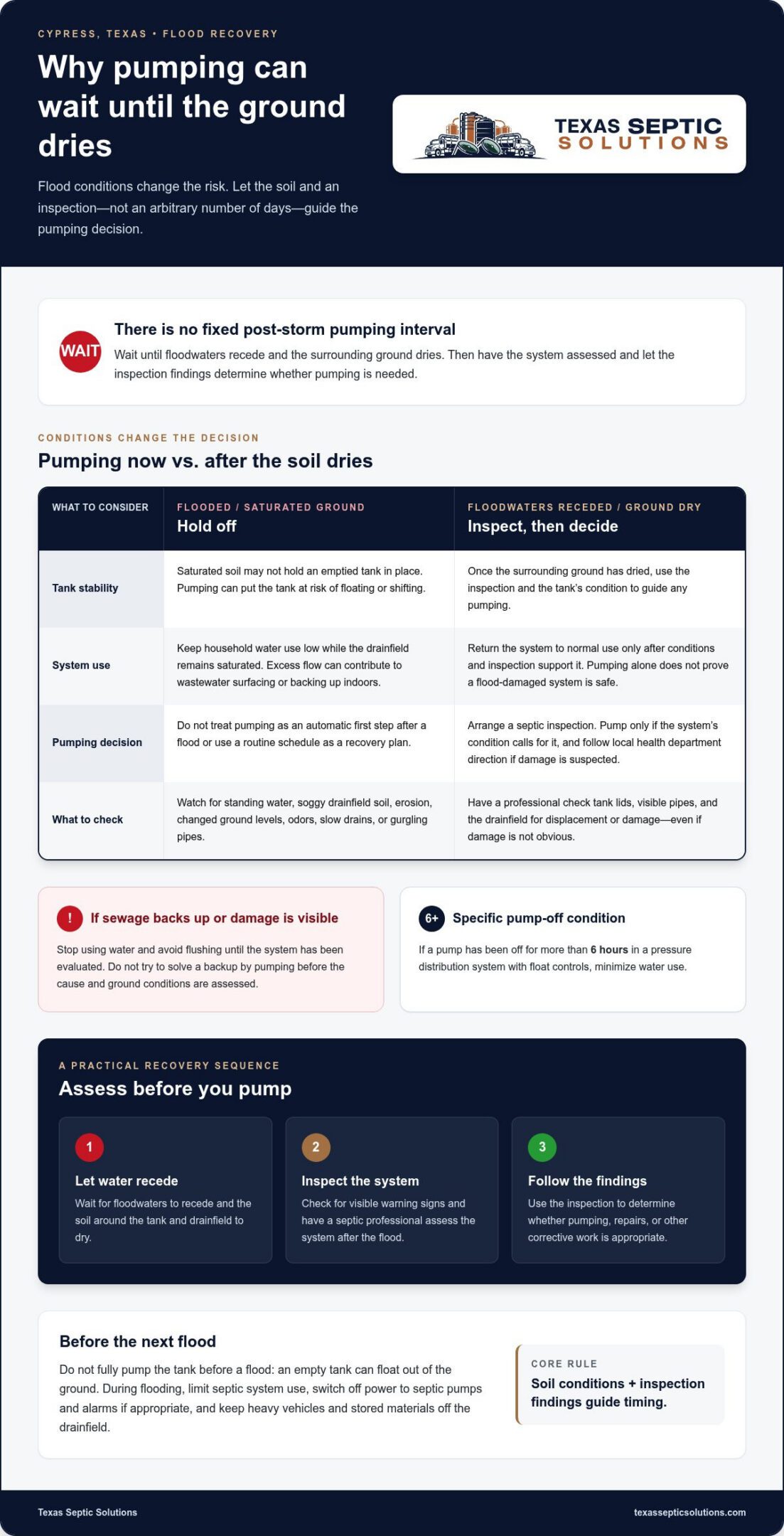
Pumping too soon after a flood can put a septic tank at risk. For septic tank pumping in disaster recovery zones in Cypress, wait until floodwaters recede and the surrounding ground dries before considering pumping. Saturated soil can cause a tank to float or shift. Have the system inspected after the flood, and pump it if its condition calls for it.
It’s understandable to want your home’s wastewater system back in service quickly. But when wet or flooded ground surrounds the tank or drainfield, using the system can lead to sewage surfacing or backing up indoors. Limit water use until conditions improve, and stop using water if sewage backs up or you find damage.
This guide explains what a post-flood septic inspection should cover, when pumping or rinsing may be appropriate, and how saturated soil affects recovery timing. You’ll also learn which warning signs to watch for and how to protect your system while the ground dries, so you can choose a practical next step for your property.
Key Takeaways
- Arrange a septic inspection after flooding, even if you can’t see damage, and look for shifted lids, damaged pipes, erosion, standing water, or soggy drainfield areas.
- Wait until floodwaters recede and the ground dries before considering pumping; saturated soil can cause a tank to float or shift.
- Use inspection findings to guide pumping and any rinsing, rather than treating them as automatic steps after every flood.
- If sewage backs up or you find damage, stop using water and avoid flushing until the system has been evaluated.
- Keep records of damage and septic work as you review disaster assistance rules; Texas Septic Solutions offers pumping, repair, and maintenance for septic system needs.
Septic system inspection and pumping after a flood
After a Cypress flood, arrange an inspection before returning a damaged system to normal use. Wait until floodwaters recede and the ground dries before considering pumping.
Post-Flood Inspections and Emergency Warning Signs
Inspect tank lids, the drainfield, and visible pipes for displacement or damage. Look for erosion, standing water, soggy soil, slow drains, odors, or gurgling pipes. These signs can point to drainage trouble or needed repairs, not just a full tank. Have a septic professional inspect the system after a disaster, even when damage isn’t visible. If sewage backs up, stop using water and avoid flushing until the system has been evaluated.
Before restoring power, check electrical parts and clean septic system filters. Don’t enter a pump chamber: its gases can be poisonous, and a lack of air can be fatal. Keep heavy vehicles and stored materials off the drainfield after flooding. These checks can help identify hazards and prevent extra strain while the soil recovers.
Pumping Fees and Recovery Reimbursement
Whether pumping fees qualify for reimbursement depends on the rules of the specific disaster recovery program. Keep the itemized invoice, proof of payment, inspection findings, and dated flood-damage photos together. These records show what work was done and when. Note whether the work involved pumping, cleaning, or repairs, since a program may treat those tasks differently.
Before arranging routine pumping solely to support a reimbursement claim, document the system’s condition and follow the program’s written requirements. Keep records of any emergency backup, damaged lids, shifted pipes, or drainfield erosion. Clear documentation makes it easier to explain why the service was needed and connect it to flood damage at the property.
Permits and Health Department Rules
Don’t assume pumping alone makes a flood-damaged system safe to use or repairs it. If you suspect damage after a flood, contact your local health department and follow its direction about inspection and any approvals needed for corrective work. This is especially important if tank lids, pipes, or drainfield areas appear shifted or damaged.
Keep inspection findings and pumping records with your property documents. If the system needs repair, use those details to describe the observed damage and work completed. Never dump floodwater or cleaning chemicals into a septic system. Limit household water use while the ground remains saturated, since a flooded drainfield can allow wastewater to surface or back up indoors.
Cypress Recovery Zones and Pumping Providers
Here, Cypress means Cypress, Texas; a recovery zone means a flood-affected property in the area. Service needs vary with the address, access to the tank, visible damage, and whether the surrounding ground has dried. Choose a septic professional who can assess the system and explain whether pumping is appropriate after inspection.
Before a flood, don’t fully pump the tank, because an empty tank can float out of the ground. During flooding, limiting septic system use and switching off power to its pumps and alarms may help reduce risks. Afterward, wait until the tank and drainfield are no longer under wet or flooded ground before resuming use. If a pump has been off for more than 6 hours in a pressure distribution system with float controls, minimize water use.
Avoiding immediate septic tank pumping after flooding
Flooded yards can make immediate pumping risky, even when the tank seems full. Saturated soil may not hold an emptied tank in place, allowing it to float or shift. Wait until floodwaters recede and the surrounding ground dries before considering pumping. The system’s condition and the soil around it matter more than an arbitrary number of days after a storm.
Pumping isn’t an automatic first step after every flood. A post-flood inspection can reveal whether the tank, lids, pipes, or drainfield have shifted or suffered damage. If the tank needs pumping, timing still matters: saturated ground can put pressure on the tank as its contents are removed. Let the inspection findings guide the decision rather than treating a routine pumping schedule as a recovery plan.
Keep water use low while the drainfield remains saturated. Showers, laundry, dishwashers, and sinks add flow to soil that may already be unable to absorb wastewater. If sewage backs up into the home or damage is visible, stop using water and avoid flushing until the system has been evaluated. Don’t try to solve a backup by arranging pumping before the cause and ground conditions are assessed.
How quickly can septic tanks be pumped in Cypress after flooding or a storm? There is no fixed post-storm interval. Pumping should wait until floodwaters have receded and the surrounding ground has dried; inspection findings help determine whether pumping is needed. If the drainfield remains wet or flooded, limit system use because wastewater may surface or back up indoors.
Before a future flood, don’t fully pump the tank. An empty tank can float out of the ground, so routine pumping immediately before a storm can create a new problem. During flooding, stop using the system, including toilets, sinks, washing machines, and dishwashers. Turn off power to septic pumps and alarms, and keep people and heavy vehicles away from flooded system areas.
Once conditions allow an inspection, look for changed ground levels, erosion, standing water, or soggy patches over the drainfield. These signs call for assessment, not guesswork. Record when flooding occurred, when standing water cleared, and what symptoms appeared, such as slow drains or odors. That timeline helps explain the system’s condition and supports a sound pumping decision.
If the system needs assessment or pumping after the soil dries, septic system pumping support can help you plan the next step around its condition.
Take precautions around the property while conditions are being assessed. Avoid direct contact with standing water or sewage after flooding until the area has been adequately treated. Wait to use the septic system until the ground over the tank or drainfield is no longer wet or flooded. If an alarm sounds, conserve water by avoiding baths, showers, and clothes washing while arranging to address the problem.
Treat well water separately from the septic system. After a flood, do not consume it until it has been tested, even if it looks clear. Contact the local health department to have it tested for bacteria and chemicals. Boil well water for five minutes before use.
Tank pumping and rinsing
After flooding, pumping and rinsing should follow an inspection, not replace one. The inspection checks whether the tank, lids, pipes, and drainfield are damaged or displaced. Once floodwaters recede and surrounding soil dries, the findings can help determine whether pumping is needed. In some cases, both septic tank chambers need pumping. For septic tank pumping in Cypress disaster recovery zones, the decision depends on the system’s condition and the flood’s effects, not simply when the storm arrived.
During pumping, a professional removes tank contents through the access opening and can assess visible conditions. Report slow drains, odors, backups, standing water, or soggy spots. These symptoms may point to a clogged filter, damaged pipe, or drainfield problem, rather than a tank that only needs emptying. Pumping without addressing a damaged component may leave the original problem unresolved.
Rinsing is a separate cleaning step, not an automatic requirement after every flood or pumping. Its purpose and suitability depend on the inspection findings and the tank’s condition. Ask for a clear explanation of the work, including whether rinsing was necessary and what it addressed. Never dump floodwater or household cleaning chemicals into a septic system. They can add unwanted material without solving contamination around the property.
Once pumping or rinsing is complete, don’t assume the system is ready for normal use if the drainfield remains saturated. Limit water use while the ground is wet. For example, postpone showers, laundry, and dishwasher loads where possible. Too much wastewater can overwhelm a drainfield that cannot absorb it, increasing the risk of wastewater surfacing or backing up indoors. If a backup occurs, stop using water and arrange an evaluation.
Post-service checks matter, too. Have the septic system filter cleaned and electrical parts checked before restoring power to affected equipment. Don’t enter a pump chamber: gases can be poisonous, and low oxygen can be fatal. Keep heavy vehicles and stored materials off the drainfield while the ground recovers. If you notice renewed odors, slow drains, gurgling pipes, or standing water, record where and when they appear. Share those observations during follow-up so the next assessment can focus on the affected area.
Keep a written record of the inspection, pumping, and any rinsing, including the date and reported findings. Save receipts and photos of visible damage with those notes. If flood damage affects both the tank area and the drainfield, describe each separately. These records help track whether symptoms improve after service or point to repair needs. For septic tank pumping in Cypress disaster recovery zones, they also help organize service details throughout recovery.
Which septic tank pumping companies serve Cypress disaster recovery zones?
For Cypress, Texas, a disaster recovery zone describes the affected area, but it doesn’t establish which streets or properties a pumping crew can reach. Access can change with floodwater, road closures, standing water, and saturated yards. Start with the property’s exact address and current site conditions. A tank near a flooded driveway may present different access challenges from one beside a clear road.
Match the service need to the system’s condition. A tank that needs routine pumping is different from a flood-damaged system with a shifted lid, broken pipe, electrical issue, or sewage backup. A septic professional from Texas Septic Solutions should assess the system and consider ground conditions before pumping. Saturated soil can cause a tank to float or shift during pumping, so recovery timing matters as much as service location.
Use these details to describe the job clearly:
- The Cypress property address and whether floodwater or road access affects entry.
- Visible damage to tank lids, pipes, or the drainfield, plus erosion or standing water.
- Symptoms such as slow drains, odors, gurgling pipes, or sewage backing up.
- Whether the ground around the tank and drainfield remains wet or flooded.
- Any pump or alarm issue, including whether power was turned off during flooding.
These details help distinguish a pumping need from a repair or electrical concern. For example, sewage backing up calls for stopping water use and having the system evaluated. A soggy drainfield may indicate that wastewater cannot drain properly, even if the tank also needs attention. Pumping alone may not resolve a damaged pipe or saturated field. An inspection helps identify the immediate issue and an appropriate next step.
Before service, keep heavy vehicles and stored items off the drainfield. Don’t enter a pump chamber or handle electrical equipment in a flooded area. After the ground dries, an inspection can guide pumping decisions and reveal damage that wasn’t visible during the flood. Keep notes about symptoms, standing water, and access conditions. Those observations give the technician from Texas Septic Solutions a useful picture of the Cypress property and its recovery needs.
There isn’t one recovery-zone boundary that determines service access for every home. The practical factors are the address, safe access to the tank, flood impacts, soil saturation, and the system’s condition. For a property manager handling several Cypress addresses, record each location and its symptoms separately. A clear site-by-site description helps avoid treating distinct septic issues as one shared pumping problem.
“Cypress” refers to Cypress, Texas. No single recovery-zone boundary determines service access; it depends on the property’s address and site conditions.
Local environmental health guidance recommends not using chemical or biological septic tank additives. They are unnecessary and do not reduce routine pumping needs.
Are septic pumping fees eligible for disaster recovery assistance or reimbursement in Cypress?
Septic pumping fees aren’t automatically reimbursed after flooding in Cypress. Eligibility depends on the specific disaster recovery program, its rules, and whether pumping fits its covered work. A receipt documents a service, but it doesn’t establish that a program will reimburse it. Keep confirmed septic damage separate from routine maintenance in your records.
Start by identifying the assistance program connected to your recovery claim. Read its current instructions for eligible property damage, required documents, deadlines, and payment procedures. Don’t assume emergency pumping, routine tank maintenance, repairs, and cleanup receive identical treatment. For example, a pump-out after a flood-related backup is a different documented circumstance from scheduled pumping unrelated to the disaster.
Build a clear record before discarding paperwork or cleaning up evidence. Save:
- The dated, itemized invoice describing the pumping or other work performed.
- Proof of payment and the property address connected to the service.
- Inspection notes describing tank, pipe, electrical, or drainfield damage.
- Photos showing standing water, erosion, sewage backup, or visible system damage.
- A brief timeline of flooding, symptoms, service, and any follow-up work.
Keep each document tied to the same property and event. If an invoice combines pumping with unrelated routine maintenance, request a clear description of each task in the service record. Don’t change or overstate the reason for the work. Accurate notes help reviewers distinguish emergency response from maintenance and connect the expense to the documented condition.
Timing can affect both system safety and your paperwork. Pumping in saturated soil can cause a tank to float or shift, so don’t arrange an early pump-out just to create a claim receipt. Wait until floodwaters recede and the surrounding soil dries before considering pumping. If sewage backs up or damage appears, stop using water and document the problem while arranging an evaluation.
For a Cypress household, preserve records and follow the specific program’s written process. Keep copies of submitted forms, responses, invoices, and inspection findings together. If the program requests additional documentation, provide records that explain what happened, what work was completed, and why. Don’t count on reimbursement when planning necessary septic work; keep the recovery decision separate from the system’s immediate safety needs.
If flood damage points to a pumping need, arrange septic pumping support based on the system’s condition and the ground around it.
Texas Septic Solutions: New Septic System Installation
Texas Septic Solutions can help homeowners choose a practical next step after a post-flood septic assessment. If the system needs pumping, maintenance, or repair, these services address the needs identified during evaluation. When damage leaves the existing system unsuitable for continued use, new septic system installation may be the appropriate path.
Share the inspection findings, visible damage, and current symptoms, such as recurring backups or slow drains. This information helps connect the problem to the right septic service instead of treating every flood impact as a pumping issue. A new installation is not the default response to flooding; the system’s condition should guide the decision.
Contact Texas Septic Solutions to discuss your septic system needs and the next step for your property.
Take the next step toward a dependable recovery
Flood recovery can also be an opportunity to make a clearer plan for your property’s septic needs. Keep inspection findings and service records together, then use them to decide what needs attention now and what belongs on a maintenance plan. If a system has sustained damage, the next step may be repair or, when the existing system can’t meet the property’s needs, new installation. Texas Septic Solutions offers septic system repair, maintenance, and new system installation to help address those needs.
For septic tank pumping for disaster recovery zones in Cypress, consider the property’s condition and recovery priorities before arranging work. A conversation about your system can help you identify a practical next step without treating every flood impact the same way. Contact Texas Septic Solutions today to discuss your septic needs and move forward with a clearer plan.
Frequently Asked Questions
Is septic pumping safe when tanks or drain fields are flooded or damaged?
No. Pumping a tank while the surrounding soil is saturated can cause it to float or shift, and visible damage raises additional safety concerns. Keep people away from displaced lids, exposed equipment, and sewage. Don’t enter a pump chamber, where poisonous gases and low oxygen can be fatal. Have the system evaluated, and wait until floodwaters recede and the ground dries before considering pumping.