
How Do I Know If My Septic Pump Is Bad? Signs and Next Steps
What if a septic alarm, slow drain, or unusual pump noise points to something other than a failed pump? If you’re asking, “how do I know if my septic pump is bad,” those symptoms are worth taking seriously, but they don’t confirm the cause. A full tank, blocked pipe, or another system problem can create similar warning signs.
It’s understandable to worry that waiting could lead to a sewage backup. If an alarm sounds or wastewater backs up, reduce water use and arrange professional help promptly. Don’t open the tank or handle electrical components. An inspection and diagnosis can help determine whether the pump is at fault or another part of the system needs attention.
This guide explains which signs may point to pump trouble, what you can safely observe, and what details to share when arranging service. You’ll also learn when symptoms call for prompt attention and how to take the next step without putting yourself or your system at risk.
Key Takeaways
- If you’re wondering “how do I know if my septic pump is bad,” an alarm or unusual equipment noise can be a clue, but symptoms alone can’t confirm pump failure.
- Slow drains, odors, wet spots, and backups can point to other septic problems. Compare the clues rather than assuming the pump is the cause.
- Septic system layouts vary, affecting where the pump is located and how it moves wastewater.
- Note when symptoms occur and which fixtures are affected. These details can help guide a professional diagnosis.
- Inspection and diagnostics can help distinguish pump trouble from another system issue and inform the next repair step.
How Do I Know If My Septic Pump Is Bad? Start With These Warning Signs
Several warning signs can suggest septic pump trouble, but no single symptom confirms that the pump has failed. An alarm or unfamiliar noise near the equipment deserves attention. Slow drains and wastewater backups matter, too, but they can have causes elsewhere in the system. If you’re asking, “how do I know if my septic pump is bad,” start by noting exactly what you observe rather than treating a clue as a diagnosis.
Which signs may point to a septic pump problem?
A pump alarm is a signal to investigate, not proof of a failed pump. Pay attention to unfamiliar sounds around the equipment area, but don’t open or handle equipment to find the cause. A change in sound is useful information to report. Slow drains or backups can involve several parts of a septic system, so consider them alongside your other observations.
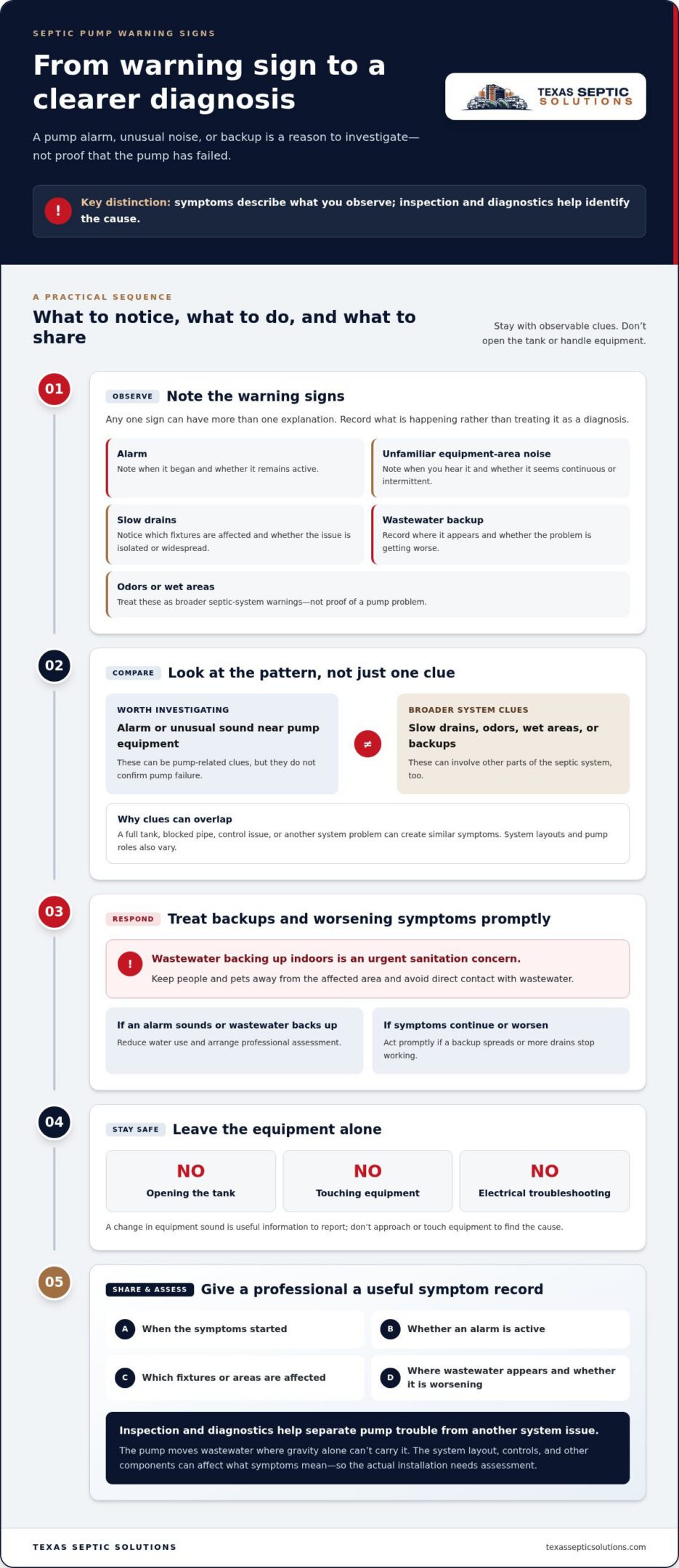
- Alarm: Note when it began and whether it remains active.
- Unfamiliar equipment-area noise: Record when you hear it and whether it seems continuous or intermittent. Don’t approach or touch equipment.
- Slow drains: Note which fixtures are affected and whether the issue is isolated or widespread.
- Wastewater backup: Record where wastewater appears and whether the problem is getting worse.
- Odors or wet areas: Treat these as broader septic-system warnings, not proof of a pump problem.
The pattern can help guide an assessment. For example, one slow fixture is a different observation from several drains slowing at once, but neither confirms pump trouble. Odors or unusually wet ground can also signal a system concern without identifying its source. A general overview of Septic Tank Operation explains why symptoms may involve more than one component.
Which warning signs need prompt attention?
Wastewater backing up indoors is an urgent sanitation concern. Keep people and pets away from the affected area, and avoid direct contact with wastewater. If an alarm sounds, reduce water use and arrange professional assessment. Don’t open a tank or attempt electrical troubleshooting. These precautions help limit exposure while the cause is investigated.
Act promptly if a backup spreads, more drains stop working, or symptoms continue to worsen. Share what you observed, when it started, which areas are affected, and whether an alarm is active. Clear details help guide an assessment, but they can’t replace one. A professional diagnosis can distinguish pump trouble from another septic-system issue and help identify an appropriate repair.
How a Septic Pump Works, and Why Symptoms Do Not Prove It Has Failed
A septic pump moves wastewater through part of a system when gravity alone can’t carry it to the next stage. It may move wastewater from a lower area to a higher one or onward to another part of the system. The pump moves wastewater; it doesn’t treat it. Treatment and disposal depend on the wider septic system and how it was installed.
Not every property has the same setup. A pump may be located in a separate chamber, and its role depends on the system layout. Some installations use controls to signal when pumping is needed. Those controls are part of system operation, so a symptom near the pump doesn’t automatically mean the pump motor has failed. For a broader overview of septic care, the EPA Septic System Care Guidelines explain why maintenance and attention to system condition matter.
What the septic pump does in a system
Think of the pump as a mover within a larger wastewater pathway. It transfers wastewater where the installation requires mechanical assistance instead of relying on gravity alone. The pump’s position, the direction it moves wastewater, and the controls connected to it can vary. A general description explains its purpose, but an assessment of the actual installation is needed to determine how it should operate.
An alarm or backup signals a problem, not a confirmed pump failure. The symptom is what you can observe; the underlying cause is the part or condition responsible. A pump issue is one possibility, but it isn’t the only one.
Why one symptom cannot identify the failed component
A pump alarm may relate to the pump or to a control that monitors or operates it. A blockage can interfere with wastewater movement, while an issue elsewhere in the system can also affect drainage. Similar symptoms can have different causes, so relying on one warning sign may lead to the wrong conclusion.
For example, a backup tells you wastewater isn’t moving through the system as expected. It doesn’t show whether the pump stopped, a control isn’t working as it should, or another component is restricting flow. Slow drainage is also an observable condition, not a component-level diagnosis. The system’s design and the pattern of symptoms help guide further assessment.
Record what you notice, such as when an alarm began or which areas are affected. That information is useful, but it can’t confirm which part has failed. Inspection and diagnostics can help separate pump trouble from another system issue and guide the repair decision. If the cause is unclear, septic system inspection and diagnostics can provide a practical next step.
Septic Pump Trouble or Another Septic Problem? Compare the Clues
Symptoms can help describe what’s happening, but they don’t identify the failed part on their own. An alarm or sound near pump equipment may make pump-related trouble worth investigating. Slow drains, odors, wet areas, and backups can point to broader system concerns. If you’re asking, “how do I know if my septic pump is bad,” use the clues to explain the situation, not to make a diagnosis.
Pump-related clues versus general system warning signs
An alarm or unfamiliar equipment-area noise is worth reporting during diagnostics. Note when it began and whether it changes. Odors, wet ground, and slow drains are broader warnings that can have several causes. Record which areas are affected and how symptoms have changed. No observation in the table independently confirms a failed pump.
| Observation | What it may suggest | Why assessment matters |
|---|---|---|
| An alarm is active | A condition in the system needs attention, potentially involving pump equipment or its controls. | The alarm signals a concern, but diagnosis is needed to identify its source. For alarm-specific steps, see this septic tank alarm guide. |
| Unfamiliar noise near equipment | Equipment may not be operating as usual. | A sound alone can’t establish which component is involved or what repair is needed. |
| Slow drains | A restriction or another issue somewhere in the system may be affecting flow. | Assessment helps distinguish a pump concern from other possible causes. |
| Odors or wet areas | A broader system warning that needs attention. | These observations don’t show whether the pump is involved. |
| Wastewater backup | Wastewater isn’t moving through the system as expected. | Prompt assessment can help locate the cause and determine the next step. |
Keep the timeline simple and specific: when did the symptom start, what changed, and is it happening more often? For example, note whether an alarm appeared before drainage slowed or whether an outdoor wet area appeared later. These details help a professional assess the pattern without treating one observation as proof.
How recent maintenance can help explain the symptoms
If you know the last service or pumping date, write it down. It gives useful context about the system’s care history, though it can’t confirm or rule out pump trouble. Texas Septic Solutions recommends pumping every 2-3 years on average, depending on water usage. The recommended interval is a maintenance guide, not a test of whether the pump is working.
Share the service date, current symptoms, and any changes you’ve noticed during an assessment. Maintenance history can help shape the investigation, but it doesn’t replace inspection or diagnostics. The goal is to connect the clues to the system’s actual condition before deciding whether a pump repair or another response is appropriate.
What to Do If You Suspect Your Septic Pump Is Failing
If you’re asking, “how do I know if my septic pump is bad,” focus first on safety and clear observations. You don’t need to diagnose the equipment yourself. A simple record of what’s happening can help a professional assess the system and distinguish pump trouble from another cause.
- Protect people. If wastewater is backing up indoors, keep people and pets away from it and avoid direct contact. Reduce water use to limit additional wastewater entering the system. This may help limit the immediate problem, but it doesn’t repair the cause.
- Note the symptoms. Record whether an alarm is active, any unfamiliar sounds near equipment, which fixtures are affected, and when the symptoms began. Note whether they’re getting worse or appearing in new areas.
- Check only visible indicators. Observe an alarm or other indicators you can see without opening equipment. Don’t open the tank, handle wiring, remove covers, or attempt electrical repairs. Septic equipment can present safety risks.
- Arrange professional diagnosis. Share your observations and any recent service history. Inspection and diagnostics can help identify whether the pump or another part of the system needs attention.
What homeowners can safely observe and report
Stick to what you can see or hear from a safe distance. Note the alarm’s status, where unfamiliar sounds seem to come from, which fixtures drain slowly, and when each issue started. If wastewater or a wet area is visible, describe its location without touching it or entering the affected area. Include the date of recent service or pumping if you know it.
These details help build a useful timeline. For instance, note whether an alarm appeared before a backup or whether the symptoms began at the same time. Don’t test the pump or try to reproduce a sound. Your observations support the diagnostic process; they aren’t a substitute for it.
When to seek urgent septic service
Arrange prompt help for wastewater backing up indoors or for an active alarm accompanied by worsening symptoms. Keep people and pets away from wastewater and continue limiting water use while you arrange professional assessment. Texas Septic Solutions offers 24/7 emergency septic service for urgent situations. The cause needs to be assessed before the appropriate repair can be determined.
For more repair context, a septic system assessment helps determine what response is appropriate. If symptoms are worsening or wastewater is backing up, arrange emergency septic service to have the issue assessed.
How Texas Septic Solutions Diagnoses and Repairs Septic Pump Problems
An alarm, backup, or change in system performance can leave you wondering what has gone wrong. The next step is to identify the cause before deciding what repair is appropriate. Texas Septic Solutions provides Detailed Inspections and Diagnostics, septic repairs, maintenance, and pumping. The team diagnoses septic pump concerns and handles repairs based on what the assessment finds, whether the issue involves the pump or another part of the system.
For homeowners asking, “how do I know if my septic pump is bad,” a symptom alone can’t provide a reliable answer. A professional assessment connects your observations with the condition of the system. The right response depends on what the assessment finds, not just on which warning sign first caught your attention.
What a professional septic assessment can clarify
Texas Septic Solutions’ Detailed Inspections and Diagnostics help assess reported symptoms and distinguish possible pump trouble from another septic-system issue. Repairs and System Recovery address the next stage when repair is needed. Findings guide the repair plan rather than an assumption based on an alarm or backup. The appropriate work depends on the system’s condition.
Depending on what the system needs, maintenance or pumping may also support its care. These services are part of a broader approach to septic system support, but they don’t replace diagnosis when a pump problem is suspected. Sharing when symptoms began, what has changed, and any recent service history gives the assessment useful context.
A straightforward diagnostic path can help you move from uncertainty to an informed next step:
- Describe the concern: Share the alarm status, affected areas, and how symptoms have changed.
- Assess the system: Inspection and diagnostics help clarify where the issue may be occurring.
- Determine the response: Repair or system recovery can be considered based on the assessment.
Local septic help in the Greater Houston area
Texas Septic Solutions serves the Greater Houston area within a 100 mile radius around Cleveland, TX, including Cleveland, Houston, Cypress, Huffman, and Shepherd. The family-owned and operated business has served customers since 2010 and brings over 20 years of hands-on septic expertise to inspections, diagnostics, repairs, maintenance, and pumping. The company is licensed and insured, with Installer II license OS0029925 and Maintenance provider license MP000 1859.
If you’re dealing with worsening symptoms or want to understand what your system needs, start with an assessment. Request septic inspection or repair service from Texas Septic Solutions.
Move From Uncertainty to a Clear Next Step
Your next step doesn’t need to be a guess. If you’re still asking, “how do I know if my septic pump is bad,” remember that observations can raise concern, but a professional assessment helps identify the cause. Getting clarity can help you make a considered decision instead of trying repairs based on symptoms alone.
Before arranging service, jot down when the issue began and what has changed. Note any alarm, affected fixtures, or visible signs from a safe distance. You don’t need to inspect equipment yourself. A short timeline is a practical starting point for discussing the problem and deciding how to move forward.
For help with an uncertain pump or septic-system concern, request septic inspection or repair service from Texas Septic Solutions. A clear assessment can help you choose the next step with more confidence.
Frequently Asked Questions
Can a septic pump alarm mean the pump is bad?
An alarm can signal a system problem, but it doesn’t prove the pump has failed. The cause could involve the pump, its controls, a blockage, or another component. If the alarm has a visible indicator or display, note what it shows without opening or adjusting the equipment. Record when it started and whether symptoms such as slow drains appeared at the same time. Arrange professional diagnostics, especially if wastewater is backing up.
What are the most common signs of a failing septic pump?
Possible signs include an alarm, unfamiliar noises near pump equipment, slow drains, or wastewater backing up. Odors and wet areas may also signal a septic-system concern, but they don’t identify the pump as the cause. Track which fixtures are affected and whether symptoms happen together. For example, note if an alarm comes before drainage changes. An assessment can help determine which part needs attention.
Can I keep using water if my septic pump is not working?
If wastewater is backing up or the alarm is active, reduce water use while arranging professional help. For example, postpone laundry and other nonessential water use until the issue is assessed. Using less water may help limit additional wastewater entering the system, but it won’t confirm or fix the cause. Keep away from wastewater, and don’t open the tank or handle electrical equipment. Share what’s happening when you request service.
How can I tell if my septic pump is running?
Home observations can’t reliably confirm that a pump is operating properly. An alarm, a change in system behavior, or a sound near pump equipment can provide useful clues, but none verifies the pump’s operation. Don’t open a cover, touch wiring, or try to activate the pump. Instead, note any visible indicator and when you observed it. If performance seems abnormal, professional diagnostics can assess the system safely.
Can slow drains mean my septic pump is bad?
Yes, slow drains can occur with pump trouble, but they can also have plumbing or other septic-system causes. Note whether the change affects one fixture, such as a sink, or several fixtures around the home. Also record whether drainage worsens after regular water use or appears alongside another warning sign. This information helps explain the pattern, but it can’t identify the failed part. Arrange diagnostics if the problem persists or worsens.
When should I call for emergency septic pump service?
Seek prompt help if wastewater backs up indoors or if an active alarm comes with worsening symptoms. Keep people and pets away from wastewater, avoid direct contact, and limit water use while arranging assistance. Texas Septic Solutions offers 24/7 emergency septic service. When requesting help, describe where the backup is occurring, when the alarm began, and what has changed. These details communicate urgency without guessing at the cause.
How often should a septic tank be pumped if it has a pump?
Texas Septic Solutions recommends pumping every 2-3 years on average, depending on water usage. That general interval is for maintenance, not a way to test whether a pump is working. Keep a record of service dates and share it if you report a new alarm or change in system behavior. Pumping and pump repair address different needs, so symptoms should still be assessed rather than treated as a reminder to pump alone.