
RV Dump Station Septic Tank Pumping in Cypress, TX: A Practical Service Guide
What happens when an RV dump station reaches tank capacity during a busy stretch? Access can be disrupted, leaving operators to manage an urgent problem instead of serving guests. A dependable plan for septic tank pumping for RV dump stations Cypress operators can use starts with matching service timing to site demand, not guesswork.
RV traffic and wastewater volume can shift, so a fixed schedule may not suit every station. To plan effectively, track site use, review service records, and pay attention to changing conditions. Scheduled pumping removes accumulated solids and supports system performance. Prompt attention to warning signs can help reduce the risk of backups, overflows, and unexpected closures.
This guide explains how to assess pumping needs, plan service around operating hours, and prepare useful site details before scheduling. It also covers the difference between conventional and aerobic systems and why an RV dump station’s commercial use matters. A practical plan helps keep operations moving as demand changes.
Key Takeaways
- Plan septic tank pumping for RV dump stations Cypress around actual site use, tank capacity, and system condition rather than a one-size-fits-all interval.
- Review observed fill patterns and RV traffic to see whether your current pumping schedule still fits demand.
- Match the response to the need: plan routine pumping, respond to changing conditions, or address urgent problems that threaten operations.
- Before scheduling, gather tank capacity, past service records, site layout, and a clear description of current concerns.
- Record service outcomes and use them to make future pumping plans more informed and dependable.
RV Dump Station Septic Pumping in Cypress: What Operators Need to Plan For
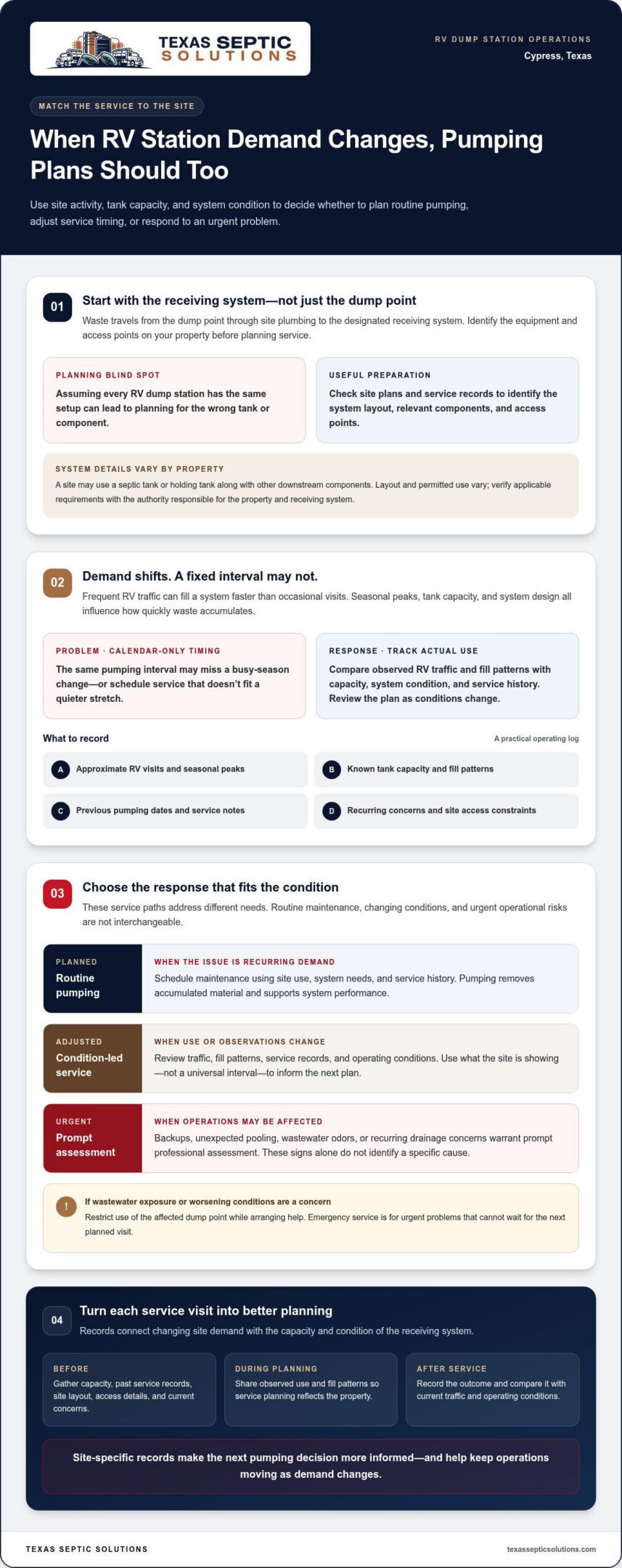
RV dump station pumping removes accumulated waste from the septic tank or holding system that receives wastewater from the dump point. The station is where visitors discharge waste; the receiving system is the equipment that stores or treats it. Distinguishing between the two helps you plan service for the system actually installed at your property, rather than assuming every dump station has the same setup.
How an RV dump station connects to a septic system
Waste flows from the dump point through the site’s plumbing to its designated receiving system. Depending on the property, that may include a septic tank or holding tank and other downstream components. A septic tank is one type of wastewater system, but the layout and permitted use vary by site. Use site plans and service records to identify the access points and components relevant to your property.
Why Cypress operators need a site-specific pumping plan
Visitor volume, seasonal use, tank capacity, and system design all affect how quickly waste accumulates. A busy period can change fill patterns, while a quieter stretch may call for a different service plan. Track use and known tank levels over time, then review the information when planning service. This keeps the schedule responsive to your site instead of relying on a universal interval.
For operators planning septic tank pumping for RV dump stations Cypress, scheduled service helps keep commercial site operations dependable. Pumping removes accumulated material and supports system performance. Routine pumping follows a plan informed by site use and system needs. Emergency service addresses urgent problems, such as a backup or overflow risk, that may disrupt access. Neither approach sets one schedule for every property.
Reliable planning also supports the guest experience. An available station lets visitors complete a necessary stop without an avoidable interruption. If you notice changing fill patterns, recurring drainage concerns, or other signs that operations are being affected, record what’s happening and arrange an assessment of the receiving system.
Local requirements depend on the station’s location, system design, and permitted use. Verify the applicable requirements with the authority responsible for the property and receiving system. Knowing how the site is configured, how it’s used, and what concerns have appeared gives you a practical starting point for coordinating pumping and keeping operations moving.
How RV Station Use, Tank Capacity, and System Condition Shape Pumping
A useful pumping plan reflects what the site sends into its receiving system. A station with frequent RV traffic may fill faster than one with occasional visitors. A larger tank may provide more capacity, but it doesn’t change what the system is designed to handle. Seasonal peaks matter, too. Track use and fill patterns over time so service planning responds to demand, not just a date on the calendar.
Pumping plans should reflect system capacity, usage, and observed conditions. This gives Cypress operators a practical way to respond to changing needs without assuming there’s one schedule for every station. The U.S. Environmental Protection Agency’s How Septic Systems Work resource explains how wastewater moves through a septic system. Knowing your own layout helps identify which tank or component the service plan addresses.
What information helps estimate pumping needs?
Start with a simple operating record. Note approximate RV visits, seasonal peaks, known tank capacity, previous pumping dates, and service notes. Add recurring problems, such as slow drainage or interruptions at the dump point. When arranging service, share the site layout and any access constraints. Together, these details connect observed demand with the receiving system’s capacity and make future planning more useful.
A fixed calendar interval can miss meaningful changes. If RV visits climb during a busy season, the system may need attention sooner than it did during a quieter period. The same interval may not suit a site with lighter use. Review records after service and compare them with current traffic and operating conditions. This gives you a practical basis for adjusting the plan.
When routine planning should give way to urgent service
Backups, unexpected pooling, or wastewater odors warrant prompt professional assessment. These signs don’t identify a specific cause on their own, so avoid treating them as a remote diagnosis. If an affected dump point could worsen the problem or expose guests to wastewater, restrict its use while arranging help.
Texas Septic Solutions provides 24/7 emergency septic service for urgent issues that affect site operations. Routine pumping is planned maintenance; emergency service is for problems that can’t wait until the next scheduled visit. For septic tank pumping for RV dump stations Cypress operators can plan around real site conditions, keep use records and share them when arranging commercial septic pumping. Those details help shape a service plan around the system and its use.
Choosing RV Dump Station Pumping in Cypress: Compare Service Fit, Not Just Timing
The right response depends on what the site is experiencing. Scheduled pumping helps manage recurring demand. Condition-led service responds to changes in use or system observations. Emergency service addresses urgent problems that threaten access or operations. These options serve different needs, so match the response to the station’s history and current symptoms instead of treating them as interchangeable.
| Site need | Suitable response | Information to prepare |
|---|---|---|
| Recurring, reviewable demand | Schedule pumping as part of the operating plan | Tank capacity, RV traffic patterns, and prior service dates |
| Changing fill patterns or recurring concerns | Arrange an assessment and review the service plan | Service notes, observed changes, and system layout |
| Backup or other urgent disruption | Seek emergency septic service | Current symptoms, affected area, and access details |
Scheduled pumping versus emergency septic service
Scheduled pumping helps operators plan around recurring demand and coordinate work with site operations. Condition-led service is appropriate when fill patterns or operating conditions change. If a backup or urgent failure threatens station use, emergency response takes priority. Pumping removes accumulated solids, but it doesn’t repair a failed component. The system’s history and current symptoms help guide the next step.
For a broader view of system care, Texas Septic Solutions’ Septic System Maintenance Texas: The Complete Homeowner’s Guide for 2026 offers related maintenance context. Operators can also consult the EPA guidelines for safe RV wastewater disposal for guidance on responsible wastewater handling.
What makes a commercial pumping service a better operational fit?
Clear coordination matters at an active site. Share available tank access points, system details, the site layout, access constraints, and any symptoms you’ve observed. Discuss operating hours when planning the visit around station use. Texas Septic Solutions provides septic pumping and maintenance for commercial clients in Cypress, supporting RV dump station operators with routine system care.
When planning septic tank pumping for RV dump stations Cypress operators can use, consider the full service fit: the site’s need, the appropriate response, and the details that help coordinate the work. This helps support smooth operations and distinguish routine maintenance from a problem that needs urgent attention.
Prepare Your Cypress RV Dump Station for a Pumping Visit
A little preparation helps the service visit fit your site and daily operations. Before arranging septic tank pumping for RV dump stations Cypress operators should gather key system details, explain current concerns, and plan access to the work area while the station is in use.
Information to have ready when scheduling
Keep these details together so you can describe the site clearly:
- Location and contact: Provide the Cypress site address and the name and number of the person coordinating access.
- System information: Share known tank capacity, receiving-system details, site layout, and the last pumping date if available. Previous service records can put current needs in context.
- Access and operations: Explain how the service area can be reached, any access constraints, and operating hours or other limits that affect coordination.
- Current concerns: Describe observed backups, wastewater odors, pooling, or changes in station use. Note when the issue began and which area is affected, without guessing at the cause.
Accurate details help the service team understand the work area and prepare for the visit. If you don’t know the tank capacity or a system component, share what you do know, such as where the access points are or which part of the station is affected.
Keep station operations organized during service
Before the visit, decide how RV traffic will move while the service area is accessed. If the affected dump point needs to be restricted, plan how staff will direct guests and communicate the change. Keep the route to the relevant access point clear, and share any site-specific safety restrictions with the service team ahead of time.
After service, record the date and any relevant observations or recommendations. Keep that information with earlier service notes. A consistent record helps you review changes in demand and make future pumping plans based on the site’s actual history.
Texas Septic Solutions provides commercial septic pumping for Cypress operators. Gather your site details and arrange commercial septic pumping to plan service around your system and station operations.
Arrange Commercial Septic Tank Pumping for Your Cypress RV Dump Station
Turn the information you’ve gathered into a clear service plan: understand the receiving system, share site details, choose planned or urgent service, and record what happens afterward. This sequence connects pumping decisions to the needs of your Cypress RV dump station and supports informed planning over time.
What to expect when arranging service
When arranging septic tank pumping for RV dump stations Cypress operators can share the site’s typical use, system information, access details, and immediate concerns. Tank capacity, the last pumping date, service records, operating constraints, and symptoms such as backups or pooling help describe the situation. Clear information also supports coordination around the work area and station operations.
Texas Septic Solutions provides septic pumping and maintenance for commercial clients in Cypress. Service coordination starts with understanding the site and the work needed, then planning access for the visit. If an urgent septic problem is affecting operations, the company also provides 24/7 emergency septic service. Every property has a different layout, so useful site details keep the discussion focused on your system and circumstances.
After the visit, keep a record of the service date, work performed, and relevant observations. File it with previous service notes. These records can help you recognize recurring concerns and make better-informed decisions about future maintenance.
Build a more dependable pumping routine
Revisit your pumping plan as station traffic, seasonal use, or system conditions change. Compare current use with earlier service notes, and update the plan when the site’s operating pattern shifts. For broader maintenance planning, see Septic System Maintenance Plan: The Comprehensive 2026 Homeowner Guide. If an active system failure needs attention, Septic System Repair in Texas: The 2026 Homeowner’s Reference Guide offers related repair context.
Good records and clear coordination make it easier to choose between planned pumping and urgent service without relying on guesswork. Texas Septic Solutions serves septic system customers in Cypress, Houston, Cleveland, Huffman, and Shepherd. Contact the team to discuss commercial septic pumping for your Cypress RV dump station and plan a practical next step for the site.
Keep Your Cypress RV Dump Station Ready
A dependable pumping plan starts with understanding the receiving system and how the station is used. Review tank capacity, RV traffic, service history, and changing conditions instead of relying on a schedule that may no longer fit. Clear site and access details also make service coordination more straightforward.
For septic tank pumping for RV dump stations Cypress operators can plan around, Texas Septic Solutions provides commercial septic pumping and maintenance. If an urgent septic issue affects operations, 24/7 emergency septic service is available. Keeping service records helps you make informed decisions as site use changes.
Schedule commercial septic pumping for your Cypress site and take a practical next step toward steady operations. With a site-specific plan and support from Texas Septic Solutions, you can manage changing demand with greater confidence.
Frequently Asked Questions
How often should an RV dump station septic tank be pumped?
There’s no single pumping interval that fits every RV dump station. Frequency depends on receiving tank capacity, RV traffic, waste volume, system design, and service history. Track approximate visits, seasonal peaks, and previous pumping dates to spot changing patterns. Then review the plan with a septic professional using your site records, rather than treating a general rule of thumb as a local requirement.
Can an RV dump station discharge into a septic tank?
An RV dump station can discharge into a septic tank only if the receiving system’s design and permitted use allow it. Don’t assume a system approved for one use can also handle RV waste or commercial traffic. Review your site plans, records, and permit conditions before changing a connection or how the station is used. Verify applicable requirements with the authority responsible for that property.
What are signs an RV dump station septic tank needs pumping?
Backups, unexpected pooling, persistent wastewater odors, or unusual changes in station operation warrant a professional assessment. These signs can have causes beyond a full tank, so pumping alone may not resolve the issue. If conditions are worsening or wastewater affects the dump point, limit its use and seek septic service promptly. Share what you’ve observed and when it began so the issue can be assessed in context.
What should I prepare before scheduling RV dump station pumping in Cypress?
Have the Cypress site address, access instructions, a site contact, known tank capacity or system details, and the last service date ready if available. Describe current symptoms, such as pooling or odors, and any operating constraints that affect access or station use. You don’t need to know every technical detail. Share what you have and clearly explain what’s uncertain so service coordination can account for the site.
Can septic pumping prevent an RV dump station backup?
Pumping removes accumulated solids and supports system maintenance, which can help reduce risks related to an overloaded tank. It can’t guarantee that backups won’t occur. Blockages, damaged components, or drainfield problems may also affect system performance and may need attention beyond pumping. If a backup occurs or symptoms continue after service, arrange a professional assessment to identify what may be affecting the system.
Is emergency septic pumping available for RV dump stations in Cypress?
Texas Septic Solutions offers 24/7 emergency septic service for urgent septic-related needs affecting RV dump stations in Cypress. When requesting help, describe the location, symptoms, site access, and impact on station operations. The company also serves commercial septic clients in Houston, Cleveland, Huffman, and Shepherd. Response timing and outcomes can vary, and pumping alone may not resolve every operational issue, especially if a component has failed.
Who oversees septic requirements for an RV dump station in Cypress?
The responsible authority and applicable requirements depend on the property’s jurisdiction, system type, permits, and approved use. Start with the site’s plans and permit records, then verify current requirements with the relevant local authority or Texas regulator. Don’t assume a rule for another property applies to your station. Checking requirements before changing system use or connections helps ground decisions in the site’s actual approvals.