
Accidentally Damaged Your Septic Tank in Huffman? Next Steps
A vehicle bump, falling branch, or piece of equipment can damage a septic tank even when the impact looks minor. If you’re searching for what to do if you accidentally damage your septic tank Huffman, first keep people and pets away. Don’t open or enter the tank, and limit water use if you notice a backup or other signs of a problem.
It’s understandable to worry about a hidden crack, a leak, or whether flushing could make the problem worse. Damage isn’t always visible from the surface, so don’t drive or dig near the tank. From a safe distance, watch for sewage backing up into the home, strong odors, or standing water around the system. These signs need prompt attention.
This guide explains how to protect your household and property after an impact, which warning signs call for urgent help, and what information to share during an assessment. Texas Septic Solutions provides septic system repair and 24/7 emergency service in Huffman, helping you move from immediate precautions to a clear assessment and next steps.
Key Takeaways
- If you accidentally damage your septic tank in Huffman, note what happened and observe from a safe distance. Don’t lift covers, dig, or touch wastewater.
- A shifted lid, surface damage, or wet ground can offer clues, but none confirms which septic component is damaged.
- Use the comparison of tanks, lids, and drainfields below to understand what your observations may mean and what to do next.
- Avoid parking, driving, digging, pumping, or placing heavy objects over the suspected damage while you arrange an assessment.
- A professional assessment can identify affected components and guide the appropriate repair, including when an urgent concern needs attention.
Accidentally Damaged a Septic Tank in Huffman? Take These Steps First
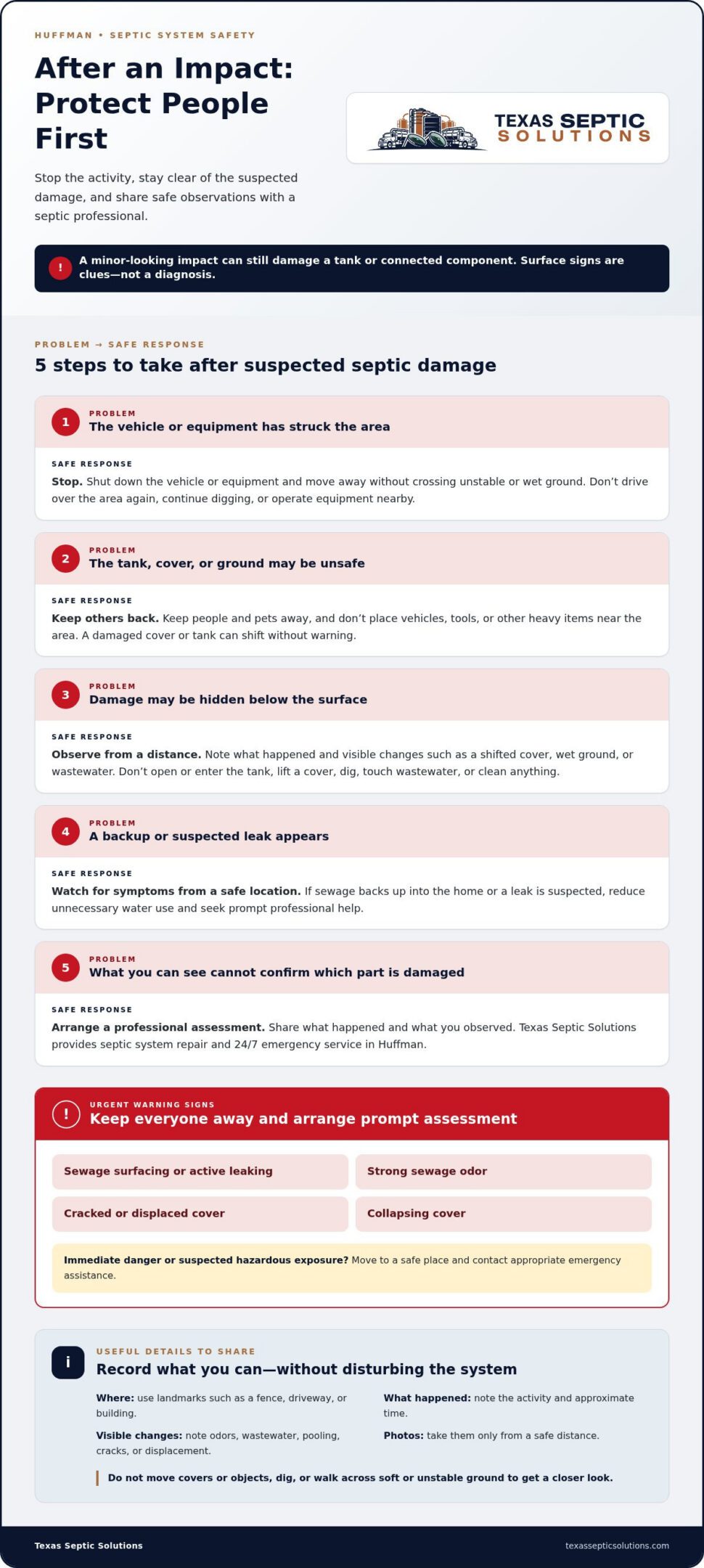
Stop the activity that caused the impact and keep clear of the suspected damage. Don’t drive over the area again, continue digging, or operate equipment nearby. Keep children, pets, vehicles, and other people back, especially if the ground looks unstable or wastewater is visible. A damaged cover or tank can shift without warning, so don’t open it, enter the tank, dig around it, or try to move or replace a lid.
If you’re unsure what to do if you accidentally damage your septic tank Huffman, focus first on safety, then arrange a professional assessment. A septic tank is part of a connected system, so an impact may affect more than the area you can see. Don’t disturb the site to investigate. From a safe distance, note what happened and what you can observe.
What should you do immediately after striking the tank?
Use this checklist to protect people and preserve useful information for the assessment:
1. Stop. Shut down the vehicle or equipment and move away from the suspected tank location without crossing unstable or wet ground.
2. Keep others back. Create a safe boundary that keeps people and pets away. Don’t place a vehicle, tools, or other heavy items near the area.
3. Observe from a distance. Note the time and activity, along with visible signs such as a shifted cover, wet ground, or wastewater. Don’t touch, lift, or clean anything.
4. Watch for symptoms. If sewage backs up into the home or a leak is suspected, reduce unnecessary water use and seek prompt professional help.
5. Arrange an assessment. Share your observations with a septic professional. Texas Septic Solutions provides septic system repair and 24/7 emergency service in Huffman.
When does septic tank damage become an emergency?
Treat sewage surfacing, active leaking, a strong sewage odor, or a cracked, displaced, or collapsing cover as urgent warning signs. Keep everyone away and arrange prompt professional assessment if the tank, lid, or a connected pipe appears damaged. Don’t wait to see whether the problem worsens, and don’t try to confirm the damage yourself. If there’s immediate danger or suspected hazardous exposure, move to a safe place and contact appropriate emergency assistance.
How to Describe the Damage Without Disturbing Your Septic System
A visible scrape, cracked-looking cover, or shifted lid can show where an impact occurred, but it can’t confirm whether the tank itself is damaged. The lid and riser provide access; beneath them, the tank shell and connected pipes are separate components. The drainfield is another part of the system, and heavy equipment or digging may disturb it even if the tank area looks unchanged. Treat what you see as clues, not a diagnosis.
If you’re wondering what to do if you accidentally damage your septic tank in Huffman, safe observations can help a technician understand the situation without putting you at risk. Don’t lift covers, dig to find a pipe, touch wastewater, or walk across soft or unstable ground to get a closer look.
Which septic components might have been struck?
A cover or access riser may crack, shift, or become unsafe after an impact. Damage to the tank shell or an inlet or outlet pipe may be hidden below ground, so an intact-looking surface doesn’t rule it out. The drainfield is separate from the tank. Note whether equipment crossed or digging occurred near that area. The U.S. Environmental Protection Agency’s guide to septic system care also explains why the drainfield is an important part of the system.
What details can you safely record for the technician?
Write down what happened and where, using familiar landmarks such as a fence, driveway, or building. If a vehicle, mower, or excavator was involved, note the activity and approximate time. Take photos only from a safe distance. Don’t move objects or covers to improve the view.
Then note any changes you can observe from a safe location. A short record can help show when symptoms began and where they appeared:
- New or stronger sewage odors, visible wastewater, or pooling
- Slow drains, sewage backup, or a septic alarm
- Cracks, displacement, or a change in ground level
- Soft, sunken, or unusually wet soil near the tank or drainfield
These details help guide a professional assessment, but they don’t establish which component has failed. Share your notes with Texas Septic Solutions so the suspected damage can be evaluated without you disturbing the system.
Is the Septic Tank, Lid, or Drainfield Damaged? Understand the Differences
An impact near a septic system doesn’t automatically mean the tank needs replacement. The access cover, riser, tank, buried pipes, and drainfield are separate components. Damage to one doesn’t prove the others are affected. Surface signs can help you describe what happened, but they’re clues, not diagnoses. A professional assessment can determine the extent of damage and what repair is appropriate.
Use this comparison to report what you’ve noticed from a safe distance. Don’t lift, probe, or test any component yourself.
| Suspected component | Possible observation | Safe next action |
|---|---|---|
| Lid or access riser | Cover appears cracked, shifted, or out of place | Keep clear of the opening and report the visible change for assessment. |
| Tank shell | Ground near the tank is newly sunken, wet, or disturbed after impact | Stay off the area and share the location and observations with a septic professional. |
| Inlet or outlet pipe | Plumbing changes, backups, or wastewater appear after the incident | Describe when symptoms began; don’t dig to locate or inspect a pipe. |
| Drainfield | Equipment crossed the area, or soil looks newly rutted, wet, or compressed | Keep vehicles and heavy objects off the area and point out the equipment path. |
How can damage to a lid, riser, or tank differ?
A lid or riser may show visible movement or breakage, but even an access cover that looks intact doesn’t establish the condition of the tank below it. A cracked or displaced cover is still a safety concern because it may be unstable. The tank shell or connections may be damaged underground without an obvious surface sign. Don’t approach to check; arrange an assessment.
Could a vehicle or excavation also affect pipes or the drainfield?
Yes. Vehicle weight or excavation can disturb buried connections or compact and damage soil beyond the tank itself. Tell the technician where equipment traveled, where digging took place, and whether symptoms appeared afterward. That context can help guide the inspection. For more repair context, see the Texas septic system repair guide.
If you’re deciding what to do if you accidentally damage your septic tank in Huffman, don’t assume the worst or try to identify the failure yourself. A professional can assess the affected components and recommend a repair based on verified damage, whether it involves an access component, a connection, or another part of the system.
What to Do While You Wait for a Septic Damage Assessment
Once the area is secure, focus on avoiding further disturbance and giving the technician useful information. You don’t need to diagnose the system or predict what the impact has done. A professional assessment will determine whether anything needs repair.
- Keep the area clear. Don’t park, drive, dig, pump, or place heavy objects over the suspected tank, pipes, or drainfield.
- Watch for changes from a safe distance. Note sewage backup, wastewater surfacing, strong odors, or a persistent alarm.
- Adjust water use if symptoms appear. If drains are backing up or wastewater is surfacing, reduce unnecessary water use while arranging professional help. This precaution won’t diagnose or repair an underlying fault.
- Record what you observe. Note when symptoms began and take photos only from a safe distance.
- Arrange an assessment. Share your observations and details about the impact with a septic professional.
Should you keep using water in the house?
If the plumbing is working normally and there are no signs of a leak or backup, don’t assume the impact means the whole system has failed. But if wastewater surfaces, drains back up, or an alarm continues, limit nonessential water use and seek prompt professional attention. Record which fixtures are affected and when symptoms started. For an alarm concern, follow the septic tank alarm response guide while keeping clear of the damaged area.
What should you prepare before requesting service?
Have the property location in Huffman and a safe access route ready. Explain what activity may have caused the impact, where a vehicle traveled or digging occurred, and what has changed since. Share photos taken from a safe distance, along with notes about odors, pooling, backups, alarms, or wastewater. These details help guide the assessment without requiring you to inspect or disturb the system.
If you’re searching for what to do if you accidentally damage your septic tank in Huffman, keep the site undisturbed and arrange professional help. Texas Septic Solutions provides septic repair and 24/7 emergency service in Huffman.
Get Professional Septic Tank Repair Help in Huffman
A professional assessment turns visible clues into a repair plan. The technician can review what happened, consider the symptoms you recorded, and assess the relevant septic components. A shifted lid, suspected pipe damage, or wastewater surfacing may point to different concerns, but surface observations alone can’t confirm the actual condition.
What happens during a professional damage assessment?
The assessment focuses on the reported impact and the parts of the system that may be affected. The findings help determine whether repair, maintenance, pumping, or further work is appropriate. The goal is to address the verified issue, not assume that every impact means the tank must be replaced. Keep your notes handy and let the professional determine what needs closer inspection.
How can Huffman homeowners move from damage to repair?
Share the location, what caused the impact, where equipment traveled or digging occurred, and any changes you’ve noticed in plumbing, odors, alarms, or ground conditions. Keep people and pets away from the affected area until it has been assessed. Don’t attempt a DIY repair or disturb a damaged cover to make the technician’s job easier.
Texas Septic Solutions provides septic system repair and 24/7 emergency service in Huffman. If sewage is backing up, wastewater is surfacing, or a cover appears unstable, seek professional help promptly. For other suspected impact damage, an assessment can clarify the next step and help prevent guesswork from driving unnecessary work.
After the immediate concern is addressed, revisit routine care to help protect the system over time. The Texas septic system maintenance guide offers useful context for ongoing upkeep.
If you’re looking for what to do if you accidentally damage your septic tank in Huffman, keep the area clear, share what you’ve observed, and arrange a professional assessment. Texas Septic Solutions also serves Cleveland, Houston, Cypress, and Shepherd. Contact the team for septic repair or emergency support in Huffman.
Take the Safe Next Step for Your Septic System
If you’re deciding what to do if you accidentally damage your septic tank in Huffman, keep people and pets away, avoid disturbing the area, and treat visible signs as clues rather than a diagnosis. A shifted lid, wet ground, or plumbing change can’t confirm which component is damaged. A professional assessment can identify what needs attention and guide the appropriate repair.
Texas Septic Solutions provides septic repair and maintenance in Huffman, along with 24/7 emergency septic service for urgent concerns. Sharing what happened and what you’ve noticed can help move the assessment forward without risking a DIY inspection.
Contact Texas Septic Solutions for professional septic repair help in Huffman and arrange an assessment. Keep the area secured and let a professional determine what’s damaged and what repair is needed.
Frequently Asked Questions
What should I do first if I accidentally hit my septic tank?
Stop the vehicle, digging, or equipment and keep people and pets away from the affected area. Don’t approach a cracked or shifted cover, open the tank, or dig to check for damage. From a safe distance, note what happened, where the impact occurred, and any visible changes. If you’re searching what to do if you accidentally damage your septic tank in Huffman, arrange a professional assessment.
Can I use water in my house after damaging a septic tank?
If your drains are working normally and there’s no sign of wastewater surfacing, don’t assume the impact has made the whole system unusable. But if drains back up, a leak is suspected, or wastewater appears outdoors, reduce unnecessary water use while arranging professional help. Limiting water is a precaution, not a repair. Tell the technician which fixtures are affected and when symptoms started.
How do I know if I damaged my septic tank or just the lid?
You can’t reliably tell from a visible mark or displaced cover alone. A damaged lid or access riser may be apparent, but the tank shell and connected pipes are often underground, and surface clues can’t confirm their condition. Stay away from the cover and don’t lift, probe, or test it. Share what you observed with a septic professional, who can assess the affected components and determine the extent of the damage.
Is a cracked septic tank lid dangerous?
Yes. Treat a cracked, shifted, or unstable lid as a safety hazard. Keep children, pets, vehicles, and other people away, and don’t try to move, lift, or replace the cover yourself. The area beneath it may be unsafe, and the visible crack doesn’t show whether the tank is also damaged. Arrange a professional assessment, especially if the cover appears to be collapsing or wastewater is visible nearby.
Can driving over a septic tank damage the tank or drainfield?
It can. Vehicle weight may damage a tank or access cover, while driving or heavy equipment over the drainfield can disturb its soil or buried connections. The affected component may not be obvious from the surface. Keep vehicles and heavy objects off the suspected area, and tell the technician where the vehicle traveled. Don’t dig to trace pipes or inspect the drainfield yourself.
When should I call for emergency septic repair in Huffman?
Seek prompt professional help if sewage backs up into the home, wastewater surfaces, a strong sewage odor develops, a leak is active, or a cover looks unstable or is collapsing. Texas Septic Solutions provides 24/7 emergency septic service in Huffman, Cleveland, Houston, Cypress, and Shepherd. If there’s immediate danger or suspected hazardous exposure, move to safety and contact appropriate emergency assistance.
Can I repair a damaged septic tank myself?
No. Don’t enter the tank, open a damaged cover, dig around the system, or attempt a repair. Damage can involve hidden components, and disturbing the area may create additional hazards or make it harder to assess. Keep the site clear and share your observations with a septic professional. Texas Septic Solutions provides septic system repair and maintenance, helping Huffman homeowners determine the appropriate next step through a professional assessment.