
Professional Septic Tank Pumping in Houston: What to Expect
Could an odor or slow drain mean your septic tank needs pumping, or is it a sign of a repair issue? With professional septic tank pumping Houston property owners can address the problem with a clearer understanding of what the symptoms may indicate, rather than assuming every issue has the same fix. Backups and drainfield concerns can be stressful, but timely attention can help you protect your system and property.
It’s reasonable to want clear answers before a service visit: when might pumping be needed, what should you prepare, and what happens on site? This article covers common warning signs, how pumping differs from repairs, and what information and access can help the appointment go smoothly. Texas Septic Solutions provides septic pumping, maintenance, and repair for residential and commercial properties in Houston, Cypress, Huffman, Cleveland, and Shepherd. Use the guidance below to prepare for local septic care and describe what’s happening at your property.
Key Takeaways
- Slow drains, recurring backups, and persistent odors can point to a septic concern, but one symptom alone may not tell you whether pumping or repair is needed.
- Professional septic tank pumping Houston service involves accessing the tank, assessing its condition, pumping it, and sharing relevant observations.
- Pumping schedules depend on household size, water use, tank capacity, and system type, so one calendar interval may not suit every property.
- Gather system records, note symptoms, and share access details before the visit. Clear access helps the service proceed smoothly.
- Texas Septic Solutions provides pumping and broader septic care for residential and commercial properties in Houston, Cypress, Huffman, Cleveland, and Shepherd.
Professional septic tank pumping in Houston: when it may be time
One slow drain or unusual odor doesn’t automatically mean your septic tank needs pumping. The same symptom can come from a household plumbing issue, a tank concern, or a drainfield problem. Look at what’s happening across the property and compare it with your system’s service history.
Professional septic tank pumping Houston service can remove accumulated solids, but symptoms alone can’t confirm that pumping is the right solution. Reviewing the system and its maintenance history helps identify a sensible next step, whether that’s pumping, further assessment, or repair.
Which symptoms can point to a septic tank problem?
Slow drains, gurgling sounds, or a toilet that backs up are clues to investigate, not definitive diagnoses. If one sink is affected while other fixtures drain normally, the cause may be limited to that fixture or its plumbing. If several drains or fixtures are slow or backing up, the issue may involve shared plumbing or the septic system.
Persistent sewage odors indoors or outdoors, or an unusually wet area near the system, deserve prompt attention. Note where and when they occur and whether multiple fixtures are affected. This information can help a septic professional assess the situation. Avoid walking on or disturbing a wet area while arranging service.
Does every warning sign mean the tank needs pumping?
No. Pumping removes accumulated solids from the tank, but it won’t correct every fault. A full tank is one possible cause of trouble; recurring backups or wet ground can also be associated with a drainfield concern. If the system uses mechanical components, an equipment issue may need attention. The right response depends on the system and what an assessment finds.
Symptoms need context: your system’s history and an on-site assessment help distinguish a pumping need from a plumbing, tank, or drainfield problem.
A septic tank separates and holds wastewater components as part of the system. The Septic tank overview provides background on its basic function. For your property, keep track of past pumping or maintenance, recent changes in water use, and when symptoms began. Texas Septic Solutions provides septic pumping, maintenance, and repairs for residential and commercial properties in Houston, Cypress, Huffman, Cleveland, and Shepherd. Sharing what you’ve noticed helps guide the service visit without assuming every warning sign calls for the same fix.
What happens during professional septic tank pumping in Houston?
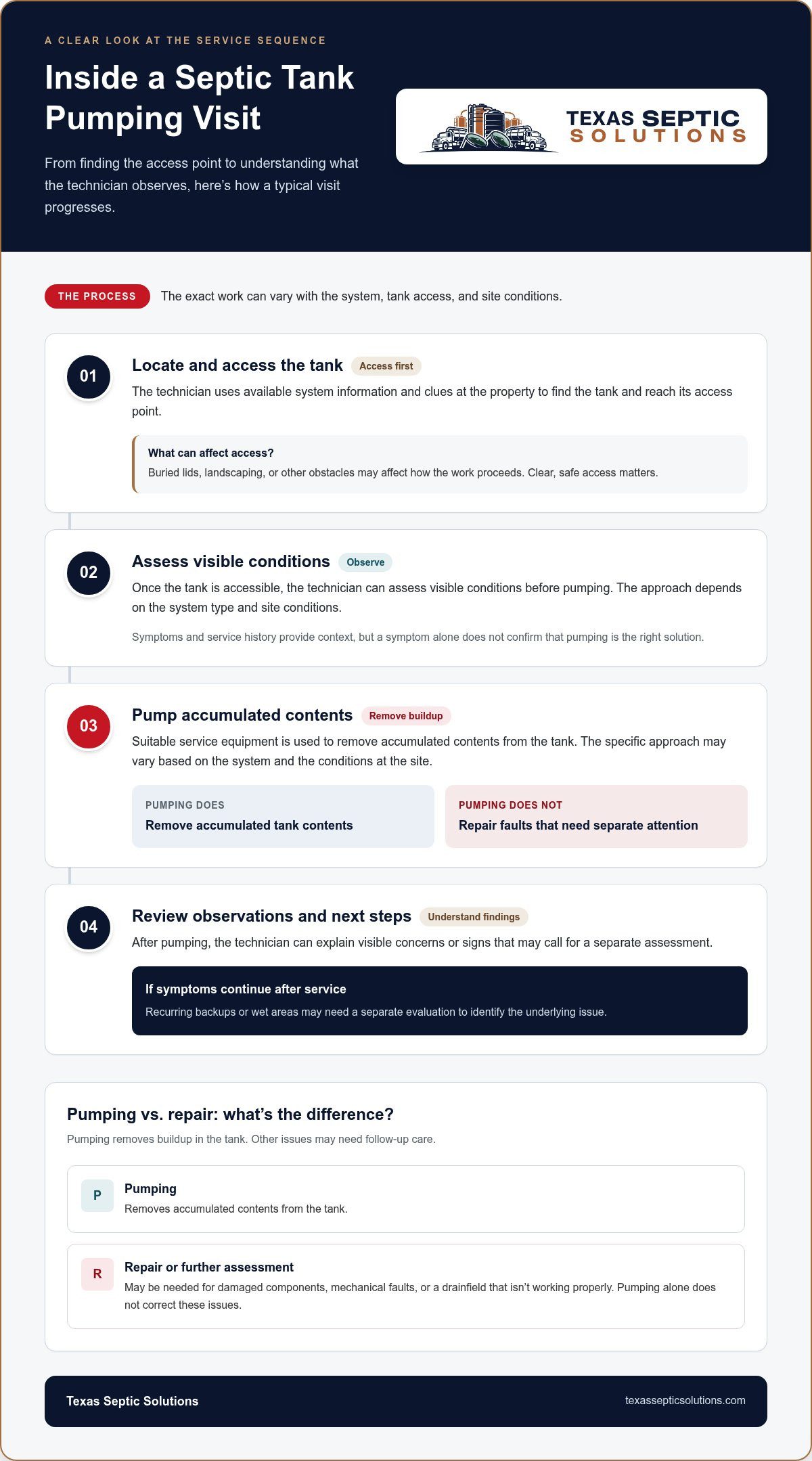
A pumping visit follows a practical sequence, though the details depend on your system, tank access, and what the technician observes. With professional septic tank pumping Houston service, the work involves accessing the tank, assessing its condition, removing accumulated contents, and sharing relevant observations so you understand any recommended next steps.
How a pumping appointment typically progresses
First, the tank must be located and accessed. The technician uses available system information and site clues to find the tank and reach its access point. Clear, safe access matters: buried lids, landscaping, or obstacles may affect how the work proceeds.
Once the tank is accessible, the technician can assess visible conditions and use suitable service equipment to pump its contents. The approach may vary by system type and site conditions. After pumping, the technician can explain visible concerns or signs that call for a separate assessment. The U.S. Environmental Protection Agency’s guidance on how often to pump your septic system also emphasizes that care should account for the system and property rather than rely on a one-size-fits-all assumption.
What pumping can and cannot resolve
Pumping removes accumulated tank contents. It doesn’t repair damaged components, correct a mechanical fault, or restore a drainfield that isn’t working properly. If backups or wet areas continue after service, those symptoms may need a separate evaluation to identify the underlying issue.
Pumping removes what has built up in the tank; septic system repair addresses faults that pumping alone can’t fix. This distinction helps set realistic expectations: pumping may address a tank that needs service, while other concerns may require follow-up. Access and system condition affect what the work involves.
Texas Septic Solutions provides septic pumping and broader septic care for residential and commercial properties in Houston, Cypress, Huffman, Cleveland, and Shepherd. To learn more or arrange service, visit Texas septic pumping services.
How often should a Houston-area septic tank be pumped?
There isn’t one pumping calendar that fits every Houston property. Household size, water use, tank capacity, and system type all affect how quickly solids accumulate and what maintenance the system needs. A schedule that works for one household may not suit a larger family, a property with heavier water use, or a different septic design.
The U.S. Environmental Protection Agency gives a general pumping guideline of every three to five years for a typical household using a conventional system, while noting that household size, tank size, and water use can change the timing. Treat that as a planning reference, not a guaranteed interval for your property. The EPA guidelines on septic system care explain more about the factors that shape a maintenance schedule.
What affects pumping frequency?
More people using the system usually means more wastewater entering the tank. Frequent laundry, long showers, and other water-intensive habits can also increase the load. Tank capacity matters too: a smaller tank serving the same household may need attention sooner than a larger one.
System design makes a difference. Conventional and aerobic systems have different maintenance needs, so don’t base your plan on a neighbor’s schedule alone. Keep records of past service, including pumping dates and maintenance observations, then use that history with a professional assessment to plan ahead. For more practical guidance, consult the existing guide to septic system maintenance in Texas.
When symptoms suggest more than routine pumping
A calendar reminder is useful, but it shouldn’t replace attention to new problems. Recurring backups, persistent sewage odors, or wet areas around the system may call for assessment rather than simply routine pumping. These clues can have different causes, including a full tank, plumbing concerns, damaged components, or a drainfield issue.
Pumping removes accumulated contents from the tank; it doesn’t resolve every fault. If symptoms continue or return after service, a separate evaluation may be needed to determine whether repair is appropriate. The septic system repair guide can help explain how repair concerns differ from routine maintenance. Houston-area property owners can use service records and current symptoms to guide a conversation about the right next step for professional septic tank pumping.
Preparing for septic tank pumping at your Houston property
A little preparation can help make a pumping visit more straightforward. Gather what you know about the system and its recent performance, then make the tank’s access area easy to reach. You don’t need to diagnose the problem yourself. Clear notes about what you’ve noticed can help the technician understand the situation at your Houston-area property.
What information should you have ready?
Pull together available pumping or maintenance records, system documents, and details about where the tank is located. If you’re unsure of its exact position, share the best information you have rather than guessing. Note when a problem began and whether it affects one fixture or several.
- Service history: Dates or records from previous pumping and maintenance visits.
- Symptoms: When slow drains, backups, or odors began, where they occur, and whether they’re recurring.
- System changes: Any alarm activity, changes in system performance, or recent changes in household water use.
Specific details are useful. For example, mention whether a backup occurred in one bathroom or across several fixtures, and whether an alarm is active. These observations describe what’s happening without assuming pumping is the only solution.
How can you make the property accessible?
Keep the known tank access area clear of vehicles, stored items, and other obstacles. If the access point is buried or you’re uncertain where it is, share that when arranging the appointment. Access conditions may affect the work plan, so avoid digging or moving heavy items if you’re unsure what lies beneath the surface.
These steps apply whether your property is in Houston, Cypress, Huffman, Cleveland, or Shepherd. Texas Septic Solutions provides septic pumping and broader care for residential and commercial properties, with the work shaped by the system and site.
Have your system notes and access details ready? Arrange septic pumping service with Texas Septic Solutions and describe what you’ve observed at the property.
Book professional septic tank pumping in Houston with Texas Septic Solutions
When it’s time to plan service, the details you share can help Texas Septic Solutions understand the property and concern. The company provides professional pumping and broader septic care for residential and commercial customers in Houston, Cypress, Huffman, Cleveland, and Shepherd. Each system and site is different, so useful information helps frame the service request without assuming every property needs the same work.
What to share when requesting service
Start with the property location and whether it’s residential or commercial. Then describe what’s happening and when it began. For example, note whether a backup affects one fixture or several, whether odors persist, or whether an alarm is active. If you know where the tank is, share its location and any access details.
Available service history can also help. Previous pumping or maintenance records provide context for planning professional septic tank pumping Houston service. If you don’t have records, describe what you do know and whether the concern seems routine or urgent. You don’t need to diagnose the cause before requesting service.
When pumping concerns may need urgent attention
An active sewage backup or wastewater exposure is an urgent property concern. Keep people and pets away from affected areas, and avoid contact with wastewater. Share the situation clearly when requesting help.
Texas Septic Solutions offers 24/7 emergency septic service, as well as pumping, maintenance, and repairs. Providing your location and a clear description of what’s happening helps communicate the situation.
Whether you’re arranging routine pumping or dealing with an urgent septic issue, take the next step through the company homepage. Request septic pumping service from Texas Septic Solutions and include the property location, system history, and symptoms you’ve observed.
Take the next step toward dependable septic care
Slow drains, recurring backups, or odors can signal a septic concern, but they don’t prove the tank needs pumping. An assessment and your system’s service history can help distinguish routine pumping from a plumbing, tank, or drainfield issue. Before a visit, gather available records, note what you’ve noticed, and clear the tank access area.
For professional septic tank pumping Houston property owners can turn to Texas Septic Solutions for residential and commercial pumping, maintenance, and repair in Houston, Cypress, Huffman, Cleveland, and Shepherd. If an active septic emergency needs attention, the company also provides 24/7 emergency septic service. Share your property location and symptoms so your service request starts with useful context.
Request professional septic tank pumping in Houston and take a practical step toward caring for your septic system.
Frequently Asked Questions
How often should a septic tank be pumped in Houston?
There’s no single pumping schedule for every Houston-area property. Household size, water use, tank capacity, system design, and past service history all affect timing. For professional septic tank pumping Houston homeowners can review maintenance records and arrange an assessment when planning service. If backups, odors, or wet areas appear, don’t assume pumping alone will resolve the cause. Describe the symptoms when requesting professional help.
What are the signs that a septic tank needs pumping?
Slow drains, recurring backups, persistent sewage odors, or unusually wet areas may signal a septic system problem. They don’t confirm that the tank needs pumping, since plumbing obstructions, damaged components, or drainfield concerns can cause similar symptoms. Note where and when the issue occurs, and whether it affects one fixture or several. An assessment can help identify the likely cause and guide the next step.
What happens during professional septic tank pumping?
A pumping visit generally involves accessing the tank, assessing its condition, removing accumulated contents, and communicating any concerns observed during the work. The exact process depends on the system design, access, and site conditions. Pumping addresses tank contents, but it doesn’t repair broken components or automatically resolve drainfield problems. Share available service records and current symptoms so the service team has useful context for the visit.
Can septic tank pumping fix a sewage backup?
Pumping may help if accumulated solids or a full tank contribute to a backup, but it isn’t a guaranteed fix for every blockage or system failure. Plumbing obstructions, damaged components, or drainfield issues can also cause wastewater problems. Avoid contact with sewage and keep people and pets away from affected areas. Describe where the backup is occurring and what you’ve observed when arranging professional septic service.
How much does professional septic tank pumping cost in Houston?
The cost depends on the system, tank access, property conditions, and work required, so there isn’t one reliable figure for every Houston-area service call. When requesting service from Texas Septic Solutions, share the property location and any known system information, along with the reason for the visit. If you’re dealing with an active backup or another urgent concern, explain that clearly when you reach out.
What should I do before the septic pumping service arrives?
Gather available service records, note the tank’s known location, and write down the symptoms you’ve noticed and when they began. Keep the access area clear of vehicles and stored items where possible. Tell the service team about alarms, recent backups, or changes in system performance. If the tank location is uncertain or access may be limited, include those details when arranging service.
Is septic tank pumping an emergency service?
Routine pumping can be arranged as scheduled maintenance, while an active backup, wastewater exposure, or sudden system failure may need urgent attention. Avoid contact with wastewater and keep people away from affected areas. Texas Septic Solutions provides 24/7 emergency septic service for urgent septic-related needs in Houston, Cleveland, Cypress, Huffman, and Shepherd. Share your location and describe what’s happening when requesting help.