
Houston Septic Tank Maintenance: 2026 Homeowner Guide
For septic tank maintenance for new homeowners Houston, a useful first step isn’t necessarily scheduling a pump-out. Find out what system you have and what is known about its condition and service history. Those details affect what care it needs, so a routine based on guesswork may miss the mark.
If you’ve just moved in, you may be wondering where the system is, when it was last serviced, and whether Houston-area rain could affect its performance. Heavy rainfall can saturate a drain field. Knowing the system’s location and watching for changes around it can help you spot concerns to discuss with a professional.
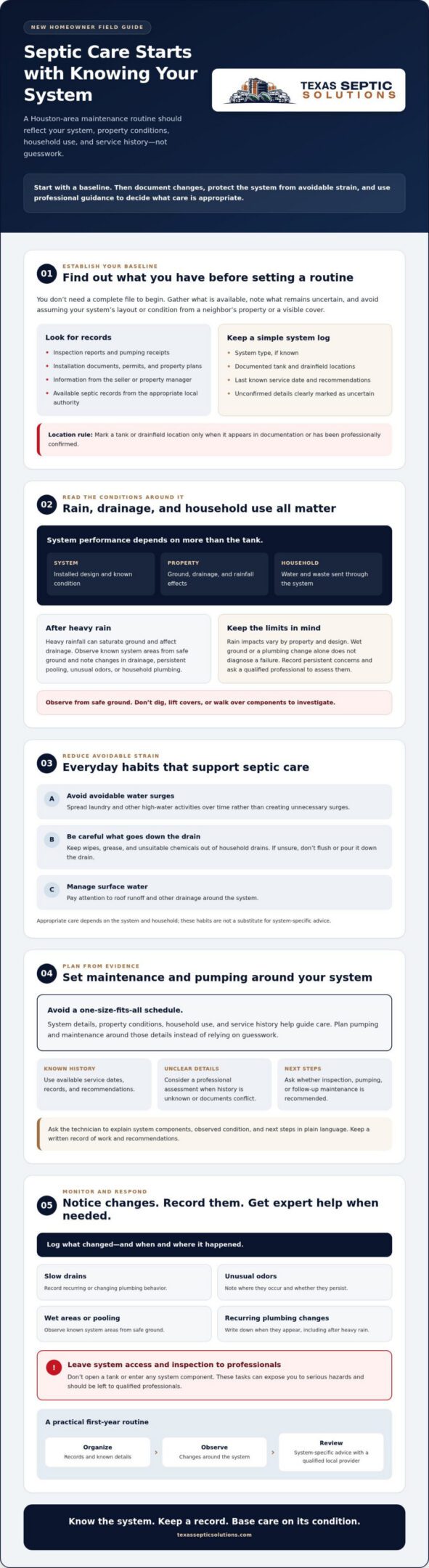
This guide covers how to identify and document your system, find records that clarify its history, and adopt everyday habits that reduce avoidable strain. You’ll also learn when to arrange a professional assessment or pumping and which warning signs call for expert help. Maintenance needs vary by system and property, so start by learning what you have, then build a routine around its condition and service history.
Key Takeaways
- Start septic tank maintenance for new homeowners Houston with a system baseline: collect available records, identify documented components, and note the last known service.
- Consider how your system, property conditions, and household use affect its care, particularly when heavy rain or saturated ground affects drainage.
- Plan pumping and maintenance around system details and service history instead of relying on a one-size-fits-all schedule.
- Record slow drains, unusual odors, wet areas, and recurring plumbing changes, including when and where they occur.
- Build a first-year routine by organizing records, logging observations, and reviewing system-specific recommendations with a qualified local provider.
New to a Houston Home with a Septic Tank? Establish Your System Baseline First
You don’t need a complete file from the seller to get started. A few practical steps can help you build a useful maintenance record and identify what still needs to be confirmed. Before setting a routine for septic tank maintenance for new homeowners Houston, gather available records, check which components are documented, note the last known service date, and consider a professional assessment if important details remain unclear.
Start with the basics: what a septic system is and how its parts work together. Then look at what’s known about your property. The system type, tank location, and service history can all affect appropriate maintenance. Don’t assume your system’s layout or condition based on a neighbor’s property or a visible cover alone.
What septic records and system details should you collect?
Look for inspection reports, pumping receipts, installation documents, permits, and property plans. Ask the seller or property manager about any missing paperwork. You can also ask the local authority that handles septic records whether information is available for your property address. The responsible office varies by location, so confirm the right contact before making a request.
Keep a simple record of the system type, known tank or drainfield locations, service dates, and any recommendations. Mark a location only if it appears in documentation or has been professionally confirmed. If paperwork is incomplete or inconsistent, note what’s uncertain instead of filling in the gaps with assumptions.
When should a new homeowner schedule a professional assessment?
Consider an assessment if the service history is unknown, documents conflict, or you notice visible concerns around the system. A professional can help establish a starting point and clarify whether an inspection, pumping, or follow-up maintenance is recommended for your system and property.
Ask the technician to explain the system components, observed condition, and next steps in plain language. Request a written record of the work and recommendations for future reference. An earlier inspection report is useful context, but it only describes what was observed at that time. It can’t guarantee the system’s current or future condition.
Keep the inspection professional. Don’t open a tank or enter any system component. These tasks can expose you to serious hazards and should be left to qualified professionals. A documented baseline gives you a sounder foundation for the care decisions covered in the next sections.
How Houston-Area Weather, Drainage, and Household Use Affect Septic Care
Your septic system doesn’t operate in isolation. Its performance depends on the installed design, the ground and drainage around it, and how much water and waste your household sends through it. That’s why septic tank maintenance for new homeowners Houston should be based on your home’s system and conditions, not assumptions about every property in the area.
Heavy rain may saturate the ground and affect how water drains around a septic system. The impact varies with the property and system design, so pooling or plumbing changes alone don’t diagnose a problem. Record what you notice and ask a qualified professional to assess persistent concerns. For practical guidance on water use, waste disposal, and drainfield care, see the EPA’s advice on how to properly maintain your septic system.
What should Houston homeowners watch after heavy rain?
After substantial rainfall, observe known system areas from safe ground. Don’t dig, lift covers, or walk over components to investigate. Note whether water drains differently than usual, and record persistent pooling, unusual odors, or changes in household plumbing. These details can help a professional understand when and where conditions appeared. The effects of rain and flooding are site-specific, so get a qualified assessment before concluding that wet ground means the system has failed.
Which everyday habits help protect a septic system?
Small routine choices can help avoid unnecessary strain, although their effects depend on the system and household. Spread laundry and other high-water activities over time instead of creating avoidable surges. Keep wipes, grease, and unsuitable chemicals out of household drains. If you’re unsure whether something belongs in the system, don’t flush or pour it down the drain.
Manage surface water carefully. Roof runoff and other drainage should be directed away from septic components, but seek site-specific professional advice before changing grading or drainage. Moving water without understanding the property could create a different drainage issue.
As you observe your property, note factors that may help explain changes: where water pools, whether the ground stays wet, how household water use varies, and whether plumbing symptoms occur in one area or throughout the home. Don’t disturb the system to collect this information. A brief record can help a technician consider your observations alongside the system design and site conditions.
If you need help interpreting recurring concerns or planning care for your property, explore septic system maintenance support from Texas Septic Solutions.
How to Set a Septic Maintenance Schedule Without Guessing
There isn’t one pumping schedule that fits every home. Timing depends on the system design, tank size, household size and water use, and documented service history. For septic tank maintenance for new homeowners Houston, use your records as a starting point, then ask a professional to recommend timing for your specific system.
A schedule may include different kinds of service. An inspection assesses the system’s condition. Pumping removes accumulated solids when recommended. Maintenance covers routine care, while repairs address a problem that needs fixing. One visit may identify a need for another, but these services aren’t interchangeable. Texas A&M AgriLife Extension offers guidance to help homeowners operate and maintain the system properly.
What factors should shape a pumping recommendation?
Ask the technician to consider the installed system, tank size, household size, water use, and available service history. For example, a household with incomplete records needs a different starting point from one with documented service and no reported concerns. Ask why a particular timing is recommended, what information supports it, and when the recommendation should be reviewed.
Use this comparison as a planning prompt, not a substitute for an assessment specific to your system:
| What you know | Sensible next step |
|---|---|
| Service history is documented | Review past work and ask a professional when the system should next be assessed or pumped. |
| Records are incomplete or conflicting | Arrange a professional assessment to establish a reliable starting point. |
| You’ve observed concerning changes | Contact a professional for an assessment. Don’t assume pumping alone will resolve the cause. |
What should you ask during an inspection or service visit?
Ask for clear answers and a record you can refer to later. Find out what was inspected, what condition was observed, whether pumping or repairs are recommended, and what should prompt follow-up. Request written documentation of the service date, observations, work completed, and next review point. This makes future recommendations easier to compare with the system’s actual history.
For more detail on ongoing care, read the Texas septic system maintenance guide and the septic maintenance plan guide. Along with your service records and a professional’s advice, these can help you build a practical schedule without relying on a one-size-fits-all interval.
Home Monitoring and When to Call a Septic Professional
As part of septic tank maintenance for new homeowners Houston, watch for changes without trying to diagnose them yourself. A single slow drain or wet spot may have more than one possible cause. Note whether an issue persists, returns, or affects several parts of the home. A clear record helps a qualified professional assess what’s happening.
Which changes should you document for a technician?
Use a phone note or simple log to record what changed and when. Include the date, location, recent weather, household water-use changes, and any related alarm. If you take photos of pooling or other visible surface conditions, do so from a safe distance. Don’t open covers, walk over components, dig, or disturb the system to get a better view.
For each observation, note whether it affected one fixture or several, whether it cleared or returned, and how long it lasted. Compare entries over time, but don’t assume a symptom reveals its cause. An alarm is useful information to report. Follow the septic tank alarm guidance for alarm-specific next steps.
When does a septic concern need prompt professional attention?
Routine monitoring means recording changes and reviewing them as part of your home’s maintenance history. Repeated backups, persistent wastewater odors, unexplained wet areas, or recurring plumbing changes call for professional guidance, especially if they continue or worsen. Don’t open a tank or attempt repairs yourself.
If wastewater is backing up into the home, reduce water use and contact a qualified professional promptly. Tell them where the backup is occurring, when it began, whether other fixtures are affected, and whether you’ve noticed alarms or outdoor changes. These details can help the professional assess the situation and determine appropriate next steps.
For questions about repair considerations, consult the Texas septic system repair guide. If you’re seeing recurring symptoms, contact Texas Septic Solutions for septic system repair or maintenance. Keep your notes and service records together so future visits can build on what you’ve already observed.
Build a Reliable Houston-Area Septic Routine with Local Professional Support
A dependable routine starts with what you know about your system and gets more useful as you gather records and professional recommendations. During your first year, organize available documents, confirm system details, log changes around the property, and review the follow-up timing your technician recommends. This creates a practical baseline without relying on memory or a generic schedule.
Keep inspection reports, pumping receipts, installation documents, system notes, and provider contact information together in one paper or digital file. After each service visit, record the date, work completed, observations, and recommended next step. Share relevant records with future providers so they can consider the system’s history before advising you. Written records make it easier to compare recommendations and notice changes over time.
How can you create a simple septic service record?
Start with a short property summary: documented system type and component locations, known service dates, and details that still need confirmation. Add observations as they occur, then update the file after each professional visit. Keep the next suggested review point visible, but treat it as guidance for your system, not an automatic appointment that applies regardless of its condition or use.
What should you expect from a local septic service conversation?
Be ready to describe the home, known system details, service history, and current concerns. Ask what service is recommended now, why it’s appropriate, and which changes you can continue to monitor. A helpful conversation should leave you with understandable findings and a clear record of completed work, not just a date on a calendar.
Texas Septic Solutions provides septic system maintenance, pumping, installation, repairs, and 24/7 emergency septic service. Confirm service availability for your address, whether your home is in Houston, Cypress, Huffman, Cleveland, or Shepherd. Local support can help you act on recommendations, while your records keep the system’s history organized.
For septic tank maintenance for new homeowners Houston, take it one step at a time: document what’s known, confirm what isn’t, and review system-specific recommendations as your first-year record grows. Contact Texas Septic Solutions for septic service to discuss maintenance, pumping, installation, repairs, or emergency service.
Start Your Septic Routine with Confidence
A reliable septic routine begins with knowing what system your home has and what its records show. Gather available service documents, note what you observe around the property, and ask a professional to recommend care based on your system, household, and service history. There’s no single pumping schedule that fits every home.
For septic tank maintenance for new homeowners Houston, keep your records together and update them after each visit. If you notice persistent slow drains, unusual odors, wet areas, or wastewater backing up, document what’s happening and seek professional guidance rather than attempting tank work yourself.
Texas Septic Solutions provides septic maintenance and pumping, residential repairs and installation, and 24/7 emergency septic service in Houston and nearby communities. If you need help assessing your system or planning its care, contact Texas Septic Solutions for septic service.
With a clear record and professional support, you can take the next steps with greater confidence and care for your home’s septic system over time.
Frequently Asked Questions
How often should a new homeowner have a septic tank pumped?
There’s no single pumping interval that suits every home. Timing depends on the system design and tank size, household size and water use, and service history. If records are missing, ask a qualified septic professional to assess the system and recommend when pumping is appropriate. Keep the recommendation and service date in your records, then use them to guide future planning rather than relying on a generic calendar interval.
What should I do first when I buy a home with a septic system?
Start by gathering any inspection reports, pumping receipts, installation documents, permits, or property plans. Confirm the system type and component locations from records or with a professional, and note the last known service date. If important details are missing or conflicting, consider a professional assessment. This gives you a useful starting point for septic tank maintenance for new homeowners Houston without guessing about your system’s needs.
Can heavy rain affect a septic system in the Houston area?
Heavy rain may saturate the ground and affect drainage around a septic system, but the impact depends on the system design and property conditions. After rain, observe known system areas from a safe distance. Note persistent pooling, unusual odors, or plumbing changes, but don’t dig or walk over system components to investigate. If conditions persist or concern you, share your observations with a qualified septic professional for a site-specific assessment.
What should never go down a septic system drain?
Keep wipes, grease, cooking oil, paper towels, and hygiene products out of septic drains, even if a package describes an item as flushable. Don’t pour chemicals or other substances not intended for septic systems down sinks or toilets. These materials can add strain or interfere with system function, though the effects depend on the system and amount. If you’re unsure about an item, dispose of it another way.
How can I tell whether a septic system needs professional attention?
Persistent slow drains, recurring plumbing changes, unusual wastewater odors, wet areas near known system components, or repeated backups are reasons to seek professional guidance. Note when and where symptoms occur, whether multiple fixtures are affected, and any related alarms. Symptoms alone don’t confirm the cause, so don’t open tanks or attempt repairs. If wastewater backs up into your home, reduce water use and contact a qualified professional promptly.
Who should I contact if my new home has no septic maintenance records?
Ask the seller or property manager whether records are available, then contact the local authority that keeps septic records for your property address to ask what may be on file. The correct authority can vary by location. If the system’s service history remains unclear, a qualified septic professional can assess its condition and recommend next steps. Texas Septic Solutions serves Houston and nearby communities including Cleveland, Cypress, Huffman, and Shepherd.
Does a home inspection mean my septic system is ready for long-term use?
No. An inspection report describes what was assessed and observed at that time, but it doesn’t guarantee the system’s future condition or establish a maintenance schedule by itself. Review the report’s scope, note any recommendations, and keep it with your service records. If the report is incomplete, the system history is unclear, or concerns arise after moving in, ask a qualified professional whether a further assessment is appropriate.